Showing posts with label Carl Oglesby. Show all posts

Tuesday, January 01, 2019

Trump in the Yankee and Cowboy War of 2019


Before Christian Bale became the character of Patrick Bateman in the movie American Psycho (2000, director Mary Harron), there existed the fictional Patrick Bateman in Bret Easton Ellis' 1991 book American Psycho. The Bateman in the novel is obsessed with the businessman and celebrity Donald Trump.
In [the book] American Psycho, [Donald Trump] is the person Patrick Bateman idolizes above all others. Bateman talks about him constantly, citing incredibly specific details of his life of luxury, and is often distracted by the thought of seeing Trump or his wife Ivana out in New York City. Bateman’s obsession often irks Evelyn, who wishes her boyfriend would talk about something other than Trump. Ellis’s inclusion of Trump as an idol in the novel (he never actually appears) grounds the book in a reality of late 1980s Wall Street New York and also shows the obsessive nature of Bateman’s mind. His love for Trump clearly indicates to the reader the things that Bateman values most in another person: wealth, success, extravagance, and beautiful women. Source.
Celebrity Donald Trump has incredibly moved his personality-driven fantasy story tale to the reality of the conspiracy movie that is his present political life.

So I have to ask the question again: What would the late Carl Oglesby (July 30, 1935 – September 13, 2011), the author of The Yankee and Cowboy War, say as which side Donald Trump is on? One thoughtful answer came to me recently.
Despite being from New York, I think Oglesby would rate Trump as pretty firmly on the Cowboys side. Trump is 100% in favor of the oil and gas industry, favoring almost no environmental or other business regulations on that industry and supporting unlimited use of fossil fuels as opposed to alternative energies. Like the oil companies he opposes the climate change treaty.

Oglesby also noted that while the Yankees supported defense, they also favored international alliances and arms treaties. Cowboys favored huge spending on defense and distrusted international alliances. So on that perspective Trump would also fit in more with the Cowboys, as he has increased defense spending a record amount, got us out of international treaties like climate change treaty and Iran nuclear treaty, the TPP, intermediate nuclear arms treaty and has been weary and negative about international agencies and alliances like the UN and NATO. 
Trump's announcement of the sudden withdrawal of all US troops that are in Syria would not fit with the Cowboys so much. But that's because I think Trump has his own prior deals and understandings with Turkey and Russia that he gave them the huge gift of abandoning the Kurds to be slaughtered and Russia to claim total victory in Syria and keep their troops there forever.
But overall I think he fits on the Cowboys side. He has continued the JFK cover up, following the request of the CIAA and other intelligence agencies to keep the files suppressed even when the law keeping them secret expired. Source: Andrew Wilkins. December 23, 2018.
Caleb Oglesby wrote (on December 23, 2018) to my Facebook page, and stated: "Andrew Wilkins, I think my dad would concur."

This discussion made me feel comfortable with what I earlier wrote on June 17, 2017: “There seems little doubt we are seeing a Yankees (Yates, Comey, Rosenstein?, Mueller) vs Cowboys (Flynn, Sessions, Trump) battle occurring right before our eyes.”

Funny how the Cowboy allies of Trump seem to have "resigned" or been fired, of late. But others have been recruited.

The Senate Judiciary Committee public hearings, regarding Brett Kavanaugh's Supreme Court nomination, merely played out this melodrama for the media lights and television cameras.

Michael Carlson writes, in part for The Times Literary Supplement, of  his thoughts on the matter in "Cowboys and Yankees: The forces that led to Trump" (October 31, 2016):
Positioning Trump as a political outlier ignores reality. His candidacy is crashing on a late questioning of his “character”, but character is a bullfighter’s cape, distracting attention from more systemic issues. Trump is far from being an exception, even if you believe exceptions that prove rules. Only eight years ago, for example, John McCain chose Sarah “Going Rogue” Palin as his choice to stand a heartbeat away from the Presidency. The roots of Trump’s success can be traced to America’s post-war transition from the grey flannel 1950s to the 60s.
Politically, Trump is the reductio ad absurdum of half a century’s decline in America’s relative balance. Yes, parts of Trump’s personal history and quirks of his performance are unusual for a candidate for the nation’s highest office. But his candidacy represents the ultimate convergence of two realignments in American politics which have taken fifty years to resolve. The Republican Party has been devolving, and the resolution of this process is Trump.
The internal conflict among Republicans lay between what the American writer Carl Oglesby described as the “Yankees” and the “Cowboys”. Yankees represented old Eastern aristocracy and money, the Wall Street lawyers and investment bankers. They founded the party before the Civil War, partly through a noblesse oblige desire to end slavery. Their ranks were joined by nineteenth-century robber barons who gained respectability through wealth and the adoption of that noblesse oblige. They tended to be internationalists. Cowboys represented new money: independent Texas oilmen, aerospace and defence contractors, gigantic retailers, the rising power of the Far West. They offered little noblesse and no oblige, and advocated American exceptionalism which bordered on isolationism, unless America’s dominant interest dictated otherwise. They included groups such as the John Birch Society, funded by the Coors brewing fortune – right-wingers who considered Dwight Eisenhower a communist.
In 1964, their standard-bearer, Barry Goldwater of Arizona (“extremism in the defence of liberty is no vice”) won the Republican presidential nomination. He was trounced in the election by Lyndon Johnson, and the Yankee-backed Richard Nixon and Gerald Ford regained power within the Party. But by 1980, the Cowboys found a more presentable spokesman. Former television host Ronald Reagan defeated Jimmy Carter by running against the Washington establishment, with George H. W. Bush, the son of a Yankee investment banker turned Texas oilman Cowboy, as his vice-president. Since then, opposition to “government” has become the Republicans’ default position. Career politicians run against “Washington insiders”, in pantomime rebellion against the very interests who bankroll them into office and whose needs they service.
The second realignment came from a schism in the Democratic Party, which, at the time Johnson beat Goldwater, was an uneasy alliance of northern working class and “liberals” alongside the so-called Dixiecrats. Dixiecrats represented the “solid South” that for a century had refused to vote Republican, for the simple reason that Abraham Lincoln had won the Civil War and freed the slaves. They were conservatives committed to segregation in the guise of “states’ rights”; many were also born-again Christians.
It was also in 1964 that Johnson enacted the landmark Civil Rights Act. In 1965 he pushed the Voting Rights Act through Congress and as he signed that bill, he remarked presciently “there goes the South”. Four years later Richard Nixon introduced a “southern strategy” to the Republicans, and by 1980, when Reagan defeated Carter, the only southern state Carter captured was his own Georgia.
When the Right and Left were mixed between two parties, the art of compromise was the essence of politics. But now all the hard Right was in one party, and these radical, religious and overwhelmingly white Republicans shared a commitment to ideological purity, exerting extreme pressure on “moderates” to tack firmly to the right or face challenges, funded by unlimited money from backers like the Koch brothers, in the primaries. Co-operation with the Democratic Party became anathema.
Into this maelstrom, Trump’s advantage over his sixteen opponents in the primary was his very lack of a political “paper trail”; he replaced positions with personality. Polls before the first primaries showed that although he commanded less than 30 per cent support, none of the other candidates ran ahead of him one to one. A party united only in its opposition to government failed to offer an attractive leader from within, leaving a vacuum for a would-be demagogue to fill. Once he won the nomination, his campaign attacked blacks and Latinos, and a thrice-married and self-confessed Lothario somehow convinced religious leaders such as Pat Robertson to channel messages of support from God.
Trump benefitted from one other evolution of politics since the 1960s. In 1960 a televised debate helped propel John Kennedy to victory over Richard Nixon. In 1964, a commercial broadcast only once, showing a little girl picking flowers before being obliterated by an atom bomb, killed the Goldwater campaign. Fifty years later Trump realised shrewdly that modern American electioneering is exactly the kind of “reality” television he has been starring in for the past decade. In a system dependent on hundreds of millions of dollars to fund television adverts, Trump’s celebrity and outlandish behaviour guaranteed him a fortune’s worth of free exposure. As one network chief said, “he’s horrible for America, but he’s great for us”. This proved a boon until the focus narrowed into a head to head battle, and the spotlight began to show Nixonian sweat beneath the makeup.


We already known that the personality of Donald Trump has been seeded into our culture for decades. Trump has inspired several movie characters. 


Gordon Gekko from the Wall Street films.

Yet it is amazing there has not been more analysis of where Trump cryptopolitically resides in the Yankees vs Cowboys landscape.

Let us not worry about 2020 yet. We have 2019 to live through first, in a script that seems to have unfolded at the movies.


The answers could be over the rainbow, with eyes wide shut. 
We all need to have ours opened. 

I miss the musings of Carl Oglesby.


See also


Tuesday, May 09, 2017

Who Is Winning The Yankee and Cowboy War?


The President of the United States, Donald J. Trump, code name Mogul, born on Flag Day 1946, fired the Director of the Federal Bureau of Investigation, on May 9, 2017.

This shocking development in President Trump’s presidency drew comparisons to President Richard M. Nixon’s infamous “Saturday Night Massacre,” in which Nixon purged the Justice Department in the middle of the Watergate investigation.

Keith Schiller, Trump's personal bodyguard and Bridgegate personality, who ran security for the Trump Organization since 2004 before becoming deputy assistant to the President and director of Oval Office operations, delivered the Comey termination notice in person, CNN and NBC News reported.

The date this occurred, once again: May 9, 2017.

Also on this date: May 9, 1974 – Watergate scandal: The United States House Committee on the Judiciary opens formal and public impeachment hearings against President Richard Nixon. Nixon resigns on August 8, 1974.


What would Carl Oglesby say?


See also my old blog posting from March 2012: "Yankees and Cowboys War."

Also, you may wish to read:


Saturday, March 19, 2016

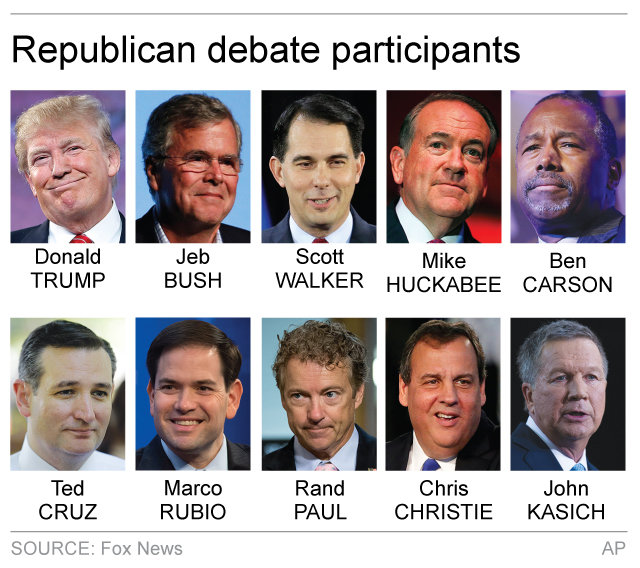
2016 Presidential Yankees or Cowboys?


What would Carl Oglesby say about all the candidates as they stumble towards the Presidential Election of 2016?

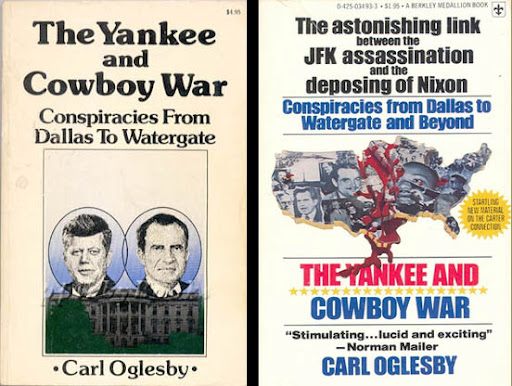
Carl Oglesby's most famous book, a favorite of mine, reveals a twilight language view of the world and should be read by all students of political history. It is The Yankee and Cowboy War: Conspiracies from Dallas to Watergate and Beyond (1976).

I've discovered this book, which is extremely difficult to find in a print edition (they go for over $300 via used book vendors), is available as a free download, here. You have no excuse not to read it.

I asked Carl's son, Caleb Oglesby, about publicly posting this link, as I respect author's copyrights. This is what Caleb wrote to me on August 10, 2015: "I think he would be happy to see it out there in the world. I know someone approached my sister about putting this book online, and we as a family gave our blessings."


Carl Oglesby, 1989.

Of course, I miss what Carl Oglesby (July 30, 1935 – September 13, 2011) would have had to say about the specific alignments of the candidates for president. "What would Carl say?" does come to mind.

It's a circus out there, but someone in this candidate pool, no doubt, is going to continue the Yankee or Cowboy traditions.


Rick Perry's Texas Cowboy roots are secure, but candidates Bush and Cruz have undermined Perry's Texas money base by courting Perry's former Cowboy funders.


Yankee Donald Trump, of course, would like to take on the mantle of the Midnight Cowboy.


Some people, like Rick Santorum, don't wear the Cowboy hat too well.


Who above are the "Yankees" and who are the "Cowboys"?

What is Hillary?


Update

I posted the above on August 10, 2015. The following is an update added on March 19, 2016.

The political calendar has advanced, and in the tradition of Carl Ogelsby, it is becoming more obvious what is what in the current Yankees vs Cowboys War.

A Virginia conservative newsletter, BearingDrift, has come forth with an item, "The Return of the Rockefeller Republicans."


Clearly, that piece's author senses that the "Yankees" in the race are Donald Trump, Chris Christie, and apparently John Kasich. 


It will be recalled that Christie was the designated person to take out Marco Rubio (a Cowboy? NeoCon).

If there is a contested convention in Cleveland, will an alliance be along Yankee and Cowboy lines?


Some dispute that Kasich is a Yankee, and, instead, wish to wrap him in the mantle of the Cowboy. But how comfortable is he with sunbelt conservatives vs East Coast moderates?


The Texas candidate who no-one-use-to-like, Ted Cruz, is an isolated Cowboy, apparently. However, he certainly seems to wish to send out occult hand signals.


The Internet has fun with Ted Cruz (above), but in reality, he transmits his own twilight language, publicly.


As far as Bernie Sanders and Hillary Rodham Clinton, there appears to be little evidence they are not Yankees.


Photographer David Becker.


Tuesday, March 13, 2012

Romneys vs Rockefellers


Today, few remember that the shoo-in candidate to be the Republican nominee in 1968 was a man named George Romney, Mitt Romney's father. A rarer minority recall that George was thrown under the bus, on the road to the convention, by a Rockefeller.

The background of what happened to George Romney and why he was derailed on his way to becoming the Republican candidate in 1968 is worthy of revisiting.

A Gallup Poll after the November 1966 elections showed Romney as favored among Republicans over former Vice President Richard Nixon for the Republican nomination, 39 percent to 31 percent; a Harris Poll showed Romney beating President Johnson among all voters by 54 percent to 46 percent. California's Nixon considered Michigan's George Romney his chief opponent.

Romney was pressed for his opinion on the Vietnam War, which hawk Richard Nixon supported. Finally, on August 31, 1967, in a taped interview with talk show host Lou Gordon of WKBD-TV in Detroit, Romney stated: "When I came back from Viet Nam [in November 1965], I'd just had the greatest brainwashing that anybody can get." 


Romney then shifted to opposing the war: "I no longer believe that it was necessary for us to get involved in South Vietnam to stop Communist aggression in Southeast Asia." 

Decrying the "tragic" conflict, he urged "a sound peace in South Vietnam at an early time." 

Thus Romney disavowed the war and reversed himself from his earlier stated belief that the war was "morally right and necessary." It was a flip-flop placed in a disturbing context.

The connotations of brainwashing, following the experiences of American prisoners of war (highlighted by the 1962 film The Manchurian Candidate), made Romney's comments devastating, especially as it reinforced the negative image of Romney's abilities that had already developed. The topic of brainwashing quickly became newspaper editorial and television talk show fodder, and Romney bore the brunt of topical humor. Senator Eugene McCarthy, running against Johnson for the Democratic nomination, commenting on the "brainwashing," said that in Romney's case, "a light rinse would have been sufficient."

Two weeks before the March 12, 1967 primary, an internal poll showed George Romney losing to Richard Nixon by a six-to-one margin in New Hampshire. Nelson Rockefeller, seeing the poll result as well, publicly maintained his support for Romney but said he would be available for a draft; the statement made national headlines and embittered Romney. Seeing his cause was hopeless, Romney announced his withdrawal as a presidential candidate on February 28, 1968. Romney wrote his son Mitt, still away on missionary work: "Your mother and I are not personally distressed. As a matter of fact, we are relieved. ... I aspired, and though I achieved not, I am satisfied."

Richard Nixon went on to gain the nomination. At the 1968 Republican National Convention in Miami Beach, George Romney refused to release his delegates to Nixon, something Nixon did not forget.

The battle that was thus set to be played out was one in which Cowboy Nixon would take on another Cowboy, LBJ. But LBJ would withdraw from the race, Eugene McCarthy would score some Democratic wins, RFK would set the stage for his nomination, and be assassinated.  LBJ's Vice President, a late entry, Humbert Humphrey would run as the Democratic candidate. Then George Wallace would run as on the American Independent Party, taking Democratic votes from the South. Nixon would win in 1968. 


Lost in that violent history of 1968, is what happened to Romney. But George Romney never forgot why he wasn't in the race. Romney would later claim it was Nelson Rockefeller's entry into the mix, and not Romney's own "brainwashing" remark, that doomed him.


Popular history has it wrong, insisted George W. Romney, the three-time Governor of Michigan whose run for the 1968 Republican Presidential nomination is widely believed to have been destroyed by his assertion that he had been misled or ''brainwashed'' by American generals and diplomats on a 1965 trip to Vietnam.
''That wasn't true,'' said Mr. Romney, who celebrated a nostalgic 80th birthday over the weekend by treating his four-generation clan to a fling in Washington. ''I didn't drop out of the race because of the 'brainwash' statement.''
What actually happened, he added Friday on their insiders' tour of the White House, was that Nelson A. Rockefeller retreated from a commitment to support him and decided to woo for himself the elements of the Republican Party not supporting Richard M. Nixon, who went on to win the nomination and the election.
''When Rockefeller said he'd accept a draft, that meant he was a candidate,'' Mr. Romney told his progeny, ''and I knew it was all up.''
Soon after, Mr. Romney continued, he and his wife, Lenore, encountered the New York Governor at a White House reception.
Rockefeller ''threw his arms around Lenore and said, 'Why did you let him pull out?' '' Mr. Romney remembered. ''And she pushed him back and she said, 'Well, Nelson, there couldn't be two candidates -and he turned red in the face and walked away.' ''

~ "Romney, Recalling 1968, Explains It All," Robert D. Hersey, New York Times, July 6, 1987.


How can this moment in history be brought into a larger overview?

There has been a war in the Republican Party, not just between the Yankees and Cowboys, but between those associated with J. P. Morgan and those tied to John Rockefeller.


 John Pierpont Morgan (1837-1913), American financier, banker, and art collector. 


John Davison Rockefeller (1839-1937), American oil industrialist, investor, and philanthropist.

Lloyd Miller, Research Director for A-albionic Research in Michigan, in 2000, noted the Morgan versus Rockefeller battles this way:

In the late 19th and early 20th centuries the British Empire was at it peak. Not only was there the official Empire but networks of influence in every significant country. In America, this pro-British Party was lead by the Morgan Bank, the leading force amongst East Coast Anglophile Blue Bloods. Standard Oil arose as a primarily self-financing entity by consolidating oil refinery and pipeline capacity outside the control of the Morgan orbit. (Rockefeller's financing to the extent he needed it came from German Warburgs' Manhattan Bank which later became the Chase Manhattan under Rockefeller control.) The British Imperialists dared not let such a powerful independent entity arise and challenge their control of the US Government. Thus, Morgan backed Progressives, Teddy Roosevelt, etc. trying to torpedo the "bad trusts," i.e. the Rockefeller behemoth. This scenario is also confirmed in many ways by Gabriel Kolko's Triumph of Conservatism. Kolko exposed the covert ruling class agenda behind the Progressive Era. Geopolitics explains the detail, not the other way around!
My theories on the Rockefeller-Morgan conflict stem from [Murray] Rothbard and the books of Dr. Emanuel Josephson which Rothbard recommended. For some reason, Rothbard only rarely expounded on this topic in public. Further, other conspiracy theorists, usually the anti-Semitic ones, have presented some of the same theory as the Rockefeller-Rothschild conflict theory based on the incorrect idea that the Rothschilds have controlled the "City" and "Britain" since their financial coup after Waterloo. A better theoretical framework in my view is The British Empire or Crown vs the upstart Rockefellers.


J. P. Morgan

J. D. Rockefeller


There have been subtle conflicts between the J. P. Morgan branch versus the John Rockefeller branch of the Republican Party for a long time. Both the Morgan and Rockefeller divisions are variously described, nevertheless, as "liberal," "moderate," or Yankee, as opposed to the more conservative Cowboy segments of the Republican Party.

Carl Oglesby’s Cowboys ~ whether Republicans or Democrats ~ are associated with the aerospace and petroleum industries of the South and West. They spread from Florida to Texas, and then into the SW, with the addition of the more recent electronics and Internet revolution, especially of California.

But history is the prelude to the present. Old events unfold new truths. The fight between the Cowboys and Yankees often overshadows the ongoing conflict between the Morgan vs Rockefeller parts of the Yankee Republicans. But sometimes there are glimpses of what might be occurring.

In a discussion of the deaths of Presidents in office, researcher Murray Rothbard writes of how these battlegrounds are evidenced, in the extreme:


Next president to die in office was William McKinley of Ohio, long-time Rockefeller tool. Another lone nut was responsible, the "anarchist" Leon Czolgosz, who, like Guiteau, was quickly tried and executed by the Establishment. Even though Czolgosz was considered a flake and was not a member of any organized anarchist group, the assassination was used by the Establishment to smear anarchism and to outlaw anarchist ideas and agitation. Various obscure anti-sedition and anti-conspiracy laws trotted out from time to time by the Establishment were passed during this post-McKinley assassination hysteria. Beneficiary? The vaulting to power of Teddy Roosevelt, long-time tool of the competing Morgan (as opposed to Rockefeller) wing of the Republican Party. Teddy immediately started using the anti-trust weapon to try to destroy Rockefeller's Standard Oil and Harriman's Northern Securities, both bitter enemies of the Morgan world empire. Exhume McKinley, and also start a deep investigation of the possible role of Teddy and the Morgans. Was Czolgosz only a lone nut?
Next sudden death in office was that of my favorite president of the twentieth century, Warren Gamaliel Harding, in the camp of the Rockefellers. His death was quickly dismissed by the Establishment as of natural causes, but Gaston Means, a Secret Service agent in the Harding White House, wrote a sensational book, The Strange Death of Warren Harding, charging that Harding was poisoned by his wife, for two possible, though somewhat contradictory reasons: (a) Harding's notorious womanizing, and (b) to spare Harding the scandal of the Teapot Dome revelations, which were just emerging. Means's charge was brusquely dismissed on the grounds that he was an unreliable character. Perhaps, but so what? Surely, the grounds for exhumation are overwhelming. Chief beneficiary of Harding's death? Vice President Calvin Coolidge, member of the prominent Massachusetts family long in the Morgan ambit. (Hmmm. Another sudden death that replaced a Rockefeller person with a Morgan man?!)


Where are we in 2012? In the ongoing battle, who is on top? The Rockefellers or the Morgans?

Some of the largest supporters of the Mitt Romney campaign are the banking executives of JPMorgan Chase. The hedge fund unit of JPMorgan Chase is one of the largest hedge funds in the United States. It was formed in 2000, when Chase Manhattan Corporation merged with J.P. Morgan & Co. In December 2000, the combined Chase Manhattan completed the acquisition of J.P. Morgan & Co., one of the largest banking mergers to date. The combined company was renamed JPMorgan Chase. In 2004, the bank acquired Bank One, making Chase the largest credit card issuer in the US. JPMorgan Chase added Bear Stearns & Co. and Washington Mutual to its acquisitions in 2009. 

Did the Rockefellers win the war?


+++++++++++++++++++++++++++++++++++++++++++++++++


Pop Quiz:


Of the current 2012 Republican presidential candidates, who was aligned and use to work for Nelson Rockefeller (who would became Vice President under Gerald Ford after Nixon resigned)?


That would be Newt Gingrich. See below a 1988 clip of Gingrich saying he was “a Rockefeller state chairman in the South.” The information has also surfaced in at least one recent profile, as has his membership on the Council on Foreign Relations.

Yankees and Cowboys War

Carl Oglesby, 1989.


Carl Oglesby died of lung cancer at his home in Montclair, New Jersey on Tuesday, September 13, 2011, at the age of 76. 


I knew of Carl for decades, and briefly overlapped with his life in the JFK assassination research circles in Cambridge, Massachusetts in the 1970s-1980s. Yesterday, I posted of being a panelist at the A.S.K. conferences in Dallas. Carl's books Who Killed JFK?  (1991) and The JFK Assassination: The Facts and the Theories (1992), reflected those years, as well as his lifelong passion for investigating the underpinnings of the JFK assassination. (Another friend from those days, Tom Miller, author of The Assassination Please Almanac, 1977, went on to be a well-known travel writer.)


One of Carl Oglesby's often-forgotten books, which I think reveals a twilight language view of the world and should be read by students of political history, is The Yankee and Cowboy War: Conspiracies from Dallas to Watergate and Beyond (1976).


As you can hear, above, from Carl's own words upon looking back at the 1960s, a view of the ongoing "Civil War" in this country was a metaphor he used. It was a foundation critique.


Carl's 1976 book, The Yankee and Cowboy War describes the historical, current, and future power struggles between the old-money Eastern Establishment ruling class and the upstart new-money oil/real-estate/aerospace ruling class of the South and West. The book used Carl's (and Kirkpatrick Sale's) interpretation of Dallas (a Cowboy assassination of a Yankee president) and Watergate (a Yankee overthrow of a Cowboy president) to make his main points to a public with a short memory. Of course, it would take a Rockefeller Republican, Gerald Ford, former member of the Warren Commission, as a Yankee President, to give amnesty to Vietnam-era draft resisters and placate the Cowboys by pardoning Nixon.


The Yankee and Cowboy battle is written in our history.

Many would see later that the Cowboys won when the scion of the relatively old-money (Rockefeller-aligned) Bush family moved to Texas and pretended to be a Cowboy so Bush the Younger had a chance of succeeding his father, Bush the Elder.


The sometimes covert, sometimes overt war between Yankees and Cowboys continues into the present, during 2012.

Few today are willing to look too deeply at the ongoing "Civil War" that rages in this country, the Yankees vs Cowboys divide, or even the Morgan vs Rockefeller Yankee conflicts.  


For most Americans, the insights today of Mitt Romney, for example, hardly ever look at the moderate Yankee background of his father, George Romney, and George's defeat at the hands of the Cowboy Richard Nixon. Few will examine closely the history revealed in the undermining of George Romney by his subtle rival Nelson Rockefeller.

But Mitt Romney, try as he might, is still a Yankee fighting the Yankee versus Cowboy War in the glaring view of today's media.

When Mitt Romney was battling for a victory in the state of his birth, blue-collar Michigan in February, Romney told voters about the four cars he and his wife own, including "a couple of Cadillacs." 

In late February, Romney traveled to Florida to attend the Daytona 500 and was asked whether he followed NASCAR closely: "Not as closely as some of the most ardent fans," he said, "but I have some friends who are NASCAR team owners."

Mitt Romney admitted that "it's a bit of an away game" as he struggles to secure votes in the Deep South, during a campaign stop at the Port of Pascagoula, Mississippi on Thursday, March 8, 2012, in an appearance with Mississippi Governor Phil Bryant.

On Friday, March 9, 2012, the call out by Mitt Romney, at one Southern whistle stop, was an uncomfortable Mornin' Y'All. 

"Mitt Romney, a Yankee born and bred, is trying hard for the Southern vote. Real hard. Aside from shouting out the regional greeting to a Jackson, Miss., audience, Romney shared with them his breakfast menu: cheesy grits with a biscuit on the side," wrote Michele Salcedo of the Associated Press, on March 10th. 

Later Romney talked about eating catfish, for the second time in his life. At other stops in the South, Mitt Romney attempted to play up his everyman credentials. But failed, miserably, again.

"I’ve got a lot of good friends — the owner of the Miami Dolphins and the New York Jets — both owners are friends of mine," Romney said in an interview with an Alabama radio host Paul Finebaum on Monday, March 12.

Stephen Gordon, a Republican consultant based in Birmingham, Alabama, told the Boston Herald that the former Bay State governor is a Yankee, and will always face skepticism no matter how many catfish filets he raves about.

"People in the Deep South have a bit of a natural distrust for Northerners, especially folks from the Northeast," said Gordon, who is not affiliated with any campaign in the Republican presidential contest. "There are cultural differences, stemming all the way back to the Civil War, and they affect the way people perceive Mr. Romney."

Avoid being distracted by the media game with the Yankee versus Cowboy jokes. There is a much more serious background battle being played out here. Romney appears to be the Republican Yankee here, with various other Republicans trying to appear to be Cowboys. Some may be. 


Meanwhile, President Barack Obama seems to be firmly entrenched as a Yankee Democrat, with ties to the Zbigniew Brzezinski camp. 


Ask yourself, what are the real histories behind these current political candidates, and who are their advisors, their mentors, and their fiscal supporters?


Carl Oglesby was correct.