Showing posts with label Secret Sun. Show all posts

Thursday, December 27, 2012

Speaking of Serpents


"Makes me think of Moses turning a rod into a serpent in front of the pharaoh," said @anomalistnews's tweet after reading my Bushmaster essay about the assault rifle and the venomous snake.
Meanwhile, earlier The Secret Sun pondered The Dark Jokers.
On December 20th, @red_pill_junkie tweeted,
"Just to be safe, don't let any strangers wearing feathered headdresses 
into your home for the next 24 hours." 


Dangerous Times overviewed how the End Times didn't come, 
but did we get something worst? Red dawns, at Aurora and post-Aurora?
Plus, have we seen the reincarnation of the rods into serpents of the NRA, 
post-Newtown?

Lest we forget, Charlton Heston was born John Carter.
Yes, just like John Carter from Mars.


Is the storm still coming?

Or is it already here?

Saturday, August 25, 2012

Summer of the Gun

by Loren Coleman ©2012
Jeffrey T. Johnson will forever be known as the Empire State Building Shooter who disturbed New York City during the Summer of the Gun. A fan of McDonald's breakfasts, of a grey suit, and of painting pirate art for his teeshirt company, we are being told Johnson simmered for a year. Then he committed a murder during a moment of workplace violence at his former job site, Hazan Imports. Johnson was taken out via "suicide by cop." Nine bystanders were injured in seconds, during the firefight across the street from the Empire State Building.

The Empire State Building shooter apparently "opened fire across from the Legends Bar. Of course, Ridley Scott [Tony Scott's brother] directed the 1985 film, Legend. It's a very interesting word from the point of view of ritual sacrifice," writes correspondent Matthew Bell. He further shares the definition below.

"Legend" derives from the Latin "legendus" (from "legō," or "pick out, select") which has an interesting semantic range. From Wiktionary, "legendus" can designate that: 
1. which is to be chosen, selected, appointed; 2. which is to be collected, gathered, brought together; 3. which is to be taken, stolen; 4. which is to be traversed, passed through; or 5. which is to be read (aloud), recited.
How do we put all of this in context? Humans, via their words and media, come up with umbrella terms, of course.
As long ago as early July 2012, Sun News television commentaries in Canada were using the term "Summer of the Gun." Joe Warmington's “summer of the gun” commentary was called "fear mongering," even as Canada's increasing gang fights and gun violence skyrocketed.
The phrase "Summer of the Gun" is a natural one, of course. For example, a Western novel used it as a book title in 2000. Many people have employed it in 2012.

After the red dawn event of Colorado's Aurora on July 20, 2012, the USA, then North America, and finally the world, woke up to the unique period of violence in which we find ourselves. By August 2012, several media outlets, like the Atlantic, began using "The Summer of the Gun."

The non-stop wall-to-wall coverage, however, caused some thoughts on "Going Numb in the Summer of the Gun," as the Atlantic Wire termed it. By the time Secret Sun's Christopher Loring Knowles used it to mention his radio appearance on August 24, 2012, the phrase had gained widespread use.

After the fatal shootings at Aurora (13 dead), Pendleton (2 dead), Oak Creek (8 dead), College Station (3 dead), and Empire State Building (2 dead), combined with a recent rash of "insider" or "green on blue" shootings occurring in Afghanistan and Mexico, you do get the idea that people are being pushed over the edge. Even gang violence, whether in Canada or Chicago or LA, is being highlighted and seems to be increasing. "Summer of the Gun" is a logical moniker for the media to employ. 

During a climate of many media-driven mass shootings, often ending in the death of the shooter, those sitting on the anger-vulnerability-suicidal-homicidal fence fall off and take action via a model for behaving that is presented to these individuals by the mainstream press and news reports. These people then go out shooting. It's called the copycat effect. 

I noted in my 2003 book, The Copycat Effect, that we have seen something like this before. During the warm months of 2001, in the Northern Hemisphere, the "if it bleeds, its leads" media called that period the "Summer of the Shark." It was also the "Summer of the Gators" too, from fatal attacks caused by alligators (mostly in Florida) and by sharks (in several locations). These deaths were all over the news. The shark attacks even got a cover on Time. Strangely, this happened after an intense time of school shootings, from 1999-2001.


Besides the shark attacks, several highly publicized deadly alligator encounters happened during the summer of 2001 in the Sunshine State. Few read of the final fatal alligator attack that year (that we know about). It happened on September 11, 2001, and it was buried in the events of that day outside of Florida.

What occurred to end the "Summer of the Shark" and the "Summer of the Gators"? 9/11 happened. The media changed their focus to the attack on the Twin Towers, and our war in Afghanistan (you know, the one that's still going on). The news organizations did not have energy for sharks and alligators. But also, they quit reporting on school shootings. Actual school shootings, relatively speaking, disappeared for almost 18 months from the American media, and from taking place.

The media gets tired of its own news. The article about "Going Numb in the Summer of the Gun" says as much about the media as it does about people on the street. Ask people in New York City, and they will still tell you they are super-aware of events that might be another terrorist attack. Talk to people going to theaters this week. They are very alert to random noises and who is sitting behind them. The media moves on. People don't, necessarily.

The media is growing bored with the mass shootings. They are looking for a hurricane (Isaac?), a war (Israel vs Iran?), or a political assassination (fill in?) to change their concentration. Watch. It will happen.

I'm not saying this won't be a bad thing (the shift, not the source of the shift). After all, there may be less copycats in the wake of Aurora because of a change in the mainstream focus.  But, frankly, I like to be conscious of how I am being manipulated.
(NY: Simon and Schuster, 2004)

Monday, June 29, 2009

Mason Gamble, Mothman, and Golf

Mark Pellington, The Mothman Prophecies, Arlington Road, Mason Gamble, Esalen, and Golf in the Kingdom. It's just another day in synchromysticism.

Pellington
Mark Pellington directed Arlington Road (1999) and The Mothman Prophecies (2002).

Christopher Knowles, over at The Secret Sun, today is discussing "astrognostics," and then he starts to make some connections to names personally familiar to me.

After pondering some popular cultural astrogeneaology emails, family mythology, and some films it brought to mind for him personally, Knowles writes that he has "friends in common" with Mark Pellington, director of The Mothman Prophecies. He notes that Pellington's first feature film was Arlington Road.


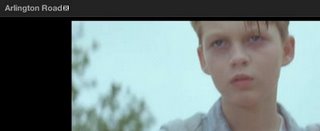
Mason Gamble in Arlington Road.

Knowles writes:

And weirdest of all, Arlington Road opens with a harrowing scene of a boy who's been maimed by a bomb. The boy is played by Mason Gamble.....who I was just hanging around with at Esalen. The gyre is constantly widening, isn't it, Bob?.


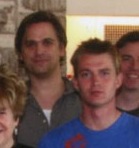
Christopher Knowles and Mason Gamble at Esalen.

...Like the Mothmen, the syncs notice you noticing them and tend to follow you around.

But for some reason, the syncs we see inside films like The Nines or The Number 23 never seem to be as arresting as the syncs we see in the Synchrosphere, or in our own lives. Movies are great at generating Synchronicity, but not usually as good at portraying it. ~ Chris Knowles


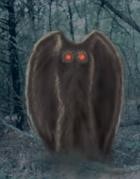
Mothman

As some may or may not know, I worked with Sony/Screen Gems' publicity division in late 2001 and early in 2002, doing media interviews on behalf of Pellington's film. John Keel was regularly ill, so I appeared on nearly 400 radio shows and in a few television documentaries (including on the special deluxe DVD) talking about the Mothman movie. My Mothman book also came out in January 2002, complete with what's called a tie-in "sunburst" promoting the movie on its backcover.

animalx1
Loren Coleman being interviewed about Mothman on "Animal X."

The links mentioned by Knowles are intriguing, to say the least.

It is a small world, indeed.

Pellington, I found, is a master of understanding the "name game." Arlington Road was a deep look at the conspiracy thought process. The Mothman Prophecies film and events surrounding it are a synchromystic gold mine or minefield (depending upon how you are impacted). Some of Pellington's "name games" are seemingly well-planned and others simply align with supposedly "random events," which I can hardly insult anyone anymore by calling them "coincidences."

In February 2002, I wrote of some of these elements I discovered in a SciFi Dimension piece, entitled "The Mothman Prophecies: 'Gordon Smallwood' and Some Strange Happenings."

I've discussed often the little "name games" played in this movie, such as John Keel showing up in the "Leek" (as in "Keel" backwards) character, played by Alan Bates (who died December 27, 2003) and the "John Klein" (John Keel) role of Richard Gere. But sometimes the "games" seem to turn sinister.

animalx3
Linda Scarberry, famed first Mothman eyewitness, is interviewed on "Animal X." Her boyfriend and fellow witness was Roger Mallette.

As I was writing that SciFi piece, deaths related to the original Mothman eyewitnesses were occurring too frequently, including Agatha Bennett (January 12, 2002), Charles Mallette (January 22, 2002), and Gary Ury (February 15, 2002). When the deaths started touching closer to the film and my book, the darkness seemed nearer. Some of those deaths included Ted Demme (Pellington's friend, January 13, 2002), Ted Tannebaum (the film's executive producer, March 7, 2002), and Aaron Rebsamen (son of the illustrator who did the art for my book's cover, by suicide, May 23, 2002).

Then, with much shock and sadness, I was so sorry to hear that Pellington's young 42-year-old wife died unexpectedly two years after the success of his film, on July 30, 2004.

That movie took many of us on several wild rides, emotionally.

That Knowles would highlight Mason Gamble, when so much of The Mothman Prophecies centers on the happening in Mason County, West Virginia, seems only right. To learn that Gamble's next project is as Michael Murphy in the movie adaption of Golf in the Kingdom (1972), an Esalen book by Michael Murphy, well, just seems so very Secret Sun. :-)

For those unaware of the links here (pun intended), here is the overview of Golf in the Kingdom:

Esalen Institute founder Michael Murphy's divine meditation on the royal and ancient game defied categorization when it was first published in 1972, and it still does. Instantly hailed as a classic, Golf in the Kingdom is an altogether unique confluence of fiction, philosophy, myth, mysticism, enchantment, and golf instruction. The central character is a wily Scotsman named Shivas Irons, a golf professional by vocation and a shaman by design, whom Murphy, as participant in his own novel, meets in 1956 on the links of Burningbush, in Fife. The story of their round of golf together culminates in a wild night of whiskey and wisdom where, as Shivas demonstrates how the swing reflects the soul, their golf quite literally takes on a metaphysical glow. The events alter not only Murphy's game, but they also radically alter his mind and inner vision; it's truly unforgettable. For a golfer, Murphy's masterpiece is as essential as a set of clubs.


Even as a non-golfer, I appreciate the deep mystical significance of golf's connection to much of what we all are attempting to fathom. One can measure a circle, beginning anywhere.

Mothman


Mothman and Other Curious Encounters, 2002.