Wednesday, June 25, 2008

Kentucky Workplace Killings

higadon

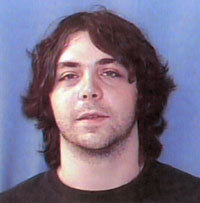
Wesley Neal Higdon, 25, who killed five people and then died by suicide in a "rampage" at the Atlantis Plastics injection molding manufacturing facility in Henderson, Kentucky, called his girlfriend two hours before the shootings to warn her that he was going to kill his boss, police told the media on June 25, 2008.


Henderson is a city located in Henderson County, along the Ohio River in Western Kentucky. It was called "Red Banks" by the native Americans who originally lived and hunted there because of the reddish clay soil on the banks of the river. For more than 100 years the city has been home to the Southern Cherokee Nation.

Henderson's roots lie in a scheme by a North Carolina judge, Colonel Richard Henderson, and a group of investors who sought to buy much of modern-day Kentucky and Tennessee from 1,200 Cherokee Indians gathered at Sycamore Shoals (located at present day Elizabethton, Tennessee) and later resell these frontier lands to settlers.

Henderson's group, the Transylvania Company, hired Daniel Boone to help settle the region. The Virginia General Assembly ultimately voided the deal, but granted Richard Henderson & Company 200,000 acres in exchange for their efforts in developing the wilderness region. That ground was located where the Green River flows into the Ohio River

Among Henderson's many famous residents was John James Audubon, a naturalist who lived in the town in the early 1800s. Displayed throughout Henderson are sculptures of several of his paintings from the "Double Elephant Folio" published in The Birds of America. The sculptures were designed by Raymond Graf, for the City of Henderson, in 2002 and 2003. They are located at various areas in the Henderson downtown district.

Henderson, a quiet town of 28,000 people, was in shock from the shootings.


Police said Wesley Higdon of Henderson had an argument with his supervisor about wearing safety goggles and using his cell phone while was at his press machine on Tuesday, June 24, 2008.

Later that night, as the supervisor escorted him from the building, Higdon shot him, apparently using a .45-caliber pistol he kept in his car. Then, he charged into a break room and the plant floor and kept shooting before turning the gun on himself, police said.

"He just walked in, looked like he meant business, and started shooting at everybody," Henderson Police Sgt. John Nevels said at a news conference.

(Early reports say the shooting began just before midnight, on June 24th, St. John's Day, although media accounts generally published that the shootings occurred early on June 25, 2008.)

A man who called 911 frantically described the violent scene to a dispatcher, tallying up the number of dead around him.

"There's more than two people dead. There's like one, two, three, four, five people dead," the man said. "The supervisor is dead, too."

The killings stunned the sleepy Ohio River town of about 28,000 people, where a local leader said many residents know or are related to a worker at the plant. The plant, operated by Atlanta-based Atlantis plastics, employs about 150 people and makes parts for refrigerators and plastic siding for homes.

Henderson County Coroner Bruce Farmer identified the supervisor as Kevin G. Taylor, 30, of Dixon. The slain co-workers were Trisha Mirelez, 25; Rachael Vasquez, 26 and Joshua Hinojosa, 28, all of Sebree; and Israel Monroy, 29, of Henderson. Shooting survivor Noelia Monroy, Israel's sister, was hospitalized in nearby Evansville, Ind.

"Our whole community is in shock," Henderson County Judge-Executive Sandy Watkins said.

Employees at the company were sent home early Wednesday, but the company said that it hoped to resume limited operations at night. Atlantis Plastics CEO Bud Philbrook told The Associated Press in an interview in Atlanta that the company was reeling.

"It's just total shock. It's something you read about in the paper," Philbrook said.

Investigators were trying to piece together the timing of the shooting spree. Philbrook said that Higdon didn't appear to have any previously disciplinary problems at the plant.

Nevels said family members told detectives that Higdon kept a .45 caliber pistol in his car almost all the time, which is permissible in Kentucky.

Four of the victims were members of St. Michael's Catholic Church in Sebree, Ky., said the Rev. Jason McClure, who had spent much of the morning with the victims' families.

"They are very upset and hurting deeply and just trying to figure out what to do next," McClure said.

In a news release on the company's Web site, Atlantis Plastics said it is a leading U.S. manufacturer of three kinds of products: polyethylene stretch films for wrapping pallets of materials, custom films for industrial and packaging uses, and molded plastic pieces used in products such as appliances and recreational vehicles.

Sunday, June 22, 2008

Talking About Indian Suicide Doesn't Cause It

One of the myths that is quickly overturned in any good suicide prevention program is that "talking about suicide causes suicide." I repeat, that's a myth.

Indeed, the suicide individual, whether youth or elderly, is literally dying to have someone talk to them about their pain and their thoughts of suicide. It is already "inside" of them.

People want to live, and yet infrequently feel the "only way out" of their pain is by dying. The copycat factor comes into play to reinforce the notion that it is the only option open, when it is presented specifically, repeatedly, and impersonally by the media, without protective factors.

Unfortunately, in a new article, "Suicide Sensitivity" by Rob Capriccioso, in Indian Times for June 18, 2008, the wrong message seems to have taken hold among my Rosebud Sioux brothers and sisters - or so seems the case from the reporter's story.

First of all, Capriccioso breaks every rule in terms of media guidelines for writing about suicide when he pens this sentence: "And the tribe's own law enforcement officials have kept track of several recent cases where suicide attempts within the reservation's small population have been successful. "

Suicides are not "successful," in the same way we want our youth to "succeed" in sports, school, work, and relationships. It has been shown that modeling behavior through writing that suicides have a "successful" goal is the incorrect signal to young people, especially among males who make up 4 out of 5 of the deaths by suicides. This tells me Capriccioso might be the source of what comes next, not the Indians.

Caprisccioso writes:

The Rosebud Sioux Tribe is still reeling from the devastating effects of suicide; and some tribal leaders, fearful of the situation, are doing their best to reflect inward regarding tribal and federal efforts in dealing with the outbreak...

In some respects, members of the tribe said, all of the attention on suicide has actually glorified the act for some. Many young people are hurting inside, and they're desperately seeking attention - even if that attention comes in the form of an emergency response to a drug overdose or a slit to the wrist.

''We need to strengthen our young people's feelings about themselves, as well as their connections with their parents,'' Black Bear said, noting that her task force's motto is ''Stop, think, honor, and celebrate your life.'' One of the videos that she regularly shows to youth notes that suicide is not a video game. ''We want them to know you won't be able to press play and start again.''

Tribal leaders are weary of the increased visibility of suicide on the reservation, and they do not want to see it glorified. Bordeaux, in fact, recently requested that IHS obtain his permission before allowing its officials to talk about their efforts to combat suicide at Rosebud. And IHS has followed his request.

''We want to be sensitive to our government-to-government relationship with the tribe,'' Thomas Sweeney, a spokesman for IHS, told Indian Country Today. ''We need to honor the tribe's wishes. ... We don't want to add to their difficulties.''

He added that it is quite rare for IHS to have hashed out such an arrangement.

''We don't want copycat suicide attempts, and I do wonder if that's happened over the past three years,'' Black Bear said regarding the increased attention as of late. ''This is an area where sensitivity is key.''


No, no, no! Talking about suicide does not cause it. Ignoring it does. But graphically and irresponsibly writing about it does have a negative impact.

The mechanism behind copycat suicides is the graphic glorification of suicides by discussing the exact details of the act - like printing the imagery of someone slitting their wrists, as was done by Capriccioso in his article.

If the Rosebud Sioux Tribe are confusing the two - or if this is just a badly written article mixing the two - something needs to be done to straighten this situation out. Someone isn't "getting it." Frankly, I don't think it is the Rosebud Sioux.

Sunday, June 15, 2008

Kent State Student Dies

Robert Stamps, 58 (his wife said he was 57), one of the 13 students shot on the Kent State University campus by the National Guard on May 4, 1970, died Wednesday, June 11, 2008.

Stamps, who passed away in Madison just east of Tallahassee, was an observer sympathetic to the anti-war protests the day of the shootings and was shot in the buttocks while fleeing the tear gas gunfire.

Alan Canfora, another of the shot students who now runs Kent's May 4 Center, said Stamps had protested other times and always believed the Guard shooters should be tried for murder.

Stamps died of pneumonia, according to an e-mail his wife Teresa Sumrall sent to friends. Canfora said Stamps had contracted Lyme disease years ago at a May 4 event at Mohican State Park and had been bedridden with it the last few years.

He was the second of the nine students injured that day to die. James Russell, the oldest of the nine, died at his Oregon home last year at the age of 60.

After the shootings, Stamps graduated with degrees in sociology and Spanish. He lived for a while in Lakewood as an author and college teacher. Canfora said Stamps moved several times between Ohio, California and Florida, and frequently returned to the Kent campus for May 4 remembrances.

"It helps and it hurts," Stamps told The Plain Dealer at one of those events in 2000. "It heals old stuff and brings up old stuff at the same time."

Just a year ago, when students shot in the incident spoke against the current war in Iraq, Stamps told The Plain Dealer that his illness was "the only thing stopping me from actively going around to college campuses, protesting and talking to people about the war."

Killed that day were students Allison Krause, Jeffrey Miller, Sandra Scheuer and William Schroeder. Scheuer and Schroeder were passers-by. Canfora said Stamps rode to the hospital in the same ambulance as Krause before joining him in a waiting room, where they learned students had died.

In addition to Stamps, Canfora and Russell, the wounded students were John Cleary, Thomas Grace, Dean Kahler, Joseph Lewis, Donald MacKenzie, James Russell and Douglas Wrentmore.

A private ceremony was set for Monday. Another ceremony is set for July in San Diego, Calif.

Source.

Friday, June 13, 2008

Wal-Mart Stabbings

In three separate incidents in Texas, Pennsylvania, and Colorado, stabbings at or near Wal-Marts have been in the news this week. The timing may be by chance or related to the Akihabara district stabbing spree in downtown Tokyo, which left seven dead last Sunday, June 8th.

A Wal-Mart employee was arrested after he allegedly stabbed a teenage customer inside a Pearland, Texas store, Houston's KPRC Local 2 reported. Pearland police said the stabbing happened at the Wal-Mart in the 1700 block of East Broadway in Pearland, Brazoria County, at about 10:15 p.m. Wednesday, June 11, 2008.

Investigators said a 16-year-old male customer got into an argument with the employee over a girl. The teen got upset and punched the employee, detectives said. The employee, 18-year-old Ray Canales, became enraged, pulled out a pocketknife and allegedly stabbed the customer five times about the upper back and face. The victim was taken by helicopter to Memorial Hermann Hospital in serious but stable condition.

Meanwhile, the Hanover, Pennsylvania Evening Sun reported Velda C. Stonesifer, 32, was stabbed nine times, near the Gettysburg Wal-Mart off Shealer Road, around 10 p.m.on Wednesday night, June 11, 2008. Michael E. Crum, 31, allegedly stabbed his girlfriend nine times during an argument, according to Trooper Curtis Whitmoyer, who led the investigation.

On Monday, June 9, 2008, the Colorado media reported a teenager was arrested in Fort Collins, who was also allegedly linked to three attacks, including a stabbing at a Wal-Mart. Police arrested the 17-year-old at the Wal-Mart Supercenter at 1250 E. Magnolia Street, in Fort Collins, Colorado, after they reported a 20-year-old man, Frank McConnell, of Ault, was stabbed in his abdomen. Police believe the suspect may be the same person who assaulted another man and harassed a cyclist earlier in the day during a series of random attacks.

These three Wal-Mart-related stabbing incidents were found through a quick survey of news sources. There may be other Wal-Mart stabbings this week, which have been unreported or underreported by the media.

As of 2005, Wal-Mart had 3,800 stores in the United States and 2,800 elsewhere in the world.

Wal-Mart Stores, Inc. is an American public corporation that runs a chain of large, discount department stores. It is the world's largest public corporation by revenue and the world's largest private employer, according to the 2008 Fortune Global 500.

Suicides Fatal To The Happening

The major graphic events occurring in The Happening are massive waves of suicides.

This new film by M. Night Shyamalan is so very obvious in its opening date of Friday the 13th of June. It is, according to a promo release, "a paranormal thriller in which a family must survive a global environmental crisis. The film will portray the earth's vegetation unleashing airborne neurotoxins that cause all those who breathe it to commit violent suicide."

Perhaps Mr. Shyamalan should have consulted a few studies on the role of graphic depictions of suicides in the visual media before he considered this motion picture?

The Minneapolis Star-Tribune said it well in their headline for June 12, 2008: "'The Happening' should never have happened".

Excerpts from the Minnesota review give a sense of the graphic suicides awaiting theater goers who wish to have a pleasant night out, expecting one of Mr. Shyamalan's psychological brain teasers:
In an opening of Hitchcockian suspense, pedestrians in New York's Central Park become disoriented and halt in their tracks, then begin acting in bizarre, self-destructive ways. The effect is almost punctured by an onlooker's awkward dialogue ("Are those people clawing at themselves? That looks like blood!"), but a sequence at a nearby building site where construction workers leap to their death evokes grim memories of 9/11. The "event" initially is considered a terrorist attack, but as more and more neuro-toxin outbreaks are reported, it becomes clear that something else is at work.


And later, the Star-Tribune points out:
As the film progresses, we're subjected to dozens of grisly deaths, most shockingly a man wandering into the lion exhibit at the Philadelphia Zoo.


This depiction bizarrely mirrors the fatal attack at the San Francisco Zoo last Christmas, when a young man, Carlos Sousa Jr., was killed by a tiger, allegedly having been taunted, perhaps parasuicidally, by Sousa and his two friends, the Dhaliwal brothers.

In conclusion, movie reviewer Colin Covert states it precisely:
The twist ending that was a fixture of earlier Shyamalan films is absent here. In fact, there's hardly a finale at all, merely a lazy coda that brings the situation full circle. "The Happening" never should have happened.


My worry is that M. Night Shyamalan has taunted death, not for himself, but for others, by making this film. He is guilty of placing fatal imagery of suicides out there, unnecessarily.

For those familiar with my book, you will understand this is not a call for censorship.

Sunday, June 08, 2008

Akihabara Stabbing Spree

There has been a stabbing spree in the Akihabara, a video game and robotics district of downtown Tokyo, on Sunday.

CNN/AP is reporting that a man used a rented van to run over a group of people, and then jumped out and stabbed 18, killing at least 7, in this special video game district of Tokyo. This occurred, local Japanese time, on Sunday afternoon, June 8, 2008, according to a Tokyo fire official.

The dead included six men, ranging in age from 19 to 74, - one may have died of a heart attack - and a 21-year-old woman, according to a Tokyo metropolitan police officer. Eleven others were wounded, police said, with two critically injured.

"The suspect told police that he came to Akihabara to kill people," Jiro Akaogi, a spokesman for the Tokyo Metropolitan Police Department, told The Associated Press.

"He said he was tired of life. He said he was sick of everything," Akaogi added.

Japanese media reported that the suspect told investigators he was 25 years old. He was later identified as Tomohiro Kato.

Nearly 20 ambulances rushed to the scene, with television footage showing rescue workers tending to victims in the street.

The attack comes seven years to the day that a man entered an elementary school in Osaka in western Japan and killed eight children with a knife. The attacker, Mamoru Takuma, was executed in 2004 for the crime.

On September 8, 1999, a man killed two shoppers and injured others in a stabbing spree in the Ikebukuro area of Tokyo.

In January 2008, a high school student injured two with a knife on a shopping street in Tokyo.

In March 2008, a man wanted by police on suspicion of murder stabbed and killed a woman and injured 7 others in a shopping mall in Ibaraki, north of Tokyo.

The Akihabara district, where the attack took place, specializes in electronic gadgets and video games and is popular with people interested in comic books and distinctive fashion.

The Akihabara is a major shopping area for electronic, computer, anime, and otaku goods, including new and used items. New items are mostly to be found on the main street, Chūōdōri, with many kinds of used items found in the back streets of Soto Kanda 3-chōme. First-hand parts for PC-building are readily available from a variety of stores. Tools, electrical parts, wires, microsized cameras and similar items are found in the cramped passageways of Soto Kanda 1-chōme (near the station). Akihabara gained some fame through being home to one of the first stores devoted to personal robots and robotics.

Tuesday, June 03, 2008

Assassinating The Youth

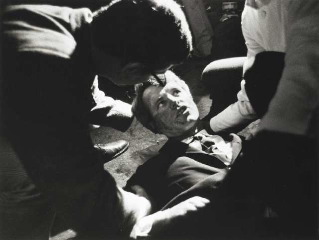
Forty years ago, the world was young and innocent. Then, in 1968, an incredible stretch of assassinations and assassination attempts began in April, and came to an apex during this week in June. The victims were so young. The heart of the youth movement was assaulted.

rfk1

Everyone recalls MLK and RFK, but they were not the only ones. Have you ever noticed the ages of the victims?

Martin Luther King, Jr., 39, was assassinated on April 4, 1968, in Memphis, Tennessee. King was shot on the 4th of April, while standing on the 2nd floor balcony, near his room 306 at the Lorraine Motel in Memphis.

On April 7, 1968, Black Panther Bobby Hutton, 18, who held the title of the Minister of Defense, was killed by police during a firefight. Eldridge Cleaver was wounded in the shootout. Two policemen were shot in the incident.

Rudi Dutschke (born Alfred Willi Rudi Dutschke) was the most prominent spokesperson of the left-wing German student movement of the 1960s. On April 11, 1968, Dutschke, when 28 years old, was shot in the head by Josef Bachmann, and lived for another 12 years with severe assassination attempt-related health problems. He died on December 24, 1979 in Aarhus, Denmark, when he had an epileptic seizure while in his bathtub and drowned.

On June 3, 1968, Andy Warhol, at the age of 39, while in his New York loft, was shot by frustrated writer, Factory-hanger-on Valerie Solanas. The Pop Art guru barely survived the shooting, became more reclusive, and would face physical repercussions from the assassination attempt until his death in 1987.

On June 4, 1968, presidential candidate Senator Robert F. Kennedy, 42, had just scored a major victory from winning the California Democratic primary. He addressed his supporters in the early morning hours of June 5, 1968, in a ballroom at the Ambassador Hotel in Los Angeles. He left the ballroom through a service area to walk through and greet supporters working in the hotel's kitchen. In a crowded kitchen passageway, Sirhan Bishara Sirhan, a 24-year-old Palestinian, opened fire with a .22 caliber revolver and shot Kennedy in the head at close range. Following the shooting, Kennedy was rushed to The Good Samaritan Hospital where he died the next day, June 6th.

Radical leaders of a generation had been systematically gunned down. Then things grew very quiet.

lennonsmall

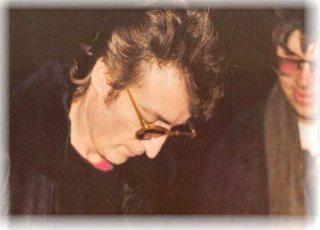
What is the most prominent "cultural" assassination after the ones above? Would that have been John Lennon, who was killed on December 8, 1980, as he was emerging from his self-imposed retirement from 1976-1980? Lennon was shot four times in the back in the entrance hallway of the Dakota by The Catcher in the Rye-obsessed, former security guard Mark David Chapman. Lennon had autographed a copy of Double Fantasy for Chapman earlier that same night.

Who killed the Youth Movement in 1968?

More about these events can be found at The Copycat Effect blog, plus specifically at Sirhan: "RFK Must Die" and Assassination Copycats.

Saturday, May 24, 2008

HRC Spreads Assassination Meme

rfk1

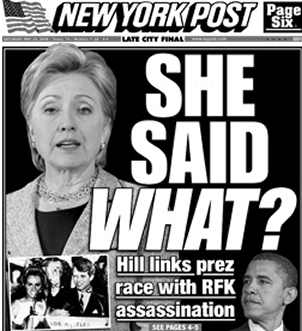
Hillary Rodham Clinton let the political assassination meme out of the bottle! She unconsciously or consciously said she is staying in the presidential race just in case something happens. The copycat factor is a reality underlying assassinations, and she did the unthinkable.

As Michael Goodwin of the New York Daily News straightforwardly wrote: "Hillary Clinton is staying in the race in the event some nut kills Barack Obama....We have seen an X-ray of a very dark soul."

One can be liberal or conservative, left, right, or middle, Drudge Report reader or Nation subscriber, and "get it." The outrage was widespread, and yet the only person that seemed unaware of the depth of feelings was Senator Hillary Clinton. What has been revealed in this one event speaks volumes.

hrc

What was she thinking, indeed?

Asked if her continuing fight for the nomination against Senator Obama hurts the Democratic party, Sen. Hillary Clinton replied to a newspaper editorial board,

I don't. Because again, I've been around long enough. You know, my husband did not wrap up the nomination in 1992 until he won the California primary somewhere in the middle of June, right? We all remember Bobby Kennedy was assassinated in June in California. You know, I just don't understand it. You know, there's lots of speculation about why it is.

Hillary Clinton, May 23, 2008.


rfk-ko

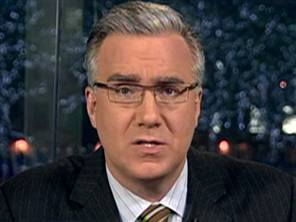
Perhaps one of the strongest editorials about this came from Keith Olbermann, who said in part:

She actually said those words.

Those words, Senator?

You actually invoked the nightmare of political assassination.

You actually invoked the specter of an inspirational leader, at the seeming moment of triumph, for himself and a battered nation yearning to breathe free, silenced forever.

You actually used the word "assassination" in the middle of a campaign with a loud undertone of racial hatred - and gender hatred - and political hatred.

You actually used the word "assassination" in a time when there is a fear, unspoken but vivid and terrible, that our again-troubled land and fractured political landscape might target a black man running for president.

Or a white man.

Or a white woman!

You actually used those words, in this America, Senator, while running against an African-American against whom the death threats started the moment he declared his campaign?

You actually used those words, in this America, Senator, while running to break your "greatest glass ceiling" and claiming there are people who would do anything to stop you?

You!

Senator - never mind the implications of using the word "assassination" in any connection to Senator Obama...

What about you?

You cannot say this!

* * *

This is unforgivable, because this nation's deepest shame, its most enduring horror, its most terrifying legacy, is political assassination.

Lincoln.

Garfield.

McKinley.

Kennedy.

Martin Luther King.

Robert Kennedy.

Countdown with Keith Olbermann, May 23, 2008.


The power of words, the power of the media, and the power of graphic imagery cannot be underestimated in this political year, or any year. The fact that the vulnerable homicidal-suicidal mind of an assassin can and has been influenced by behavior contagion and the copycat effect cannot be disputed by anyone who is a student of assassinations.

Indeed, what was Hillary Clinton thinking?

Her non-apology "apology" only has made this worse, and I predict will fester like an unhealed wound until she steps aside. Despite what she said in her "apology," she has not honored RFK's New York Senate seat with her actions of late. She little realizes the power of her own words if she allows this to continue, and sit there, waiting to further infect the nation, as we move closer to the 40th anniversary of the assassination of Robert F. Kennedy.

Clinton will not be to blame, needless to say, if a politician is assassinated or an attempt occurs during this campaign year, but to reinforce the climate of instability with these words is beyond belief.

rfk-40

If Hillary Clinton is steeped in history, then she surely realizes that an African American man, Martin Luther King, was assassinated a mere two months before Robert Kennedy was assassinated. The meme was there in 1968. That meme happened almost exactly 40 years ago. Actions are followed by actions. Why give this such an contoured focus in 2008? Is Hillary Clinton truly a student of history or does she wish to make a mockery of it?

As it turns out, we were left to the Drudge Report and Keith Olbermann to serve as strange bedfellows, the united emotional voices in this nation to speak for most of us about how horrible her words really are.

Was she thinking that, indeed, Obama would be killed, and thus she wanted to be waiting in the wings?

How can she look at herself in the mirror and stay in this race any longer?

Wednesday, May 21, 2008

Maine Self-Immolation

Sad news, indeed.

A 18-year-old Connecticut man has died after apparently dousing himself with gasoline and setting fire to himself, according to a Maine Department of Public Safety statement.

Two motorists found Alex Whitney, Tuesday night, May 20, 2008, sitting in the middle of Duck Pond Road in Ellsworth, Maine. A can of gasoline and a lighter were found nearby.

Whitney, a student at the University of Maine in Orono, was taken for treatment to Brigham and Women's Hospital in Boston where he was flown by helicopter overnight. He was receiving treatment for burns on more than 60 percent of his body, before he passed away due to his injuries.

The fire burned more than two acres of woods.

The State Fire Marshal's Office has impounded Whitney's car, which was found nearby at the fire scene, according to McCausland. Investigators plan to examine the vehicle "to try and find out why he did this bizarre act," McCausland said.

Joe Carr, director of university relations at University of Maine, said Wednesday that Whitney was a freshman forestry student who had been staying on Mount Desert Island as part of a UM program. Each spring, first-year forestry students spend two weeks studying and working in Acadia National Park as part of the school's forestry studies, he said.

Counselors went to MDI to offer their services to Whitney's fellow forestry students. "They going to visit them directly," Carr said.

Dr. Robert Dana, UMaine’s dean of students, said Wednesday that Whitney was an Eagle Scout, a big UMaine hockey fan and a member of the Tau Kappa Epsilon fraternity. He said Whitney also enjoyed playing guitar.

Whitney was a 2007 graduate of St. Paul Catholic High School in Bristol, Connecticut, and was studying forestry.

Whitney and his fellow first-year forestry students had just started a two-week program at Acadia National Park. The voluntary trip sends students into the sprawling park to repair roads and infrastructure and work in the forest, Dana said. "It's on-the-job training as well as a bonding experience" for the freshmen, he said.

Whitney arrived at Acadia sometime over the weekend, Dana said. But at some point, he left and drove to Ellsworth.

"The death of a child and person is always indescribable," Dana said. "Communities like this are always devastated."

Dana described Whitney as a "friendly, quiet young man" who had attained the rank of Eagle Scout.

Whitney's Eagle Scout project involved the restoration of a section of the trail in Unionville's Suburban Park. On Dec. 14, 2004, the Farmington Town Council declared it "Alexander J. Whitney Day" in honor of his efforts.

"As a result of Alexander J. Whitney's work, the experience of the citizens of Farmington who use Suburban Park will be forever enriched and enhanced," the proclamation states.

When discovered on fire, Whitney spoke to the two individuals who found him, indicating his was intentional act.

Wednesday, May 14, 2008

Fortean Times

TCE-FT

This spring Fortean Times highlights "The Copycat Effect - Suicide epidemics and death pacts in the Internet age."

Here's how the editors overview the contents:

This month, in the wake of the recent suicides of young people from Bridgend, South Wales, Jack Sargeant wonders whether some kind of "copycat effect" might be so powerful that it could induce people to end their own lives, while Loren Coleman examines the anatomy of a suicide cluster and Chris Kimberley listens to "Gloomy Sunday", a song supposedly responsible for a rash of self-killings in pre-war Hungary and beyond.


On sale from 1 May 2008 (in the UK), later elsewhere.

I personally object to the cover art of the hanging images, Jack Sargeant's use of the word "successful" to describe suicides in his article, and the confusion he conveys between "suicide pacts" and "mass suicides." Those are the weak points. To actually have such an overt considering of suicide clusters and the copycat effect is a major plus.- Loren

Tuesday, May 13, 2008

Red Zone Silent?

All was not truly quiet. Although no classic fatal school shooting outbreaks occurred during 2008's red zone temporal window at North American schools and universities, other events did transpire. The following is a summary of various incidents.

jokela

History Revisited

The media published several articles reviewing the Virginia Tech shootings of April 16, 2007. A bit less so, mentions were made of the shootings at Columbine, in which 15 people were killed, on April 20, 1999.

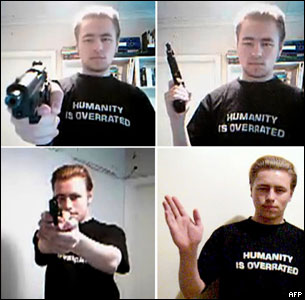
Several news items detailed the public sections of the final report released April 17, 2008, about Finnish school shooter Pekka-Eric Auvinen, seen above from a video he posted online.

Auvinen shot and killed eight people and himself at a Jokela, Finland school, in November 2007. In copycat fashion, he planned the attack for months, wanting to create "massive destruction and chaos," police said.

Among Auvinen's ten Web contacts was U.S. teenager Dillon Cossey, who was sentenced last year to up to seven years in a juvenile facility after admitting he had a plan to attack his school near Philadelphia. The two teens communicated online about the 1999 Columbine school massacre in Colorado, and exchanged videos they found on the Internet.

The Excel Institute Incident

On April 28, 2008, Wesley Johnson, a 27-year-old auto mechanics student, was charged with two counts of assault with intent to kill, two counts of carjacking and assault on a police officer after opening fire at a vocational school, the Excel Institute, in Washington D.C. He had been a former student of the school.

Witnesses said the gunman -- wearing a black suit and a fedora -- walked through the Excel campus in the 2800 block of V Street and spoke to some students before going into a building and suddenly opening fire. A male student was the first hit. Teacher Curtis Hochman found himself in the crosshairs next. The gunman pointed the pistol at Hochman's head and pulled the trigger. But it jammed, sparing the teacher's life. A woman outside the school, a visitor, became the next victim. She was shot in the shoulder as the gunman walked out. Both victims are expected to survive.

Police said the gunman carjacked two vehicles as he fled. One carjacked vehicle hit a police cruiser and another car, injuring an officer and a pregnant woman. Officers then caught the suspect and arrested him.

Police searched Johnson's Fort Washington, Md., home Tuesday night, April 28th. Sources said they found ammunition and writings on the wall about Judgment Day.

Other 2008 Incidents

Several other threats and arrests did occur around the anniversaries of Columbine and VA Tech. But it appears students, parents, educators, and law enforcement personnel worked together to prevent any major incidents in 2008.

Here are a few examples:

In February 2008, 64-year-old Joe Parks, who has taught education at Fresno State for 10 years, allegedly said he would cause a school shooting of his own. California State University, Fresno is investigating allegations by two students that this tenured professor threatened to bring a gun to class and start shooting. The school has suspended Parks. A student said in a police report that during a discussion of a school shooting, Parks said he wished he could bring his gun to class and "shoot all of you." Parks denies making that statement during a teacher-preparation class in February, but concedes that he tends to be controversial in his remarks.

A 15-year-old Springboro girl Springboro (Ohio) High School officials accused of saying on April 17, 2008, "I feel like shooting all the jocks and hanging all the preps" has been transferred to Kettering Youth Services. The girl was transferred on Tuesday, April 22, according to court records, a day before juvenile authorities in Warren County were scheduled to reconsider her detention. Officials said she uttered the threat in the cafeteria April 17 at Springboro High School. On April 17, the school district issued a statement, assuring parents and students that school would be safe the next day.

Students were sent home early Thursday, April 17, 2008, from a high school in Hacienda Heights, California, and the school was closed Friday, April 18, due to rumors of a school shooting planned there.

Los Angeles police arrested on Friday, April 18, a high school student who posted warnings of a school shooting to happen at Glen A. Wilson High School in Hacienda Heights of Los Angeles, prompting authorities to close the school. The incident began Wednesday evening, April 16, when Los Angeles County sheriff's officials notified Hacienda La Puente Unified School District police that a threat against students at Wilson High had been posted on the district's Wikipedia entry. The entry read: "This is a warning. Do not remove this from this page. On Friday, April 18, 2008, there will be a shooting at this school. Current list of victims to be shot on this day: . . ." The student was arrested.

An unidentified South Bend, Indiana, teen was arrested April 19, 2008, after a school officer investigating an unrelated threat at Penn High School (near South Bend) discovered Internet postings in which the teen allegedly discussed his support for the Columbine attack. Authorities said the boy and an Ohio man exchanged e-mails and discussed mass murders at Penn High and another location. Early in May 2008, Lee Billi, 33, of the Cleveland suburb of Lakewood pleaded not guilty to conspiracy to commit murder.

Columbine-style shootings were threatened in graffiti at Prairie High School, Vancouver, Washington, on April 21, 2008. All was calm as the day passed.

A Hyde Park, Ohio, man was credited with stopping a potential school shooting in Canada. On Monday, April 21, 2008, the 20-year-old who wishes to only identify himself as Jason found a website with a posting that contained a threatening message that included a picture of a mask with two guns and ammunition. With the anniversary of Columbine on his mind, Jason notified Cincinnati Police. It turns out the threat was against one of Montreal's Vieux Montreal college. As a result, officers shut down all classes and activities for the day. Back in 2006, a gunman opened fire on students at a Montreal's Dawson College, killing one and injuring 20. Through investigative work, Montreal police tracked down a 16-year-old suspect who had ammunition inside his home; he is in custody and faces charges.

Parents were notified Tuesday, April 22, 2008, that their child was on a hit list, after it was uncovered at Hayfield Secondary School in Fairfax County, Virginia. Fairfax County School officials did not say how many kids were on the list and what, if any, disciplinary action was taken, as the list maker was identified by authorities. No injuries occurred.

On April 24, 2008, a 14 year old boy was arrested for sending e-mails to a female classmate that threatened a shooting at West Valley Junior High in Yakima, Washington State. According to police, the boy claimed he was going to bring a gun to school on April 25. However, the boy stayed home from school and police said they do not believe he posed a threat to the girl or any of his classmates. The boy is being charged with felony harrassment and is being held at the Yakima County Juvenile Detention Center.

In Alabama, around this time, a Floyd County parent contacted the police department about a school shooting threat against Coosa Middle School. One subject told police the suspect said he wanted to re-enact Columbine. Police went to the home of the suspect and conducted a consent search of the residence and found several articles associated with the Columbine shooting that had been printed off of the internet. The juvenile was arrested, and in early May 2008, was at the Youth Detention Center in Rome.

On May 9, 2008, a threatened Minico High School, Rupert, Idaho, school shooting event never happened, and the Minidoka County Sheriff's Office arrested the student who made the threat. The sheriff monitored the school because the student allegedly had threatened a massive school shooting.

Tuesday, April 15, 2008

The Red Zone

Tomorrow, dangerous times begin. April 16th will be the first anniversary of the Virginia Tech killings of 32 and the suicidal death of the shooter Cho. Vulnerable suicidal individuals who are thinking about homicide will be triggered by the recycling of the news on cable television, and for ten days, through the anniversary of Columbine. The days through April 26th will be a time in which you should remain alert. The theaters of this tragic play may be played out in more than universities, colleges, and other schools.

Remembering this, others sound similar warnings....

New York, April 15 /PRNewswire-USNewswire/ -- Morality in Media President Robert Peters had the following comments regarding tomorrow's first anniversary of the April 16, 2007 Virginia Tech massacre:

"Two of our nation's leading newspapers, USA TODAY ("For families and survivors, grief becomes call to action," 4/11/08) and the N.Y. Times ("At State Level, More Attempts To Limit Guns," 4/11/08) have already chosen to remember the first anniversary of the April 16, 2007 Virginia Tech massacre with front page articles highlighting gun control efforts.

"Undoubtedly, there are loopholes in our nation's gun control laws that need plugging, but in remembering that the Virginia Tech killer used guns to slaughter fellow students, we should also remember that the killer grew up in a culture that glamorizes and even celebrates gun mayhem.

"Along with reporting on loopholes in our nation's gun laws, therefore, the media should also be reporting on the irresponsible TV shows, films, rap lyrics and video games released in the past year that wallow in deadly gun violence and that are popular among children and young adults.

"The media should also reconsider its blind adherence to modernistic Supreme Court decisions that have made it almost impossible to hold entertainment media companies responsible for harm caused by their reckless disregard for human life. Surely, this was not the intent of our nation's founding fathers, which never meant for the Constitution to become a 'suicide pact.'

"Set forth below are quotations that appeared in news publications following the horrible mass murder that took place one year ago at Virginia Tech. They merit the public's consideration."

"Equally important was an observation made by one of the CNN talking heads who pointed out that the killer who made a bloody wreck of Virginia Tech used the 'weapon of choice' seen in rap videos and action films. That was another indictment of the strutting, malicious violence that pollutes our popular culture and may have influenced the Virginia Tech killer who brandished two pistols..." [Stanley Crouch, "Society hits a dead end," N.Y. Daily News, 4/23/07)

"The notion that 'movies don't kill people, lunatics kill people' is liberating to us screenwriters because it permits us to give life to our most demented fantasies and put them up on the big screen without any anxious hand-wringing. We all know there's a lot of money to be made in trafficking in blood and guts...[But can] we really in good conscience conclude that the violence saturating our popular culture has no impact?...As responsible Americans put their heads down on their desks and reflect, should the scribes of popular entertainment be excused to the playground? ...Before cashing those big checks, shouldn't we at least pause to consider what we are saying with our movies about the value of life and the pleasures of mayhem?" [Mike White, "Making a Killing," N.Y. Times, 5/2/07]

"'My first thought when I saw the newspaper picture of Cho holding two guns was this guy has seen too many Asian gun films...,' Tom Weisser, Editor of Asian Cult Cinema magazine, told the Post yesterday. 'Perhaps there has never been a better example of a pop-culture killer.'" [V.A. Musetto, "Erie link to blood soaked Korean film," N.Y. Post, 4/20/07]

"Much has been made of the frightening similarity between 'Oldboy,' Park Chan Wook's dark 2003 movie thriller, and the deeds of Cho Seung Hui, who shot to death 32 people...But there are problems as well. For one, 'Oldboy' wasn't a gun picture...Many of Cho's pictures - 11 out of 43 - featured guns. And when I look at them, another name struck me as far more relevant than Park Chan Wook. That's John Woo. Woo almost redefined the action genre with a series of Hong Kong gangster movies...In at least three regards, Cho activities so closely reflect the Woo oeuvre that it seems somewhat fair to conclude that in his last moments, before he blew his brains out, he was shooting a John Woo movie in his head. First is the peculiar nature of the gun violence...Second is the nature of the guns themselves...The third...is thematic..." [Stephen Hunter, "Cinematic Clues To Understand The Slaughter," Washington Post, 4/20/07]

"Virginia Tech killer Cho Seung-Hui plagiarized other school shooting psychos in a twisted show of one-upmanship. He used the Internet to research and learn from infamous school killers, including Columbine's Eric Harris and Dylan Klebold...'Cho was an empty vessel and he poured himself full from images off the Internet...,' said Loren Coleman, an expert on school shootings and the author of The Copycat Effect. 'There's a psychological process that these shooters appear to be competing for - the high body count.'" [Jill Culora, "Sick homages from a student of psychos," N.Y. Post, 04/22/07]

Monday, April 07, 2008

"Die, Elders, Die!"

sheldrake

Perhaps it is a coincidence but on March 22, 2008, a renegade alignment of "thinkers" calling themselves the RRRgroup (although known by some critics as the "KKKgroup") wrote a blog (together?) entitled "Death(s) will clean the UFO palate."

They begin by stating,
"When ufology’s old-guard passes on – Dick Hall, Stan Friedman, Kevin Randall, John Schuessler, and even the 60ish Jerry Clark to name a few – taking hangers-on and sycophants with them (and you know who they are), the UFO palate will be cleansed."

The RRRGroup then mention others who "include Paul Kimball, Nick Redfern, Greg Bishop, and Mac Tonnies."

I found such statements outrageous, incredible, and unwise. I said, partially, in a comment directed to the RRRGroup:

Every "new" generation sees themselves as having the "real" solutions or the next best outside-the-box suggestions. Of course, it will only be something you will reflect upon when the next generation after you, the new group of "Young Ones" start nibbling at your aging heels....

It's always been that way, and it will continue so into the future.


But calmness is rare and, instead, dark days are afoot when people like these young bloggers feel it is cool to expound on the positive value in the forthcoming deaths of their elders, mentors, and older writers.

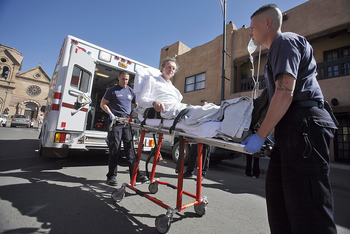
It is now with some concern I reflect that on April 2, 2008, a week and half after these words were written by the RRRGroup, Rupert Sheldrake, 65, of London, while speaking at the "10th International Conference on Science and Consciousness" at the La Fonda Hotel, in Santa Fe, New Mexico, was attacked by a much younger man.

Sheldrake had just taken a break at 3:00 p.m., when Hirano Kazuki, 33, of Yokohama, Japan, stabbed Sheldrake in the leg.

The Santa Fe New Mexican described the wound in graphic detail: "Sheldrake had a 2- or 3-inch cut on the front of his left thigh, just above his kneecap, causing blood to spurt some 8 inches into the air as he lay on his back."

A statement of probable cause quoted witnesses to the stabbing as saying the man, Hirano Kazuki, had a knife in his hand, pushed people out of the way as he approached the stage where Rupert Sheldrake was speaking and tried to get onto the stage. According to the statement, Kazuki tripped as he tried to stab Sheldrake in the chest and stabbed him in the left thigh instead.

Sheldrake's keynote address was entitled "Memory and Morphic Resonance," and his workshop was "Fields of the Mind: Experimental and Research and Practical Intuition," according to a catalog on the conference.

Dr. Rupert Sheldrake studied biochemistry at the Clare College, Cambridge, UK, graduating with a double First Class honors degree. He was a Frank Knox fellow at Harvard, studying philosophy and history. He returned to Cambridge where he gained a Ph. D. in biochemistry and was a Fellow at Clare College. He was a Research Fellow of the Royal Society.

In recent years, Sheldrake has been an intellectual writer of some note on the topics of animal and plant development and behavior, telepathy, perception and metaphysics, which skeptics and critics have called "pseudoscience." Writers like Jerome Clark, Greg Bishop, and Nick Redfern, the same ones whom the RRRGroup mentioned, have noted Sheldrake's thoughts with favor. Sheldrake's material is marginal to ufology, although central to some Fortean thoughts, but overlaps, no doubt, have occurred.

Getting into the mind of the Japanese stabber seems to be key. But who knows why this individual attacked Sheldrake? Amazingly, people can read articles and watch visual presentations which stimulate their future actions, as I document throughout The Copycat Effect. When statements about how the "deaths" of certain researchers will result in "cleaning the palate" are added to the blogsphere, can anyone say who is reading them and what impact they might have?

What is known about Hirano is that he had been attending the "10th International Conference on Science and Consciousness." Other attendees said he had been acting oddly. They said he confronted Sheldrake earlier in the week, telling Sheldrake that he heard voices and saw demons. Another featured speaker at the conference told the man he was 'full of negative energy' and counseled him to 'calm down,' reported Evan Mecham, an attendee from Broomfield, Colorado.

Hirano is being held on a $200,000 bail.

Sheldrake is expected to fully recover, physically.

Friday, April 04, 2008

Assassination Copycats

Do assassinations come in copycat clusters? Historically, such situations appear to have occurred.

Forty years ago, Martin Luther King, Jr., was assassinated on April 4, 1968, in Memphis, Tennessee. On April 3, King in Memphis, addressed a rally, delivering his "I've been to the Mountaintop" address at Mason Temple (Church of God in Christ, Inc. – World Headquarters). King was shot on the 4th of April, while standing on the 2nd floor balcony, near his room 306 at the Lorraine Motel in Memphis.

On April 4, 1968, Robert F. Kennedy, the then-senator from New York State, learned of the assassination of Martin Luther King, Jr. and gave a moving impromptu speech in Indianapolis' inner city, in which Kennedy called for a reconciliation between the races. Riots broke out in 60 cities in the wake of King's death, but not Indianapolis, a fact many attribute to the effect of Kennedy's speech. (Barack Obama recalled that speech while speaking himself from Indianapolis on April 4, 2008.)

On April 7, 1968, Black Panther Bobby Hutton, who held the title of the Minister of Defense, was killed. Bobby Hutton, or "Lil' Bobby," was the youngest member of the Black Panther Party. He joined soon after the conception of the BPP in 1966, at the age of 16. He was killed by the Oakland, California, police after a firefight. Eight Black Panther Party members, including Hutton, Eldridge Cleaver and David Hilliard, were traveling in two cars when they were allegedly ambushed by the Oakland police. Cleaver was wounded. Both the Oakland police and the Black Panther Party each called the event an ambush by the other group. Two policemen were shot in the incident.

Rudi Dutschke born Alfred Willi Rudi Dutschke (March 7, 1940 – December 24, 1979, Århus, Denmark) was the most prominent spokesperson of the left-wing German student movement of the 1960s. He famously split from those who went on to form the violent Red Army Faction and advocated instead "a long march through the institutions" of power to create radical change from within government and society by becoming an integral part of the system's machinery.

On April 11, 1968, Dutschke was shot in the head by Josef Bachmann. After the attempted assassination, Dutschke lived for another 12 years until related health problems caused his death. Because of massive brain damage from the assassination attempt, Rudi Dutschke continued to suffer the effects for the rest of his life. He died on December 24, 1979 in Aarhus, Denmark, when he had an epileptic seizure while in his bathtub and drowned.

On June 3, 1968, Andy Warhol, while in his New York loft, was shot by frustrated writer, Factory-hanger-on Valerie Solanas. The Pop Art guru barely survived the shooting, and would face physical repercussions from the assassination attempt until his death in 1987.

On June 4, 1968, presidential candidate Senator Robert F. Kennedy had just scored a major victory from winning the California Democratic primary. He addressed his supporters in the early morning hours of June 5, 1968, in a ballroom at the Ambassador Hotel in Los Angeles. He left the ballroom through a service area to walk through and greet supporters working in the hotel's kitchen. In a crowded kitchen passageway, Sirhan Bishara Sirhan, a 24-year-old Palestinian, opened fire with a .22 caliber revolver and shot Kennedy in the head at close range. Following the shooting, Kennedy was rushed to The Good Samaritan Hospital where he died the next day.

June 5, 1968, was the first anniversary of the Six-Day War between the military forces of Israel versus Egypt, Syria, Jordan and Iraq.

There has been no assassination of a major political figure resulting in a fatality of any leader in the United States since 1968. There have been killings of minor figures, assassination attempts against significant individuals, and some of these events have come in clusters.

Tappan Zee Suicides

Bridges are magnets for suicides. Two men jumped from the Tappan Zee Bridge on Thursday, April 3, 2008.

"More than 25 people have made fatal jumps from the Tappan Zee Bridge into the Hudson River in the past 10 years, the [New York] State Thruway Authority said," on August 29, 2007, noted New York's CBS-TV.

Called "one of the country's largest bridges," the number of suicides from the Tappan Zee is vague. Copycats are a problem.

"The 3-mile-long Governor Malcolm Wilson Tappan Zee Bridge, which opened in 1955, has no walkway. Would-be suicides tend to drive to midspan, stop their cars in an outside lane, scale the barrier and jump," reported CBS-TV in 2007.

In general, bridge authorities do not like to publicize how many people jump off bridges. "More than 25," of course, could be 250 or 1500. After yesterday's Tappan Zee suicides, the number was revised to "about 30 people" in media accounts.

The specific number of bridge suicides is a touchy topic nationally. Take, for example, what has occurred in conjunction with the suicide count from the Golden Gate Bridge. I wrote about the subject in The Copycat Effect:

Between 1937 and 1973, five hundred people “officially” died by suicide from jumping off the Golden Gate Bridge. That’s a rate of fourteen a year. Between 1974 and 1995, when the next five hundred victims died, the rate had increased to about twenty-four a year. When the actual number of suicides neared a thousand, local media madness tried to document who would be number 1000. Tad Friend writing in The New Yorker in 2003 about the approach of this milestone in 1995, recalled that a “local disk jockey went so far as to promise a case of Snapple to the family of the victim. That June, trying to stop the countdown fever, the California Highway Patrol halted its official count at 997. In early July, Eric Atkinson, age twenty-five, became the unofficial thousandth; he was seen jumping, but his body was never found.”

By 2003, upwards of 1,300 people are said to have died from throwing themselves off the Golden Gate Bridge, a yearly rate of nearly forty-three people a year. But one Coast Guard coxswain who works closely with others on the bridge recently told the media that the yearly average is, incredibly, closer to three hundred.


The Tappan Zee may have more suicides in its near future because of copycats. On April 3, 2008, it experienced two men jumping from the bridge within an hour of each other. Steve Lieberman of The Journal News shares the following about the news (edited):

The two suicides were individual decisions and represented the first time in recent memory that two people jumped from the bridge within such a short period of time, authorities said.

The first man, a 55-year-old from Montvale, N.J., jumped from the bridge's causeway in Rockland on the Westchester-bound side just before 1:30 p.m. The second man, a 27-year-old from Ossining, leapt into the water from the main span on the Rockland-bound side about 2:30 p.m., about 10 minutes after the first jumper's body had been found.

Both were dead when pulled from the water by Piermont firefighters.

State police were not releasing the names of the two men until they could confirm their identities and notify their families.

The two deaths came about two weeks after a 23-year-old Newburgh man jumped to his death from the 3-mile bridge on the Rockland-bound side. His body has not been recovered.

"This is the first time I can recall two jumpers so close together in time," South Nyack-Grand View Police Chief Robert Van Cura said.

Van Cura, a police officer for 26 years and a volunteer firefighter, said there might have been two jumpers within a 24-hour period before, but he couldn't recall specifically.

A state police report said the jumps were an "unprecedented series of events" on the bridge.

During the past decade about 30 people have jumped to their deaths from the bridge. Several others have been saved, either in the water or grabbed on the precipices.

"I don't know what it is about the Tappan Zee Bridge, but it is certainly a magnet for folks," Van Cura said. "This is all very sad. Two people dead."

...

"Never before have we had two jumpers like this in one day," said Goswick, a three-time Fire Department chief and a 25-year volunteer. "We've had a lot of jumpers in recent years after a quiet period. You don't know what goes through people's minds."

Yesterday's first jumper leapt into the river from the bridge's causeway, which is 35 feet above the river. The chances of survival from that portion is considered better than from the main span, which at its highest point is 157 feet above the river.

Ramesh Mehta, the New York State Thruway Authority's director for the Hudson Valley, said the man pulled into the right lane, which was closed for maintenance. Moments later, a two-truck crew arrived on the scene to ask if the man needed help. He declined and drove off. Mehta said the man then passed through the tolls, turned around at an exit, crossed the bridge back into Rockland, circled around again and then headed back onto the causeway, where he pulled over - and jumped around 1:40 p.m.

He had left the keys in the ignition, witnesses said.

Rescuers found the first jumper just before 2:17 p.m.

At first, state police held out hope of saving his life, though they didn't know at the time the man was dead when pulled from the water.

"We got the person and they are working on him now," Sgt. John Antonelli of the state police said before the jumper had been pronounced dead. "We had a quick response and found the body pretty quickly. We hope they can revive him. In a sense, that height is more survivable."

...

Authorities have taken some steps to cut down on the number of suicides off the Tappan Zee Bridge and other spans in the Lower Hudson Valley.

In August, the Thruway Authority activated four suicide hotline phones at each end of the bridge. Signs were installed along the approaches on both sides and near midspan directing people to the call boxes. Above each telephone is a sign that says, "When it seems like there is no hope, there is help."

Mehta said the hotlines have yet to receive a call.

Sunday, March 23, 2008

Mall Stabbings in Japan

One person was stabbed to death and at least seven others injured in a stabbing spree at a shopping mall in Tsuchiura, Ibaraki Prefecture, eastern Japan, local media reported Sunday, March 23, 2008.

The 24-year-old man suspected of attacking the eight people with a knife was arrested, reported the Kyodo news agency. One of the victims was rushed to a nearby hospital, where he died.

The suspect was wanted for the earlier slaying of a 72-year-old man, police said.

Wednesday, March 19, 2008

SoCal Shooting

Four men were shot to death in a junk yard on March 18, 2008, at Santa Maria, near California's central coast in what police called "a case of workplace violence."

In a wild scene that sent workers and customers fleeing for their lives, police said, the shooter killed the men with a semiautomatic handgun, pausing at one point between rounds to reload. A suspect was later taken into custody.

The shooting at Black Road Auto was reported about 4 p.m., and all four victims were dead by the time police and medics arrived, Police Chief Danny Macagni told the Santa Maria Times.

The victims, whose names were not immediately released, were shot at close range, Macagni said. One victim was found outside the junk yard, and three were found inside.

The gun used in the shooting was found at the scene.

"This is a case of workplace violence," the chief said. "We have a lot of work to do here. We have a very large crime scene."

Police aided by California Highway Patrol helicopters searched the area to see whether there were more victims. Macagni said police believed there was "a sole suspect that entered the premises and fired the shots."

Officers chased the man over a fence, tackled him and took him into custody. Police said witnesses have identified the man who did the shooting.

The junkyard, Black Road Auto, is on the outskirts of Santa Maria, near Black and West Stowell roads. Santa Maria is a city of 92,000 people 150 miles northwest of Los Angeles, in northwestern Santa Barbara County.

Homicides are rare in Santa Maria, which is in a largely agricultural area. In 2006, there were two homicides in the city; in 2005, there were three.
+++update+++
Lee Isaac Bedwell Leeds of Santa Maria was booked for investigation of murder and was held without bail. Police issued a news release saying witnesses at the scene identified the 31-year-old as the gunman.

At least one of those killed at Black Road Auto was related to Leeds, two were employees and the fourth victim appears to have been a customer of the business, investigators said. The wrecking yard is in the outskirts of Santa Maria, about 150 miles northwest of Los Angeles.

Tuesday, March 04, 2008

Cafeteria Carnage

Death at the Wendy's in Florida is cause for a pause. Before the terribly high death toll at Virginia Tech, the largest number of recent "rampage deaths" took place in an eating establishment in 1991, with a direct link to an earlier fast food rage killing in 1984.

"The McDonald's Massacre" incident resulted in 21 deaths and 19 injuries at a McDonald's in the San Ysidro section of San Diego, California, on July 18, 1984.

That massacre was carried out by James Oliver Huberty, a 41-year-old former welder from Canton, Ohio, who had moved to the area with his wife and children in January 1984. He worked as a security guard until his dismissal one week prior to the rampage.

The McDonald's Massacre began at 4 p.m. and lasted for 77 minutes. Huberty used 2156 rounds of ammunition from a 9mm Uzi semi-automatic (the primary weapon fired in the massacre), a Winchester pump-action twelve-gauge shotgun, and a 9mm Browning HP in the restaurant before he was fatally shot by a SWAT team sniper perched on the roof of a nearby post office. It was a classic "suicide by cop."

Throughout the shooting, which involved the death of mostly Mexicans and Mexican-Americans from 8 months to 74 years of age, Huberty yelled out he had killed thousands in Vietnam. In reality, Huberty had never served in the military.

Fast forward to 1991.

The so-called "Luby's Massacre" was a mass killing that took place in Texas.

On October 16, 1991, George Jo Hennard drove his 1987 Ford Ranger pickup truck through the front window of a Luby's Cafeteria at 1705 East Central Texas Expressway in Killeen, Texas. He yelled "This is what Bell County has done to me!", then opened fire on the restaurant's patrons and staff with a Glock 17 pistol and later a Ruger P89. About 80 people were in Luby's at the time. He stalked down and killed 23 people and wounded another 20 before dying by suicide. It remained the deadliest shooting rampage in American history until the Virginia Tech Massacre.

As I wrote on page 163 of The Copycat Effect: "Before George Hennard crashed his truck into Luby's cafeteria in Killeen, Texas, on October 16, 1991 and sprayed it with gunfire, he had watched a documentary video at home about a similar mass murderer, James Huberty, who killed 21 people at a California McDonald's on July 18, 1984." (Hennard watched the tape over and over again.)

Hennard had also a used ticket stub in his pocket to the motion picture Fisher King, (1991) directed by Terry Gilliam and starring Jeff Bridges and Robin Williams, in which a fan of a despondent shock rock talk host takes the radio commentator's remarks seriously, goes to a restaurant, and opens fire, murdering numerous diners.

On the 11th of October, 1991, five days before the Luby's Cafeteria massacre, there had been a highly publicized "going postal" situation tied to the US Post Office in Ridgewood, New Jersey, which had left 4 dead. The killer in that case, Joseph M. Harris, was arrested wearing a gas mask and bullet-proof vest, and also dressed in black military fatigues, black combat boots and a black silk Ninja-style hood, with a 9-millimeter Uzi handgun, a .22-caliber machine gun with silencer, a samurai sword, three hand grenades and some homemade bombs.

Now we are at the present and another fast food place has had a "random killing." A shooting at a Wendy's in Florida on Monday, March 3, 2008, brings into focus again that shooting rampages do not merely take place at post offices, schools, colleges, malls, churches, and workplaces. They also occur in large gathering spots where people go to eat, i.e. fast food restaurants and cafeterias.

Brian Skoloff of the Associated Press summarized, in part, what tragically happened at the West Palm Beach Wendy's, around noontime on March 3, resulting in 2 dead (including the shooter by suicide), and 4 injured:

Paramedic Rafael Vazquez left a training course on how to help when several people are hurt at once, and went to lunch at a nearby Wendy's. He became exactly the kind of victim he was being trained to save.

As Vazquez stood at the counter waiting to exchange a promotional toy for his child, he was shot point blank in the back by a gunman wearing a jacket, tie and baseball cap. Four others were wounded by gunfire during the lunch hour rampage Monday, and the 60-year-old gunman - Alburn Edward Blake [a handyman and maintenance worker] of West Palm Beach - committed suicide....Vazquez, the slain off-duty firefighter, "probably didn't even see him," said Palm Beach County Fire-Rescue Deputy Chief Steve Delai. Vazquez's wife and child were outside in the parking lot when the shooting began.

Vazquez, 42, was on a lunch break Monday and had been attending a course called "Strategy and Tactics," after being promoted to lieutenant in January. Delai said the course teaches officers how to "manage large-scale incidents like we had today."

Witnesses said Blake entered the restaurant and went to a restroom. He appeared nervous when he emerged and killed Vazquez. He died at the scene without ever uttering a word....Josh Maynard, 30, said he and his 20-year-old brother Jerry hit the floor when Blake opened fire. Jerry Maynard said the shooter held his gun sideways, repeatedly pulling the trigger, and said nothing.....


Researcher Richard D. Hendricks has pointed out this additional detail mentioned in Florida's Sun-Sentinel: "Jerry Maynard couldn't believe the irony of the T-shirt he chose to wear that day. The black shirt bears the name of his friend's band: Witness Murder."

Neighbors interviewed by the media described Blake as a quiet man who "kept to himself."

A 1996 story in The Palm Beach Post revealed that Blake accidentally ran over an 18-month-old girl with his van, leaving her seriously injured. The story said he had a young daughter, himself.

Paul Miller, a Palm Beach County sheriff's spokesman, said Blake had no relation to anyone at the restaurant and no suicide note was found. "We don't know why he picked this location to do this horrible deed," Miller said.

It should be mentioned for clarification that the so-called "Wendy's Massacre" on May 24, 2000, was a brutal killing of five employees and the attempted murder of two others at a Wendy's fast-food restaurant at 40-12 Main Street in Flushing, Queens, New York, as an outcome of a robbery of $2,400, by a former employee and his accomplice.

More to the point here, past school shootings have shown that the suicidal-homicidal rampage-styled shooters often focus on in-school cafeterias, for example, at Aarhus University, Denmark (1994), Thurston High School, Oregon (1998), Montreal, Ecole Polytechnique, Montreal (1998), Columbine High School, Colorado (1999), Red Lion Area Junior High School, Pennsylvania (2003), and Dawson College, Montreal (2006).

Even during the so-called "Port Arthur Massacre" by Martin John Bryant on Sunday, April, 28, 1996, in Port Arthur, Tasmania, he killed the most (20 of the 35 dead) at the Broad Arrow Cafe, a tourist cafeteria. Bryant's rampage was theorized to be due to the coverage of the Dunblane massacre (18 dead, including the shooter by suicide), which occurred at the Dunblane Primary School in Scotland on March 13, 1996. The story had received saturation media attention in New Zealand, Tasmania, and Australia, in particular on the perpetrator. It is thought to have provided the trigger for Bryant to act. This causal factor was, according to Dr. Paul Mullen, a forensic psychiatrist, the "copycat effect."

The workplace rampage shooter, nicknamed "The Cafeteria Killer," was, like the Wendy's Alburn Edward Blake, a man in a business suit who walked in and opened fire at lunchtime. The Cafeteria Killer struck on January 27, 1993, killing three people and wounding three others at Tampa, Florida's Island Restaurant. Just days before, the Kentucky's East Carter High School shooting had left two dead and received national media attention in its wake.

Two other instances of recent "rampage-style" fast food murder sprees are worthy of mention. One was on January 20, 2003, at the Burger King, in Pomono, California, with 2 dead, including the shooter through "suicide by cop." The other example was on March 1, 2000, at the Burger King & McDonald's in Wilkinsburg, Pennsylvania, where 3 died and 2 wounded. The day before, February 29, 2000, a school shooting had occurred at the Buell Elementary School, Michigan, with one young student killed by one of her childhood classmates.

All of these types of copycat incidents reinforce each other. Late in 2007 and early in 2008, media attention to group church shootings, mall killings, and school shootings appears to be on the increase again, and thus it should be no surprise that people in cafeterias and fast food locations have become targets anew.

Sigmund Freud conceptualized suicide as the murder of one's self. Karl Menninger in Man Against Himself (1938) extended the concept: "Is it hard for the reader to believe that suicides are sometimes committed to forestall the committing of murder? There is no doubt of it. Nor is there any doubt that murder is sometimes committed to avert suicide."

Suicides underlie each and every one of these "rampages." The copycat effect is the trigger, and suicide ideation is the key to understanding them more clearly, from Columbine to VA Tech and NIU, and from McDonald's and Luby's to yesterday's Wendy's.

Thursday, February 28, 2008

Rampage Ripples

On the half-month anniversary of the NIU shootings, the volume of rampage-style shootings and school violence stories have been on the increase. Yesterday, February 27, 2008, was no exception, with new incidents in Tennessee, Arkansas, and California, sweeping across the nation, from time zone to time zone.

Here is a summary of yesterday's events:

At Bristol, Tennessee, at 11 a.m., on Wednesday, February 27, Rusty L. Rumley, 26, fatally shot four people at a public housing complex, Edgemont Towers on Ash Street, before dying by suicide. The police initially said Rumley was captured shortly after the shooting when he crashed his car about 20 miles away. A short time later they said he was dead and had apparently shot himself. Bristol, considered to be the "Birthplace of Country Music," is on the Virginia-Tennessee border.

At Little Rock, Arkansas, at 2:10 p.m., on February 27th, shots were fired in a parking lot near University Theatre and Stabler Hall, hitting a young man who was walking about 70 yards from the University Theatre. The two suspects who shot the University of Arkansas student left the scene in a "gold vehicle." The victim was transported to a local hospital with injuries.

In South Los Angeles, at 3:15 p.m., on February 27th, at a bus stop, a gunman fired about ten times into a crowd of children and adults. Eight were wounded, including three 10-12 year old girls and a 49-year-old woman who were critically injured. A 12-year-old girl, a 14-year-old boy and two men, ages 48 and 68, had minor injuries. The gunman ran away and has not been found.

Meanwhile, yesterday, Illinois Governor Rod Blagojevich asked state lawmakers to spend $40 million to raze Northern Illinois University's Cole Hall where five students were fatally shot on Valentine's Day. He suggested it be replaced with a new classroom and memorial building.

"Cole Hall will be torn down, but what happened there will never be forgotten," Blagojevich said at a news conference at the university in DeKalb, Illinois.

NIU President John Peters said he talked to Blagojevich the day after the shooting about what should be done with the building. In subsequent days, Peters said, students and others urged him to push for the building's removal to "consecrate" the site.

Further news yesterday came from MacNeil Environmental. The company is named in lawsuits by Red Lake school shooting survivors, and it denies allegations it failed to provide an adequate crisis plan for the Red Lake School District. Jeffrey James Weise, a 16-year-old Ojibwa who lived on the Red Lake Reservation and attended the school, opened fire at Red Lake High School, killing seven people before shooting himself on March 21, 2005. He had previously killed his grandfather (a tribal police officer) and his grandfather's girlfriend (also a tribal police officer) before going to the school. Fifteen people were wounded during and survived the Red Lake shooting.

Thanks to Todd and Richard for news items and links.

Wednesday, February 27, 2008

NIU Ripples

As the half-month anniversary of the Valentine's Day shootings approaches on February 28th, a potential date for copycats, campus alerts have occurred in the wake of the Northern Illinois University event. Two-week, one-month, first-year, and then on-going annual anniversaries are worthy of extreme caution for educational and law enforcement officials.

Here are examples of a few recent campus scares:

At Jersey City, New Jersey, St. Peter's College locked down its campus for several hours on February 20, 2008, after the discovery of a message threatening violence at the Jesuit school. At 10:40 a.m., campus security became aware of the handwritten note, taped in the stairwell of an administration and classroom building on the 3,000-student campus. The note referenced the Virginia Tech killings. No danger was found in a massive search of the campus, and an all-clear was called shortly before 3:00 pm.

In Louisville, Kentucky, also on February 20th, Fern Creek Traditional High School was locked down for a few hours after a student told officials she thought she saw someone with a gun on campus. No weapon was found after a campus-wide room-by-room police search, but police said they were looking for a former student based on the witness's description.

At Long Island, New York's Stony Brook College, on February 25th, officials sent out a text message alert at 1:58 p.m., 21 minutes after university police reported to the scene of a sighting. The message said: "There is a report of an armed perpetrator on the academic mall. Remain alert and follow directions of emergency personnel. Go to the Stony Brook Web site for updates." But the first Web site update providing more details was not posted until 2:51 p.m. No one was found.

Confusion occurred, however. Some of Stony Brook College's 23,000 students were told to stay in buildings; others were not told what to do. Campus police responded to complaints about the lack of a lockdown by saying: "It's almost impossible to lock down a city of 40,000 people."

At Decatur, Mississippi, a student was found shot to death in his Neshoba Hall dormitory room at East Central Community College on February 26th, an apparent suicide. The shooting led to a brief lockdown before authorities determined there was not a security concern. Mark McEachern, 23, of Ridgeland, was enrolled at the Decatur campus as a cosmetology student, ECCC President Phil Sutphin said. (Condolences to his family and friends.)

In Fargo, North Dakota, classes were canceled in a downtown building used by North Dakota State University after a man with a gun was reported there on February 26th. Fargo and university police said a 28-year-old suspect was later arrested a few blocks away on suspicion of carrying a concealed weapon. Minnesota officials said the man had recently been released from prison, where he served time for robbery and burglary.

At Ferrum, Virginia, a campus lockdown took place on February 26th, and classes have been cancelled for the rest of the week at Ferrum College after a young man with a gun was seen by the housekeeping staff in a residence hall. A search by police was not able to locate the individual. More than 800 of the school's 1,000 students live on campus, but most left for an early spring break.

Ferrum College, affiliated with the United Methodist Church, is less than 50 miles from Virginia Tech campus in Blacksburg, where a student gunman killed 32 people and died by suicide on April 16, 2007.