A Dutch man has opened fire at the crowded Café Laurenshof in Rotterdam, Netherlands, killing one person and injuring three others, on Saturday, April 11, 2009.
Dutch police said bystanders wrestled the gunman to the ground and held him until officers arrived.
A police spokesman said the gunman was a 44-year-old Rotterdam resident, but gave no further details.
He said the motive for the early morning shooting was unclear, but may have begun with a quarrel in the cafe, where a talent contest was under way.
The shooting took place at 0100 local time (2300 GMT) on April 11, 2009, according to Dutch police.
One person was wounded inside the cafe and three people were hit on the street, one fatally.
Police said the fatality was a 46-year-old man from Rotterdam but gave no further details. The other victims suffered gunshot wounds in the lower body.
The suspect was described by witnesses as wearing a cap and having behaved erratically and picking fights with people earlier that evening.
One witness, identified only as "Madelon'. "He just shot like a wild man,' she said. "At first I thought it was a fake pistol, but then I saw fire spewing from the barrel as he was firing it.'
Some patrons barricaded themselves inside the toilets, others fled from the door in a panic. One man, identified as "Peter", remained with his friend who'd been shot in the back and had collapsed on the floor, while the man kept on shooting, writes the Algemeen Dagblad newspaper in Rotterdam.
Ambulance personnel still tried to reanimate him, but he died in the doorway. A third victim -- a man in a wheelchair -- was hit in a leg. The fourth victim suffers an injury to a hand.
The wounded are in stable condition in hospital.
The Café Laurenshof is a small but popular bar with live music near a shopping mall on Poolster Square, noted the Associated Press, in the east side of the port city of Rotterdam. A talent contest was under way at the time of the shooting.
The Café Laurenshof, which the English media sources are saying is located "near a shopping mall on Poolster Square," is actually, in Dutch, has an address at the Mall Alexandrium, Poolsterplein.
Besides "Alexandrium" being extremely suggestive, "Poolster Square" is, apparently, an incomplete translation of "Poosterplein."
Also, for the record, "Laurenshof" is Dutch for "Laurens Court."
April 11th is the second anniversary of the date in 2007, when two bombs exploded in the Algerian capital of Algiers, killing 33 people and wounding a further 222 others.
Sources include the BBC, CBC, AP, Algemeen Dagblad, Digital Journal, and other media.
≈≈≈≈≈≈≈≈≈≈≈≈≈≈≈≈≈≈≈≈≈≈≈≈≈≈≈≈≈≈≈≈≈≈
Thank you for your continued research support:
Saturday, April 11, 2009


The Huffington Post on Copycats
In looking for the various factors involved in the recent wave of "rampage shootings," The Huffington Post columnist Earl Ofari Hutchinson posted his thoughts on the afternoon of Friday, April 10, 2009.
Huffington Post's Political Analyst and Social Issues Commentator, it was good to read, briefly reviewed the influence of copycats in conjunction with these events.
Here is an excerpt of the copycat reflections, from Mr. Hutchinson's posting, "No Easy Answer to Mass Killing Wave," The Huffington Post, April 10, 2009 | 02:28 PM (EST):
Note: It is always good to begin the discussion anywhere, even if the proper title of my book is not given, and I appreciate Earl Ofari Hutchinson's overview.
As readers here know, of course, the full and correct title of my book is The Copycat Effect: How the Media and Popular Culture Trigger the Mayhem in Tomorrow's Headlines (NY: Paraview Pocket~Simon and Schuster, 2004).
Buy the book, and remember to...
Thank you for reading The Copycat Effect
Huffington Post's Political Analyst and Social Issues Commentator, it was good to read, briefly reviewed the influence of copycats in conjunction with these events.
Here is an excerpt of the copycat reflections, from Mr. Hutchinson's posting, "No Easy Answer to Mass Killing Wave," The Huffington Post, April 10, 2009 | 02:28 PM (EST):
Suicide prevention and school violence researcher Loren Coleman examined the media saturation coverage of the school shootings in the late 1990s topped by Columbine. He found a direct cause and effect relation between them.
In his book How The Media and Popular Culture Trigger The Mayhem in Tomorrow's Headlines, Coleman found that the copycat killings followed a regular temporal pattern that repeated themselves after a primary media event in a day, a week, two weeks, a month, or a year. He further found that the copycat killings imitate the previous violent attacks, oftentimes down to specific details that mirror the previous specifics of the shooter, the victims, and the methods. He dubbed the mass killings "celebrity" events and noted they have a far-reaching impact and modeling effect. In other words, the killers knew they'd get their proverbial fifteen minutes of fame, and killed with impunity.
Days after the Binghamton killings, a gunman shot up the Korean Christian retreat center in Temecula in Orange County, California. Investigators gave no reason for the shooting. However, the proximity in time to the Binghamton shooting made it possible that Binghamton could have been a trigger.
Note: It is always good to begin the discussion anywhere, even if the proper title of my book is not given, and I appreciate Earl Ofari Hutchinson's overview.
As readers here know, of course, the full and correct title of my book is The Copycat Effect: How the Media and Popular Culture Trigger the Mayhem in Tomorrow's Headlines (NY: Paraview Pocket~Simon and Schuster, 2004).
Buy the book, and remember to...
Thank you for reading The Copycat Effect
Friday, April 10, 2009
College Shootings: Greece & Michigan {Updated}
On Friday, April 10, 2009, there have been college shootings in Greece and the United States.
Dimitris Patmanidis had warned of the attack in an Internet posting, featuring 17 photographs of himself holding guns, three hours before the shootings, according to the Greek newspaper Ekathimerini.
A 19-year-old student of a vocational training college opened fire at the school in Rendi, western Athens, Greece, the morning of April 10th, seriously injuring a fellow student and hurting two passers-by before turning the gun on himself.
In an unprecedented incident for Greece that fueled debate about laws governing gun ownership, Dimitris Patmanidis, an ethnic Greek from Georgia, walked into the college, run by the Manpower Organization (OAED), wielding two guns and started shooting. He hit an 18-year-old student in the chest, sending him to the hospital with serious injuries, before leaving the building and firing at two passers-by whom he shot in the legs. According to witnesses, he then sat down on a street bench and shot himself in the head. At around 11.30 a.m., three hours after the attack, he died of his injuries in the hospital.
“It is the first time that this has happened in Greece – we have never seen anything like this before,” Dimitris Souras, a Health Ministry psychiatrist dispatched to support victims, told reporters.
A note found on Patmanidis when he was taken to the hospital accused his fellow students of picking on him and expressed the evident desperation that led him to carry out the shooting. “Until now, I have received nothing but rejection and contempt from those around me,” said the note, written in Greek. “I have no reason to continue living. But unluckily for you, I’m too selfish to leave and let you continue living.”
“For me, you are all mentally retarded garbage... Whoever I see on the morning of April 10 will immediately become a target,” he wrote, adding that he had been “rejected” by someone he had fallen in love with and felt “nothing but rejection and contempt” for all those around him.
Later in the day it emerged that Patmanidis had posted photographs on the Internet of himself menacingly holding various guns, eerily reminiscent of photographs by the perpetrators of shootings in the USA in recent years.
Police confirmed that the man seen on the posting on the MySpace social networking site was the 19-year-old gunman. They also said that the posting, which features 17 photographs, had been uploaded onto the site about three hours before the attack. Officers said that Patmanidis had apparently planned to kill several people because of the number of weapons he was carrying: two guns, two knives and some 80 bullets. Police, who confiscated a computer from Patmanidis’s home yesterday, were trying to determine where he acquired the two pistols used in the attack.
Fellow students described the gunman as a loner who was “generally very well-behaved” but reports emerged later (after the April 10 attack) that the 19-year-old had once tried to strangle a fellow student and had subsequently been placed under the surveillance of a college psychologist.
Also, on Friday, April 10, two students were killed in an apparent murder-suicide at a Dearborn, Michigan community college, police reported to the media.
Police responded to an emergency call of a gunshot on campus, said Dearborn Deputy Police Chief Gregg Brighton. As officers entered the MacKenzie Fine Arts Center, they heard another gunshot, Brighton said. A shotgun was used in the killings, he said.
Then two bodies were discovered in a room at a Henry Ford Community College building. Police found the bodies of Asia McGowan, 20, of Ecorse and Anthony Powell, 28, of Detroit in the MacKenzie Fine Arts Center on the Dearborn campus on Friday afternoon. They had been in a theater class in the morning.
The school, which has about 17,000 commuter students, sent alerts through an e-mail and cell phone system and locked down the campus, said Marjorie Swan, Henry Ford's vice president/controller.
"Nothing like this has ever occurred on campus," Swan said.
She said the school west of Detroit wasn't as busy as usual because the shooting happened on Good Friday.
Christian Plonka, a 12-year-old who attends a theater program in the building, said he heard "one gunshot, and I saw someone getting pulled back into the room they were in."
Plonka and other students in the program ran into a parking lot at the adjacent University of Michigan-Dearborn campus, where they waited until police allowed them to leave, said the AP and other media, including the Detroit Free Press.
Thanks to S.M. for the alert.
Support the research and the blog:
Dimitris Patmanidis had warned of the attack in an Internet posting, featuring 17 photographs of himself holding guns, three hours before the shootings, according to the Greek newspaper Ekathimerini.
A 19-year-old student of a vocational training college opened fire at the school in Rendi, western Athens, Greece, the morning of April 10th, seriously injuring a fellow student and hurting two passers-by before turning the gun on himself.
In an unprecedented incident for Greece that fueled debate about laws governing gun ownership, Dimitris Patmanidis, an ethnic Greek from Georgia, walked into the college, run by the Manpower Organization (OAED), wielding two guns and started shooting. He hit an 18-year-old student in the chest, sending him to the hospital with serious injuries, before leaving the building and firing at two passers-by whom he shot in the legs. According to witnesses, he then sat down on a street bench and shot himself in the head. At around 11.30 a.m., three hours after the attack, he died of his injuries in the hospital.
“It is the first time that this has happened in Greece – we have never seen anything like this before,” Dimitris Souras, a Health Ministry psychiatrist dispatched to support victims, told reporters.
A note found on Patmanidis when he was taken to the hospital accused his fellow students of picking on him and expressed the evident desperation that led him to carry out the shooting. “Until now, I have received nothing but rejection and contempt from those around me,” said the note, written in Greek. “I have no reason to continue living. But unluckily for you, I’m too selfish to leave and let you continue living.”
“For me, you are all mentally retarded garbage... Whoever I see on the morning of April 10 will immediately become a target,” he wrote, adding that he had been “rejected” by someone he had fallen in love with and felt “nothing but rejection and contempt” for all those around him.
Later in the day it emerged that Patmanidis had posted photographs on the Internet of himself menacingly holding various guns, eerily reminiscent of photographs by the perpetrators of shootings in the USA in recent years.
Police confirmed that the man seen on the posting on the MySpace social networking site was the 19-year-old gunman. They also said that the posting, which features 17 photographs, had been uploaded onto the site about three hours before the attack. Officers said that Patmanidis had apparently planned to kill several people because of the number of weapons he was carrying: two guns, two knives and some 80 bullets. Police, who confiscated a computer from Patmanidis’s home yesterday, were trying to determine where he acquired the two pistols used in the attack.
Fellow students described the gunman as a loner who was “generally very well-behaved” but reports emerged later (after the April 10 attack) that the 19-year-old had once tried to strangle a fellow student and had subsequently been placed under the surveillance of a college psychologist.
Also, on Friday, April 10, two students were killed in an apparent murder-suicide at a Dearborn, Michigan community college, police reported to the media.
Police responded to an emergency call of a gunshot on campus, said Dearborn Deputy Police Chief Gregg Brighton. As officers entered the MacKenzie Fine Arts Center, they heard another gunshot, Brighton said. A shotgun was used in the killings, he said.
Then two bodies were discovered in a room at a Henry Ford Community College building. Police found the bodies of Asia McGowan, 20, of Ecorse and Anthony Powell, 28, of Detroit in the MacKenzie Fine Arts Center on the Dearborn campus on Friday afternoon. They had been in a theater class in the morning.
The school, which has about 17,000 commuter students, sent alerts through an e-mail and cell phone system and locked down the campus, said Marjorie Swan, Henry Ford's vice president/controller.
"Nothing like this has ever occurred on campus," Swan said.
She said the school west of Detroit wasn't as busy as usual because the shooting happened on Good Friday.
Christian Plonka, a 12-year-old who attends a theater program in the building, said he heard "one gunshot, and I saw someone getting pulled back into the room they were in."
Plonka and other students in the program ran into a parking lot at the adjacent University of Michigan-Dearborn campus, where they waited until police allowed them to leave, said the AP and other media, including the Detroit Free Press.
Thanks to S.M. for the alert.
Support the research and the blog:
Mena: Mysterious Mecca
The Masonic Lodge was destroyed, in a town with a name not heard since the William Jefferson Clinton era. Yes, I'm on the level.
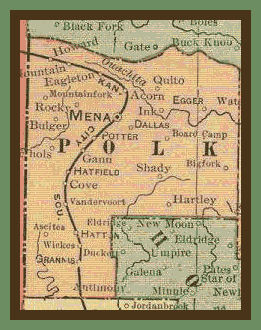
James Reeves, the Polk County emergency coordinator, says the town of Mena, Arkansas, suffered a direct hit from a tornado between 7:30 and 8 p.m. Thursday, April 9, 2009.
The tornado killed three people, and injured 30 people, while it seriously damaged or destroyed 600 homes in that small western Arkansas town.
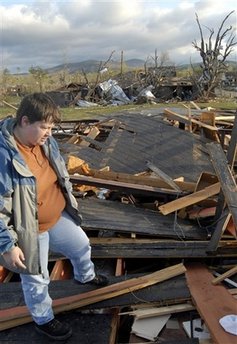
Tammy Key inspects the destroyed Masonic Lodge in Mena Arkansas, on April 10, 2009, where one person was killed after a tornado struck the building on April 9th. Battered residents of this western Arkansas town waited for day light to dig out from a "direct hit" by a tornado that killed three people, and flattened homes and businesses, including a manufacturing plant. (AP Photo/Mike Wintroath)
One of the victims was found in a collapsed house, one in a Masonic Lodge (seven people reportedly sought shelter there), and another person was found in her front yard. Their identities have not been released.
Officials say the tornado heavily damaged the downtown area, including the county courthouse. At least 100 homes were damaged enough to be rendered unsafe.
Gov. Mike Beebe has dispatched 30 National Guard soldiers to help secure the area.
Of course the governor did. Isn't part of your brain thinking outside the box on this one? With no disrespect to the families and friends of the victims, this story shouts that it needs to be investigated from a synchromystic twilight conspiracy point-of-view. Hey, no telling what kinds of top secret papers are flying around from the backrooms of that Masonic lodge and the courthouse, right?
Crazy, am I? Okay, let's insanely speculate here. Let's step back a few feet and beat all the supposedly loonie conspiracy theorists to the punch.
Probably one of the best fictional examples of the media assisting in the coverup of the real news is portrayed in Close Encounters of the Third Kind. You remember the scenes, don't you? To project the coverup of whatever contact seems to be actually happening, via the televised and print media, the US Government says there has been a massive accidental release of a cloud of poisonous gas around the Devil's Tower. Troops are sent in, and long range cameras show enough to make people believe the cover story.
Fictional scenarios like that don't come out of thin air mixed with a late night fantasy nightmare of a good screenwriter. Cover stories have a long and real history. Watergate, anyone? So, let's follow this exercise through today's news.
Now look at this news from Arkansas. All of the key wording is there, rather unbelievably and covertly broadcasting that there's funny business near at hand. Polk, Reeves, a Masonic lodge, phrases like "securing the area" spinning quickly around the name "Mena."
Do you remember the place "Mena" has in conspiracy theory and factual history? Look at how the watered down debunking version makes it even to Wikipedia's entry for the town of Mena.
The film Clinton Chronicles gives the extreme view that became famous as the "Clinton Body Count." They also produced another film on the so-called "Mena connection." You might as well be aware of it if you are going to write a conspiracy screenplay for the next generation:
Someplace between the debunkers and the total nutcases, there is the truth that Mena has been a Mecca of intrigue, mystery, and intelligence operations. (There is mainstream evidence for this, but I'll point to one easily accessible summary in a moment.)
Even that skeptical Wikipedia's Mena entry does note:
Today, "Operation Black Eagle" has come to denote a recent operation in Iraq, and it is interesting that the old Iran-Contra codename has been "overwritten," so to speak. What did it use to mean?
"Operation Black Eagle" covertly used Mena, "a small obscure town in western Arkansas, with a population around 5,000 people. With no tower and monitoring of flights, CIA contract employee Barry Seal found Mena to be the perfect place to fly in and out without being recorded. Seal brought up to $5 billion of cocaine into the USA during the 1980s. Mena was where he based his cargo airline and parked his one of three C123 planes that made trips to Colombia and Nicaragua," mentioned an Ezine article.
Or originally on various sites, there's this one:
"Operation Black Eagle"
What is the reality? Clearly, Mena is a special place.
In the deeply researched, nicely referenced and thorough article "The Crimes of Mena" by Sally Denton and Roger Morris, in the July 1995 issue of Penthouse Magazine, the whole Barry Seal-CIA-DEA-Mena connection is detailed.
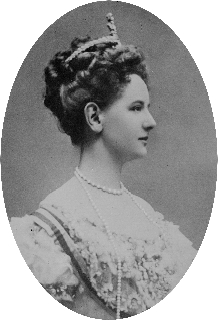
Queen Wilhelmina of The Netherlands
Speaking of Mena, you can understand why it is often overlooked. Here's how Denton and Morris begin their article:
"Nestled in the dense pine and hardwood forests of the Oachita Mountains, some 160 miles west of Little Rock, once thought a refuge for nineteenth-century border outlaws and even a hotbed of Depression-era anarchists, the tiny town has been the locale for persistent reports of drug smuggling, gunrunning, and money laundering tracing to the early eighties, when [Barry] Seal based his aircraft at Mena's Intermountain Regional Airport."
Read the complete article here; it reveals how the story has unfolded of the CIA and DEA involvements and their use of the Mena Airport.
"Seal was smuggling drugs and kept his planes at Mena," The Wall Street Journal reported in 1994.
Barry Seal died in the 1980s, when murdered by Medellin drug cartel hit men in a brutal killing in Baton Rouge, some say with a wink and a nod from elements of the intelligence community.
Barry Seal, the gunrunner, drug trafficker, and covert C.I.A. operative extraordinaire, the man who knew too much, made Mena a household name in conspiracy jargon. He was played by Dennis Hopper in the 1991 HBO Films' Doublecrossed. Perhaps it's time for a rebroadcast of that film?
Or maybe it's time to take a look at Dan Hopsicker's video, Barry and the Boys - The CIA, the Mob and America's Secret History or try to find a copy of the book of the same name that doesn't cost $50 used?
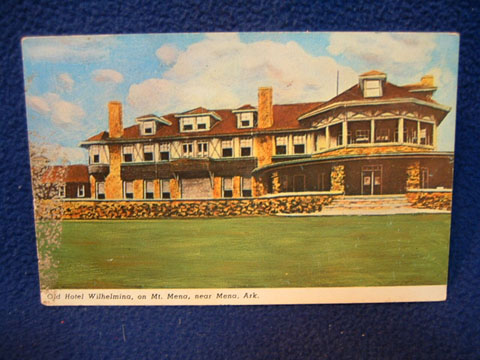
The Old Wilhelmina Hotel (postcard), on Mt. Mena, near Mena, Arkansas.
Bill Grimstad has just penned me this note about the new events in Mena:
Today, there is a Ouachita National Forest Albert Pike Recreation Area, and a Camp Albert Pike Store and Cabin, the latter being located in the Ouachita Mountains, at Caddo Gap, Arkansas, Montgomery County, north of Pike County. Montgomery County was named after Irishman and Freemason, Brigadier Gen. Richard Montgomery, an American Revolutionary War general best remembered for leading the invasion of Canada and dying in the attack on Quebec. Polk County is the location of Mena.
Seriously, why would a tornado target Mena?
Your support is needed and appreciated. Please, today...
James Reeves, the Polk County emergency coordinator, says the town of Mena, Arkansas, suffered a direct hit from a tornado between 7:30 and 8 p.m. Thursday, April 9, 2009.
The tornado killed three people, and injured 30 people, while it seriously damaged or destroyed 600 homes in that small western Arkansas town.
Tammy Key inspects the destroyed Masonic Lodge in Mena Arkansas, on April 10, 2009, where one person was killed after a tornado struck the building on April 9th. Battered residents of this western Arkansas town waited for day light to dig out from a "direct hit" by a tornado that killed three people, and flattened homes and businesses, including a manufacturing plant. (AP Photo/Mike Wintroath)
One of the victims was found in a collapsed house, one in a Masonic Lodge (seven people reportedly sought shelter there), and another person was found in her front yard. Their identities have not been released.
Officials say the tornado heavily damaged the downtown area, including the county courthouse. At least 100 homes were damaged enough to be rendered unsafe.
Gov. Mike Beebe has dispatched 30 National Guard soldiers to help secure the area.
Of course the governor did. Isn't part of your brain thinking outside the box on this one? With no disrespect to the families and friends of the victims, this story shouts that it needs to be investigated from a synchromystic twilight conspiracy point-of-view. Hey, no telling what kinds of top secret papers are flying around from the backrooms of that Masonic lodge and the courthouse, right?
Crazy, am I? Okay, let's insanely speculate here. Let's step back a few feet and beat all the supposedly loonie conspiracy theorists to the punch.
Probably one of the best fictional examples of the media assisting in the coverup of the real news is portrayed in Close Encounters of the Third Kind. You remember the scenes, don't you? To project the coverup of whatever contact seems to be actually happening, via the televised and print media, the US Government says there has been a massive accidental release of a cloud of poisonous gas around the Devil's Tower. Troops are sent in, and long range cameras show enough to make people believe the cover story.
Fictional scenarios like that don't come out of thin air mixed with a late night fantasy nightmare of a good screenwriter. Cover stories have a long and real history. Watergate, anyone? So, let's follow this exercise through today's news.
Now look at this news from Arkansas. All of the key wording is there, rather unbelievably and covertly broadcasting that there's funny business near at hand. Polk, Reeves, a Masonic lodge, phrases like "securing the area" spinning quickly around the name "Mena."
Do you remember the place "Mena" has in conspiracy theory and factual history? Look at how the watered down debunking version makes it even to Wikipedia's entry for the town of Mena.
During [President William Jefferson] Clinton's administration, there were accusations (most notably in the controversial film Clinton Chronicles) that Clinton, during his time as governor of Arkansas, and other high-ranking state officials were involved in some way with alleged illegal cocaine importation, money laundering, and drug-use centered upon the airport in Mena. These allegations have been disputed by several different investigations, including one by the Banking Committee of the U.S. House of Representatives.
The film Clinton Chronicles gives the extreme view that became famous as the "Clinton Body Count." They also produced another film on the so-called "Mena connection." You might as well be aware of it if you are going to write a conspiracy screenplay for the next generation:
Pat Matrisciana, Citizens for an Honest Government, Inc., Integrity Films; and Jeremiah Films also released a 1996 video titled Obstruction of Justice: The Mena Connection. This film claimed Jay Campbell and Kirk Lane, both law enforcement officers, were connected to the murder of two teenage boys. Supposedly these two officers killed the teenagers when they came across a cocaine smuggling ring in Mena, Arkansas Clinton was tied to. The two officers sued against the false claims and Judge C. Arlen Beam of the Eighth Circuit Court of Appeals sided with the officers in an in-depth 26 page decision.
Despite the information above, the case, however, was reversed in 2001. The court ruled the state troopers were public figures and had to prove the producers of the documentary willingly and knowingly disregarded the truth.
Someplace between the debunkers and the total nutcases, there is the truth that Mena has been a Mecca of intrigue, mystery, and intelligence operations. (There is mainstream evidence for this, but I'll point to one easily accessible summary in a moment.)
Even that skeptical Wikipedia's Mena entry does note:
Mena was home to "Operation Black Eagle" of the Iran-Contra affair.
Today, "Operation Black Eagle" has come to denote a recent operation in Iraq, and it is interesting that the old Iran-Contra codename has been "overwritten," so to speak. What did it use to mean?
"Operation Black Eagle" covertly used Mena, "a small obscure town in western Arkansas, with a population around 5,000 people. With no tower and monitoring of flights, CIA contract employee Barry Seal found Mena to be the perfect place to fly in and out without being recorded. Seal brought up to $5 billion of cocaine into the USA during the 1980s. Mena was where he based his cargo airline and parked his one of three C123 planes that made trips to Colombia and Nicaragua," mentioned an Ezine article.
Or originally on various sites, there's this one:
"Operation Black Eagle"
What do the Mena, Arkansas, and Fire Lakes, Nevada, airfields have in common? The answer is they were both secure facilities run by the highly classified National Programs Office (NPO). Other facilities were located at Joppa, Missouri, and Iron Mountain, Texas.
President Ronald Reagan appointed Oliver North as the secret head of this secret organization, and sometime in 1983, the NPO, which is organizationally part of the National Security Agency (NSA), became the effective administrator of a covert plan called Operation Black Eagle.
Operation Black Eagle became a network of 5000 people who made possible the export of arms in the direction of Central America, and the import of drugs from the same direction. According to Navy Lt. Commander Alexander Martin (ret.), he, as an assistant to Major General Richard Secord, worked closely with Oliver North, Richard Secord, Felix Rodriquez, and Jeb Bush (son of Vice-President Bush) in the operation. Different aspects of Black Eagle were consolidated under the office of the Vice President.
What is the reality? Clearly, Mena is a special place.
In the deeply researched, nicely referenced and thorough article "The Crimes of Mena" by Sally Denton and Roger Morris, in the July 1995 issue of Penthouse Magazine, the whole Barry Seal-CIA-DEA-Mena connection is detailed.
Queen Wilhelmina of The Netherlands
Speaking of Mena, you can understand why it is often overlooked. Here's how Denton and Morris begin their article:
"Nestled in the dense pine and hardwood forests of the Oachita Mountains, some 160 miles west of Little Rock, once thought a refuge for nineteenth-century border outlaws and even a hotbed of Depression-era anarchists, the tiny town has been the locale for persistent reports of drug smuggling, gunrunning, and money laundering tracing to the early eighties, when [Barry] Seal based his aircraft at Mena's Intermountain Regional Airport."
Read the complete article here; it reveals how the story has unfolded of the CIA and DEA involvements and their use of the Mena Airport.
"Seal was smuggling drugs and kept his planes at Mena," The Wall Street Journal reported in 1994.
Barry Seal died in the 1980s, when murdered by Medellin drug cartel hit men in a brutal killing in Baton Rouge, some say with a wink and a nod from elements of the intelligence community.
Barry Seal, the gunrunner, drug trafficker, and covert C.I.A. operative extraordinaire, the man who knew too much, made Mena a household name in conspiracy jargon. He was played by Dennis Hopper in the 1991 HBO Films' Doublecrossed. Perhaps it's time for a rebroadcast of that film?
Or maybe it's time to take a look at Dan Hopsicker's video, Barry and the Boys - The CIA, the Mob and America's Secret History or try to find a copy of the book of the same name that doesn't cost $50 used?
The Old Wilhelmina Hotel (postcard), on Mt. Mena, near Mena, Arkansas.
Bill Grimstad has just penned me this note about the new events in Mena:
Seems like there's always something bad or at least bizarre happening there, starting in the late 1800s when European royalty including Queen Wilhelmina (the town name comes from that) traveled all the way to the middle-of-nowhere burg for ceremonies dedicating a hotel of some sort (but who knows what it really was).
A short distance southeast is Caddo Gap where Albert Pike had his famous books-filled retreat, abandoned after the Civil War when he went on the lam. The site is now memorialized by Camp Albert Pike.
Today, there is a Ouachita National Forest Albert Pike Recreation Area, and a Camp Albert Pike Store and Cabin, the latter being located in the Ouachita Mountains, at Caddo Gap, Arkansas, Montgomery County, north of Pike County. Montgomery County was named after Irishman and Freemason, Brigadier Gen. Richard Montgomery, an American Revolutionary War general best remembered for leading the invasion of Canada and dying in the attack on Quebec. Polk County is the location of Mena.
Seriously, why would a tornado target Mena?
Your support is needed and appreciated. Please, today...
Thursday, April 09, 2009
Obelisk: A History
I just received my copy of Obelisk: A History (Cambridge: MIT Press, 2009), written by Brian A. Curran, Anthony Grafton, Pamela O. Long, and Benjamin Weiss, who are four art historians and historians. Let me give you an overview of this wonderful book.

Publications of the Burndy Library shares this publication information:
While not thoroughly and intensely reading Obelisk: A History yet, cover to cover, I have studied each illustration and caption deeply. Then I read multiple parts of the tome, scanned the entire book, while recovering from some apparently kidney stone-related ailments over the weekend. (My empathy to any ancient Egyptians going through that misery as they built these beautiful obelisks.)
In general, I found Obelisk: A History is a grand overview that I must recommend. It is art-oriented, technical, and shares many intriguing details on the known cultural history of obelisks through 295 pages of text, 38 pages of notes, 25 pages of bibliography, five pages of illustration captions for the archival black and white images, and nine pages of an excellent index.
My favorite supporting appendix is the section entitled "The Wandering Obelisks: A Cheat Sheet." This supplementary material tracks the creation and journey a few well-known obelisks have taken to their current locations.
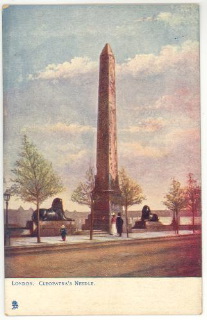
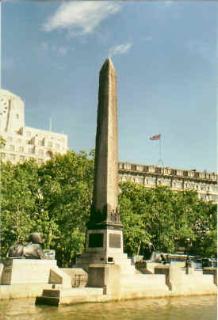
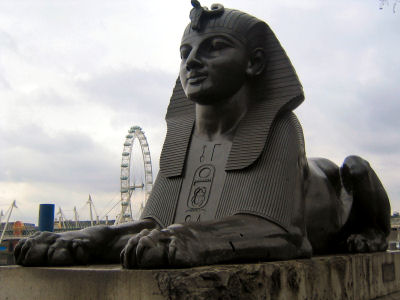
Cleopatra's Needle, London, United Kingdom.
For example, here is one sample entry of the obelisk I was able to view while over in London to appear on the Paul O'Grady Show.
∆∆∆∆∆∆∆∆∆∆∆∆∆∆∆∆∆∆∆∆∆∆∆∆∆∆
LONDON, THAMES EMBANKMENT
• Inscribed for Pharoah Thutmose III (1479-1425 BCE) and raised at Heliopolis
• Moved to Alexandria by Emperor Augustus between 23 and 12 BCE; erected in front of the Caesarium
• Moved to London in 1877-78; erected on the Thames Embankment
• Usually called Cleopatra's Needle
• Pair to the New York obelisk
∆∆∆∆∆∆∆∆∆∆∆∆∆∆∆∆∆∆∆∆∆∆∆∆∆∆
The authors record the travels of 19 obelisks in this interestingly constructed list.

While Obelisk: A History is not as reader friendly and exploratory as Peter Tompkins' book, The Magic of Obelisks, there is much about it that thoughtful researchers, students, and obelisk-obsessed fans will enjoy.

A synchromystic footnote: In Obelisk: A History, Freemasonry is treated somewhat dismissively, and only mentioned on two pages, regarding the gathering of many Masons at the dedication of the New York obelisk (shown above). This is more evidence that this book, in essence, is more a mainstream cultural art history tome than a collection of anomalistic factoids. Also, this means too, that this book avoids touching on the hidden history of how much overlap there has been in recent years between the proper preservation of Egyptian obelisks and Masonic funding.
Nevertheless, Obelisks: A History is a worthy addition to any obelisk resource and research library, of course.
Publications of the Burndy Library shares this publication information:
Nearly every empire worthy of the name—from ancient Rome to the United States—has sought an Egyptian obelisk to place in the center of a ceremonial space. Obelisks—giant standing stones, invented in Ancient Egypt as sacred objects—serve no practical purpose. For much of their history their inscriptions, in Egyptian hieroglyphics, were completely inscrutable. Yet over the centuries dozens of obelisks have made the voyage from Egypt to Rome, Constantinople, and Florence; to Paris, London, and New York. New obelisks and even obelisk-shaped buildings rose as well—the Washington Monument being a noted example. Obelisks, everyone seems to sense, connote some very special sort of power. This beautifully illustrated book traces the fate and many meanings of obelisks across nearly forty centuries—what they meant to the Egyptians, and how other cultures have borrowed, interpreted, understood, and misunderstood them through the years.
In each culture obelisks have taken on new meanings and associations. To the Egyptians, the obelisk was the symbol of a pharaoh’s right to rule and connection to the divine. In ancient Rome, obelisks were the embodiment of Rome's coming of age as an empire. To nineteenth-century New Yorkers, the obelisk in Central Park stood for their country’s rejection of the trappings of empire just as it was itself beginning to acquire imperial power. And to a twentieth-century reader of Freud, the obelisk had anatomical and psychological connotations.
The history of obelisks is a story of technical achievement, imperial conquest, Christian piety and triumphalism, egotism, scholarly brilliance, political hubris, bigoted nationalism, democratic self-assurance, Modernist austerity, and Hollywood kitsch—in short, the story of Western civilization.
While not thoroughly and intensely reading Obelisk: A History yet, cover to cover, I have studied each illustration and caption deeply. Then I read multiple parts of the tome, scanned the entire book, while recovering from some apparently kidney stone-related ailments over the weekend. (My empathy to any ancient Egyptians going through that misery as they built these beautiful obelisks.)
In general, I found Obelisk: A History is a grand overview that I must recommend. It is art-oriented, technical, and shares many intriguing details on the known cultural history of obelisks through 295 pages of text, 38 pages of notes, 25 pages of bibliography, five pages of illustration captions for the archival black and white images, and nine pages of an excellent index.
My favorite supporting appendix is the section entitled "The Wandering Obelisks: A Cheat Sheet." This supplementary material tracks the creation and journey a few well-known obelisks have taken to their current locations.
Cleopatra's Needle, London, United Kingdom.
For example, here is one sample entry of the obelisk I was able to view while over in London to appear on the Paul O'Grady Show.
∆∆∆∆∆∆∆∆∆∆∆∆∆∆∆∆∆∆∆∆∆∆∆∆∆∆
LONDON, THAMES EMBANKMENT
• Inscribed for Pharoah Thutmose III (1479-1425 BCE) and raised at Heliopolis
• Moved to Alexandria by Emperor Augustus between 23 and 12 BCE; erected in front of the Caesarium
• Moved to London in 1877-78; erected on the Thames Embankment
• Usually called Cleopatra's Needle
• Pair to the New York obelisk
∆∆∆∆∆∆∆∆∆∆∆∆∆∆∆∆∆∆∆∆∆∆∆∆∆∆
The authors record the travels of 19 obelisks in this interestingly constructed list.
While Obelisk: A History is not as reader friendly and exploratory as Peter Tompkins' book, The Magic of Obelisks, there is much about it that thoughtful researchers, students, and obelisk-obsessed fans will enjoy.
A synchromystic footnote: In Obelisk: A History, Freemasonry is treated somewhat dismissively, and only mentioned on two pages, regarding the gathering of many Masons at the dedication of the New York obelisk (shown above). This is more evidence that this book, in essence, is more a mainstream cultural art history tome than a collection of anomalistic factoids. Also, this means too, that this book avoids touching on the hidden history of how much overlap there has been in recent years between the proper preservation of Egyptian obelisks and Masonic funding.
Nevertheless, Obelisks: A History is a worthy addition to any obelisk resource and research library, of course.
Passover 1865: Lincoln Assassination
Events out of context often float adrift in time. April 14, 1865 has become important as the day that John Wilkes Booth shot Abraham Lincoln. For Americans of the Jewish faith, it was also Passover.
I share the following snippet to revisit how it felt during these under-discussed moments of the War Between the States.
Chapters in American Jewish History
Of Civil Seders in the Civil War
For American Jewry during the Civil War, the Passover story was especially powerful. Northern soldiers saw clear parallels between the Union freeing the South's slaves and Moses leading the ancient Hebrews out of Egypt. However, creating a seder during in a war zone requires flexibility and creativity.
In 1862, the Jewish Messenger published an account by J. A. Joel of the 23rd Ohio Volunteer Regiment of a seder celebrated by Union soldiers in Fayette, West Virginia. Joel and 20 other Jewish soldiers were granted leave to observe Passover. A soldier home on leave in Cincinnati shipped matzot and hagaddot to his colleagues. Joel wrote:
Yankee ingenuity indeed! Historian Bertram Korn observes, "It must have been quite a sight: these twenty men gathered together in a crude and hastily-built log hut, their weapons at their side, prepared as in Egypt-land for all manner of danger, singing the words of praise and faith in the ancient language of Israel."
The seder proceeded smoothly until the eating of the bitter herbs. Joel recounted:
More problematic was the situation of Union soldiers who, unable to form their own seders, were forced to "fraternize" with local Jews. Myer Levy of Philadelphia, for example, was in a Virginia town one Passover late in the war when he saw a young boy sitting on his front steps eating a piece of matzo. According to Korn, when Levy "asked the boy for a piece, the child fled indoors, shouting at the top of his lungs, "Mother, there's a damn Yankee Jew outside!" The boy's mother invited Levy to seder that night. One wonders how the Virginian family and the Yankee soldier each interpreted the hagadah portions describing the evils of bondage.
On the eve of the fifth day of Passover (April 14), 1865, Abraham Lincoln was shot and died of his wounds in the early morning of April 15th, which had already been scheduled as a national day of prayer to mark the end of the Civil War. Jews across the land were gathering in synagogues to give thanks. When news of Lincoln's death arrived, Korn notes, the synagogue altars were quickly draped in black and, instead of Passover melodies, the congregations chanted Yom Kippur hymns. Rabbis set aside their sermons and wept openly at their pulpits, as did their congregants. Lincoln had been protective of American Jewry, overturning General Grant's infamous General Order #11 expelling Jews from the Department of the Tennessee and supporting legislation allowing Jewish chaplains to serve in the military. The Jewish Record drew the analogy between Lincoln not having lived to see the reconciliation of North and South and Moses dying on Mount Pisgah before he saw the Israelites enter the Promised Land.
When no American armed forces are in combat anywhere in the world, it is easy to forget how difficult it can be for Jewish soldiers to serve their country while maintaining the traditions that beautify Judaism. Nevertheless, for Jewish Union soldiers fighting between 1861 and 1865 to free others from slavery, the Passover parallels must have made each seder particularly sweet and meaningful.
I share the following snippet to revisit how it felt during these under-discussed moments of the War Between the States.
Chapters in American Jewish History
Of Civil Seders in the Civil War
For American Jewry during the Civil War, the Passover story was especially powerful. Northern soldiers saw clear parallels between the Union freeing the South's slaves and Moses leading the ancient Hebrews out of Egypt. However, creating a seder during in a war zone requires flexibility and creativity.
In 1862, the Jewish Messenger published an account by J. A. Joel of the 23rd Ohio Volunteer Regiment of a seder celebrated by Union soldiers in Fayette, West Virginia. Joel and 20 other Jewish soldiers were granted leave to observe Passover. A soldier home on leave in Cincinnati shipped matzot and hagaddot to his colleagues. Joel wrote:
We . . . sen[t] parties to forage in the country [for Passover food] while a party stayed to build a log hut for the services. . . We obtained two kegs of cider, a lamb, several chickens and some eggs. Horseradish or parsley we could not obtain, but in lieu we found a weed whose bitterness, I apprehend, exceeded anything our forefathers "enjoyed.?"?
We had the lamb, but did not know what part was to represent it at the table; but Yankee ingenuity prevailed, and it was decided to cook the whole and put it on the table, then we could dine off it, and be sure we got the right part.
The necessaries for the choroutzes we could not obtain, so we got a brick which, rather hard to digest, reminded us, by looking at it, for what purpose it was intended.
Yankee ingenuity indeed! Historian Bertram Korn observes, "It must have been quite a sight: these twenty men gathered together in a crude and hastily-built log hut, their weapons at their side, prepared as in Egypt-land for all manner of danger, singing the words of praise and faith in the ancient language of Israel."
The seder proceeded smoothly until the eating of the bitter herbs. Joel recounted:
We all had a large portion of the herb ready to eat at the moment I said the blessing; each [ate] his portion, when horrors! What a scene ensued . . . The herb was very bitter and very fiery like Cayenne pepper, and excited our thirst to such a degree that we forgot the law authorizing us to drink only four cups, and . . . we drank up all the cider. Those that drank more freely became excited and one thought he was Moses, another Aaron, and one had the audacity to call himself a Pharaoh. The consequence was a skirmish, with nobody hurt, only Moses, Aaron and Pharaoh had to be carried to the camp, and there left in the arms of Morpheus.
More problematic was the situation of Union soldiers who, unable to form their own seders, were forced to "fraternize" with local Jews. Myer Levy of Philadelphia, for example, was in a Virginia town one Passover late in the war when he saw a young boy sitting on his front steps eating a piece of matzo. According to Korn, when Levy "asked the boy for a piece, the child fled indoors, shouting at the top of his lungs, "Mother, there's a damn Yankee Jew outside!" The boy's mother invited Levy to seder that night. One wonders how the Virginian family and the Yankee soldier each interpreted the hagadah portions describing the evils of bondage.
On the eve of the fifth day of Passover (April 14), 1865, Abraham Lincoln was shot and died of his wounds in the early morning of April 15th, which had already been scheduled as a national day of prayer to mark the end of the Civil War. Jews across the land were gathering in synagogues to give thanks. When news of Lincoln's death arrived, Korn notes, the synagogue altars were quickly draped in black and, instead of Passover melodies, the congregations chanted Yom Kippur hymns. Rabbis set aside their sermons and wept openly at their pulpits, as did their congregants. Lincoln had been protective of American Jewry, overturning General Grant's infamous General Order #11 expelling Jews from the Department of the Tennessee and supporting legislation allowing Jewish chaplains to serve in the military. The Jewish Record drew the analogy between Lincoln not having lived to see the reconciliation of North and South and Moses dying on Mount Pisgah before he saw the Israelites enter the Promised Land.
When no American armed forces are in combat anywhere in the world, it is easy to forget how difficult it can be for Jewish soldiers to serve their country while maintaining the traditions that beautify Judaism. Nevertheless, for Jewish Union soldiers fighting between 1861 and 1865 to free others from slavery, the Passover parallels must have made each seder particularly sweet and meaningful.
Wednesday, April 08, 2009
Korean Retreat Shooting
A gunman opened fire at a remote Korean Christian retreat center in Temecula, California, Tuesday, April 7, 2009, night, leaving one person dead and at least three people injured, authorities said.
UPDATE:
Authorities in Southern California have identified a man they say opened fire at a Korean religious retreat, killing a woman and wounding a man before being beaten and disarmed in a fight with two other people.
Riverside County sheriff's Capt. Mitchell Alm says the man is 69-year-old John Chong, a volunteer who lives at the Kkottongnae (GOHT'-dohng-nay) Retreat Camp in Temecula, about 85 miles southeast of Los Angeles. He was earlier believed to be 72 years old.
Chong is hospitalized and is unconscious.
Authorities have no information on the motive for the violence that broke out Tuesday night.
Alm says the man who was shot is in serious condition and the two other people who were injured in the fight with Chong also remain hospitalized but their conditions are not serious.
AP's earlier story is below.
Investigators are trying to determine why a 72-year-old man opened fire at a remote Korean Christian retreat, killing a woman and wounding three other people before being disarmed during a struggle with some of his victims, authorities said Wednesday.
The man was hospitalized in guarded condition, Riverside County sheriff's Detective Jesse Martinez said. His identity was not immediately released.
Detectives were puzzling over the attacker's motives for the Tuesday shootings at the Kkottongnae (GOHT'-dohng-nay) Retreat Camp in Temecula, about 85 miles southeast of Los Angeles.
Investigators hadn't determined if there was any relationship between the victims and the gunman, and having trouble piecing together exactly what transpired because many victims speak only Korean.
"That language barrier, that's the key to figuring out what happened," sheriff's spokesman Dennis Gutierrez said.
The gunman, armed with a revolver, attacked a couple in a cabin, killing the unidentified woman with a single shot and wounding a man in the chest, sheriff's Sgt. Michael Lujan said.
He then tried to kill a man and a woman in another cabin, firing two shots in the air before they managed to disarm him following a fist fight that injured all three, knocked over furniture and damaged a door, Lujan said.
"It was hand-to-hand," he said.
The remaining victims, all older than 50, were hospitalized and expected to live, Lujan said.
The campground, located along an isolated road amid rolling hills, has eight to 10 cabins for visitors and semi-permanent residents.
The retreat is one of four U.S. branches of the Kkottongnae Brothers and Sisters of Jesus, a Roman Catholic organization dedicated to serving the poor and homeless. It was founded in the city of Cheongju, South Korea, by Father Oh Woong Jin in 1976.
Kkottongnae means "flower village" in Korean.
"We have some nuns that are very distraught," Gutierrez said. "
A woman who answered the phone at the group's Lynwood branch about 10 miles from downtown Los Angeles said she did not speak English well and declined to discuss the shooting.
At the group's headquarters in Eumseong, South Korea, south of Seoul, spokesman Brother Matthew Park said he has been unable to get through to branch officials in California and only learned about the shooting through news reports.
The campground, previously used as a summer camp before the group bought it, was marked by a single white sign in English and Korean on the side of the winding road in remote southeast Riverside County.
Several women from the retreat sat wrapped in blankets outside the law enforcement lines.
"This is the last place this is supposed to happen," Gutierrez said, reported the AP.
UPDATE:
Authorities in Southern California have identified a man they say opened fire at a Korean religious retreat, killing a woman and wounding a man before being beaten and disarmed in a fight with two other people.
Riverside County sheriff's Capt. Mitchell Alm says the man is 69-year-old John Chong, a volunteer who lives at the Kkottongnae (GOHT'-dohng-nay) Retreat Camp in Temecula, about 85 miles southeast of Los Angeles. He was earlier believed to be 72 years old.
Chong is hospitalized and is unconscious.
Authorities have no information on the motive for the violence that broke out Tuesday night.
Alm says the man who was shot is in serious condition and the two other people who were injured in the fight with Chong also remain hospitalized but their conditions are not serious.
AP's earlier story is below.
Investigators are trying to determine why a 72-year-old man opened fire at a remote Korean Christian retreat, killing a woman and wounding three other people before being disarmed during a struggle with some of his victims, authorities said Wednesday.
The man was hospitalized in guarded condition, Riverside County sheriff's Detective Jesse Martinez said. His identity was not immediately released.
Detectives were puzzling over the attacker's motives for the Tuesday shootings at the Kkottongnae (GOHT'-dohng-nay) Retreat Camp in Temecula, about 85 miles southeast of Los Angeles.
Investigators hadn't determined if there was any relationship between the victims and the gunman, and having trouble piecing together exactly what transpired because many victims speak only Korean.
"That language barrier, that's the key to figuring out what happened," sheriff's spokesman Dennis Gutierrez said.
The gunman, armed with a revolver, attacked a couple in a cabin, killing the unidentified woman with a single shot and wounding a man in the chest, sheriff's Sgt. Michael Lujan said.
He then tried to kill a man and a woman in another cabin, firing two shots in the air before they managed to disarm him following a fist fight that injured all three, knocked over furniture and damaged a door, Lujan said.
"It was hand-to-hand," he said.
The remaining victims, all older than 50, were hospitalized and expected to live, Lujan said.
The campground, located along an isolated road amid rolling hills, has eight to 10 cabins for visitors and semi-permanent residents.
The retreat is one of four U.S. branches of the Kkottongnae Brothers and Sisters of Jesus, a Roman Catholic organization dedicated to serving the poor and homeless. It was founded in the city of Cheongju, South Korea, by Father Oh Woong Jin in 1976.
Kkottongnae means "flower village" in Korean.
"We have some nuns that are very distraught," Gutierrez said. "
A woman who answered the phone at the group's Lynwood branch about 10 miles from downtown Los Angeles said she did not speak English well and declined to discuss the shooting.
At the group's headquarters in Eumseong, South Korea, south of Seoul, spokesman Brother Matthew Park said he has been unable to get through to branch officials in California and only learned about the shooting through news reports.
The campground, previously used as a summer camp before the group bought it, was marked by a single white sign in English and Korean on the side of the winding road in remote southeast Riverside County.
Several women from the retreat sat wrapped in blankets outside the law enforcement lines.
"This is the last place this is supposed to happen," Gutierrez said, reported the AP.
Tuesday, April 07, 2009
Alabama Mass Violence: 9 Dead
Five new shooting deaths were discovered in rural Alabama, April 7, 2009, which follow in the wake of the stabbing deaths of four people in a home in Hueytown, near Birmingham, on March 7, and the shooting spree deaths of 10 people on March 10 by a gunman in south Alabama who also took his own life.
One question I have: Has the media decided that everyone wishes to read indepth details about every new murder-suicide that occurs?
Events like this happened in the past routinely, quietly and locally, but now each one has been elevated to a national story. As a demonstration of this, I reprint the following example.
The Associated Press covered this expanded domestic violence incident today from near Priceville, Alabama:

One question I have: Has the media decided that everyone wishes to read indepth details about every new murder-suicide that occurs?
Events like this happened in the past routinely, quietly and locally, but now each one has been elevated to a national story. As a demonstration of this, I reprint the following example.
The Associated Press covered this expanded domestic violence incident today from near Priceville, Alabama:
A man facing a divorce trial shot and killed his estranged wife, their teenage daughter and two other relatives in rural north Alabama before returning to his home in a nearby town and killing himself, authorities said Tuesday [April 7, 2009].
Kevin Garner's body was found Tuesday afternoon near his Priceville home, which burned to the ground overnight. His divorce trial was to start Wednesday [April 8, 2009].
Garner apparently shot himself in the chest, said Travis Clemmons, chief investigator for the sheriff's office in Lauderdale County, where the four bodies were found earlier in the day in a home in Green Hill, a small community near the Tennessee line.
The victims were identified as Garner's estranged wife, Tammy, 40; their 16-year-old daughter, Chelsie; Garner's sister, Karen Beaty of Illinois; and Beaty's 11-year-old son, whose name was not released.
Investigators said the four were shot, apparently with a handgun, around midnight Monday. They did not know if Kevin Garner was licensed to carry a firearm.
It was one of eight mass shootings around the country and the third in Alabama in the last month that have left grief-stricken communities in shock.
Clemmons said a neighbor visiting the Green Hill house Tuesday morning saw a body through the door and called authorities.
Court officials said the Garners were in court Monday in advance of the trial and nothing seemed unusual.
"I just can't understand it," said Clemmons, "and with a 16-year-old and an 11-year-old kid, there's nothing rational about it."
In the divorce file, Tammy Garner sought custody of their daughter and alleged that her husband "has been both physically and emotionally abusive."
Kevin Garner accused her of adultery and of taking $38,000 out of their joint bank account when they separated May 27.
Michael Corley, chief deputy in Morgan County, where Garner's body was found, said Beaty and her son might have been on the witness list for the divorce case. He said investigators believe Garner was "unhappy" with proceedings and "after court adjourned it appears he set some of his plans in motion."
He said it appears the divorce was filed about a year ago but was just now coming up on the court docket.
"Now that we know the final end of it all it's just going back and putting the pieces together," Corley said. "We feel like this was solely a homicide, that he killed them, then went to the home. He used some type of accelerant that caused the home to burn very, very quickly, then walked about 200 yards back into a wooded area behind the house and took his life."
Jerry Knight, an attorney who represented Kevin Garner in the divorce case, said in an e-mail to The Associated Press that Garner "had a terrific work ethic and value system. I was terribly shocked and saddened by this unexpected tragedy."
Kevin Garner had worked at a Decatur chemical plant and Tammy Garner at a Huntsville department store.
Along with Garner's two-story house, which collapsed in the fire, a green Subaru Legacy belonging to Tammy Garner was found burned in the Morgan County community of Somerville, less than 10 miles from the burned house.
by Jay Reeves
Landshut Shootings & Suicide
Updated Insight: While this is disturbing news, it appears to be an extension of a domestic violence situation into a courthouse. Two people are confirmed dead, one man and a woman he knew.
___ Earlier information shared___
At least two people were killed and several more injured by a gunman in a courthouse in the southern German town of Landshut, Bavaria, on Tuesday, April 7, 2009, a police spokesman said.
Leonard Mayer, spokesman for police, told N-TV television that authorities believed the gunman had killed himself.
"There are two confirmed dead, we do not yet know if the shooter was among them," Mayer said. He was unaware of any warning: "It came out of the blue."
Mayer said the assailant, believed to be aged 60, had apparently killed himself and wounded others in a hail of bullets unleashed during what was reportedly a hearing in an inheritance case.
It was not immediately clear whether the gunman was involved in the case being heard before the court or was simply a spectator.
"The sniper is no longer on the move," Mayer said. "The situation has calmed down."
Another police spokesman, Thomas Ploessl, told news channel N24 the courthouse in the city about 60 kilometres (40 miles) northeast of Munich had been evacuated and barricaded.
Matthias Loew from local radio station Radio Trausnitz said the shooting took place at around 10:15 local time (0815 GMT).
"The talk was of four seriously wounded," Loew said, although authorities have not confirmed the number.
The court employs 128 people including 34 judges, according to its website.
The incident comes after a 17-year-old gunned down 15 people in the German town of Winnenden, on Wednesday, March 11, 2009 (exactly four weeks ago tomorrow).
The teenage killer shot himself when police tried to apprehend him.
#########################
A little background on Landshut:
Landshut (Austro-Bavarian: Landshuad) is a city in Bavaria in the south-east of Germany, belonging to both Eastern and Southern Bavaria. Situated on the banks of the River Isar, Landshut acts is the capital of Lower Bavaria, one of the seven administrative regions of the Free State of Bavaria.
During World War II, a subcamp of Dachau concentration camp was located in the city to provide slave labour to local industry.
Owing to its characteristic coat of arms, the city is also often called "Three Helmets City" (German: Dreihelmenstadt).
Landshut lies in the centre of Lower Bavaria, and is part of the Alpine foothills. The River Isar runs through the city centre. Landshut is about 72 kilometres (45 mi) northeast of Munich.
The city is of national importance because of its predominantly Gothic architecture within the historic city center, especially Trausnitz Castle and the Church of Saint Martin featuring the world's tallest brick-tower. Among other Gothic architecture are the churches St. Jodok and Holy Spirit, but also the Town Hall and the Ländtor, the only still existing gate of the medieval fortification.
This information will be updated as more news develops.
Please...if everyone sent in $10....the impact would be incredible:
___ Earlier information shared___
At least two people were killed and several more injured by a gunman in a courthouse in the southern German town of Landshut, Bavaria, on Tuesday, April 7, 2009, a police spokesman said.
Leonard Mayer, spokesman for police, told N-TV television that authorities believed the gunman had killed himself.
"There are two confirmed dead, we do not yet know if the shooter was among them," Mayer said. He was unaware of any warning: "It came out of the blue."
Mayer said the assailant, believed to be aged 60, had apparently killed himself and wounded others in a hail of bullets unleashed during what was reportedly a hearing in an inheritance case.
It was not immediately clear whether the gunman was involved in the case being heard before the court or was simply a spectator.
"The sniper is no longer on the move," Mayer said. "The situation has calmed down."
Another police spokesman, Thomas Ploessl, told news channel N24 the courthouse in the city about 60 kilometres (40 miles) northeast of Munich had been evacuated and barricaded.
Matthias Loew from local radio station Radio Trausnitz said the shooting took place at around 10:15 local time (0815 GMT).
"The talk was of four seriously wounded," Loew said, although authorities have not confirmed the number.
The court employs 128 people including 34 judges, according to its website.
The incident comes after a 17-year-old gunned down 15 people in the German town of Winnenden, on Wednesday, March 11, 2009 (exactly four weeks ago tomorrow).
The teenage killer shot himself when police tried to apprehend him.
#########################
A little background on Landshut:
Landshut (Austro-Bavarian: Landshuad) is a city in Bavaria in the south-east of Germany, belonging to both Eastern and Southern Bavaria. Situated on the banks of the River Isar, Landshut acts is the capital of Lower Bavaria, one of the seven administrative regions of the Free State of Bavaria.
During World War II, a subcamp of Dachau concentration camp was located in the city to provide slave labour to local industry.
Owing to its characteristic coat of arms, the city is also often called "Three Helmets City" (German: Dreihelmenstadt).
Landshut lies in the centre of Lower Bavaria, and is part of the Alpine foothills. The River Isar runs through the city centre. Landshut is about 72 kilometres (45 mi) northeast of Munich.
The city is of national importance because of its predominantly Gothic architecture within the historic city center, especially Trausnitz Castle and the Church of Saint Martin featuring the world's tallest brick-tower. Among other Gothic architecture are the churches St. Jodok and Holy Spirit, but also the Town Hall and the Ländtor, the only still existing gate of the medieval fortification.
This information will be updated as more news develops.
Please...if everyone sent in $10....the impact would be incredible:
Sunday, April 05, 2009
A Week Of Body Counts
I predicted an increasing build-up in copycat activity as the calendar ticks off days moving towards April 20, 2009, the tenth anniversary of Columbine.
Here's the week that just was (click on the dates for full details):
Saturday, March 27.
A 23-year-old beheads his younger sister Bianca, 5, and kills Samantha Revelus, 17, at their home in Milton, Massachusetts. The killer is killed by police officers.
Sunday, March 29.
Seven patients and a nurse were killed during a Sunday morning shooting at a Carthage, North Carolina, nursing home. The 45-year-old man accused of carrying out the attack was shot by a police officer, and his condition "is currently unknown."
Friday, April 3.
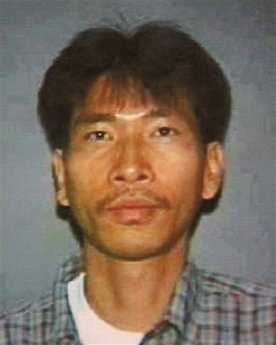
A 41-year-old gunman barricaded the back door of a community center with his car and then opened fire on a room full of immigrants taking a citizenship class Friday, killing 13 people before dying by suicide, in Binghamton, New York.
Saturday, April 4.
The bodies of five children between the ages of 7 and 16 years old and their father were found dead in separate locations south of Seattle, near Orting, Washington State on Saturday. The father apparently killed his children before dying by suicide near a casino some distance away from their home.
Three Pittsburgh police officers responding to a domestic-disturbance call on the morning of Saturday, were killed when a man, who is hiding and waiting, armed with an AK-47, opened fire on them.
Other very recent shootings include these:

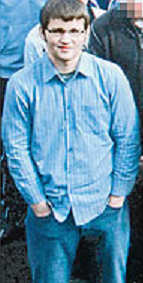
A gunman (pictured above) killed 10 people and himself in Samson, Alabama; shootings that began with a traffic stop in Oakland, California, left four police officers and the gunman dead; an apparent murder-suicide in Santa Clara, California, left six dead. At an Illinois church, a man shot and killed the pastor and stabbed two parishioners, and a 17-year-old (below) in Germany killed 15 people in two small towns before dying in a shootout with police.
Updates: It appears I'm not the only one with the notion that an overview is in order. Thanks to Patrick Huyghe who told me about "No End In Sight," after I wrote the above.
Another overview article has been published on Monday: "Deadly Rampages Rack the Nation," Wall Street Journal, April 6, 2009.
Yet another such long discussion has been published, and it notes the role of the media and other factors.
The AP detailed it this way, later on April 5th:
A string of shootings in the U.S. in the last month alone has claimed the lives of 53 people:
_MARCH 10, SAMSON, Ala. — A gunman kills 10 people and commits suicide in a rampage that spanned two dozen miles across the southern Alabama countryside. Police say Michael McLendon had struggled to keep a job and left behind lists of employers and co-workers he believed had wronged him.
_MARCH 22, OAKLAND, Calif. — A man pulled over in a routine traffic stop fatally shoots two officers and then kills two more in a gunfight in which the suspect was also killed. Relatives say Lovelle Mixon, 26, had been frustrated about not finding work and feared returning to jail.
_MARCH 29, SANTA CLARA, Calif. — A man shoots and kills his two children and three other relatives, then kills himself at a family housewarming party in an upscale neighborhood. Investigators don't yet know the motive of Devan Kalathat, a 42-year-old engineer at Yahoo.
_MARCH 29, CARTHAGE, N.C. — A man opens fire in a nursing home and kills seven elderly residents and a nurse who cared for them. Investigators say Robert Stewart, 45, apparently had targeted an estranged wife, a nurse's assistant who escaped by hiding in a bathroom.
_APRIL 3, BINGHAMTON, N.Y. — A gunman bursts into an immigrant center and kills 13 people before killing himself. Police say Jiverly Wong, a 41-year-old Vietnamese immigrant, was apparently upset about losing his job and about people picking on him for his limited English.
_APRIL 4, PITTSBURGH — A gunman wearing a bulletproof vest opens fire on officers responding to a domestic disturbance call, killing three of them. Police say Richard Poplawski, 23, had been upset about losing his job and feared the Obama administration was poised to ban guns.
_APRIL 4, GRAHAM, Wash. — A man fatally shoots his five children in their mobile home and then takes his own life in his car miles away. Relatives identified the father as James Harrison. A motive was not yet known.
Support my research, please, and today....click below:
Thank you.
Here's the week that just was (click on the dates for full details):
Saturday, March 27.
A 23-year-old beheads his younger sister Bianca, 5, and kills Samantha Revelus, 17, at their home in Milton, Massachusetts. The killer is killed by police officers.
Sunday, March 29.
Seven patients and a nurse were killed during a Sunday morning shooting at a Carthage, North Carolina, nursing home. The 45-year-old man accused of carrying out the attack was shot by a police officer, and his condition "is currently unknown."
Friday, April 3.
A 41-year-old gunman barricaded the back door of a community center with his car and then opened fire on a room full of immigrants taking a citizenship class Friday, killing 13 people before dying by suicide, in Binghamton, New York.
Saturday, April 4.
The bodies of five children between the ages of 7 and 16 years old and their father were found dead in separate locations south of Seattle, near Orting, Washington State on Saturday. The father apparently killed his children before dying by suicide near a casino some distance away from their home.
Three Pittsburgh police officers responding to a domestic-disturbance call on the morning of Saturday, were killed when a man, who is hiding and waiting, armed with an AK-47, opened fire on them.
Other very recent shootings include these:
A gunman (pictured above) killed 10 people and himself in Samson, Alabama; shootings that began with a traffic stop in Oakland, California, left four police officers and the gunman dead; an apparent murder-suicide in Santa Clara, California, left six dead. At an Illinois church, a man shot and killed the pastor and stabbed two parishioners, and a 17-year-old (below) in Germany killed 15 people in two small towns before dying in a shootout with police.
Updates: It appears I'm not the only one with the notion that an overview is in order. Thanks to Patrick Huyghe who told me about "No End In Sight," after I wrote the above.
Another overview article has been published on Monday: "Deadly Rampages Rack the Nation," Wall Street Journal, April 6, 2009.
Yet another such long discussion has been published, and it notes the role of the media and other factors.
The AP detailed it this way, later on April 5th:
A string of shootings in the U.S. in the last month alone has claimed the lives of 53 people:
_MARCH 10, SAMSON, Ala. — A gunman kills 10 people and commits suicide in a rampage that spanned two dozen miles across the southern Alabama countryside. Police say Michael McLendon had struggled to keep a job and left behind lists of employers and co-workers he believed had wronged him.
_MARCH 22, OAKLAND, Calif. — A man pulled over in a routine traffic stop fatally shoots two officers and then kills two more in a gunfight in which the suspect was also killed. Relatives say Lovelle Mixon, 26, had been frustrated about not finding work and feared returning to jail.
_MARCH 29, SANTA CLARA, Calif. — A man shoots and kills his two children and three other relatives, then kills himself at a family housewarming party in an upscale neighborhood. Investigators don't yet know the motive of Devan Kalathat, a 42-year-old engineer at Yahoo.
_MARCH 29, CARTHAGE, N.C. — A man opens fire in a nursing home and kills seven elderly residents and a nurse who cared for them. Investigators say Robert Stewart, 45, apparently had targeted an estranged wife, a nurse's assistant who escaped by hiding in a bathroom.
_APRIL 3, BINGHAMTON, N.Y. — A gunman bursts into an immigrant center and kills 13 people before killing himself. Police say Jiverly Wong, a 41-year-old Vietnamese immigrant, was apparently upset about losing his job and about people picking on him for his limited English.
_APRIL 4, PITTSBURGH — A gunman wearing a bulletproof vest opens fire on officers responding to a domestic disturbance call, killing three of them. Police say Richard Poplawski, 23, had been upset about losing his job and feared the Obama administration was poised to ban guns.
_APRIL 4, GRAHAM, Wash. — A man fatally shoots his five children in their mobile home and then takes his own life in his car miles away. Relatives identified the father as James Harrison. A motive was not yet known.
Support my research, please, and today....click below:
Thank you.
Saturday, April 04, 2009
Maine Monument
The sinking of the Maine on February 15, 1898 precipitated the Spanish-American War and also popularized the phrase Remember the Maine, to Hell with Spain! It became as well-known as the battle cry Remember the Alamo!
The cause of the explosion that sank the Maine remains an unsolved mystery.
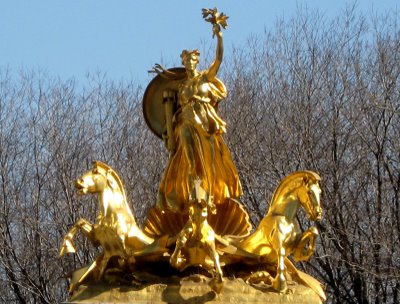
Christopher Knowles' Secret Sun blog mentions today New York City's Maine Monument. Knowles made me a bit curious about the placement of this highly significant piece of Masonic art, especially as it is connected to the name of my resident state. Since I did a little digging on this, I figured I would share some of this here with you.
This monument is clearly Masonic. In the article about the initial construction, in the February 16, 1912 issue of the New York Times, it says,
"Just fourteen years after the destruction of the battleship Maine in Havana harbor, and thirteen after the inception of the project to build a monument in commemoration of the 266 sailors who perished in the disaster, the cornerstone of the Maine Monument was laid yesterday afternoon at the Columbus Circle entrance to Central Park, facing the Columbus Monument."
The rite of the laying of the cornerstone was conducted by Admiral Loutzs with a group of Masons.
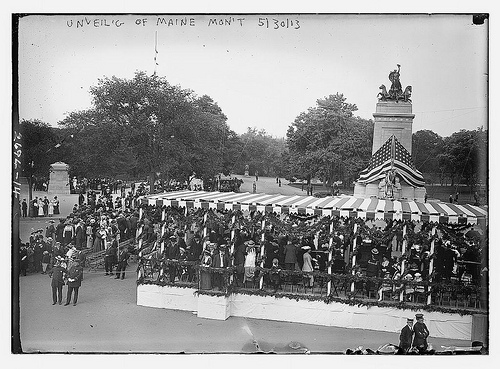
Columbus Circle's Maine Monument is dedicated to the 260 sailors killed when the battleship Maine was sunk in Havana harbor in 1898. It has atop it, cast in bronze from guns recovered from the Maine herself, a female figure, Columbia Triumphant, symbolizing American sea power and embodying in sculpture the thesis of a then-popular book, Alfred Thayer Mahan's The Influence of Sea Power upon History.
As Chris Knowles writes, it is William Phelps Eno (1858-1945) who is responsible for the overall design of Columbus Circle, and as Knowles also notes, and Wikipedia puts bluntly, Eno "graduated from Yale University in 1882, where he had been a member of Skull and Bones." Eno furthermore designed roadways in London and the circular traffic that runs around the Arc de Triomphe in Paris.
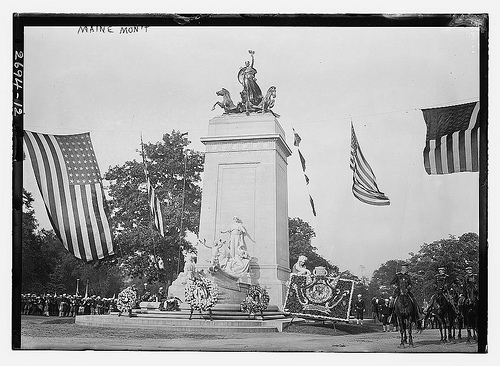
The United States government has the following historical information on Central Park's Maine Monument, in public domain:
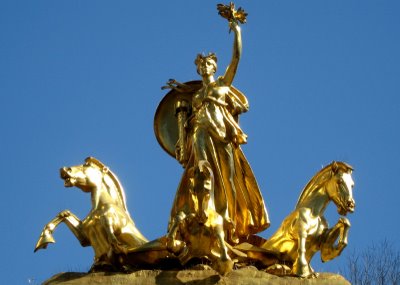
In New York City, this Maine monument's lady Columbia Triumphant, of course, is overshadowed by Liberty Enlightening the World - the Statue of Liberty in New York Harbor. Dedicated in 1886, Frédéric-Auguste Bartholdi's copper statue, a deeply symbolic gift from the people of France, is without question the most famous public sculpture in the United States, perhaps in the world. The form of "Lady Liberty" is Roman, though with a superb transmutation of symbols. Where, for example, the expectation is this classically gowned female would be holding a scepter, instead, she grips the Torch of Enlightenment - of Liberty. Her crown, with its seven points, represents the seven continents. In her left arm she cradles a tablet, said to be of Masonic origin, inscribed with the date July 4, 1776.
The hidden is in plain sight.
Thank You.
The cause of the explosion that sank the Maine remains an unsolved mystery.
Christopher Knowles' Secret Sun blog mentions today New York City's Maine Monument. Knowles made me a bit curious about the placement of this highly significant piece of Masonic art, especially as it is connected to the name of my resident state. Since I did a little digging on this, I figured I would share some of this here with you.
This monument is clearly Masonic. In the article about the initial construction, in the February 16, 1912 issue of the New York Times, it says,
"Just fourteen years after the destruction of the battleship Maine in Havana harbor, and thirteen after the inception of the project to build a monument in commemoration of the 266 sailors who perished in the disaster, the cornerstone of the Maine Monument was laid yesterday afternoon at the Columbus Circle entrance to Central Park, facing the Columbus Monument."
The rite of the laying of the cornerstone was conducted by Admiral Loutzs with a group of Masons.
Columbus Circle's Maine Monument is dedicated to the 260 sailors killed when the battleship Maine was sunk in Havana harbor in 1898. It has atop it, cast in bronze from guns recovered from the Maine herself, a female figure, Columbia Triumphant, symbolizing American sea power and embodying in sculpture the thesis of a then-popular book, Alfred Thayer Mahan's The Influence of Sea Power upon History.
As Chris Knowles writes, it is William Phelps Eno (1858-1945) who is responsible for the overall design of Columbus Circle, and as Knowles also notes, and Wikipedia puts bluntly, Eno "graduated from Yale University in 1882, where he had been a member of Skull and Bones." Eno furthermore designed roadways in London and the circular traffic that runs around the Arc de Triomphe in Paris.
The United States government has the following historical information on Central Park's Maine Monument, in public domain:
The Maine Monument stands at Merchant’s Gate, a park entrance named in 1862 to recognize the importance of commerce and business in New York City. The monument honors the 258 American sailors who perished when the battleship Maine exploded in the harbor of Havana, Cuba, then under Spanish rule. The causes of the February 15, 1898 explosion remain unclear, but by April of that year, Spain had declared war on the United States.
The Spanish-American War ended in December of 1898 with the signing of the Treaty of Paris. This agreement, a landmark in the United States’ rise to international power, released Cuba from Spanish rule and ceded Guam, Puerto Rico, Hawaii, and the Philippines to the jurisdiction of the United States. Cuba, nominally independent after the war, was forced to include a clause known as the Platt Amendment in its new constitution. This amendment allowed the United States to ‘protect’ Cuba whenever Congress was of the opinion that the new republic was experiencing a threat to its sovereignty. By effectively negating that sovereignty, and by the brutal suppression of the independence struggle in the Philippines, the United States ended the Spanish-American War much enhanced in territory, trade, and prestige.
The war brought rewards for the state, but quoting the words inscribed on the monument itself, the “valiant seamen who perished on the Maine by fate unwarned, in death unafraid” were mourned by the entire nation. Four days after the Maine went down, newspaper publisher William Randolph Hearst’s New York Morning Journal called for a public collection to honor the sailors with a monument. Over the course of several years, the newspaper received monetary gifts of all sizes, from large grants to thousands of dollars worth of pennies collected from schoolchildren.
Hearst first considered the mouth of New York Harbor as a fitting site for a monument to sailors. He wrote that, “A monument standing at the mouth of the Narrows, looking out over the ocean, would form a memorial worthy of the brave fellows who died while on duty for their country.” The site eventually chosen for the memorial was Longacre Square (now Times Square), the present location of the midtown TKTS booth. Through some “clerical oversight,” however, the designers discovered that a comfort station had been hastily built on the designated spot. When the architects started looking around for another site, the obvious choice was the Merchants’ Gate, where the memorial would provide a balance to the monumental column of Columbus Circle, erected in 1892.
H. Van Buren Magonigle and Attilio Piccirilli were chosen to design and sculpt the massive monument. Sculptor Piccirilli and architect Magonigle also worked together on the Firemen’s Memorial in Riverside Park at West 100th Street. Attillio and his five brothers operated a studio in the Mott Haven section of the Bronx where they modeled and carved their own work and also carved for other artists some of the nation’s best-loved works, including the Library Lions at 42nd Street and Fifth Avenue, portions of the Washington Square Arch in Greenwich Village, and Abraham Lincoln at Washington, D.C.’s Lincoln Memorial. Designed by Magonigle and created by Piccirilli, the monument is rich in allegory and symbolism. Atop the center pylon rides the bronze figure of a woman, Columbia Triumphant, drawn in a seashell chariot by three sea horses. This martial group is cast in bronze recovered from the guns of the Maine itself.
In the front of the tall shaft is an allegorical group arranged in a ship configuration, entitled The Antebellum State of Mind: Courage Awaiting the Flight of Peace and Fortitude Supporting the Feeble. The youth at the prow of the ship holds his hands in the sign of the Victory that he represents. Recumbent figures at the side fountains represent the Atlantic and Pacific, while those at the rear represent The Post-Bellum Idea: Justice Receiving Back the Sword Entrusted to War. The names of those who died on the Maine are inscribed on the pylon above the oceans, while all over dolphins, seashells, and sea creatures bring a unity of decoration to the complex allegorical composition. The sculptural program figuratively reflects America’s new position as a dominant world force just as the imposing Beaux Arts structure itself symbolizes the American conception of the bold and grandiose domination of space.
In New York City, this Maine monument's lady Columbia Triumphant, of course, is overshadowed by Liberty Enlightening the World - the Statue of Liberty in New York Harbor. Dedicated in 1886, Frédéric-Auguste Bartholdi's copper statue, a deeply symbolic gift from the people of France, is without question the most famous public sculpture in the United States, perhaps in the world. The form of "Lady Liberty" is Roman, though with a superb transmutation of symbols. Where, for example, the expectation is this classically gowned female would be holding a scepter, instead, she grips the Torch of Enlightenment - of Liberty. Her crown, with its seven points, represents the seven continents. In her left arm she cradles a tablet, said to be of Masonic origin, inscribed with the date July 4, 1776.
The hidden is in plain sight.
Thank You.
Shootings: Orting (6) and Pittsburgh (3)
Orting is a small city located approximately 30 miles (48 km) from Mount Rainier, in Washington State.
The bodies of five children between the ages of 7 and 16 years old and their father were found dead in separate locations south of Seattle, near Orting, police said.
The Pierce County Sheriff's Office said Saturday April 4, 2009, it was investigating the deaths of the children in northwest Washington.
The 7-year-old is a boy, and the other four are girls.
The Pierce County Sheriff's Department said the father is a suspect in the shooting. He allegedly shot his children and then fatally shot himself at another location.
The father's body had been found earlier Saturday in a still-running car near the Muckleshoot Casino in Auburn. He had apparently killed himself with a rifle, but left no note in the car, Auburn Police Sgt. Scott Near said, according to the Seattle Times.
After his body was found, police did a welfare check on his family and found the five children dead, according to Fox News.
Penny Slanasburg and Tammy Dettwiler, both of Tacoma, who identified themselves as aunts of the children's mother, arrived at the mobile-home park Saturday night. They identified the father as James Harrison and the mother as Angela Harrison, and said the couple had been together since Angela was 13.
The children were Maxine, Samantha, Jamie, Heather and James Harrison, they said.
They said Angela works at Wal-Mart and James was a diesel mechanic.
Angela Harrison was with the sheriff's department chaplain Saturday evening, but then went to stay with a family member.
+++
The incident is among the worst Western Washington mass slayings.
Last September, Isaac L. Zamora went on a shooting rampage that began in Alger in Skagit County that left six people dead and four wounded.
On Christmas Eve of 2007, six family members were shot and killed at their home in Carnation. Michele Kristen Anderson and her boyfriend, Joseph McEnroe, are charged with murdering Anderson's parents, her brother and his wife and two children, ages 3 and 5.
In July 2006, a Kirkland woman and her two children, ages 3 and 5, and the woman's sister were slain in her home. A neighbor, Conner Schierman, has been charged in the slayings and could face the death penalty if he is convicted.
In March 2006, Kyle Huff, 28, shot and killed six people and wounded two others in a Capitol Hill house where a rave after-party had taken place. After the rampage, Huff fatally shot himself, according to the Seattle Times.
+++
Meanwhile, earlier in the day, April 4, 2009, police officers were killed in Pittsburgh, Pennsylvania.
Three Pittsburgh police officers responding to a domestic-disturbance call on the morning of Saturday, April 4, 2009, were killed when a man armed with an AK-47 opened fire on them, the police department said.
Thank You.
The bodies of five children between the ages of 7 and 16 years old and their father were found dead in separate locations south of Seattle, near Orting, police said.
The Pierce County Sheriff's Office said Saturday April 4, 2009, it was investigating the deaths of the children in northwest Washington.
The 7-year-old is a boy, and the other four are girls.
The Pierce County Sheriff's Department said the father is a suspect in the shooting. He allegedly shot his children and then fatally shot himself at another location.
The father's body had been found earlier Saturday in a still-running car near the Muckleshoot Casino in Auburn. He had apparently killed himself with a rifle, but left no note in the car, Auburn Police Sgt. Scott Near said, according to the Seattle Times.
After his body was found, police did a welfare check on his family and found the five children dead, according to Fox News.
Penny Slanasburg and Tammy Dettwiler, both of Tacoma, who identified themselves as aunts of the children's mother, arrived at the mobile-home park Saturday night. They identified the father as James Harrison and the mother as Angela Harrison, and said the couple had been together since Angela was 13.
The children were Maxine, Samantha, Jamie, Heather and James Harrison, they said.
They said Angela works at Wal-Mart and James was a diesel mechanic.
Angela Harrison was with the sheriff's department chaplain Saturday evening, but then went to stay with a family member.
+++
The incident is among the worst Western Washington mass slayings.
Last September, Isaac L. Zamora went on a shooting rampage that began in Alger in Skagit County that left six people dead and four wounded.
On Christmas Eve of 2007, six family members were shot and killed at their home in Carnation. Michele Kristen Anderson and her boyfriend, Joseph McEnroe, are charged with murdering Anderson's parents, her brother and his wife and two children, ages 3 and 5.
In July 2006, a Kirkland woman and her two children, ages 3 and 5, and the woman's sister were slain in her home. A neighbor, Conner Schierman, has been charged in the slayings and could face the death penalty if he is convicted.
In March 2006, Kyle Huff, 28, shot and killed six people and wounded two others in a Capitol Hill house where a rave after-party had taken place. After the rampage, Huff fatally shot himself, according to the Seattle Times.
+++
Meanwhile, earlier in the day, April 4, 2009, police officers were killed in Pittsburgh, Pennsylvania.
Three Pittsburgh police officers responding to a domestic-disturbance call on the morning of Saturday, April 4, 2009, were killed when a man armed with an AK-47 opened fire on them, the police department said.
Thank You.
Friday, April 03, 2009
Binghamton: 14 Dead
Perhaps the media is taking note of the "copycat effect," and the fact that there is a link between so-called "rampage killings."
Sheer numbers tend to wake up the unaware and move the unconscious.
"A string of attacks in the U.S. in the last month left 44 people dead in all," observed the Associated Press, after detailing today's attacks in Binghamton, New York, which had a total body count of 14.
"A gunman killed 10 people and himself in Samson, Alabama; shootings that began with a traffic stop in Oakland, California, left four police officers and the gunman dead; an apparent murder-suicide in Santa Clara, California, left six dead; and a gunman went on a rampage at a nursing home last Sunday, killing seven elderly residents and a nurse who cared for them," noted the AP.
Last Sunday's killings in Carthage, North Carolina, mentioned CNN at the time, were "the latest in a series of high-profile but apparently unrelated rampages [CNN's words] in March, including the killings of 10 people by an Alabama man who was then killed by police. At an Illinois church, a man shot and killed the pastor and stabbed two parishioners, and a 17-year-old in Germany killed 15 people in two small towns before dying in a shootout with police."
Now "Binghamton" has occurred.
The shooter has been identified as 41-year-old Jiverly Voong of Taylor Street, Johhson City, New York.
The Associated Press overviewed the New York attack at the "American Civic Association," thusly:
Your contributions to this research is greatly appreciated. Only $80 has been received in the last three weeks. Even your $10 donation assists in conjunction with that from others. Thank you. Please click below:
Sheer numbers tend to wake up the unaware and move the unconscious.
"A string of attacks in the U.S. in the last month left 44 people dead in all," observed the Associated Press, after detailing today's attacks in Binghamton, New York, which had a total body count of 14.
"A gunman killed 10 people and himself in Samson, Alabama; shootings that began with a traffic stop in Oakland, California, left four police officers and the gunman dead; an apparent murder-suicide in Santa Clara, California, left six dead; and a gunman went on a rampage at a nursing home last Sunday, killing seven elderly residents and a nurse who cared for them," noted the AP.
Last Sunday's killings in Carthage, North Carolina, mentioned CNN at the time, were "the latest in a series of high-profile but apparently unrelated rampages [CNN's words] in March, including the killings of 10 people by an Alabama man who was then killed by police. At an Illinois church, a man shot and killed the pastor and stabbed two parishioners, and a 17-year-old in Germany killed 15 people in two small towns before dying in a shootout with police."
Now "Binghamton" has occurred.
The shooter has been identified as 41-year-old Jiverly Voong of Taylor Street, Johhson City, New York.
The Associated Press overviewed the New York attack at the "American Civic Association," thusly:
A gunman barricaded the back door of a community center with his car and then opened fire on a room full of immigrants taking a citizenship class Friday, killing 13 people before apparently committing suicide, officials said.
Investigators said they had yet to establish a motive for the massacre, which was at least the fifth deadly mass shooting in the U.S. in the past month alone.
The attack came just after 10 a.m. at the American Civic Association, an organization that helps immigrants settle in this country. Police Chief Joseph Zikuski said the gunman parked his car against the back door, "making sure nobody could escape," then stormed through the front, shooting two receptionists, apparently without a word.
The killer, believed to be a Vietnamese immigrant, then entered a room just off the reception area and fired on a citizenship class.
"The people were trying to better themselves, trying to become citizens," the police chief said.
One receptionist was killed, while the other, shot in the abdomen, pretended to be dead and then crawled under a desk and called 911, he said.
Police said they arrived within two minutes.
The rest of those killed were shot in the classroom. Four people were critically wounded.
The man believed to have carried out the attack was found dead with a self-inflicted gunshot wound in an office, a satchel containing ammunition slung around his neck, authorities said. Police found two handguns — a 9 mm and a .45-caliber — and a hunting knife.
Thirty-seven people in all made it out of the building, including 26 who hid in the boiler room in the basement, cowering there for three hours while police methodically searched the building and tried to determine whether the gunman was still alive and whether he was holding any hostages, Zikuski said.
Those in the basement stayed in contact with police by cell phone, switching from one phone to another when their batteries ran out, Zikuski said. Others hid in closets and under desks.
Police heard no gunfire after they arrived but waited for about an hour before entering the building to make sure it was safe for officers. They then spent two hours searching the building.
They led a number of men out of the building in plastic handcuffs while they tried to sort out the victims from the killer or killers.
Most of the people brought out couldn't speak English, the chief said.
Alex Galkin, an immigrant from Uzbekistan, said he was taking English classes when he heard a shot and quickly went to the basement with about 20 other people.
"It was just panic," Galkin said.
Zhanar Tokhtabayeva, a 30-year-old from Kazakhstan, said she was in an English class when she heard a shot and her teacher screamed for everyone to go to the storage room.
"I heard the shots, every shot. I heard no screams, just silence, shooting," she said. "I heard shooting, very long time, and I was thinking, when will this stop? I was thinking that my life was finished."
Dr. Jeffrey King, speaking at a Catholic Charities office where counseling was being offered Friday night, said he was certain his mother, 72-year-old Roberta King, who taught English at the community center, was among the dead.
Authorities read a list of survivors and his mother's name wasn't on it, he said.
King, one of 10 children, described his mother as a woman brimming with interests ranging from the opera to the preservation society to collecting thousands of dolls. He recollected a recent conversation in which he told her to enjoy her retirement.
"I said, 'Mom you're in your 70s,'" King said. "She said, 'What? You don't think I enjoy working?'"
Gov. David Paterson said the massacre was probably "the worst tragedy and senseless crime in the history of this city." Noting mass killings in Alabama and Oakland, California, last month, he said: "When are we going to be able to curb the kind of violence that is so fraught and so rapid that we can't even keep track of the incidents?"
The community center was holding class "for those who want to become citizens of the United States of America, who wanted to be part of the American Dream, and so tragically may have had that hope thwarted today," the governor said. "But there still is an American dream, and all of us who are Americans will try to heal this very, very deep wound in the city of Binghamton."
The suspected gunman carried ID with the name of 42-year-old Jiverly Voong, of nearby Johnson City, N.Y., but that was believed to be an alias, said a law enforcement official, speaking on condition of anonymity.
A second law enforcement official, also speaking on condition of anonymity, said the two handguns were registered to Jiverly Wong, another name the man used. Both officials were not authorized to speak publicly.
Initial reports suggested Voong had recently been let go from IBM. But a person at IBM said there was no record of a Jiverly Voong ever working there.
The police chief would not confirm the name of the dead man with the ammunition satchel, saying authorities were still trying to establish with certainty that he was the gunman.
"We have no idea what the motive is," Zikuski said.
He said the suspected gunman "was no stranger" to the community center and may have gone there to take a class.
A woman who answered the phone at a listing for Henry D. Voong said she was Jiverly Voong's sister but would not give her name. She said her brother had been in the country for 28 years and had citizenship.
"I think there's a misunderstanding over here because I want to know, too," she said.
Friday evening, police searched Voong's house and carried out three computer hard drives, a brown canvas rifle case, a briefcase, a small suitcase and several paper bags.
Police left the Voong home shortly before 8 p.m., soon after four people arrived by car and went into the house. It wasn't clear who they were, but they promptly turned out the lights.
Crime scene tape was stretched across the street about 20 yards from the house, and a steady rain fell as two state troopers stood guard to keep anyone but neighborhood residents from entering the dead-end street.
Waiting outside a Catholic Charities office where counselors were tending to relatives of victims, Omri Yigal said his wife, Delores, was taking English lessons when the gunman attacked. He had no word on what happened to her.
He finally left the center feeling sullen shortly before 8 p.m.
"They told me they don't have much hope for me," the Filipino immigrant said before going home to wait for a telephone call.
The American Civic Association helps immigrants in the Binghamton area with citizenship, resettlement and family reunification. The shootings took place in a neighborhood of homes and small businesses in downtown Binghamton, a city of about 47,000 situated 140 miles northwest of New York City.
The Binghamton area was the home to Endicott-Johnson shoe company and the birthplace of IBM, which between them employed tens of thousands of workers before the shoe company closed a decade ago and IBM downsized in recent years.
Your contributions to this research is greatly appreciated. Only $80 has been received in the last three weeks. Even your $10 donation assists in conjunction with that from others. Thank you. Please click below:
Subscribe to:
Posts (Atom)