Showing posts with label Tigers. Show all posts

Friday, June 01, 2018

The "Eifel" Behind Those Zoo Escapes

Several animals, including 2 lions, 2 tigers, a bear and a jaguar break out of a zoo in Germany's hilly Eifel area on Friday, June 1, 2018. All were soon captured, except the bear, which was shot dead.

Eifel? Eiffel? What's the story behind the name?


The Eifel lies between the cities of Aachen to the north, Trier to the south and Koblenz to the east. It descends in the northeast along a line from Aachen via Düren to Bonn into the Lower Rhine Bay. In the east and south it is bounded by the valleys of the Rhine and the Moselle. To the west it transitions in Belgium and Luxembourg into the geologically related Ardennes and the Luxembourg Ösling. In the north it is limited by the Jülich-Zülpicher Börde. Within Germany it lies within the states of Rhineland-Palatinate and North Rhine-Westphalia; in BeNeLux the area of Eupen, St. Vith and Luxembourg. Its highest point is the volcanic cone of the Hohe Acht (746.9 m). Originally the Carolingian Eifelgau only covered the smaller region roughly around the sources of the rivers Ahr, Kyll, Urft and Erft. Its name was more recently transferred to the entire region.


The Eifel was inhabited by people: Neandertals and modern man, Homo sapiens.


Regarding the origins of the name Eifel:
Müller/Schnetz (1937) believe that an -n- has dropped out between the diphthong and the syllable, -fel. The resulting root form Anfil or Anfali would then mean an "area that is not so level". An- would then be a prefix and -fali, which is related to the Slavic polje ("field"), means "plain" or "heath".
W. Kaspers (1938) deduces from the surviving form in pago aquilinse the root form aku-ella, akwella and points to its development into the name "Eifel" in the following sequence: aquila > agfla > aifla > eifla > Eifel. Akuella derives from the pre-German and means "land with summits" or "land with peaks".
Both propositions, like several others, are highly contentious. The most convincing proposal is that of Heinrich Dittmaier (1961). Dittmaier initially derives it from the Germanic Ai-fil. The second component corresponds to Ville, which is the name of a ridge between the Erft, Swist and Rhine today. The variants Vele, Vile and Viele may often be found in place names such as Veler Weg or Veler Pfad. Unlike the modern word Ville the fricative consonant is hard in "Eifel". Responsible for that was probably a sound between ai- and -fil, which was assimilated by the f, possibly f, k, ch, d, t. Dittmaier believes the missing sound was a k or ch, whereby "Eifel" originally went back to Aik-fil. Aik/Aich is also a name for oak (Eiche) and qualifies the root word ville. On the basis that it was covered by oak trees, the Eifel (= Eich-Ville) could thus be distinguished from the other Ville, a name still used today, on the Erft. However, the original, historical and even current vegetation of the present day Ville is dominated by oak mixed forest.
The meaning of "Ville" is also disputed. Dittmaier gives three possible explanations: "marshy region", "plain, heath" and "heathland", which would all bring geology and vegetation into harmony.
Another proposal sees the name as even older and possibly of Celtic origin. Near Cologne, an altar was found, which was dedicated to Matronae Aufaniae Celtic goddesses which were honoured by flowing water. The thesis that the name "Eifel" was derived from this source is not conclusive, but it is persuasive; Eifel would then mean "land of water" or "watery mountains".


Gustave Eiffel was born in Burgundy, France, in the city of Dijon, Côte-d'Or, the first child of Catherine-Mélanie (née Moneuse) and Alexandre Bönickhausen. He was a descendant of Jean-René Bönickhausen, who had emigrated from the German town of Marmagen and settled in Paris at the beginning of the 18th century. The family adopted the name Eiffel as a reference to the Eifel mountains in the region from which they had come.

Alexandre Gustave Eiffel (born Bönickhausen; 15 December 1832 – 27 December 1923) was a French civil engineer. A graduate of École Centrale Paris, he made his name with various bridges for the French railway network, most famously the Garabit viaduct. He is best known for the world-famous Eiffel Tower, built for the 1889 Universal Exposition in Paris, and his contribution to building the Statue of Liberty in New York.

Wednesday, May 27, 2009

Cat People: Enemy Action?

"Mr. Bond, they have a saying in Chicago: Once is happenstance. Twice is coincidence. The third time it's enemy action." ~ said by Auric Goldfinger, in Ian Fleming's novel Goldfinger, 1959.


There have been more zoo animal attacks, with one resulting in a fatality in New Zealand and another a death in South Zealand. A cluster of such incidents has occurred since the weekend. What's going on?


First the latest news, and then I'll share a review of recent incidents.

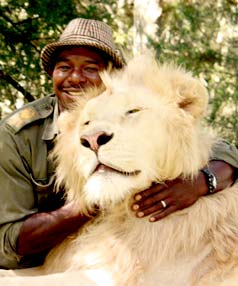
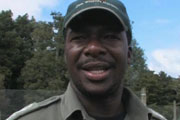
On Wednesday, May 27, 2009, senior zookeeper Dalu Mncube (pictured below, with a lion) was mauled to death by a white tiger at Whangarei's Zion Wildlife Gardens as eight horrified tourists, including two young children, witnessed the attack.


Northland Police spokeswoman Sarah Kennett confirmed that, at about 11am on Wednesday, two keepers went in to clean the white tiger enclosure when the animal attacked Mncube. (The time of 11:00 a.m. Wednesday, May 27, 2009 in New Zealand, converts to 4:00 p.m., Tuesday May 26, 2009, in the Pacific Time Zone/North America.)


Despite the best efforts of the other keeper, the royal white Bengal tiger wouldn't let go. Mncube, who had saved a colleague in an attack earlier this year, died at the scene before an ambulance arrived at the park.

The tiger has since been shot dead. The other keeper was not injured.

The tourists who watched the attack - six adults and two children thought to be from England and New Caledonia - were being offered counselling through Victim Support.


The South African, known as "Uncle Dalu," had been the park's senior cat handler since Craig "The Lion Man" Busch was sidelined following a business dispute with the park's boss, his mother Patricia Busch. Craig Busch says the fatal mauling of a keeper at the park is "absolutely tragic."

Zion Wildlife Park is home to 42 rare lions and tigers.

Mncube had saved fellow park employee Demetri Price during a white tiger attack in February 2009, after he used his hands to open the animal's jaws. Price required surgery after he was attacked by the cat who had been spooked by a pride of lions. The zoo has had a series of incidents in recent years making it "controversial," according to the New Zealand National.

Meanwhile, from New Zealand to South Zealand, as in Denmark, it was discovered on Monday, May 25, that on Sunday, May 24, a zookeeper apparently decided to die by suicide by having Bengal tigers there maul him to death.

The body of a former employee of Næstved Zoo was partly eaten by white tigers after the man broke into their enclosure on Sunday night.


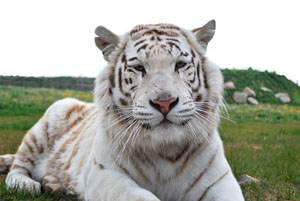
One of the Næstved Zoo's white tigers.

Ekstra Bladet newspaper reports that the remains of the man were found by zoo staff on Monday morning. An investigation showed that the man broke into the tiger enclosure with a flammable substance, where he set fire to the straw and opened the door to the animals’ cage so they could get access to him.

The man had been employed as an animal keeper at the South Zealand zoo for ten months, where he was described as having a deep fascination with the zoo’s Bengal tigers. He developed a mental illness last winter which resulted in him losing his job due to the perceived security risk, according to the Copenhagen Post.

"'Hm,' said Bond. 'Bogeyman stuff.'" ~ Ian Fleming, Live and Let Die, 1954.

The animal incidents constitute a remarkable cluster.

Is what is taking place here merely the reflective factor at work, where humans don't notice how frequent these types of events occur until they are brought to their attention? Is it all coincidence? Or an enemy action?

So, of course, I compiled a list, to ponder the short view of the long weekend.


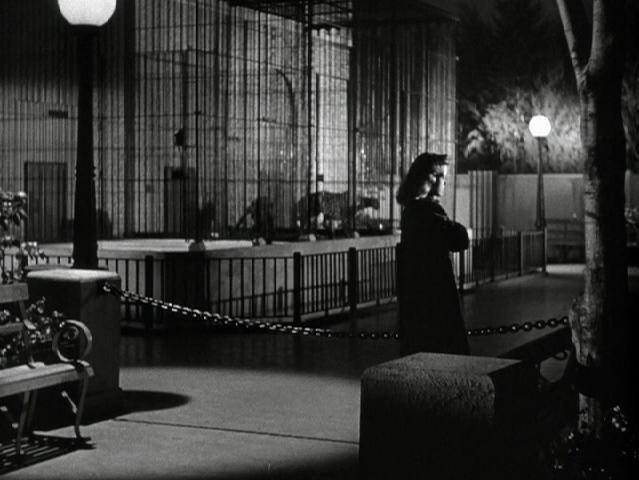
Jane Randolph, who starred in the two Cat People film noir classics of the 1940s, as the “other woman,” died earlier in the month.

Let's look at this recent animal incidents cluster:

Zookeeper Dalu Mncube was killed by a white tiger at a zoo in New Zealand. Wednesday a.m., May 27 local date. (Tuesday, May 26, USA.)

An elementary-aged girl Bailey Rhine Stine was attacked by a pet mountain lion on Lones Road in Columbiana County, Ohio, near Lisbon. Monday a.m., May 25.

A former zookeeper died (apparently by suicide) from being killed by two Bengal tigers at a South Zealand, Denmark, zoo. Sunday late p.m., May 24.

A 14-year-old female mountain lion escaped from the Brit Spaugh Zoo, before being shot and killed by police at the Kansas zoo. Sunday p.m., May 24.

A moose was killed in Thompson Lake, Oxford County, Maine, after it began swimming around boats. Sunday p.m., May 24.

A female moose wandered into Portland, Maine, and was killed by police when it was deemed a danger to the public. Sunday a.m, May 24.

A zookeeper was bitten in the leg by a 3-year-old Bengal tiger at the Memphis Zoo. Sunday a.m., May 24.

Royal Bengal Tigers have killed 36 people in Bangladesh during the first four months of 2009. The tigers prey on villagers in the Sundarbans, the largest mangrove forest in the world and home to the Royal Bengal Tigers. In the mangrove forest in Bangladesh, at least 100 people are killed by the Royal Bengal Tigers. The villagers also kill tigers wandering around their village, at the rate of a dozen tigers a year. Sunday, May 24, Digital Journal.

Enemy action, indeed?

A great deal of Bengal tigers appear to be in the mix above, in an ongoing war that seems to be going in both directions.

On May 24, 2009, the The Liberation Tigers of Tamil Eelam or the Tamil Tigers admitted that its founder and leader Velupillai Prabhakaran, was dead and declared a week of mourning starting the next day. The Sri Lankan war that had begun in May 1976, was over, according to the BBC News.


Or maybe it is only the The Butterfly Effect at work?

Malta Today reports that naturalists have recorded thousands of painted lady butterflies (Vanessa cardui) migrating over the Maltese islands. Sunday, May 24.

New Moon - Sunday, May 24, 2009, 12:11 Universal Time.

"Love of life is born of the awareness of death, of the death of it." ~ Ian Fleming, The Spy Who Loved Me, 1962.

(Thanks to Cryptomundo correspondent and Aucklander celebrity, Club Bizarre's Mark Wallbank for the Kiwi news tip.)


Added later...