Showing posts with label Men in Black. Show all posts

Thursday, April 14, 2016

The Man Who First Saw "The Men in Black" Dies


The man who brought the ufo silencers, the men in dark clothing, into modern consciousness, Albert K. Bender, 94, died on March 29, 2016, in California.


"Men in Black" (MIBs) are what appear to be male humans dressed in black suits who claim to be government or paramilitary (or even alien) agents and who harass or threaten UFO witnesses to keep them quiet about what they have seen.


From portrayals in The X-Files, appearances in movies, references in popular culture and points of debate in UFO conspiracy theories, the MIBs have become part of our 21st Century culture.
In April 1952, Albert K. Bender, a factory worker from Bridgeport, Connecticut, announced the formation of International Flying Saucer Bureau (IFSB), whose purpose was to "gather flying saucer information" and to "get all Flying Saucer minded people acquainted with each other...."
At the time he established the IFSB, Bender was a 31-year-old bachelor who lived with his stepfather. He was obsessed not only with UFOs but with occultism, horror movies, and science fiction. Bender transformed his part of the house into what he called a "chamber of horrors." Jerome Clark, The Emergence of a Phenomenon: UFOs from the Beginning through 1959 ~ The UFO Encyclopedia - Volume 2 (Chicago: Omnigraphics, 1992: 73) 
Ufology historian Jerry Clark told of how Bender took "out-of-body trips into deep space," but also worked hard on the IFSB's publication, Space Review. Bender built up the 1952-1953 membership to 1500 people from around the world. "One of the most active was a West Virginia man named Gray Barker."


In early September 1953, Bender, who is acknowledged as one of the first pioneers of UFO research, was visited at his home in Bridgeport, Connecticut, by three men dressed in black who warned him in threatening terms to cease his investigations or else. 


The "silencers," as he called them, scared Bender to the point where he did not publish a report he said was going to answer all the mysteries of the UFO question. Instead, Bender left a warning: "We advise those engaged in saucer work to please be very cautious." Bender's organization - the IFSB - closed down.


After pressing Bender for more details about the "whys" behind the shutdown, Barker wrote his first book, They Knew Too Much About Flying Saucers, which was published by University Books in 1956. The book was the first to describe the Men in Black (MIBs). Barker recounted Bender's own alleged encounters with the MIBs, who were said to travel in groups of three, wear black suits, and drive large black automobiles. In 1962, Barker and Bender collaborated on a second book on the topic, called Flying Saucers and the Three Men. Published under Barker's own imprint, Saucerian Books, this book proposed that the MIBs were, themselves, extraterrestrials.

These "ufo silencer" experiences of this one individual, Albert K. Bender, promoted in later years by Gray Barker (May 2, 1925–December 6, 1984), created an enduring legacy beginning over 60 years ago - the MIBs. 


Besides Bender and Barker, Men in Black researchers and writers have included the late John A. Keel, Jerome Clark, the late Jim Keith, and Nick Redfern.  Nick Redfern, who passed on the news of Bender's passing to me, has written many books on MIBs, including his 2006 book, On the Trail of the Saucer Spies: UFOs and Government Surveillance (which contains information on Bender).


Now Albert K. Bender has passed away.  


Bender was born on June 16, 1921, and served in the United States Air Force during World War II.  In Bridgeport, Connecticut, he was a supervisor at the Acme shear factory. 

After Bender's 1962 book was published, and before Bender moved to Los Angeles, in 1965, while in Bridgeport, Bender started the Max Steiner Music Society, which was later renamed the Max Steiner Memorial Society, dedicated to the famed music composer of theater and film hits.

Steiner (May 10, 1888 – December 28, 1971) composed over 300 film scores, and was nominated for 24 Academy Awards, winning three: The Informer (1935), Now, Voyager (1942), and Since You Went Away (1944). Steiner's popular works include King Kong (1933), Little Women (1933), Jezebel (1938), Casablanca (1942), The Searchers (1956), A Summer Place (1959), and Gone with the Wind (1939), the film score for which Steiner is best known.

Thanks to Albert Bender's Max Steiner Memorial Society, collections of Steiner's music have been preserved, discussed, and disseminated. Bender's Society was responsible for obtaining a Hollywood Walk of Fame Star for Max Steiner, as well as Steiner's name being written in the Golden Book of the State of Israel. Bender's Steiner collection was donated to the Brigham Young University manuscript collection.

This little known part of Albert K. Bender's life, beginning in 1965, is noted in Max Steiner: Composing, Casablanca, and the Golden Age of Film Music by Peter Wegele (2014):


Albert K. Bender and Max Steiner.


Albert K. Bender at the announcement of the Max Steiner commemorative stamp, 1999.


At the time of his death, Bender was residing in Los Angeles, and his funeral was held in Manhattan Beach, California, on April 9, 2016. His known sibling survivors are Fred Bender, Shirley Audugar, and Joseph Kevlin.


Albert K. Bender and his wife.

The only known recording of Albert K. Bender can be found here. He also wrote a volume of recollections, Five Slices of Life: A Collection of Short Stories.

(Confirmation: Besides the Wikipedia page that was apparently written by a source close to Bender, the death is verified by the page on his funeral arrangements.)

+++

See also: 
Synchromystic Men In Black

Nick Redfern has posted his comments on the
death of Albert K. Bender at Mysterious Universe

Tuesday, June 05, 2012

First MIBs Novel?


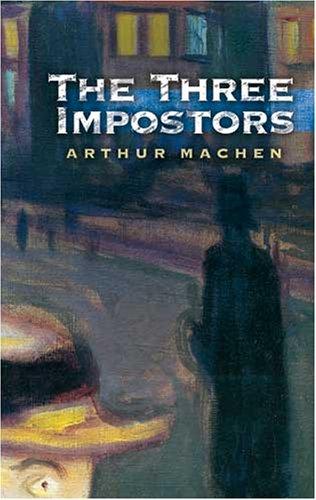
Was one of the earliest "men in black" fictional tales, about three MIBs, published five years before the turn of the 20th century? Perhaps so. This is a significant book written about three men in a secret organization in pursuit of a man "with spectacles" who possesses a vanished Roman coin denoting important mystic symbolism.

The Three Impostors "is the story of three men too absorbed by their own literary interests to realize the truth, or otherwise, of the events unfolding around them. These are Dyson, in thrall to his own imagination, Phillipps, an adherent to science, and Russell, who simply considers himself a realist," writes critic Mark Anderson.
Dyson, the man without a first name, lives in a "couple of rooms in a moderately quiet street in Bloomsbury," nevertheless, and is interested in what happened in the streets "beyond Whitechapel" (known infamously for the Jack the Ripper killings). Charles Phillipps lives "in a quiet square not far from Holborn," in the "calm retirement of Red Lion Square," and makes appointments with Dyson at "the shop in Queen Street." Edgar Russell "occupies a small back room on the second floor of a house in Abington Grove, Notting Hill."
In one tale told by Phillipps, the description imparted to him seems familiar to all who have read about the Men in Black:
I noticed that this man was leading my brother rather than walking arm-in-arm with him; he was a tall man, dressed in quite ordinary fashion. He wore a high bowler hat, and, in spite of the warmth of the day, a plain black overcoat, tightly buttoned, and I noticed his trousers, of a quiet black and grey stripe. The face was commonplace too, and indeed I cannot recall any special features, or any trick of expression; for though I looked at him as he came near, curiously enough his face made no impression on me -- it was as though I had seen a well-made mask. They passed in front of me, and to my unutterable astonishment, I heard my brother's voice speaking to me, though his lips did not move, nor his eyes look into mine. It was a voice I cannot describe, though I knew it, but the words came to my ears as if mingled with plashing water and the sound of a shallow brook flowing amidst stones. I heard, then, the words, "I cannot stay,"....
The Three Impostors is an episodic novel by British horror fiction writer Arthur Machen, first published in 1895 in The Bodley Head's Keynote Series. Its importance was recognized in its later revival in paperback by Ballantine Books as the forty-eighth volume of the celebrated Ballantine Adult Fantasy series in June 1972.

In Things Near and Far, Machen wrote:
It was in the early spring of 1894 that I set about the writing of the said Three Impostors, a book which testifies to the vast respect I entertained for the fantastic, New Arabian Nights manner of R. L. Stevenson, to those curious researches in the byways of London which I have described already, and also, I hope, to a certain originality of experiment in the tale of terror.
Partly in response to criticism of the Stevensonian style of the book, Machen altered his approach in writing his next book, The Hill of Dreams. Following the death of his first wife in 1899, Machen developed a greater interest in the occult, joining the Hermetic Order of the Golden Dawn. He noted that a number of events in his life seemed to mirror events in The Three Impostors, most notably a conflict in the order between William Butler Yeats (a "young man with spectacles") and Aleister Crowley, which reached its height around this time. These experiences are reflected on in Alan Moore's Snakes and Ladders.

The novel incorporates several inset weird tales and culminates in a final denouement of deadly horror, connected with a secret society devoted to debauched pagan rites. The three imposters of the title are members of this society who weave a web of deception in the streets of London—retailing the aforementioned weird tales in the process—as they search for a missing Roman coin commemorating an infamous orgy by the Emperor Tiberius and close in on their prey: "the young man with spectacles".

Two of the novel's inset tales, "The Novel of the Black Seal" and "The Novel of the White Powder," have been cited as major influences on the work of H. P. Lovecraft. In his survey Supernatural Horror in Literature, Lovecraft suggested that these stories "perhaps represent the highwater mark of Machen's skill as a terror-weaver." They have been frequently anthologized.

"The Novel of the Black Seal" has been cited as a model for some of Lovecraft's best-known stories: "The Call of Cthulhu," "The Dunwich Horror," and "The Whisperer in Darkness". "The Novel of the White Powder," which Lovecraft said "approaches the absolute culmination of loathsome fright," is pointed to as an inspiration for Lovecraft's stories of bodily disintegration, such as "Cool Air" and "The Color Out of Space".

The story "Rx... Death!" in Tales from the Crypt #20 is an adaptation of "The Novel of the White Powder," with the change made that the poisonous "medicine" contains digestive enzymes, rather than a witch's brew.

Mark Anderson looks for clues to Machen's message in the novel he released in the wake of The Three Imposters:
The novel The Hill of Dreams (1897) may be the longest suicide note in history, in its part-autobiographical depiction of a failing writer whose talent and unique personal vision is overlooked to the point where madness fatally perverts whatever it was he’d earlier harboured. Here, the author seems to be predicting his own fate; what may – and may yet – happen to him if he listens to all those who think he should give up his art and get a ‘proper job.’

Arthur Machen (March 3, 1863 – December 15, 1947) was a Welsh author and mystic of the 1890s and early 20th century. He is best known for his influential supernatural, fantasy, and horror fiction. His novella The Great God Pan (1890; 1894) has garnered a reputation as a classic of horror (Stephen King has called it "Maybe the best [horror story] in the English language"). He is also well known for his leading role in creating the legend of the Angels of Mons.

Machen was born Arthur Llewelyn Jones in Caerleon, Monmouthshire, though he usually referred to the county by its Welsh name Gwent. The house of his birth, opposite the Olde Bull Inn in The Square at Caerleon, is adjacent to the Priory Hotel and is today marked with a commemorative blue plaque. The beautiful landscape of Monmouthshire, with its associations of Celtic, Roman, and medieval history, made a powerful impression on him, and his love of it is at the heart of many of his works.

In 1887, the year his father died, Machen married Amy Hogg, an unconventional music teacher with a passion for the theatre, who had literary friends in London's bohemian circles. Hogg had introduced Machen to the writer and occultist A. E. Waite, who was to become one of Machen's closest friends. Machen also made the acquaintance of other literary figures, such as M. P. Shiel and Edgar Jepson.

In 1899, Machen's wife Amy died of cancer after a long period of illness. This had a devastating effect on Machen. He only gradually recovered from his loss over the next year, partially through his close friendship with A. E. Waite (famed for his Tarot card deck today). It was through Waite's influence that Machen joined at this time the Hermetic Order of the Golden Dawn.

Arthur Machen's influence may have waned today, but his influence remains in modern horror writers, and myths and motifs he created, from partially the Men in Black to the Angel of Mons.

The way we view Pan today may have as much to do with Machen as it does with the Greeks. "The Great God Pan" is a novella written by Arthur Machen.

In Supernatural Horror in Literature (1926; revised 1933), H. P. Lovecraft praised the story, saying: "No one could begin to describe the cumulative suspense and ultimate horror with which every paragraph abounds"; he added that "the sensitive reader" reaches the end with "an appreciative shudder." Lovecraft also noted, however, that "melodrama is undeniably present, and coincidence is stretched to a length which appears absurd upon analysis." The Encyclopedia of Science Fiction (1993) notes "The story begins with an sf rationale (brain surgery) which remains one of the most dramatically horrible and misogynistic in fiction."

The story's depiction of a monstrous half-human hybrid inspired the main plotline of Lovecraft’s The Dunwich Horror, which refers by name to Machen’s story. According to Lovecraft scholar Robert M. Price, "'The Dunwich Horror' is in every sense an homage to Machen and even a pastiche. There is little in Lovecraft's wonderful story that does not come directly out of Machen's fiction." It also inspired Peter Straub's Ghost Story.

The book was translated into French by Paul-Jean Toulet (Le grand dieu Pan, Paris, 1901). It was a major influence on his first novel, Monsieur du Paur, homme public.

Stephen King wrote in the endnotes for his story collection Just After Sunset (2008) that his newly published novella N. was "strongly influenced" by Machen's piece, which he noted, "surmounts its rather clumsy prose and works its way relentlessly into the reader's terror-zone. How many sleepless nights has it caused? God knows, but a few of them were mine. I think 'Pan' is as close as the horror genre comes to a great white whale." In another interview he stated: "Not Lovecraft; it’s a riff on Arthur Machen’s “The Great God Pan,” which is one of the best horror stories ever written. Maybe the best in the English language. Mine isn’t anywhere near that good, but I loved the chance to put neurotic behavior—obsessive/compulsive disorder—together with the idea of a monster-filled macroverse."


Monday, May 28, 2012

MIBs: Silencers vs Killers

by Loren Coleman ©2012

In recent postings here entitled "Synchromystic Men In Black" and "Vallée on MIB Imagery," I have examined the nature of the figurative appearance and illustrations used to display the Men in Black (MIBs). In general, they have been sinister, not comedic as shown in the currently screening film, Men in Black 3.

But there is another level of the metaphor that has evolved in the imagery, which we need to pay attention to before we leave this topic.

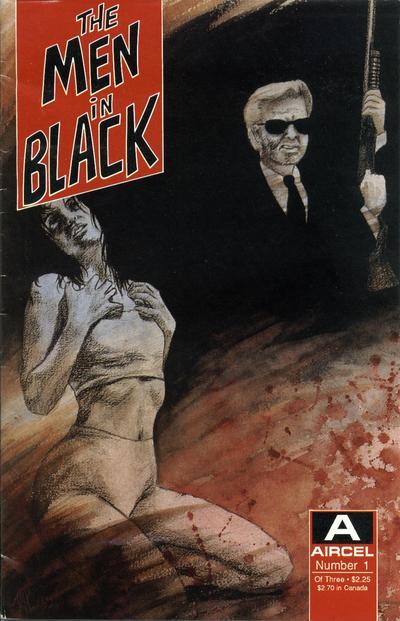
I want to share a short comparative display of book covers and graphic novels showing the Men in Black to display one simple point. The book covers have developed gradually from the notion of silencers to nearly merge with what we find on the more recent graphic novels. Today, we discover much more aggressive MIBs.

First, some book cover examples, followed by the more violent comic book covers. Obviously, this has much to do with the medium of the presentations, but there appears to be something else going on too.


In the contemporary graphic novels (comics), as you can see below, the Men in Black are represented as agents with guns, in violent circumstances. The transformation of the MIBs is nearly complete, from the quiet, foreboding presence to a more active element of these interactions.
It should also be added that Nick Redfern does "note in [his] The Real Men in Black and On the Trail of the Saucer Spies books - there are at least two category of MIB: government and 'something else.'"


What will the future bring in terms of the actual incidents being experienced and reported?


Saturday, May 26, 2012

Vallée on MIB Imagery


by Loren Coleman ©2012
Jacques F. Vallée, Ph. D. is a great person to have at your side when exploring the hidden realm. 

Vallée, as you may agree, is a cornerstone figure in intellectual ufology, who has added his genius to the study of "flying saucers" and the reported "occupants." He gathers information from diverse fields, including fairylore, cryptid sightings, Fortean phenomena, religious visions, and astrophysics. His third book, Passport to Magonia: From Folklore to Flying Saucers (Chicago: Henry Regnery Company, 1969) elegantly melts many of these threads of thought into a sensible and stimulating thesis on what UFOs might be.


For more background on Jacques' ufological work, see here.


Jacques wrote me the other day, after I posted my essay on this blog about the synchromystic visualizations of Men in Black in television treatments and cinema creations.

On May 25, 2012, Jacques emailed the following:

My contribution to that imagery was in 1979 with this book [Messengers of Deception: UFO Contacts and Cults (Ronin, June 1979)] cover [shown at top].
At the time, I instructed the artist to show a human walking deliberately away from a hovering saucer rather than running away or cowering in front of it.
Most readers at the time didn't like the image, too disturbing and not in line with expectations about flying saucers: the occupants shouldn't be human.
I think what was disturbing in the 'Messengers' image was the implication that some humans knew what the saucers were, and [the 'others'] were walking quietly into our world.
Warm regards,
Jacques

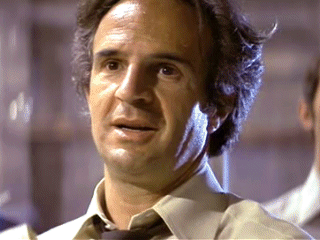
The French scientist Claude LaCombe in the Steven Spielberg film Close Encounters of the Third Kind  was based on my friend Jacques Vallée.

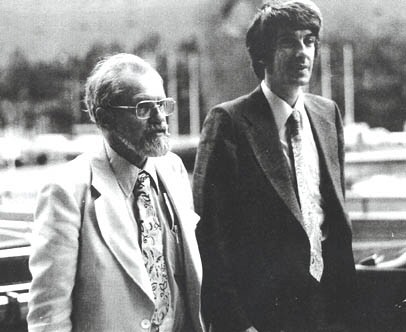
Jacque Vallée (right) and J. Allen Hynek (left)

Claude LaCombe (François Truffaut)

My Boing Boing buddy David Pescovitz mentioned the following magnifique deleted scene from the film that says some things about twilight language:


David Laughlin (Bob Balaban). Name game note: Laughlin, Nevada, in the extreme southern tip of the state, has become a modern focal meeting point for ufology conferences, anomalistic gatherings, and Area 51 researchers.


See here for more from David Pescovitz on what special phrase shows up in CEIII that is, indeed, so very Vallée.


Thanks also to Patrick Huyghe of Anomalist Books for bringing the deleted scene to my attention in 2009.

Friday, May 25, 2012

Synchromystic Men In Black

by Loren Coleman ©2012


The posters are a pun. The message they portray is a serious one. But the reality is one of a comedy. If we are to believe the new movie, Men In Black 3 (2012), the darkly-clad government or whatever agents are rather cheerful and go about their jobs with good humor and paronomasia aplenty.


Three Is More Than A Trinity


In this 2012 incarnation of MIB3, there are clearly three men in black, following the motif of the sightings. Of course, within this trio, two of the individuals are the same person, merely in different times. Very synchromystic, actually.
But for anyone who truly understands the darker history of "Men in Black" (MIBs), before their modern deep involvement in Ufology, they were anything but funny.


Three has always been the key. What took them so long?


One of the earliest stories ~ whether it was true or not ~ was of the three silencers who visited Albert Bender. Here is a summary of that case from the Pelicanist:
1953, 16 September: Albert Bender, founder of the International Flying Saucer Bureau, told Gray Barker in a letter, “do not accept any more memberships until after the October issue of Space Review is in your hands.” About the same time Bender told August Roberts that “three men had visited him, and in effect shut him up completely as far as saucer investigation is concerned!” On 4 October Roberts and Dominick C. Lucchesi interviewed Barker, who said that the three men wore “Dark clothes and black hats”, but his usual response to questions was: “I can’t answer that,” e.g. “Q. Do the saucers come from Venus as stated in Adamski’s book? A. I can’t answer that. Q. Do they come from Mars? A. I can’t answer that.” The final (15 October) issue of Space Review contained the statement: “The mystery of the flying saucers is no longer a mystery. The source is already known, but any information about this is being withheld by orders from a higher source.” Barker, They Knew Too Much, pp.109-110, 114, 138. In 1962 Bender would relate that three men with glowing eyes had materialised in his bedroom: “All of them were dressed in black clothes. They looked like clergymen, but wore hats similar to Homburg style.” Later he was teleported to a secret Antarctic saucer base. They told him that they were from another star system, they had merely assumed human bodies, being hideous monsters in reality, and were here to extract a chemical from our seawater. Once they had finished this mission Bender would be free to tell his story, as he duly did. Bender, Flying Saucers, pp.74.
One of the most frequent “MIB origins” sentences you will find online is this one: “In 1967, [John A.] Keel coined the term ‘Men In Black’ in an article for the men's adventure magazine Saga, entitled ‘UFO Agents of Terror’.” 
But the facts are a bit more complex. West Virginia UFO researcher Gary Barker’s book They Knew Too Much About Flying Saucers (which was published by University Books in 1956) introduced the notion of the Men in Black to UFO folklore. The follow-up book Flying Saucers and the Three Men (NY: Paperback Library, 1968) by Albert K. Bender, was published by Gray Barker (with Barker’s input and words) through his own Saucerian Books at Clarksburg, West Virginia, in 1962. (The title is infrequently incorrectly given as “Flying Saucers and the Three Men in Black.”)


As Jerome Clark personally told me, regarding the question of "origins": "It is my view that 'men in black' were what Gray Barker wrote about, and that's what he called them. Keel coined the acronym 'MIB' -- different from Barker's enforcers in being otherworldly in appearance and behavior."


For our examination here, it is not important if the Bender story actually happened. In this example, what is more significant is its place in the folkloric men in black accounts, sightings, encounters, and then the chronicles and writings that followed in the wake of this telling of the tale, which evolved into the MIBs.
The world's most thorough ufological historian, Jerome Clark, author of The UFO Book (1997) and his forthcoming Unexplained! (3rd Ed., 2012)has studied the phenomenon of men in black/MIBs for over 40 years. He had this to say about the topic:
First-generation American ufologists' experiences of men in black - as opposed to the MIB who came along later - were the extremely dubious cases of Maury Island and Al Bender, along with the even more questionable Edgar Jarrold "mystery" and Stuart/Wilkinson affair (in both senses of the word "affair"). In retrospect, the bulk of what Gray Barker wrote in the one men-in-black book of the 1950s (They Knew Too Much About Flying Saucers, 1956) has been discredited. Beyond that, contactee writers such as Adamski and Williamson were using men in black to weave conspiracy theories, based in anti-Semitic literature, about the so-called Silence Group. No wonder sensible ufologists were sensibly suspicious of men-in-black notions.
From Clark's grounded awareness of the MIB "problem," through John A. Keel's demonic view of them, we end up today finding ourselves confronted with a popular culture version of the Men in Black as captured for us by such authors as the late Jim Keith (Casebook on the Men In Black), Jenny Randles (The Truth Behind Men in Black) and Nick Redfern (The Real Men In Black).


The "real Men in Black" or MIBs are not friendly. Not funny. Not full of puns. 

MIBs on Television

One of the earliest televised nonfiction notions of the Men in Black was seen on April 18, 1997, on NBC's Unsolved Mysteries. (It is to be recalled that the first Men in Black movie appeared in 1997, and the sequel Men in Black II, in 2002.)
Staying with television, how did the MIBs become manifest on the highly symbolic program, The X-Files?
Men in Black appeared in The X-Files as the serious "Cigarette Smoking Man" (played by William B. Davis, from September 10, 1993 to May 19, 2002) and as the more comedic MIBs (played by ex-wrestler and former governor Jesse Ventura and, yes, Jeopardy's Alex Trebek) in the dreamlike episode "Jose Chung's From Outer Space," (1995-96 season).


Also on The X-Files were the Men in Black operatives for an agency known as Majestic 12. One character was named “Morris Fletcher,” played by Michael McKean (who was just critically injured when hit by a car at West 86th Street and Broadway on the upper West Side, New York City, on May 22, 2012). 


“Morris Fletcher” (above) was in charge of keeping Area 51 information secret from the American people, and was credited with coining the term “Bermuda Triangle.” 
The X-Files’ Fletcher also claimed that in 1979, he found a young dinner theater actor named John Gillnitz in Tulsa, Oklahoma. He set him up as the President of Iraq under the name Saddam Hussein in order to distract the American public.


MIBs in Movies

How then has the more sinister form of Men in Black been translated, in this era of synchromystic visualizations, to the canvas of fictional narratives at the movies?
Martin Balsam

An early effort showing the MIBs motif is the Italian movie (set in England) Eyes Behind The Stars (1978). It involves a UFO abduction, a model with photos, and a reporter. What transpires almost immediately is the "Silencers" -- an international secret police force of Men In Black -- try to steal the negatives from the reporter. American actor Martin Balsam plays Inspector Jim Grant of Scotland Yard, sporting, what has been called, "a rather jarring, broad Yorkshire accent." Sergio Rossi, an actor with the same moniker as the fashion designer, plays the leader of the Silencers, and Victor Valente plays antique dealer turned ufo expert with the curious name Coleman Perry. The film's wider impact was small, if none at all.

In the following year, the B-movie The Alien Encounters (1979) appeared with little plot and slower action. Astronomer Alan Reed (played by Augie Tribach) is the focus of the ufo incident. Two Men in Black were included; one was played by the actor Gene Davis (above) and the other by Mark Purdy (also above), who went on to be a well-known sports columnist for the Mercury News in San Jose. Allegedly, the actors were not even required to dress in black for their roles.

Another of the earliest representations of the Men in Black in film is in the underrated, highly political film, The Brother from Another Planet (1984), written, directed and edited by John Sayles. Sayles (on the left) actually plays one of the two on-screen MIBs.  Joe Morton plays the three-toed extraterrestrial who has escaped to Earth and who hides from the MIBs in New York City. It is aliens chasing aliens, and employs a more twisted plot than most other MIBs film detailed here.
MIBs have usually been shown as sinister and foreboding. Here is a quick survey of imagery from a few other fictional motion pictures demonstrating the darker side of MIBs in cinema.

In the movie The Silencers (1996), the Men In Black are depicted as cryptic characters dressed in black, wearing reflective sunglasses, and having pale skin and hypnotic black eyes. They secretly threaten the lives of those who have witnessed UFOs, and then target US Senator Rawlings (played by Madison Mason) who dies despite the best efforts by Secret Service agent Rafferty (played by Jack Scalia) to prevent the assassination.
Soon after the release of The Silencers, The Shadow Men (1997) appeared. It is about three MIBs (played by Andrew Prine, Chris McCarty, and Tom Poster) who visit the happily married couple Bob and Dez Wilson and their 12-year-old son Andy (played by Eric Roberts, Sherilyn Fenn, and Brendon Ryan Barrett) who have had an alien encounter. The Wilsons, after suffering maddening nightmares and more MIB terrors, find refuge at the home of sf-writer Stan Mills (played by Dean Stockwell).
The Strangers in the strange film, Dark City (1998), are the embodiment of the darkest of the dark Men in Black. The appearance of these men dressed in black look hauntingly like John A. Keel's other worldly descriptions of his MIBs.

The next year, the first The Matrix (1999) film appeared. What is often forgotten is that Neo (Keanu Reeves) was first confronted and arrested by three sinister Agents, led by Agent Smith (Hugo Weaving) and his two sidekicks, Agent Jones (Robert Taylor) and Agent Brown (Paul Goddard).
The Matrix franchise released (first in 1999 and then again in 2003) an army of Men in Black agents who dominated the screen seemingly temporarily. However, the imagery went on to influence human consciousness for years, including at your local high school and college, from Columbine to VA Tech.

The strong twilight language of The Matrix also projects three humans in black as the force to overthrow the Agents.  Thomas Anderson (Keanu Reeves), known as "Neo," Trinity (Carrie-Anne Moss) and Morpheus (Laurence Fishburne) make up the triad. Of course, Trinity's name is significant, as, no doubt, are all names in this movie.
What's next? Being in control? Losing control? Being guided? Regaining control?

The Adjustment Bureau (2011), based on Philip K. Dick's 1954 story, "The Adjustment Team," presented a movie with legions of MIBs attempting to have things run the way they want them run. ("Richardson," played by John Slattery, is visible, second from the left in the lower photo of the two directly above.)

MIBs in Mad Men?

The reach of the Men in Black in our popular culture is great. The conditioning is widespread. Several television series have embedded Men in Black characters. They include agents from the following super-secret organizations: NID (in Stargate), Section 31 (in Star Trek: Deep Space Nine and Star Trek: Enterprise), Silence (in Doctor Who), and The Observer (in Fringe). The Gentlemen in black terrorize in Bluffy the Vampire KillerIn the comics and movies, there is S.H.I.E.L.D. 

There are even hints of MIBs imagery and singlemindedness in Mad Men, of course.
A MIB face in the crowd in The Adjustment Bureau turns up as Mad Men's "Roger Sterling" (played by John Slattery, on the right). Subtle scenes are designed with a sense of iconic Men in Black styling.

MIB3 will open to huge audiences, probably because people want a break from the sinister. But remember, deep down, the Men in Black - in the real world, whatever that is - are hardly ever comedians.

First posted on May 23, 2012; updated and revised on May 25, 2012.

"Synchronicity is an ever present reality for those who have eyes to see." 
Carl Gustav Jung (July 26, 1875 - June 6, 1961)