
Tuesday, March 17, 2009

Green Men

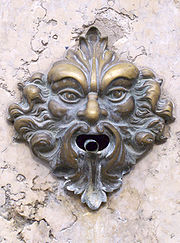
Green Man


Green Man 2


Green Men are often represented as garden waterspouts, doorknockers and associated landscape ornaments.


Happy St. Patrick's Day!


March 17th seems like a good day to talk about Green Men, Jolly Green Giants, and Wild Men traditions.


Let’s look for a moment at the tradition underlying the Green Giant, as it was originally known.


In 1903, Green Giant® was founded in Le Sueur, Minnesota, as the Minnesota Valley Canning Company. In 1925, a boy-like, pale, giant human figure with a leafy bit of clothing was introduced to market the company’s new line of giant sweet, early green peas. The name “Green Giant” for this marketing image soon followed, with the giant figure’s skin then turning green.


Eventually the Green Giant came to symbolize not only the peas, but the company as well. In 1950, Minnesota Valley Canning Company disappeared completely behind the trademark it had created and became officially, the Green Giant Company. Today, the “Jolly Green Giant”® is the name of the giant figure, having evolved from the youthful figure of 1925.


Jolly Green Giant


Statue of Jolly Green Giant, Blue Earth, Minnesota.


In our search for the origins of the California Giant in the tales of the California Bigfoot, should we be disturbed that Jolly Green Giants are not running around Minnesota? Perhaps. Perhaps not. First and foremost, the tradition of the Green Giant appears to have a direct link, in terms of artistic imagery, with the folklore and widespread art of the European Green Man.


From ancient times, the archetypal figure shown as the “Green Giant” is commonly referred to as “The Green Man,” or leafy man, and has been discussed throughout European texts, especially in England, and as well as, in France, where it is called Le Feuillou, and in Germany, where it is known as Blattqesicht. Authors have written extensively on the pagan and Celtic traditions of these Green Men, and books and websites about them are abundant.


Scholars, furthermore, see a direct link between the European traditions of the Green Man, and the old tales and encounters with real Wild Men. "The wildman (who may be the same as the 'green man'),” Myra Shackley notes in her book, Wildmen: Yeti, Sasquatch and the Neanderthal Enigma, “also takes on the role of the spirit of the woods, a kind of pagan nature god...Over 200 European families have wildmen as heraldic emblems, and many more as supporters. Any nude figure in heraldry is called a 'savage', 'wildman' or 'woodman', and the terms are interchangeable. There is little variation in the way they are portrayed, leafy decorations and a club being the rule....Wildmen (or green men) also appear carved in wood and as architectural adornments in the Middle Ages...Green men are frequently shown as a face with foliage emerging from the mouth, and fifty or more of these are known from England alone. The green man is also found carved in stone, as a gargoyle…In the Elizabethan period wildmen, or green men, were often employed to clear the way for processions, wielding sticks."


Clearly the Green Man comes from the tradition and evolution of the art form of the burly wildmen, the woodsmen, and thus the man of the woods and greenery. Shackley notes: "Wildmen are important figures in medieval paintings and illuminated manuscripts. They may be called 'wodewoses' or 'woodhouses', and are frequently shown covered with long hair or fur. An additional class of picture shows actors in plays, masques and dramas who are depicted in wildman costumes...The name 'wodewose' is derived from the Anglo-Saxon Wudewasa and thence from Wudu (late Old English for wood); Wudewasa seems to mean 'man-of-the-wood'.…"


The “wildmen” are an active topic in hominology, and some researchers feel the Wildmen and Green Men are a remembrance of Neandertal. As Shackley, Ivan T. Sanderson, and others have noted, we must view the interrelationship between the hairy wildfolk lurking in the remote woodlands of the Middle Ages and the European wildmen, regardless of whether they were called wodewose or green men.


So the graphic transmutation of the survival of late Neandertals in Europe to Wild Men and Green Men, with an artistic connection to the Green Giant and Jolly Green Giant, is worth serious consideration. There appears to be a link between that label on a can of peas in your kitchen and the possible existence of relict hairy hominids, even if uncomfortably so.


Just as the encounters of European wildmen survive in medieval carvings and other graphic representations, so too is the evidence of early-twentieth-century California Bigfoot evident in an artistic form. Depression-era painters appear to have captured the giant hairy hominid on at least one fruit crate label. The containers for lettuce, carrots, and, yes, green peas may have much to teach us in Bigfoot studies, beyond our wildest imaginations.

by Loren Coleman, from Bigfoot! The True Story of Apes in America (NY: Paraview Pocket - Simon and Schuster, 2003, pages 56-58)


Wild Man


European Wild Man art.


Photo credit for all images above: Wikipedia.


Your support is needed to continue my research and support the exhibitions I share with researchers, media, and the public. Please donate via PayPal by pushing the button ~ it appears as a long flat "Donate" box ~ below. It takes you to the right spot at PayPal to contribute, even if you are not a member of PayPal. Blogs are free, but I am on the edge of losing everything. I'm not joking. Ten dollars from you means a lot because if everyone gives a little, it gathers the power of numbers. Forestall my foreclosure!! (There is light at the end of the tunnel, when my retirement benefits kick in September 2009.) I need your help now.


:-) Thank You.

Monday, March 16, 2009

March 17: Be Alert

March 17th is more that just St. Patrick's Day!

The date March 17th keeps surfacing in an almost ritualistic way, as a "chosen" date for activities that have ties to oil, certain people, Tibet, Yeti, and more.

Slick Airways

Wonder and wander with me in this temporal landscape and stream of consciousness as we rush to our next St. Patrick's Day.

First, it is intriguing to note that March 17th was a pivotal date in the wealthy Oklahoma/Texas oil family that was the origins of the cryptozoologist Tom Slick.

Tom Slick's father was also named Tom Slick, and comes down to us in history as the "King of the Wildcatters." Wildcatting was the practice of going about the oil-rich farm lands, in his case, of Oklahoma, buying up oil lease rights, and drilling for oil on pure speculation.

In 1912, Tom Slick, Sr. made the "biggest discovery of his life" when the Wheeler Well Number 1 in the Cushing Field of Oklahoma struck oil on March 17th, St. Patrick's Day. From that day forward, crazy ole Tom Slick was called "Lucky Tom Slick." He made millions from the Cushing leases. Slick's family moved to Texas to follow the oil boom of the 1920s. When Tom Sr. died at the early age of 46, his estate was estimated to be worth seventy-five million dollars in 1930 dollars!

Tom Slick, his son, was not allowed to inherit any of the principal of his father's money until he was 30, 45, and 55 years of age. But the will stated he was to live off the interest. By the year 1960, Tom Slick has inherited 15 million dollars.

Slick had decided to invest in oil and beef, but he had creative ideas also for what to do with some of his money. Part of what he began to do was search for cryptids. I document his quests for the Loch Ness Monster, Sumatran rhinos, Trinity Alps' Giant Salamanders, Bigfoot, and Orang Pendek.

In 1957, Tom Slick personally headed his first-sponsored expedition into Nepal in search of the Yeti, with Peter Byrne and Sherpa guides along for his deadly serious reconnaissance. From noting the timeline for Slick's trek, remarkably I discovered that Slick began his search in earnest in the Arun Valley on March 17, 1957.

On March 18th and 19th, 1957, the Government of Nepal issued press releases and answered reporters' questions that they officially forbade all foreign mountaineers from "killing, injuring, or capturing a Yeti." Slick's party was allowed to carry guns for their self-defense. But they also had steel traps to capture a Yeti, and the law was specifically targeted at Slick's expedition.

What seems to have been one of the other missions of the 1957 expedition? Apparently, it could have been spying on the Chinese in Tibet. Certainly that was what the Russians thought.

NYT April 27, 1957

This April 27, 1957, article (above) in The New York Times carried the claims that Tom Slick was behind an effort to subvert the Chinese and free Tibet. (It would be revealed years later that Tom Slick and his Slick Airways were working closely with the OSS and the CIA.)

Two years later, what date would the CIA pick to begin the exit of the Dalai Lama from Tibet? March 17, 1959. Who may have been helping with that trek? Tom Slick and Peter Byrne. Perhaps it was Tom Slick that picked the date, not the CIA?

Colonel Fletcher Prouty has written about this secret mission to Tibet. In 1955, Prouty was appointed the first "Focal Point" officer between the CIA and the Air Force for Clandestine Operations per National Security Council Directive 5412. He was Briefing Officer for the Secretary of Defense (1960-1961), and for the Chairman of the Joint Chiefs of Staff.

Prouty, in his 1973 book about the CIA, Secret Team, writes: "This fantastic escape and its major significance have been buried in the lore of the CIA as one of those successes that are not talked about. The Dalai Lama would have never been saved without the CIA."

Exactly 50 years ago, on March 17, 1959, three groups, the Dalai Lama, his immediate family and senior advisors, escaped from Lhasa, Tibet.

John Prados writing in The Presidents' Secret Wars: CIA and Pentagon Covert Operations Since World War II (New York: Morrow, 1986), notes: "Tenzin Gyatso [the Dalai Lama] was disguised as a common soldier of the guard.... The best information [about the fleeing Dalai Lama] came from the CIA.... The CIA was so well informed because it had furnished an American radio operator, who traveled with the Dalai Lama's party...There may have been other CIA agents with the party as well."

Who were these individuals? Who helped the Dalai Lama's party get out of Tibet? None other than Peter Byrne, Tom Slick's man in Nepal. He may forget it, but he told me so in 1988, when I was interviewing him about his years of work, overt and covert, with Tom Slick. I go into further details in my book, Tom Slick: True Life Encounters in Cryptozoology (Fresno: Linden Press, 2002).

Is it a coincidence that today, six years ago, is seen by some as the date that another Texan, linked to oil, began the present Iraqi War? While most historians use the date of March 20, 2003, as the start of the Iraqi War, others point to March 17, 2003. On this special date, the start of the US invasion of Iraq is keyed to then-President George W. Bush's announcement in a televised speech that Iraqi President Saddam Hussein and his sons have 48 hours to leave Iraq, or the United States will initiate preemptive military action against Iraq. On March 17, 2003, Robin Cook, Leader of the British House of Commons, resigned from the UK cabinet over the plan to invade Iraq. The UK and the USA withdrew a proposed UN Security Council resolution on Iraq. The United States advised UNMOVIC and the IAEA to withdraw all weapon inspectors out of Iraq.


Watch what happens on March 17, this year! Will the focus be Tibet, on the 50th anniversary of the forceful change that occurred there in 1959?

Tom Slick 1957


Tom Slick (above, after his March 15, 1957, near-death accident in Nepal) was most famous, of course, for his expeditions in search of the Abominable Snowmen, the Yeti of the Himalayan Mountains. He wanted to be someplace special on March 17th.


Sunday, March 15, 2009

Ides of March & Obelisks

Today is Lupercalia, an ancient Roman religious holiday. It is known in modern times as the Ides of March.

Julius Caesar would not see the day through to its end on one memorable Ides of March, but he had been warned. Of course, the Ides of March (literally in Latin, Idus Martias) is the name of the date 15 March in the Roman calendar.


Shakespeare put the infamous warning in prose, with which most of us are familiar.


Caesar: Who is it in the press that calls on me?
I hear a tongue shriller than all the music
Cry "Caesar!" Speak, Caesar is turn'd to hear.


Soothsayer: Beware the ides of March.

Caesar: What man is that?

Brutus:
A soothsayer bids you beware the ides of March.

Julius Caesar Act 1, scene 2, 15–19


The press was the crowd, and the man who would be king had cause for concern from that press.

The time came. Caesar was assassinated. Brutus, Cassius and their friends stabbed him to death (most accounts record 23 wounds, although Shakespeare's play says 33 times) - on the Ides of March, 44 BC, after Julius Caesar declared himself emperor-dictator of Rome for life.

There is a significant obelisk (at top, above) that is tied to the specific location of the death warning to Caesar. It is sited in Rome, in Saint Peter's Square, supposedly on the exact spot where Julius Caesar was told by the soothsayer of the date on which he would be killed.

"An English prelate who traveled to Rome at the beginning of the fourteenth century, Master Gregorius, found the last obelisk still standing up against the walls of Saint Peter's Basilica, in a dark alley flanked by crumbling old houses....Gregorius was captivated by the tradition that the bronze ball on the top of the obelisk contained the ashes of Julius Caesar....Gregorius passed on the story that the obelisk had been raised on the exact spot where Caesar, on the way to the Capitol, had been accosted by an astrologer who warned him he would be killed on the ides of March," from The Magic of Obelisks by Peter Tompkins, New York: Harper & Row, 1981, page 17.

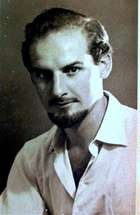
Peter Tompkins

(Peter Tompkins, pictured above as a young man, was a wonderfully textured individual, a former Office of Strategic Services agent who would go on to write scholarly researched books about occult matters. The most famous and successful is The Secret Life of Plants. Tompkins only recently died, on January 24, 2007. See his obituary here.)

The obelisk today is called Vaticano. It began first as an ancient Egyptian obelisk (they were erected in twos). In this one's first known Roman move, it was originally raised in the Forum Iulium in Alexandria by the Prefect Cornelius Gallus on Octavian's orders around 30-28 BC.

It was brought to Rome by Caligula in 37 for the spina of the Vatican Circus. Relocated by Pope Sixtus V in 1586 using a method devised by Domenico Fontana; the first monumental obelisk raised in the modern period, it is the only obelisk in Rome that has not toppled since Roman times. As noted, during the Middle Ages, the gilt ball on top of the obelisk was believed to contain the ashes of Julius Caesar. Fontana later removed the ancient metal ball, now in a Rome museum, that stood atop the obelisk and found only dust.

Today, this authentic Egyptian obelisk is one of only a few* left in the world.

Obelisks are tied to Egypt and Masonic importance, sexual magick and death, and more. I will speak of them further in the future. For this temporal moment, I merely wanted to share the visual impact they leave.

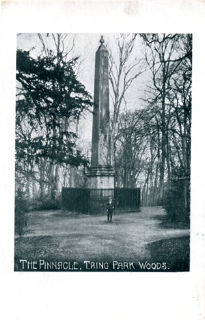
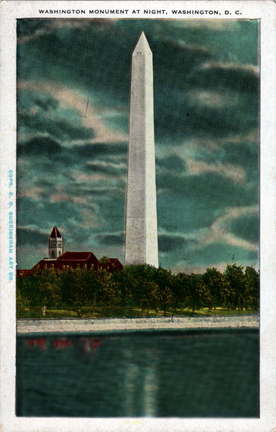
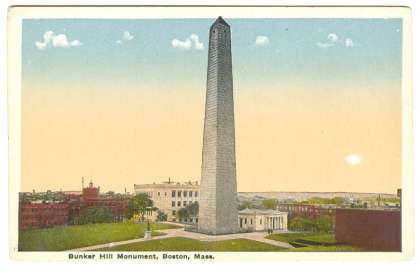
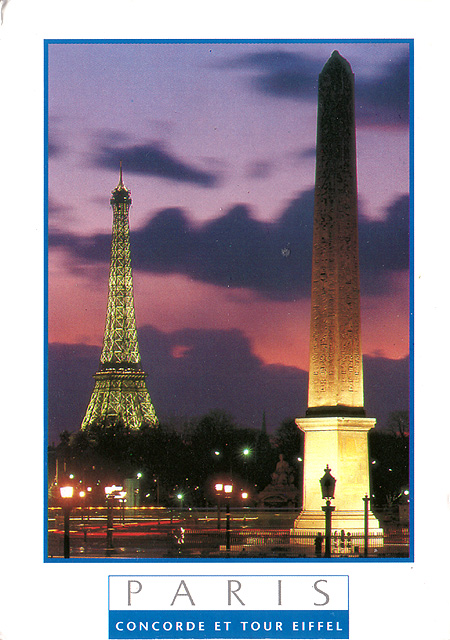
For March 15th, here's a vintage postcard tour of some of the mystical obelisks of various types, from around the globe.

Deploy. Wonder.

Enjoy. Ponder.


Obelisk, Heliopolis, Egypt


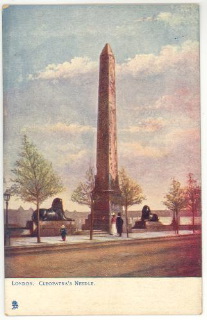
Cleopatra's Needle, London, United Kingdom


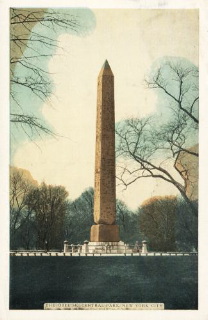
Cleopatra's Needle, New York, New York


Obelisk, Cairo, Egypt


Tring Park Pinnacle, Rothschilds' Vale of Aylesbury, United Kingdom


Washington Monument, Washington, D.C.


Cleopatra's Needle, Rosicrucian Park, San Jose, California


Bunker Hill Monument, Charlestown, Massachusetts


La Tour Eiffel vue depuis l'Obélisque, place de la Concorde, Paris, France

+++++++
*Footnote:

There are 29 ancient Egyptian obelisks in the following locations:

Egypt – 9
Pharaoh Tuthmosis I, Karnak Temple, Luxor
Pharaoh Ramses II, Luxor Temple
Pharaoh Hatshepsut, Karnak Temple, Luxor
Pharaoh Senusret I, Al-Masalla area of Al-Matariyyah district in Heliopolis, Cairo
Pharaoh Ramses III, Luxor Museum
Pharaoh Ramses II, Gezira Island, Cairo, 20.4 m
Pharaoh Ramses II, Cairo International Airport, 16.97 m
Pharaoh Seti II, Karnak Temple, Luxor, 7 m
Pharaoh Senusret I, Faiyum (ancient site of Crocodilopolis), 12.9 m

France – 1
Pharaoh Ramses II, in Place de la Concorde, Paris

Israel – 1
Caesarea obelisk

Italy – 11 (includes the only one located in the Vatican City)
8 in Rome (see Obelisks in Rome)
Piazza del Duomo, Catania (Sicily)
Boboli Gardens (Florence)
Urbino

Poland – 1
Ramses II, Poznań Archaeological Museum, Poznań (on loan from Ägyptisches Museum und Papyrussammlung, Berlin)

Turkey – 1
Pharaoh Tuthmosis III, in Square of Horses, Istanbul

United Kingdom – 4
Pharaoh Tuthmosis III, "Cleopatra's Needle", on Victoria Embankment, London
Pharaoh Amenhotep II, in the Oriental Museum, University of Durham
Pharaoh Ptolemy IX, Philae Obelisk, at Kingston Lacy, near Wimborne Minster, Dorset
Pharaoh Nectanebo II, British Museum, London

United States – 1
Pharaoh Tuthmosis III, "Cleopatra's Needle", in Central Park, New York


++++


Thursday, March 12, 2009

Soldier Who Imitated The Joker Killed

Army Spc. Christopher Lanum


An internet creation of how Army Spc. Christopher Lanum might have appeared.


A soldier dressed and wearing face-paint like Batman villain The Joker was shot and killed by police on March 8th, in the Shenandoah National Park after he pointed a loaded shotgun at them after a chase, an FBI affidavit says. The incident occurred near Front Royal, Warren County, Virginia, according to the Associated Press.

Army Spc. Christopher Lanum's girlfriend, Patsy Ann Marie Montowski, who was with him when he was shot, told FBI investigators that the soldier idolized the Joker, played in the most recent Batman film, The Dark Knight, by the late Heath Ledger.

Lanum, a suspect in the stabbing of a fellow soldier at Fort Eustis, was killed hours after the attack when officers attempted to stop the minivan he was driving, according to court documents filed Wednesday, March 11th that first disclosed the weekend shooting.

Montowski, a passenger in the van, was hit by gunfire and treated at a hospital. She was arrested Wednesday evening and charged with being accessory after the fact to assault, authorities said.

A lawyer for Montowski was not listed in court documents.

According to the FBI affidavit filed in federal court in Montowski's case, Lanum was dressed in The Joker outfit at the time of an argument early Sunday with his Fort Eustis suite mate, Spc. Mitchell Stone.

Stone told emergency workers that Lanum stabbed him and used a stun gun on him, authorities said, adding he was taken to a hospital for serious injuries and later released.

Lanum and Montowski fled in her van, which a park ranger spotted about 200 miles northwest of the base, according to authorities. The ranger called for help, and Lanum led police on a slow-speed chase before running over a spike strip laid down by police and crashing, they added.

The FBI said Montowski told them that Lanum handed her the shotgun and asked her to kill him, but she refused. The affidavit says Lanum pointed the gun at police, his finger on the trigger, and refused commands to drop the weapon. A trooper fired through the driver's side window, Lanum's shotgun discharged, and police fired several times.

The trooper and park rangers involved in the shooting were placed on administrative leave with pay pending the outcome of internal investigations, according to a joint state police, FBI and National Park Service release.

Another source.

++++

Update...note the iconic mask painted on the face on a man in the news for the cover of a recent issue of New York:


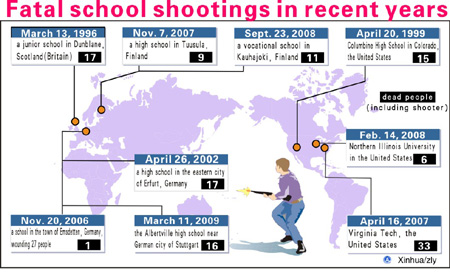
The New Map of School Shootings

The real world of school rampage killings is changing in the 21st century, and being imaged differently than in the past.

The Chinese News Service Xinhua has published a new graphic map showing their understanding of the landscape of school shootings. In the last decade, since Columbine, the focus for such visual aids has been on the USA and the shootings by students at their own schools. It is interesting to see the media attention being extended by international incidents and graphics such as this one from the Chinese.

Including old "rampages," such as the one in Scotland conducted by an adult outsider, reminds people of how the phenomenon can shift around, from outsiders, to the school's own youth as shooters, to outsiders again.

Furthermore, it is to be noted that American school shootings and suicides dominated between February 1996 (Moses Lake, Washington State) & February 1997 (Bethel, Alaska) through April 1999 (Columbine), up until March 2001 (two in California & one each in Pennsylvania and Indiana). Then they all grew quiet in the USA, right before and after 9/11. That is, for about two years.

School shootings became a re-ignited topic of media interest due to international incidents in February 2002 (Munich, Germany), April 2002 (Erfurt, Germany), April 2002 (Vlasenia, Bosnia-Herzegovina), and January 2003 (Taiuva, Brazil), before school shootings returned in earnest, in April 2003 to the USA.

Nowadays, the global school shooting events dot the world map, from towns in Finland to Fayettevilles in America.

The new Chinese map is a lesson in where the eyes outside of the USA are looking for this new history.

As I have noted before, while Asian school shootings are rare, the Orient does have outbreaks of Japanese and Chinese school stabbings. A significant school stabbing/slashing cluster occurred in five communities in China, between August and November of 2004.

Germans Debate Banning Violent Video Games

Investigators looking through German school shooter Tim Kretschmer's possessions said they found pornographic films (Ponder. violent computer games and a collection of horror and action films that included Rambo First Blood, Freddy vs. Jason, and The Marksman.

Der Spiegel magazine reported that the 17-year-old logged onto his computer at around 7:30pm the night before the shootings, and spent at least two hours playing Far Cry 2 an "ego shooter" game in which the player sees his own weapon pointing at those he has to kill.

This particular game takes place in a fictional country, where the player has to shoot dead as many ‘weapons dealers’ as possible. Kretschmer also had the shooter games Counter-Strike and Tactical Ops installed on his computer.

In the Friday the 13th of March edition of The New York Times, reporter Carter Dougherty writes a portrait of a troubled, depressed teenager with easy access to an unsecured pistol who ended up killing 15 people before taking his own life.

Several insights have been revealed. Tim Kretschmer, 17, last year broke off a round of psychological counseling for depression. Bedroom items were detailed, as noted above. Weapons that fire small yellow pellets were also found in Kretschmer's room.

Meanwhile, media in Germany are reporting police are declaring an earlier posting to a chat room in which someone warned of an attack on a school in Winnenden is apparently a hoax.

What is also being acknowledged in a detail many of us involved in working on these school shootings have spoken about before: women were targeted.

Dougherty observed:

The brutality was overwhelming.

Of the 12 people Mr. Kretschmer killed at the school, eight were girls and three were female teachers. Several died with carefully placed shots to the head. After killing an employee of a clinic for the mentally ill, he sprayed at least 13 rounds to kill two people at a Volkswagen dealership shortly before turning the gun on himself.

...with the computer having played such a role in the young man’s life, the Winnenden shootings seem likely [to] renew a debate in Germany over banning violent video games.

“These games basically program the minds of young men a thousand times over,” said Alina Wilms, a psychologist involved [in] a long-term project treating and tracking people affected by the Erfurt shooting, who advocates a ban. “If ever it were going to be possible,” she said, “then now.”


Just to be clear: I am reporting the above as news, but I do not find any factual basis for linking videogames, violent or otherwise, in a cause-and-effect fashion with school shootings. ~ Loren


Thanks to MAH for the advance heads up on this NYT analysis. German sources are reporting the hoaxing of the chatroom "warning." Here's an English summary of those written on Friday, March 13th.

Wednesday, March 11, 2009

April 20, 2009: Be Alert!

The 10th anniversary of the Columbine incident is not to be taken lightly, especially in the wake of so-called rampage killings in Illinois, Alabama, Nevada, and Germany recently.

After the Amish school shootings of October 2, 2006, I was interviewed by various media about the copycat effect.

Bridget Brown of Toronto's Canadian TV online edition wrote the following, October 4, 2006:

"Coleman says violent offenders, intent on shocking the public, sometimes 'compete for the highest body count.'...the copycat crimes will likely slow down as we near winter. He says spring, and the anniversary of Columbine, could be enough to spark another cycle of tragedy."

Here's a snippet from Montana's Daily Inter Lake, for October 5, 2006:

"There is also the influence of cable news to be accounted for, as wall-to-wall coverage of shootings and murder could easily sway sick minds to think of killers as culture heroes. Indeed, researcher Loren Coleman believes copycats imitate previous violent attacks on a regular basis. He says school attacks follow a pattern after a media event in a day, a week, two weeks, a month, a year, or 10 years. 'Vulnerable humans have internal media clocks,' he maintains."

The spring, following the violent fall of 2006, was a cause for concern during the week near the Columbine anniversary. Then, unfortunately, in confirmation of my warnings (especially after the Dawson College through Amish shootings' media attention), on Monday, April 16, 2007, Virginia Tech "happened."

Now consider what we are in the midst of. Watch how this is being handled on the screens across America.

The 10th anniversary of the Columbine killings and double-suicides occurs on Monday, April 20, 2009, which is also the 120th anniversary of the birth of Adolf Hitler. Hitler died by his own hand, ten days after his birthday, on April 30, 1945, a mere 64 years ago. This year's ten day period will be a dangerous "red zone," in the larger high frequency time period of March through April.

April 26th is Hitler's right hand man, Rudolf Hess's birthday and the anniversary of the Erfurt, Germany school shooting in 2002, when Robert Steinhäuser killed 16 and then himself.

Murder and suicide are two sides of the same coin played out in going postal, workplace violence, shooting spree, and school shooting incidents, which are impacted by the copycat effect.

Being forewarned and aware is half the battle. Vulnerable, suicidal, homicidal youth need help and attention, long before it gets to the stage where they feel there's no turning back. Keep talking, take care, get people help, and remain alert, with your guard up.

A few bloggers may wish to demean the predictive insights of known patterns, but ridicule does not overwhelm the reality of history.

Germany School Shooting: 16 Dead

A gunman killed at least 15 people when he opened fire at a junior high school in southwest Germany on Wednesday, March 11, 2009, police told the media. Nine students, three teachers, a school gardener, two bystanders at a supermarket and the shooter are among the dead. Most were females.

The German newspaper Bild report that German police have released the name of the 17-year-old who carried out the shooting attacks. He was Tim Kretschmer. He graduated from secondary school in Germany last year.

"We have at least nine dead and numerous wounded," a police spokeswoman reported to Reuters. This was later updated to 15, including the teenager student shooter.

The gunman, wearing black combat gear, fled the scene of the shooting spree in Winnenden, a town of 27,000 near Stuttgart in Baden-Wuerttemberg state. German media reports say as many as nine may have been shot dead. It is unclear how many were pupils, in the incident, which is reported to have begun around 0945 (0845 GMT).

A number of people are also thought to have been wounded in the incident at the Albertville-Realschule school in Winnenden, north of Stuttgart, earlier reported the BCC

The Web site of German broadcaster ZDF explains that the name of the school, the Albertville-Realschule, is related to the fact that the town of Winnenden in Baden-Württemberg is twinned with the French city of Albertville, which hosted the Winter Olympics in 1992.

Helicopters were circling above the town, police said. Rescue workers and fire fighters were at the school, which had been evacuated.

Police said the gunman was a 17-year-old former student dressed in military gear.

According to Welt Online, a shoot out between the gunman and police officers ensued in a grocery store, during which the gunman was killed. Two other people also died during the shootout, which left two police officers seriously wounded, it said.

According to Spiegel, the German newspaper Bild has reported that the teenage gunman’s parents were in the possession of 18 weapons and that his father is a “wealthy entrepreneur.” Spiegel Online says that “Special units of the police stormed the house of Tim K’s parents, his mother was interrogated by the police.”

The English-language Web site of the German broadcaster Deutsche Welle reports that the gunman was killed during a shoot-out with police:

Stuttgart police said the 17-year-old black-clad gunman was killed 40 kilometers away from his former school where he opened fire in a classroom.

The gunman is reported to have fled in a car to the neighboring town of Wendlingen. Police said the gunman was killed in a shootout with the police near a supermarket. Authorities say the total death toll has risen to 16.


(March 11th is the fifth anniversary of the Madrid, Spain, train bombings.)

Several school shootings have shocked Germany in past years.

In 2006, a masked man wearing explosives and brandishing rifles opened fire at a school in the western German town of Emsdetten, wounding at least 11 people before committing suicide.

In April 2002, Germany suffered its worst school shooting when a gunman killed 17 people, including himself, at a high school in the eastern city of Erfurt. Wednesday's shooting occurred after news that in the United States, at least a dozen, including the suspected gunman and his mother, were killed in a shooting spree and car chase in southern Alabama on Tuesday, March 10, 2009, noted Reuters

Readers of this blog will be aware of the cycles that occur and some of the key windows of dates to be aware of, across the board.

April 26th is Hitler's right hand man, Rudolf Hess's birthday and the anniversary of the Erfurt, Germany school shooting in 2002. An expelled student Robert Steinhäuser calmly walked into the school, dressed in black and a trenchcoat, targeted specific teachers and perhaps randomly killed students, then turned his gun on himself. All in all, 18 died.

The November 20, 2006 incident at the Geschwister Scholl secondary school in Emsdetten, near the city of Münster, involved former student Sebastian Bosse, who wounded 37 before killing himself. He was wearing a long black coat and a gas mask. His nickname at the school was "Man in Black" because he always wore black. After the attack, a total of 13 pipe bombs were found distributed around the school and in his car. Soon afterward, 3,700 police officers were deployed in Baden-Württemberg's schools because of a December 6, 2006, copycat threat to carry out a "killing spree" in the schools. Later, the "anonymous person" who sent the "killing spree" threat was found dead of a self-inflicted gunshot wound.

March and April have become the "copycat" months for these shootings, with a less significant peak in the fall.

Tuesday, March 10, 2009

Alabama Shootings: 12 Dead

There was a "rampage" Tuesday afternoon, March 10, 2009. As the moon grew nearly full, a man in an automobile model called an Eclipse went on a shooting spree in the southern USA.


The Dothan Eagle reports on March 10th:

Friends and neighbors living on Wise Street in Samson say they won’t sleep tonight after witnessing a shooting spree by a man who one person said was a “cool guy.”

Alina Knowles, who was moving into a house with her husband close to where seven people were gunned down, described the bloody scene.

“You want to talk about a horrific scene,” she said. “You see what I saw. I went to get the baby (who lived there). There was blood all over that porch. The baby was covered in her mother’s blood.”

Knowles and friend Barry Applin said they witnessed six people shot to death, including a sheriff’s deputy’s wife and child.

Knowles gave the Dothan Eagle the names of the victims, but those are being withheld pending official notification.


Updated info:

Police have now identified the man behind Tuesday's deadly south Alabama shooting spree. Police say Michael McLendon of Kinston went on a two county rampage before turning the gun on himself, says WSFA 12 News.

The Coffee County coroner said McLendon started his day off with bloodshed at the Kinston area home owned by his mother; a home he ended up burning to the ground. The mother's body was still inside the house Tuesday evening, but Coroner Robert Preachers said officials had not been able to enter the house to determine if she was shot. It's also believed McClendon's girlfriend was killed inside the home.

The body count now stands at twelve, including the gunman. Others citizens and law enforcment officers were wounded as McClendon drove though town firing shots at anyone in his path. Alabama gunman Michael McLendon also killed 4 dogs.

The man's shooting spree covered two counties (Coffee and Geneva) and targeted people in the town of Kinston and the cities of Samson and Geneva in extreme southeast Alabama.

Victim identities and a motive remain unknown. Preachers confirmed that several other victims of the gunman were related to him including McLendon's grandparents, an aunt and an uncle. Investigators tell WSFA 12 News the victims ranged in age from 18 months to 74-years-old.

Col. Chris Murphy held an evening news conference at the Alabama State Troopers post in Montgomery to provide details. Murphy called the day's events "one of the worst tragedies in recent memory."

Murphy said Governor Bob Riley was briefed on the situation, and he spoke with area mayors a short time later. Riley promised state resources to help those local municipalities deal with the aftermath. (Note: Wednesday morning news conference now planned. WSFA 12 News will have coverage.)

The Federal Bureau of Investigation, the Alabama Bureau of Investigation, the Alabama Emergency Management Agency and many other agencies continue to work multiple crime scenes.

Murphy told media outlets that four adults and one child were found dead inside of one house, and one body was found at each of two other houses in the Samson area.

Investigators said McLendon drove down Highway 52 where he fired at least seven times on a state trooper vehicle. The trooper was wounded by broken glass.

He then drove to the Samson Pipe and Supply Company on Highway 52 where he gunned down another victim. Afterwards, he took aim at an innocent civilian at a local service station in the same area. That victim also died of their wounds.

Geneva police then began a pursuit of the suspect's vehicle, chasing McLendon to the Reliable Metal Products company in Geneva. Officials later confirmed he had been a former employee of the company, but the reasons for his leaving the company were not immediately know.

On there, officials said the man fired at least a 30 round burst of ammunition at the city police chief before running inside the business. The police chief was grazed by gunfire but was wearing a bullet-proof vest.

A short time later investigators said they heard shots inside the building, and when they entered the business they found the man dead of a self-inflicted gunshot wound.

Earlier reports:

Law enforcement agencies say they are investigating a series of shootings in south Alabama that left 12 people dead, including the gunman.

Samson Police Chief Gary Weeks said the suspect was also killed, apparently by a self-inflicted gunshot near the Reliable Metal Products company outside Geneva.

"I heard five shots to my right, and then I looked up and saw a maroon Eclipse speed off from the scene, then I saw deputies and troopers in pursuit after him,” eyewitness Soleta Darden said. "I was just scared, crazy scared. I thought, ‘What the crap is going on."

WSFA 12 News has confirmed through the Geneva Police Department that there has been a shooting at the Reliable Metal Products company in Geneva and other shootings in Samson.

The gunman started firing at a gas station in Samson, shooting a woman there.

The Alabama Department of Safety says at least four shootings by a single gunman left people dead before he killed himself.

The department says in a statement that the shootings began late Tuesday afternoon in Samson. Other victims were at a home off of Highway 52. The shooter killed five people in one home and one each in two other homes.

The gunman then shot at a state trooper's car, striking the vehicle seven times and wounding the trooper with broken glass.

The towns of Geneva and Samson are about 11 miles apart, and roughly 30 miles south of Fort Rucker, near the Florida border in southeast Alabama. Geneva's population is about 4,400 and Samson, 2,000.

Reliable Metal Products makes grills and vents for heating and AC systems, mainly for hotels.

Workplace Copycats

Each year some 1,500 Swedes decide to end their lives. The reasons are often personal and can be numerous, such as mental or physical disease.

Previous research has shown that people’s choices are affected by their surroundings. Various types of behavior, feelings, and
attitudes are spread in social networks. The researchers at Stockholm University and the University of Oxford have studied whether such a drastic step as taking your life can also be influenced by others. The study is based on comprehensive register data on all individuals who lived and worked in Stockholm County during the 1990s.

"By tying together relatives and colleagues, we could see which individuals who had someone in the family or in the workplace who died by suicide. Then we studied whether the suicides of others increased or decreased their risk of dying by suicide when we have controlled for other known risk factors," says Monica K. Nordvik, PhD, who during her doctoral studies in sociology at Stockholm University was one of the researchers who carried out the study.

The researchers discovered that the risk of suicide increased markedly both for women and men if someone in the family had taken their own life, somtehing that is supported by previous research. But the study also showed that men’s suicide risk increased if they have had one or more work mates who had died by suicide in the last year. On the basis of how many suicides, statistically speaking, can be ascribed to this phenomenon, it turns out that workplace exposure prompts more new suicides than that within the family.

"Since there are so many more individuals who experience a suicide at their workplace, the aggregate effect is greater than what can be ascribed to the family, even though a suicide in the family obviously has a greater impact on the suicide risk of the individual in question," says Professor Peter Hedström at Oxford University.

All in all the study indicates that twice as many suicides among men can be ascribed to the "contagious effect" of the workplace than to that of the family.

Of course, such a study raises issues of research ethics and what information researchers can access about people.

"The data we work with is de-identified. This means that we can’t see who it is or where he or she works, since all such information has been replaced with number codes," says Monica K. Nordvik.

Suicide at the workplace "contagious"
09 March 2009
Vetenskapsrådet (The Swedish Research Council)

Full bibliographic information: Peter Hedström, Ka-Yuet Liu, Monica K. Nordvik "Interaction Domains and Suicide: A Population-based Panel Study of Suicides in Stockholm, 1991-1999," Social Forces - Volume 87, Number 2, December 2008, pp. 713-740.

The article is part of Monica K. Nordvik's doctoral dissertation in sociology, Contagious Interactions: Essays on social and epidemiological networks.

Courtesy T. Chapman.

Monday, March 09, 2009

Ten Years of Church Shootings

Previous church shootings include the following (more complete than the AP or other lists):

March 8, 2009 - Maryville, Illinois - Suspect Terry Joe Sedlacek, 27, of Troy, walks into the First Baptist Church, and shoots pastor Fred Winters dead, point blank. Several church members are injured by a knife in the struggle to capture after the attack, The suspect also had stabbed himelf, but survived, when his gun jams.

Feb. 18, 2009 - Garden Grove, California - A man walks into the internationally known Crystal Cathedral, hands a greeter a note, then kneels in front of a cross and shoots himself in the head, leaving him dead at the altar.

July 27, 2008 - Knoxville, Tennessee - A gunman opens fire in a church during a youth performance, killing two people and injuring seven.

Dec. 9, 2007 - Colorado - Three people are killed and five wounded in two shooting rampages, one at a missionary school in suburban Denver and one at a church in Colorado Springs. The gunman in the second incident is killed by a guard.

May 20, 2007 - Moscow, Idaho - A standoff between police and a suspect in the shootings of three people in a Presbyterian Church ended with three dead, including one police officer.

Aug. 12, 2007 - Neosho, Missouri - First Congregational Church - 3 killed - Eiken Elam Saimon shot and killed the pastor and two deacons and wounded five others.

Oct. 2, 2006 - Lancaster County, Pennsylvania - Attack by a gunman who killed five girls and then himself, while not a church, occurs at an Amish school targeted a religious site.

May 21, 2006 - Baton Rouge, Louisiana - The Ministry of Jesus Christ Church - 4 killed - The four at the church who were shot were members of Erica Bell's family; she was abducted and murdered elsewhere; Bell's mother, church pastor Claudia Brown, was seriously wounded - Anthony Bell, 25, was the shooter.

Feb. 26, 2006 - Detroit, Michigan - Zion Hope Missionary Baptist Church - 2 killed + shooter - Kevin L. Collins, who reportedly went to the church looking for his girlfriend, later killed himself.

April 9, 2005 - College Park, Georgia - A 27-year-old airman died after being shot at a church, where he had once worked as a security guard.

March 12, 2005 - Brookfield, Wisconsin - Living Church of God - 7 killed + shooter - Terry Ratzmann opened fire on the congregation, killing seven and wounding four before taking his own life.

July 30, 2005 - College Park, Georgia - World Changers Church International - shooter killed - Air Force Staff Sgt. John Givens was shot five times by a police officer after charging the officer, following violent behavior.

Dec. 17, 2004, Garden Grove, Calif.: A veteran musician at the Crystal Cathedral shoots himself to death after a nine-hour standoff.

Oct. 5, 2003 - Atlanta, Georgia - Turner Monumental AME Church - 2 killed + shooter - Shelia Wilson walked into the church while preparations are being made for service and shot the pastor, her mother and then herself.

June 10, 2002 - Conception, Missouri - Benedictine monastery - 2 killed + shooter - Lloyd Robert Jeffress shot four monks in the monastery killing two and wounding two, before killing himself.

March 12, 2002 - Lynbrook, New York - Our Lady of Peace Catholic Church - 2 killed - Peter Troy, a former mental patient, opens fire during Mass, killing the priest and a parishioner. He later receives a life sentence.

May 18, 2001 - Hopkinsville, Kentucky - Greater Oak Missionary Baptist Church - 2 killed - Frederick Radford stood up in the middle of a revival service and began shooting at his estranged wife, Nicole Radford, killing her and a woman trying to help her.

Nov. 1, 2000, Kansas City: The wife of a minister fatally shoots her daughter and then herself.

Sept. 15, 1999 - Fort Worth, Texas - Wedgewood Baptist Church - 7 killed + shooter - Larry Gene Ashbrook shot dead seven people and injured a further seven at a concert by Christian rock group Forty Days in Fort Worth, Texas before killing himself.

April 15, 1999 - Salt Lake City, Utah - LDS Church Family History Library - 2 killed + shooter - Sergei Babarin, 70, with a history of mental illness, entered the library, killed two people and wounded four others before he was gunned down by police.

Besides the March 8, 2009, Maryville, Illinois incident, church shootings have been discussed on this blog as having occurred in Toronto, Ontario, and Knoxville, Tennessee, in July 2008, and in Colorado, in December 2007.

Sunday, March 08, 2009

Fiery Calamity Coming?

Is there a horrible "earth-shattering calamity" in the near future, which will leave fires raging throughout New York City and moving to other urban areas of the globe?

The famed author of the The Cross and the Switchblade, pastor David Wilkerson thinks so, according to the socially conservative, Christian right website WorldNetDaily.

Wilkerson felt it necessary to warn people of his prediction over the weekend of March 7th-8th.

"An earth-shattering calamity is about to happen," Wilkerson alerted readers of his blog. "It is going to be so frightening, we are all going to tremble – even the godliest among us."

"For ten years I have been warning about a thousand fires coming to New York City. It will engulf the whole megaplex, including areas of New Jersey and Connecticut. Major cities all across America will experience riots and blazing fires—such as we saw in Watts, Los Angeles, years ago," the pastor predicts.

"There will be riots and fires in cities worldwide. There will be looting – including Times Square, New York City. What we are experiencing now is not a recession, not even a depression. We are under God’s wrath. In Psalm 11 it is written, 'If the foundations are destroyed, what can the righteous do?'"

Wilkerson concludes, "I do not know when these things will come to pass, but I know it is not far off. I have unburdened my soul to you. Do with the message as you choose."
The Cross and the Switchblade is a 1963 book written by Wilkerson with John and Elizabeth Sherrill. It tells the true story of Wilkerson's first five years in New York City, where he ministered to gang youth, encouraging them to turn away from the drugs and violence they were involved with. The book became a best seller, with more than 15 million copies distributed in over 30 languages.
The film version of The Cross and the Switchblade was released in 1970, starring Pat Boone (who is a direct descendant of the American pioneer Daniel Boone) as David Wilkerson and Erik Estrada as Nicky Cruz, the teen gang member whose life was transformed by Wilkerson's ministry.

According to Run Baby Run, the autobiography of Nicky Cruz, the Mau Mau gang actually wore black leather jackets with crimson double M's on the back instead of red jackets with white double M's, as depicted in the film. Cruz tells of how he was born to witchcraft-practicing parents from Puerto Rico, before he discovered Christ.

Illinois Church Shooting: "Death Day"

Several parishioners have been injured and the pastor is dead in a shooting at a Maryville, Illinois, church on Sunday, March 8, 2009.

Shortly after services began at 8:15 am, a man (see updates on his identity, below) walked straight down the aisle of the Illinois church and shot the pastor to death, according to the state police. The killing took place in front of horrified members of the church, who then tackled the gunman. A Maryville police dispatcher told CNN the pastor was shot three times.

The victim was identified as Fred Winters, the pastor of the First Baptist Church of Maryville, who was shot and killed. The suspect then pulled out a knife and wounded himself. The attacker and at least two parishioners suffered knife wounds in the attack, Illinois state police spokesman Ralph Timmins told CNN affiliate KSDK.

St. Louis University Hospital spokeswoman Laura Keller told CNN three males, including the suspect, were brought to the hospital.

One was dead on arrival, she said, but the hospital was not releasing names and ages. The second was in an operating room and the third was the suspect, she said. The suspect's condition was not immediately available.

Some reports indicate five have been injured.

Maryville is about 10 miles east of St. Louis, Missouri.

+++
Suspect updates:

A source close to the case confirmed late Sunday that the suspect is Terry Joe Sedlacek, 27, who was the subject of a St. Louis Post-Dispatch story in August 2008 about how Lyme disease had attacked his brain.

His home in the first block of Zachary Court in Troy, Ill., about three miles from the church, was searched late Sunday afternoon by police, who seized some gun cases and a computer. They would not comment.

Most of the media was keeping his id unidentified, however, as can be noted in the following example.

The Chicago Tribune on Monday, March 9, 2009, shares that...


...investigators found no immediate evidence of a criminal background for the suspect....Police were investigating whether a red Jeep parked outside the church belonged to the man.

The Jeep, which remained at the church Sunday night under State Police watch, was registered to the address of a 27-year-old man in an upscale neighborhood in Troy. No one answered the door at the residence Sunday. A woman from a neighboring home cried while hugging other neighbors in the cul-de-sac, but all declined comment.

A man of the same age whose mother's name also is registered at the Troy address was featured in a St. Louis Post-Dispatch article detailing his battle with Lyme disease. In the article, the man's mother said the disease left lesions on his brain and that doctors had diagnosed him as mentally ill before discovering the disease.

In the August 2008 article, the mother said her son was taking several medications and had difficulty speaking after contracting the tick-borne illness.

Police would not confirm that the man in the article was the church shooting suspect. The Associated Press is not naming the man because no one has been charged in the shooting.


+++

A prosecutor says the 27-year-old man charged with gunning down a suburban St. Louis pastor in the middle of his sermon marked the day as "death day" in a planner.

Madison County State's Attorney William Mudge says investigators found the planner in the home of alleged gunman Terry J. Sedlacek (SEHD'-lack).

Mudge also says Sedlacek brought enough rounds of ammunition to First Baptist Church in Maryville on Sunday to kill 30 people. Investigators say four rounds were fired before the his gun jammed.

The Troy man is charged with first-degree murder and aggravated battery in the attack that killed the Rev. Fred Winters and left two congregants with stab wounds.

Saturday, March 07, 2009

TWC's Eye of Ra

Symbolic twilight language is all around us. Take the Eye of Horus or Ra.

The Illuminati Observer recently overviewed some manifestations of the All-Seeing Eye.

Of course, the example most often given is the United States Great Seal, found on the reverse side of the dollar bill.


One I'd like to mention is tied to the means by which I use to communicate via the Internet, my web provider, Time Warner Cable.


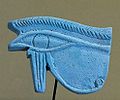
There can be little doubt that the TWC logo is a stylized Eye of Horus, a form of the All-Seeing Eye.


The Eye of Horus, Wedjat, (previously Wadjet and the Eye of the Moon; and afterwards as The Eye of Ra) or ("Udjat") is an ancient Egyptian symbol of protection and royal power from deities, in this case from Horus or Ra. The above object from Egypt is on exhibit at the Louvre.

The sun deity is Ra (Re). The symbol is seen on images of Horus' mother, Hathor or Isis, and on other deities associated with her.

Wedjat was a solar deity and this symbol began as her eye, an all seeing eye.


Parts of the symbol were used to write fractions in Egyptian hieroglyphic orthography.

Friday, March 06, 2009

Bulldozer Rampages

Three incidents in eight months have involved a Palestinian construction worker using a heavy construction vehicle to go on a "rampage-style" attack in Israel. All three mirror the infamous Killdozer incident that occurred in Colorado in 2004.

Two of the Israeli incidents occurred in July of 2008.

On July 2, 2008, a Palestinian construction worker, Hussam Taysir Duwait, used a Caterpillar 966 front-end loader (incorrectly called a "bulldozer" in early media reports) in a deadly rampage in central Jerusalem on Jaffa Street. He used the construction vehicle to crush several cars and ram into buses and pedestrians, killing three people and injuring 45, before he was shot and killed by Israeli police.

The identity of the man who shot the driver is an intriguing detail of the incident. At the point when the vehicle had stopped for the first time, three men had climbed up to the cabin: A 20-year old off-duty soldier from Jerusalem who had recently enlisted as an elite Israel Defense Forces commando and whose name has been published as "Moshe Plesser," armed civilian Oron Ben Shimon, who is a regional manager of a security firm, as well as an unnamed policeman.

According to Oron, while he was struggling with the driver inside the cabin, he shouted at the soldier to shoot the driver. The soldier then grabbed Oron's handgun and killed Duwait with three shots to the head at point blank range. The soldier was quoted as saying that "I got closer to the bulldozer, the whole time looking for my weapon to shoot him." Coincidentally, the soldier is the brother-in-law of Captain David Shapira, the paratrooper officer who shot and killed the perpetrator in the Mercaz HaRav massacre.

Three weeks later, on Tuesday, July 22, 2008, another east Jerusalem Arab resident, Ghassan Abu Tir, drove an earth-moving machine into a number of cars in downtown Jerusalem, before he was shot and killed. That attack, which left some 16 people injured, took place in Jerusalem’s upscale hotel district, close to the King David Hotel, where Senator Barack Obama, the then-presumptive Democratic nominee for president, was to stay on Tuesday evening.

The July 22 attack occurred near the Israeli presidential residence, where President Shimon Peres was having lunch with the Palestinian president, Mahmoud Abbas. It was the first visit by a Palestinian leader to the residence.

The driver, Ghassan Abu Tir, a Jerusalem resident in his early 20s, came from Umm Tuba, an Arab village in the southeast area of the city with a strong Hamas presence.

Now it has happened again.

On Thursday, March 5, 2009, a Palestinian driver was shot dead in Jerusalem after slamming his tractor into a police car and a bus. The killing happened as tensions flare over Israel's planned demolition of Arab homes in East Jerusalem and a spate of new violence in Gaza.

It was a scene of chaos on Jerusalem's busy Menachim Begin Highway in the moments after police said the Palestinian driver of a large construction vehicle smashed the front-end loader into a police car and a bus.

An Israeli cab driver told Israel Radio he pulled a gun and opened fire on the Palestinian.

He said he saw a terrorist act, and saw the police car fly into the air. He said he got out of his car with his gun. He said he fired four shots and killed the man. Then, he said, a policeman came and "finished the man off."

Police and hospital officials said the man died from his wounds. The officers inside the car sustained minor injuries.

Police said they found a copy of the Muslim holy book, the Koran, open in the vehicle - something Israeli authorities in the past have associated with attacks by Muslim extremists.

No one has claimed responsibility for the crash.

Officials are probing the circumstances surrounding the incident, but Israeli authorities quickly labeled it an act of terrorism.

Jerusalem Mayor Nir Barkat went on television shortly after and called it "an attack to murder innocent people."

Tensions remain high due to Israel's plans to demolish scores of Arab homes built without permits in East Jerusalem to make way for an archeological zone.

Copycats of the Thursday incident could happen.

After the two attacks of last July, it is to be noted, in September 2008, a Palestinian was shot and killed after he drove his car into a group of Israeli soldiers near Jerusalem's Old City.

The BMW terror attack of September 22, 2008, in which a resident of East Jerusalem drove a black BMW into a group of off-duty soldiers standing on a Jerusalem street injuring 19, was an apparent copycat attack, said The New York Times reporter Isabel Kershner.

Similar "rampages" have occurred outside of Israel, including two relatively infamous cases.

A M60A3 TTS tank was involved in a police chase, when one was stolen by Shawn Nelson, 35, an unemployed plumber, from an Army National Guard armory and taken on a rampage through San Diego, California. The M60 Patton tank was taken on its rampage on May 17, 1995, destroying cars, fire hydrants, and an RV. Nelson was killed by police when he refused to surrender after the tank got stuck on concrete freeway dividers. News footage of the 23-minute, televised chase through the streets of the Clairemont neighborhood in San Diego, has been shown numerous times on "World's Wildest Police Videos" and other such programs.

Finally, there is the so-called "Killdozer" event.

Marvin John Heemeyer (October 28, 1951 – June 4, 2004) was an American welder and owner of an automobile muffler repair shop. On June 4, 2004, frustrated over the adverse outcome of a zoning dispute, Heemeyer used a Komatsu D355A bulldozer armored with layers of steel and concrete to demolish the town hall, a former judge's home and other buildings in Granby, Colorado. The rampage ended when the bulldozer became immobilized. After a standoff with law enforcement agencies, Heemeyer died when he used his .357-caliber handgun to kill himself.

The Killdozer, as it was called in news reports, had been fitted with makeshift armor plating covering the cabin, engine and parts of the tracks. For visibility, the bulldozer was fitted with several video cameras linked to two monitors mounted on the vehicle's dashboard. The cameras were protected on the outside by 3-inch shields of bulletresistant plastic. Onboard fans and an air conditioner were used to keep Heemeyer cool while driving and compressed air nozzles were fitted to blow dust away from the video cameras. Food, water and life support were present in the almost airtight cabin. In places, the vehicle's armor was over one foot thick, consisting of concrete sandwiched between sheets of steel to make ad-hoc composite armor. This made the machine impervious to small arms fire and resistant to explosives; three external explosions and over 200 rounds of firearm ammunition fired at the bulldozer had no effect on it.

Wednesday, March 04, 2009

Cricket Attack: Copycat of Mumbai

Imagine a terrorist attack on the Boston Red Sox traveling in Japan or Cuba. Outside of the USA, the rest of the world has been horrified by the news of the attack on the Sri Lankan national cricket team.

"International cricket’s been murdered in Pakistan now, officially," reports Time.

This violent event is being headlined globally as a "Copycat of Mumbai." Reuters did so, as did newspapers from South Africa to the UK, and others from India to Australia. While this event is going largely unnoticed in North America, it certainly is getting big media attention elsewhere.

I watched the breaking news unfold from my central London hotel, early March 3, 2009, Tuesday morning, as it was being broadcast live from Pakistan on the BBC news. Lahore, the capital of the Punjab district of Pakistan was the target city. The people target were cricket players. (As fate would have it, the evening before, I appeared on the Paul O'Grady show with a large group of Punjab dancers and singers. It's a small world.)

The attack on the Sri Lankan cricket team in Pakistan bore the hallmarks of the same militants that carried out the attack on Mumbai in November, a senior Pakistan official said late on Tuesday.

Around dozen heavily armed assailants attacked the Sri Lankan cricket team's bus and a police escort as they drove to a stadium in the Pakistani city of Lahore.

A dozen terrorists, armed with Kalashnikovs, grenades and rocket launchers, attacked the team bus for 15-20 minutes. Eight cricket players were injured; five policemen and a bus driver died. Reserve Umpire, Ahsan Raza, is still in critical condition.

On Wednesday, the police had surrounded the area where the attackers were believed to be now holed up.

"I want to say it's the same pattern, the same terrorists who attacked Mumbai," Salman Taseer, governor of central Punjab province, told reporters at the site of the attack.

"They are trained criminals. They were not common people. The kind of weaponry they had, the kind of arms they had, the way they attacked ... they were not common citizens, they were obviously trained."

Ten gunmen killed 179 people in the Indian financial capital of Mumbai between Nov. 26-28, 2008.

The copycat angle for the two attacks was not lost on the editorial writer Siddharth Varadarajan for The Hindi:

The Lahore police chief and the Punjab governor have noted obvious similarities between the modus operandi of the Lahore terrorists and the 10 Lashkar-e-Taiba men who struck Mumbai. The supposition is that the same group which masterminded the attack on India’s commercial capital has now targeted Lahore. Or that another group equipped with similar capabilities, training and even motivation has copied the Mumbai MO.

Since imitation is not just the sincerest form of flattery but also of incrimination, the last thing the planners of any supposed tit-for-tat Indian attack would do is unleash armed men with backpacks in a crowded metropolis. The hallmark of an intelligence agency black operation is deniability. The fortuitous arrest of Ajmal Kasab who was supposed to die fighting -- helped India unravel the full extent of the Mumbai conspiracy. Against this backdrop, staging an attack with 12 assailants and Indian ordnance (as some Pakistani channels are speculating) would be an act of such foolishness that it is absurd to think RAW (Indian Research & Analysis Wing) would involve itself in such a risky venture. That it would want to do so at a time when Islamabad is conceding the validity of Indian claims about the involvement of Pakistani nationals in the Mumbai conspiracy simply defies reason.

But if the theory of Indian involvement in Lahore is ridiculous, the Indian side too needs to ask what Tuesday’s copycat attack reveals about the wider motivation and affiliation of the Mumbai attackers. The Mumbai incident was aimed at India, the India-Pakistan peace process and also the civilian government in Pakistan. Lahore is clearly targeted at the third objective, and can be seen, more generally, as an outgrowth of the steady inroads terrorist organisations have made in the heartland of the country. Emboldened by Islamabads capitulation to the Tehrik-e-Nafaaz- e-Shariati-Mohammadi (TNSM) and the Tehreek-e-Taliban Pakistan in Swat, as well as the in-fighting within the secular parties, the jihadi groups are upping the ante. Cricket is the most visible icon of secular Pakistan, and perhaps the only competitor militant Islam faces in its struggle to tame the wayward Pakistani mind. The intended target for the attack could well have been the Pakistani team itself, though attacking the Sri Lankan guests serves the additional goal of ensuring the demise of international cricket in the country.

Saturday, February 28, 2009

Self-Immolations Spread

Politically-related suicides-by-fires are increasing. In the wake of media attention to immolations in China and USA, there's breaking news of fires by a Tibetan monk in Asia, and a man in London's "protest" square.

A man apparently set himself on fire outside Britain's Parliament on Friday, February 27, 2009, and he was taken to a hospital with superficial burns, authorities told the UK media.

Police said the man was on fire "for a short time" in Parliament Square in the heart of London. Without saying specifically that the man attempted self-immolation, police said they did not believe anyone else was involved.

A police spokesman said the man's burns were superficial and "certainly not critical." He spoke on condition of anonymity in line with force policy.

There was no immediate word on who the man was or why he would set himself on fire. But it follows two attempts at self-immolation by men who have been reported to be ethnic Tamils based in Britain.

(In Sri Lanka, on February 26, 2009, 36-year old worker of actor Vijaykanth led DMDK attempted self immolation over the Sri Lankan Tamils issue. He poured kerosene over his body and set himself ablaze at Vellappatti village in this district, police said. He was immediately rushed to the Christian Medical College hospital, where his condition was stated to be critical.)

Back in the UK, on February 14, 2009, a Tamil was arrested outside Downing Street, home of the British prime minister, before he could set himself ablaze. That came days after a 26-year-old Sri Lankan protester poured gasoline over himself and burned to death outside the U.N. complex in Geneva.

Tamils have been holding steady protests over the Sri Lanka's military action against ethnic Tamils.

In Geneva, police found a five-page letter identifying the man and declaring that the self-immolation was to protest developments in the island nation.

Sri Lanka's government is fighting to crush the rebels and end their 25-year campaign for an independent homeland for the country's ethnic minority Tamils, who have suffered marginalization under the country's majority ethnic Sinhalese. More than 70,000 people have been killed in the violence.

Meanwhile, the Washinton Post reports on another Tibetan-related self-immolation from Asia that had an awful reaction from Chinese authorities.

A young Tibetan monk was shot by Chinese police after he set himself on fire Friday, February 27, 2009, the third day of the Tibetan New Year, at a market in Sichuan province's Aba prefecture, Tibetan activist groups said, citing eyewitnesses.

Many Tibetans this year are avoiding celebrating the New Year or are instead using the 15-day holiday to commemorate those killed in deadly riots in Lhasa last March. Chinese authorities, determined to avoid a recurrence of the violence, have sharply increased security patrols, detentions and so-called reeducation campaigns. They are especially nervous about March 10, the 50th anniversary of the 1959 Tibetan uprising, which Chinese troops forcibly suppressed shortly before the Dalai Lama fled into exile and Beijing imposed its own government in Tibet.

Witnesses told the activist groups that the monk's protest came shortly after he and about 1,000 other monks were refused entry to the main prayer hall at the Kirti Monastery in Aba because local authorities had forbidden observation of Monlam, a traditional prayer festival held after Losar, as the New Year is known. In defiance of the order, the monks sat down outside to begin their prayers about 1 p.m. while older monks pleaded with them to disperse, according to Students for a Free Tibet and the Washington-based International Campaign for Tibet.

The monks complied, but then a monk in his 20s named Tapey came out of the monastery, took out a homemade flag bearing a photograph of the Dalai Lama and at 1:40 p.m. walked to a nearby street market. He had doused himself with oil by the time he reached an intersection in the market, where he set himself on fire, the activist groups said.

Witnesses said police then fired three shots at Tapey. At the first shot, he fell, said Kate Saunders, a spokeswoman for the International Campaign for Tibet, and officials removed him from the scene.

Eyewitnesses said they believed he was dead, but his condition has not been confirmed.

Phones at the public security bureau and government offices in Aba county were not answered Friday night and early Saturday. A doctor at Aba Hospital who gave his surname as Luo said, "Even we don't know where the monk is. Hospital officials had a meeting and told us not to say anything."

After the incident, 500 monks from the monastery immediately began funeral rites for the monk.

A Chinese employee of an Internet cafe surnamed Mu said the streets of Aba were largely empty, except for armed policemen. Shops have been closing earlier than usual, , he said.

The Kirti Monastery in Sichuan has links to the Kirti Monastery in Dharmsala, India, where monks said eyewitnesses in Tibet had reported the self-immolation and the shooting, the activist groups said.

Dozens of Tibetans from in and around Aba prefecture were killed last year.


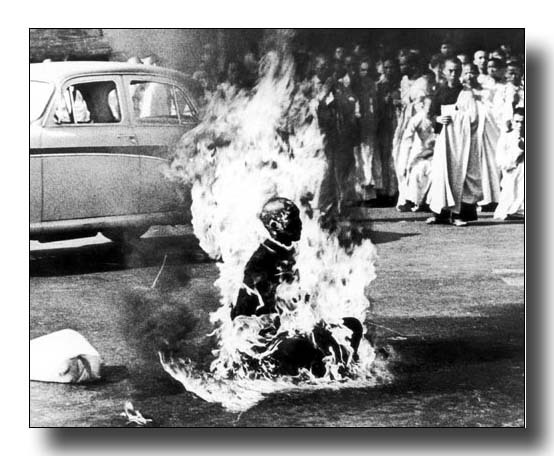
The modern history of political self-immolations began in Vietnam in 1963.

Friday, February 27, 2009

Immolations: China/Chicago


University of Washington, USA: 2008

Now Tibet, again.

Three men set themselves on fire at a busy road crossing in Wangfujing, which is close to the famous Tienanmen Square in the heart of Beijing, on Wednesday afternoon (February 25, 2009), according to Asian media reports.

The Beijing administration has indicated that they were trying to voice some grievance while making the attempt at self-immolation. But it did not disclose any details. The Beijing government did not disclose the identify of the persons, who ignited themselves inside a car around 3pm. But it said that they came from outside the city in a car bearing a non-Beijing license plate. Xinhua said there were one woman and two men in the car at the time of the incident.

The fire assumed significance because it occurred on the Tibetan New Year Day.

free tibet

Now word comes of a Chicago area man who has died in a self-immolation.

A 58-year-old Wal-Mart employee who said he "couldn't take it anymore" lit himself on fire outside the Bloomingdale store where he worked late Thursday night (February 26, 2009) and was later pronounced dead at a hospital, according to Chicago-area media reports.

The Carol Stream man, who worked the overnight shift, was in a parking lot of an adjacent sporting goods store in the west suburban strip mall when he set himself on fire with lighter fluid around 10 p.m., said Randy Sater, a watch commander with the Bloomingdale Police Department.

Wal-Mart corporate spokesman Dan Fogleman said the man had worked for the company for a little over 7 years, most recently as an overnight stocker. He said he had spoken with a member of the store's management who described him as "a good guy and fun to be around."

He called the suicide "a tragic situation, and our thoughts and prayers are with the friends and family."

Wal-Mart was cooperating with authorities in their investigation, he said, but he declined to "speculate" on whether the man had been in to work last night before the incident or had spoken with any employees.

Thanks to Todd Campbell for the heads up on the Carol Stream incident.

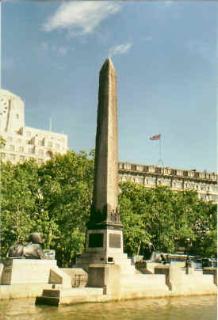
Cleopatra's Needle

I'll be on television in London soon, on The Paul O'Grady Show on Monday, March 2, 2009. The program is on Olga TV, and will be broadcast live from 5:00 PM to 6:00 PM, local time. While the show is well-known in the UK, it is virtually unknown in North America.

I'll be their invited guest, and the topics will be cryptozoology, the Dover Demon, Nessie, and such. I might even talk about the Hobbs name game. I may be on for only five minutes. Who knows?


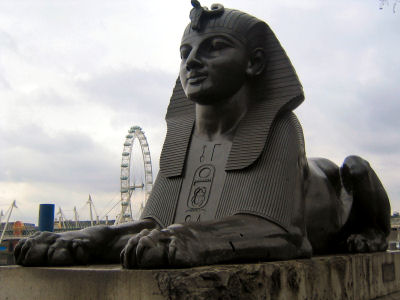
While in London, staying near the London Eye, visible in the distance above, near one of Cleopatra's Needle's guardian sphinxes, I'll take a look at Masonic Egyptian history, through their obelisk dimly lit.

Mohammed Ali awarded an obelisk to England in 1819 but it laid prostrate in Alexandria, where it had fallen centuries before.


It was not until 1875 that an eminent Mason, General Sir James Alexander, resolved to ship 'Cleopatra's Needle' to London. This now occured, but only because another Mason, Dr. Erasmus Wilson, agreed to put up 20,000 Pounds to ship and erect it. The two engineers who planned its transportation, Dixon and Stephenson, were also Masons. In 1877 the obelisk was encased in an iron cylinder, christened Cleopatra, and towed out from Alexandria. The voyage was a catastrophe. During a storm in the Bay of Biscay the Cleopatra broke loose. Six men drowned. The obelisk did not sink but was recovered and eventually towed to England. At last on 13 September 1878 it was erected alongside the Thames on Victoria Embankment - a less glorious site than Parliament Square, which some worthies had suggested but which the oblelisk's 186 tons might do to underground gas and sewer pipes. For his massive expenditure Erasmus Wilson received a knighthood.

Various items were encased in the obelisk's new pedestal: a box of hairpins, a portrait of Queen Victoria, a shilling razor and chapter 3 verse 16 of the Gospel of St John in 215 languages: 'For God so loved the world, that he gave his only begotton Son, that whosoever believeth in him should not perish, but have everlasting live.' As this was buried out of sight, posterity might find the inscription on the obelisk more eloquent. These spoke of the Sun God Ra, of Horus and Osirus: another God's son whose death gave believers everlasting life.

Source: "Obelisks and Freemasonry"


Cleopatra's Needle is flanked by two faux-Egyptian sphinxes cast from bronze that bear hieroglyphic inscriptions that say netjer nefer men-kheper-re di ankh (the good god, Thuthmosis III given life). These Sphinxes appear to be looking at the Needle rather than guarding it. This is due to the Sphinxes' improper or backwards installation.

Obelisks come in pairs; there are three Ancient Egyptian obelisks that were re-erected in London, Paris, and New York City during the nineteenth century. The London and New York ones are a pair, while the Paris one comes from a different original site, where its pair remains.


Also, I understand there is a bit of a blush on the commemorating column to the Hell Fire of London, 1666, via the monument there. My tour guide and friend who I'll be seeing in London, Bob Rickard, founder and editor of Fortean Times, tells me the monument is "newly re-opened after being renovated."

My thanks to Chris Knowles' brief caption about an obelisk here. It reminded me to mention the forthcoming *coincidence* of my close encounter with a London obelisk, in a couple days.

Thursday, February 26, 2009

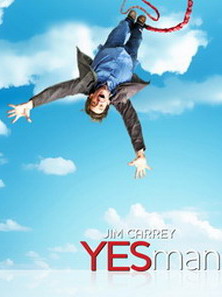
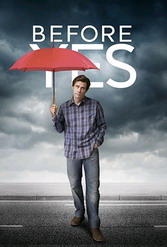
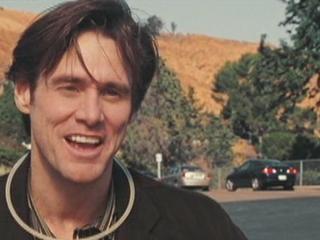
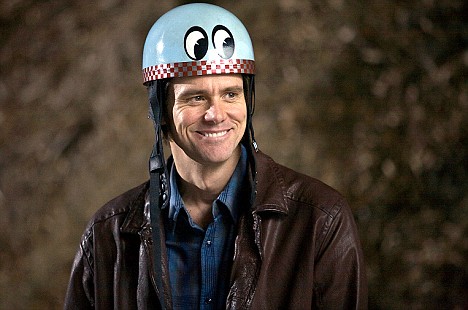
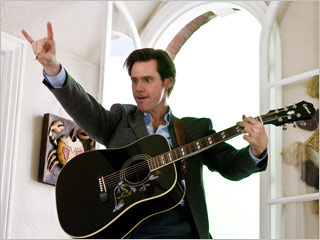
Yes Man's Hidden Messages

Yes Man is out on DVD on April 7, 2009.

Is the movie full of hidden messages?


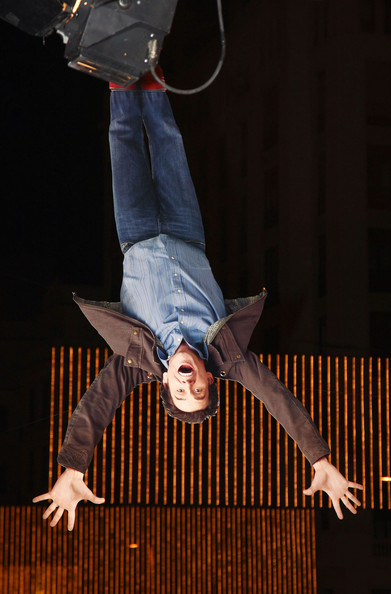
The Hanging Man?


Bigfoot Lodge?


The Hand Signal?


The Red Bull and other scarlet jokes?


The All-Seeing Eyes?


The Twin Towers?


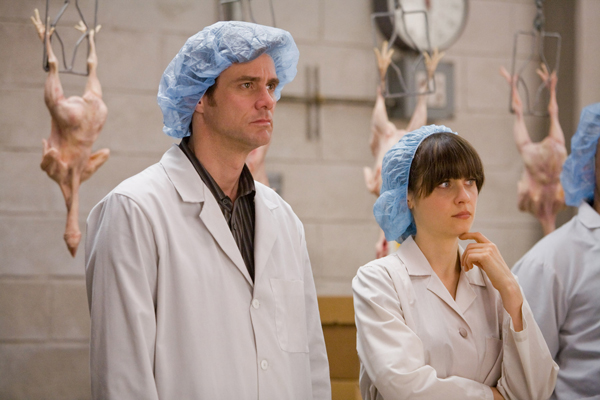
The Hanging Chickens?


The Zoey?


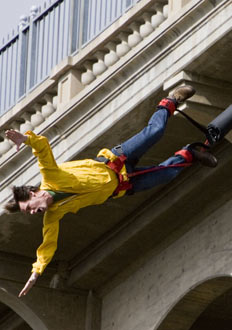
The director Peyton Reed?