Hunkpapa Lakota holy man and leader Sitting Bull (Húŋkešni), 59, was killed on December 15, 1890, at the Standing Rock Indian Reservation, Grand River, South Dakota.
+++
During 2017, it will be 40 years since a series of remarkable events occurred on the Standing Rock Reservation. The Little Eagle “flap” was covered extensively in the media, with articles about the incidents appearing in the national news magazines, Time and Newsweek, for example.
Initially, the current news from Standing Rock has received less mainstream attention than the Bigfoot stories of four decades ago did.

On September 7, 1974, a calf was found mutilated in Pierce County, Nebraska. The blood had been drained from the animal and the sexual organs removed.
The day before, on September 6, 1974, near Jefferson, South Dakota, Jim Douglas saw a very tall, sandy Bigfoot dragging a red furry object through an alfalfa field. The Bigfoot stood and watched Douglas.
Three years later, during mid-September 1977, near Little Eagle, South Dakota, Chris Howiatow and others said a “big ape” watched them from a hillside as they checked cattle. The Bigfoot then ran into the brush as the men approached.
This Little Eagle encounter was near the beginning of three full months of Taku-He (the local name for Sasquatch) sightings, at least 25 in total, in that area of South Dakota, and elsewhere on the Standing Rock Reservation.
Little Eagle, in Corson County, South Dakota, was a community of about 300 people in 1977, with 99% of the population being Native Americans. The entire county lies within the Standing Rock Indian Reservation, which is the home of Dakota and Lakota people.
The Taku-He sightings were typically lowkey, such as the two by Phoebe Little Dog who saw a Bigfoot in a cattle pasture on October 6th and then again in the same one on October 13th, 1977, north of Little Eagle. The Taku-He encounters were reported by many locals, including several by police officers Verdell Veo, Bobby Gates, Selvin Arlen and others. The Bigfoot events at Little Eagle continued until the 5th of December 1977.
Meanwhile, in North Dakota, in mid-September 1977, near Cannonball River, Paul Monzelowsky and his son chased a 8-9-ft Bigfoot, using their pickup truck. The Bigfoot ran “as fast as a horse” and leapt across a creek.
Researched and mostly written on 9.7.2007. Sources: Richard Hall, Zetetic Scholar, p. 49, case 6. Janet and Colin Bord, “Chronological List of Bigfoot Sightings (1818-1980)” in The Bigfoot Casebook Updated. Mark A. Hall, “Contemporary Stories of ‘Taku-He’ or ‘Bigfoot ‘ in South Dakota as Drawn from Newspaper Accounts,” The Minnesota Archaeologist 37(2): 63-78 (May 1978).

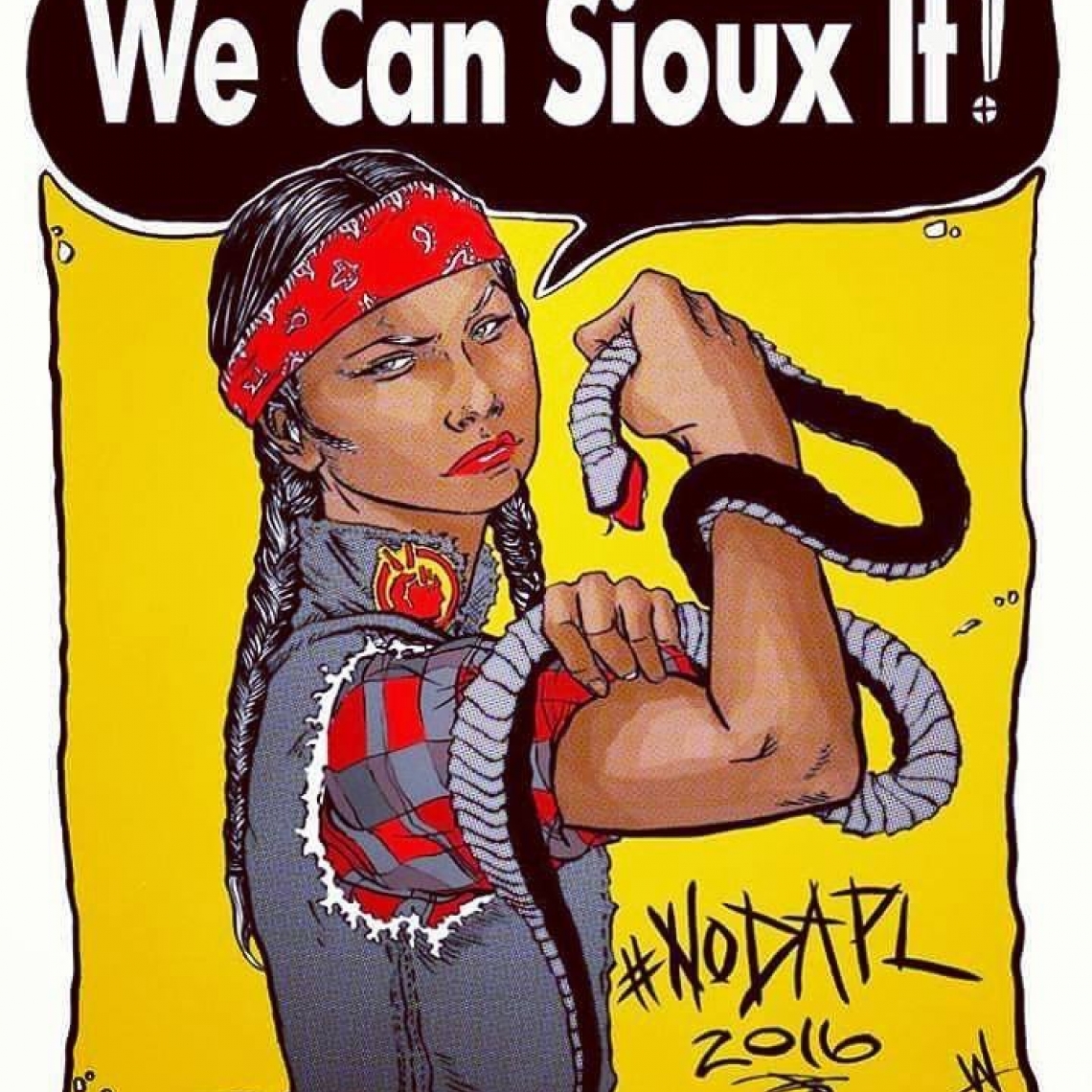
The Standing Rock's Dakota Access Pipeline Protests
The Standing Rock Native American Reservation is a Hunkpapa Lakota and Yanktonai Dakota Native American reservation in North Dakota and South Dakota in the United States. The sixth-largest reservation in land area in the United States, Standing Rock includes all of Sioux County, North Dakota, and all of Corson County, South Dakota, plus slivers of northern Dewey and Ziebach Counties in South Dakota, along their northern county lines at Highway 20.
On April 1, 2016, an elder member of the Standing Rock Sioux tribe and her grandchildren established the Sacred Stone Camp to protest the Dakota Access Pipeline, which directly threatens the only water supply for the Standing Rock Reservation. Founded by LaDonna Brave Bull Allard, the camp is on her private land, and is a center for cultural preservation and spiritual resistance to the Dakota Access Pipeline. Protests at the pipeline site in North Dakota began in the spring of 2016 and drew indigenous people from throughout North America as well as many other supporters, creating the largest gathering of Native Tribes in the past 100 years. A number of planned arrests occurred when people locked themselves to heavy machinery in civil disobedience. Criticism has been directed at Facebook for assisting the local authorities in censoring the protesters.
In the summer of 2016, a group of young activists from Standing Rock ran from North Dakota to Washington, D.C., to present a petition in protest of the construction of Energy Transfer Partners' Dakota Access Pipeline, which is part of the Bakken pipeline, and have launched an international campaign called ReZpect our Water. The pipeline, which goes from North Dakota to Illinois, the activists argue, would jeopardize the water source of the reservation, the Missouri River. The Standing Rock Sioux Tribe has filed an injunction against the U.S. Army Corps of Engineers to stop building the pipeline. In April 2016, three federal agencies -- U.S. Environmental Protection Agency, U.S. Department of Interior, and Advisory Council on Historic Preservation—requested a full Environmental Impact Statement of the pipeline. In August 2016, protests were held near Cannon Ball, North Dakota.
By late September it was reported that there were over 300 federally recognized Native American tribes and an estimated 3,000 to 4,000 pipeline resistance supporters residing in the camp, with several thousand more on weekends.
As of late September 2016, major U.S. broadcast news outlets have given scant attention to the Standing Rock protests, even after a video was aired on Democracy Now! showing Dakota Access guard dogs with bloody mouths after attacking protesters. Summary source.
++++++

++++++


The Standing Rock's Dakota Access Pipeline Protests
The Standing Rock Native American Reservation is a Hunkpapa Lakota and Yanktonai Dakota Native American reservation in North Dakota and South Dakota in the United States. The sixth-largest reservation in land area in the United States, Standing Rock includes all of Sioux County, North Dakota, and all of Corson County, South Dakota, plus slivers of northern Dewey and Ziebach Counties in South Dakota, along their northern county lines at Highway 20.
On April 1, 2016, an elder member of the Standing Rock Sioux tribe and her grandchildren established the Sacred Stone Camp to protest the Dakota Access Pipeline, which directly threatens the only water supply for the Standing Rock Reservation. Founded by LaDonna Brave Bull Allard, the camp is on her private land, and is a center for cultural preservation and spiritual resistance to the Dakota Access Pipeline. Protests at the pipeline site in North Dakota began in the spring of 2016 and drew indigenous people from throughout North America as well as many other supporters, creating the largest gathering of Native Tribes in the past 100 years. A number of planned arrests occurred when people locked themselves to heavy machinery in civil disobedience. Criticism has been directed at Facebook for assisting the local authorities in censoring the protesters.
In the summer of 2016, a group of young activists from Standing Rock ran from North Dakota to Washington, D.C., to present a petition in protest of the construction of Energy Transfer Partners' Dakota Access Pipeline, which is part of the Bakken pipeline, and have launched an international campaign called ReZpect our Water. The pipeline, which goes from North Dakota to Illinois, the activists argue, would jeopardize the water source of the reservation, the Missouri River. The Standing Rock Sioux Tribe has filed an injunction against the U.S. Army Corps of Engineers to stop building the pipeline. In April 2016, three federal agencies -- U.S. Environmental Protection Agency, U.S. Department of Interior, and Advisory Council on Historic Preservation—requested a full Environmental Impact Statement of the pipeline. In August 2016, protests were held near Cannon Ball, North Dakota.
By late September it was reported that there were over 300 federally recognized Native American tribes and an estimated 3,000 to 4,000 pipeline resistance supporters residing in the camp, with several thousand more on weekends.
As of late September 2016, major U.S. broadcast news outlets have given scant attention to the Standing Rock protests, even after a video was aired on Democracy Now! showing Dakota Access guard dogs with bloody mouths after attacking protesters. Summary source.