Showing posts with label Sychromysticism. Show all posts

Thursday, July 06, 2017

7.7.17


Have you heard some of the things people are talking about on social media that might happen on July 7th in 2017?


There supposedly could be a false flag alien disclosure/invasion for July 7th this year.

Maybe there will be a terrorist attack on that date?

What has happened recently for people to look with caution at 7/7/17?

Here are some of those events for past July 7ths:


1865 – Four conspirators in the assassination of Abraham Lincoln are hanged. George Atzerodt (b. 1833); David Herold (b. 1842); Lewis Payne (b. 1844); and Mary Surratt (b. 1823). A military tribunal convicted them, although a civil court should have presided. The executions were supervised by General Winfield Scott Hancock, a prominent Freemason and first leader of the NRA.


1930 – Sir Arthur Conan Doyle, the creator of Sherlock Holmes, died.
1937 – The Peel Commission Report recommended the partition of Palestine - the first formal recommendation for partition in the history of Palestine.
1980 – Institution of sharia in Iran.


2005 – A series of four explosions occured on London's transport system, killing 56 people, including four suicide bombers, and injuring over 700 others.

2016 – Former U.S. Army soldier Micah Xavier Johnson shot fourteen policemen during an anti-police protest in downtown Dallas, Texas, killing five of them. He was subsequently killed by a robot-delivered bomb.


Then there are the 7.7.17 movie openings, which some synchromystics view as insights into syncs to occur. The major films opening are Spider-Man: Homecoming (yes, yet again, the beginning story all over again), A Ghost Story (with Casey Affleck returning to be a benevolent presence), Hickok (about "Wild Bill"), and Superpowerless (what happens to a superhero who loses his powers at 40).

Monday, September 17, 2012

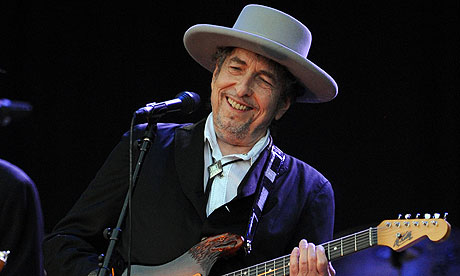
Synchromystic Bob Dylan


I have connected with Bob Dylan's music for a long time. Since 1975, I've seen him perform several times - in San Francisco, Cambridge, and Portland, Maine. I appreciate his varied styles; that is all kinds of his music, whether acoustic, electric, folk, folk-rock, blues, ballads, or whatever he has to offer for the night. I have seen him grow old, as I have, and enjoy his gravelly voice as a testimony to his hard years on the road, in the studio, and on stage.

To me, Dylan is a poet. Simply and profoundly. But he may turn out to be more. His lyrics are Rorschach tests for every individual listener, and each person forms their own perceptions from his songs.


Quite literally, Dylan's newest album, Tempest is a masterpiece. Songwriter, critic, and my friend Jerry Clark, privately shared with his circle of music friends these insights: "This is among the greatest of all Dylan recordings. It holds up against just about anything in his career in its beauty and maturity."

With that in mind, I feel his new album Tempest and his concurrent interview in Rolling Stone reveal Bob Dylan as a synchromystic prophet or, at the very least, a twilight language patron. 

Others have noticed this too. Andrew W. Griffin, editor of the Red Dirt Report, early in August looked at Dylan’s upcoming Tempest album. In Griffin's excellent "A 'Tempest
On The Horizon," he wrote: "You have song titles including 'Soon After Midnight.' 'Long and Wasted Years.' 'Scarlet Town.' 'Early Roman Kings.' Of course there is 'Tempest' and the song 'Pay in Blood' with the line 'I’ll pay in blood, but not my own.' And note 'Scarlet Town.' This would echo the blood spilled in Aurora – a “red dawn” event – in the state of Colorado (Spanish for 'colored red')."

"The night is darkest just before the dawn. And I promise you, the dawn is coming." 
~ Harvey Dent, The Dark Knight, 2008.

Griffin's essay acknowledges that I've been talking about the lines in The Dark Knight Rises alluding to a "storm coming" for some time. Dylan's Tempest merely reinforces that notion.

Selina Kyle: There's a storm coming. 
Bruce Wayne: You sound like you're looking forward to it. 
Selina Kyle: I'm adaptable. 
~ The Dark Knight Rises, 2012

Griffin also notes that Tempest, despite that various details of the music were known for weeks, had as its official release the highly symbolic date of September 11th ~ symbolic individually to Dylan, as well as societally to America, needless to say.

Let's look at some segments of Dylan's songs' lyrics:

Listen to that Duquesne whistle blowingBlowing like it's gonna sweep my world awayI'm gonna stop in Carbondale and keep on goingThat Duquesne train gonna ride me night and dayYou say I'm a gambler, you say I'm a pimpBut I ain't neither oneListen to that Duquesne whistle blowingSounding like she's on a final run….Listen to that Duquesne whistle blowing
***
Listen to that Duquesne whistle blowing
Blowing like it's gonna kill me deadCan't you hear that Duquesne whistle blowingBlowing through another no good townThe lights of my native land are glowingI wonder if they'll know me next time aroundI wondered if that old oak tree's still standingThat old oak tree, the one we used to climbListen to that Duquesne whistle blowingBlowing like she's blowing right on time~ "Duquesne Whistle" lyrics by Bob Dylan

I know the phantom of the train of which Dylan speaks. I sense the "rhythm of the rail" that his music invokes. If one mentions "Duquesne" (read Du Quoin, Illinois) and Carbondale, then this song is historically talking about Amtrak's City of New Orleans (although the train runs are called the Illini and the Saluki today).

The Fifties were a simpler time, at least for me and the situation I was in....It was just woods and sky and rivers and streams, winter and summer, spring, autumn. The changing of seasons. The culture was mainly circuses and carnivals, preachers and barnstorming pilots, hillbilly shows and comedians, big bands and whatnot. Powerful radio stations and powerful radio music.
~ Bob Dylan, "The Rolling Stone Interview," Rolling Stone, Issue 1166, September 27, 2012.
I grew up in Illinois in the '50s, in the time of the "Duquesne Whistle." Damn, my mother's mother, Nellie Grey, was murdered in the coal mining town of Shelbyville, Illinois, on Valentine's Day in 1940, by my mom's stepfather. A bullet from a rifle whizzed by my future mother, killing her mom on the davenport in her sister's front room. Life was simple back then. But the 1940s turned into the 1950s, and it became a time of baseball, vanilla ice cream, outside circuses, and searching in the woods for wild animals.

In the 1960s, I got out of central Illinois and I rode Illinois Central's City of New Orleans to college. Well, at least, infrequently, that is, when I had the fare and didn't have to hitchhike to Southern Illinois University in Carbondale (the home of the Salukis) in Little Egypt.

Dylan's music picks up nicely on the rattling tracks and the sway of the cars. As one academic blogger wrote, Bob Dylan’s “Duquesne Whistle,” is "the only song" he could "think of that mentions trains and Carbondale."

(I was reminded, of course, of Steve Goodman's "The City of New Orleans" too. See Goodman singing his song at the end of this posting. Goodman died at 36. I'm glad we still have Dylan around at 71.)

Griffin notices that the song "Scarlet Town," calls attention to Colorado's Aurora (literally, "red dawn"). In "Duquesne Whistle," Dylan mentions "that old oak tree." The Oak Creek, Wisconsin, Sikh Temple attack flashed into my mind when I read those lyrics.

Hauntingly, another of Dylan's lyrics says,

It's soon after midnight,And my day has just begun
"Soon After Midnight" synchs with the actual time of the Aurora shootings.
And what do we see in "Early Roman Kings"? The early early Friday morning shooting, down from the mountains of Colorado, in Aurora? Or was this a flash about the suicide that followed a month after Aurora? I penned about just such a death, without knowledge of Dylan's song, in "Tony Scott: Divine Sacrifice of the King."
All the early Roman kingsIn the early early mornComing down the mountainDistributing the cornSpeeding through the forestRacing down the trackYou try to get awayThey drag you backTomorrow is FridayWe'll see what it bringsEverybody's talkingBout the early Roman kings

Kurt Gegenhuber writes about one song when he says, "Bob has thrown Duquesne to the Dylanologists like meat to ravening wolves." 

Of course Dylan has. And none of what he wrote is really about Aurora. Or Tony Scott. Or anything prophetic, is it?

This is true about this entire album. As Gegenhuber notes, "Bob Dylan is indeed sending me — and not you — subliminal messages through his song lyrics."

But, of course, Dylan is sending all, every one of us, messages, overt and covert.


In the comment section to Gegenhuber's blog posting, Jerry Clark checks in and sends along some insights about the title song, "Tempest," which is based more on the sinking of the Titanic than Shakespeare: 
Dylan's "Tempest" is indeed based on the 1952 Carter Family version of "The Titanic." It quotes the lyrics, prominently but not exclusively the opening line "The pale moon rose in its glory" (not unique to the Carters, by the way), and the words composed by Dylan can be sung to the older melody. "The watchman" also figures in the original, and other lyrics borrow or parody the Carters's. That may be plagiarism to Joni Mitchell, but to the rest of us, it's Dylan's continuing, brilliantly employed use of the folk process.
The LA Times writer evidently missed all of this, but at least he has some marginal awareness of Titanic ballads -- albeit, it seems, not this Carter gem -- in American traditional music.
~ Jerry Clark
Bob Dylan is not playing games. He's just being an artist. And a synchromystic. And perhaps even a Fortean.

His interview in Rolling Stone is quite interesting. It tells of Robert Zimmerman's/Bob Dylan's transformation and much more.
Among the revelations in the interview is that the death in the '60s of a Hell's Angel named Robert Zimmerman, which was Dylan's real name, captivated him to the point where Dylan believes they are somehow connected, though there doesn't appear to be a family relationship. Zimmerman's death was chronicled in the book Hell's Angel: The Life and Times of Sonny Barger, written by Barger.
As Dylan explained it to Gilmore, “Look at all the connecting things: motorcycles, Bobby Zimmerman, Keith and Kent Zimmerman, 1964, 1966. And there's more to it than even that. If you went to find this guy's family, you'd find a whole bunch more than that connected.”
He says the Barger book gave him an identity. “I didn't know who I was before I read the Barger book.”
~ Steve Marinucci 
Andrew Griffin also pointed out to me that we should look at the name of the Hell's Angel who broadsided and killed his brother Hell's Angel, "poor Bobby" Zimmerman. That Angel's name is "Jack Egan." That's a spooky shadow of "James Eagan Holmes," the alleged Aurora shooter.

From reading the Sonny Barger book, which he found was about him, Bob Dylan discovered transfiguration. The interview details his feelings, his excitement, his wonder, in finding out those "name game"/twilight language details. 

Bobby Zimmerman's motorcycle-related death occurred in 1961 (the book gives the wrong date as 1964). Dylan's near-death Woodstock motorcycle accident happened in 1966. Transfiguration took place in Dylan's life, and it is reflected in his changing art.

That's synchomysticism at work, plain and simple. Yes, it evens happens through the life and music of Bob Dylan.
The carnival came to town, the carnival left and you ran off with them. It's just what you did. You don't travel to the end of the line until someone gives you a gold watch and a pat on the back. That's not the way the game works. People really don't retire. They fade away. They run out of steam....
~ Bob Dylan, "The Rolling Stone Interview," Rolling Stone, Issue 1166, September 27, 2012.
I have a younger brother, my Irish twin, who actually ran away to a carnival and worked a summer in the South. My youngest brother took off to meet his Waterloo in Napoleon, Ohio. And my youngest sibling, my sister, departed the plains of Illinois to the earthquake country of southern California. I guess I escaped to college in Carbondale, and beyond alternative service, to be transfigured into a father and a writer. Like Dylan, I'm not done yet. And most of us aren't. 

But getting there is transformative.

We all met our Buddhas in the middle of Highway 61 or Route 66, one way or another.

###


Remember Steve Goodman, 
who died 28 years ago on September 20th.

 
Steve Goodman, singing his song, City of New Orleans.

Steve Goodman died at the age of 36 (July 25, 1948 – September 20, 1984). He was a Jewish-American folk music singer-songwriter from Chicago, Illinois. He wrote "City of New Orleans," which was made popular by Arlo Guthrie, John Prine, and Willie Nelson.  According to Goodman, "City of New Orleans" was inspired by a train trip he and his wife took from Chicago to "southern Illinois, not Carbondale," as he said in an interview, but "to Mattoon, Illinois," to visit his wife's mother in an "old folks home." Yes, that is that Mattoon ~ the site of 1944's Mad Gasser of Mattoon. Steve Goodman won two Grammy Awards and he made his family very proud of him. He died much too young. In April 1988, some of Goodman's ashes were scattered at Wrigley Field, the home of the Chicago Cubs.

###

Portions of this blog, in terms of photos and content, are reprinted under the 
as educational and/or editorial material 
of which commentary is made, 
without benefit of financial gain. 
This is applicable throughout 
the entire Twilight Language blog.
Some sources may be attributed above in embedded links, 
as well as mixtures and various tidbits from Wikipedia.


(NY: Simon and Schuster, 2004)


Monday, August 20, 2012

Tony Scott Kills Self By Jumping From LA Bridge

"Tony Scott did NOT have inoperable brain cancer, or for that matter brain cancer at all...this according to Scott's family. TMZ has learned ... Scott's wife told investigators the rumor that Tony had inoperable brain cancer is 'absolutely false,'" said TMZ late in the day.


Synchrocinematically significant producer and director Tony Scott, brother of director Ridley Scott, has died due to leaping from an LA bridge on Sunday, August 19, 2012. Tony Scott was a producer on his brother's recent Prometheus, background influence in the important Blade Runner film, and director of blockbuster movies including Unstoppable, The Taking of Pelham 1 2 3, Deja Vu, Man on Fire, Spy Games, and Crimson Tide. He was working on Prometheus II, as well as other movies.


Director Tony Scott, who was the producer on his brother's best known for the films Top Gun and Beverly Hills Cop II, died by suicide when he jumped from the Vincent Thomas Bridge in San Pedro, California.


Scott, 68, climbed a fence on the south side of the bridge's apex and leapt off "without hesitation" around 12:30 p.m., according to the Coroner's Department and port police.

A suicide note was found inside Scott's black Toyota Prius, which was parked on one of the eastbound lanes of the bridge, said U.S. Coast Guard Lt. Jennifer Osburn.

Officers with port police, the Los Angeles Police Department and California Highway Patrol joined city firefighters and the Coast Guard in searching the water for his body.

Authorities used sonar equipment to track the man in the port's murky waters and his body was recovered by a dive team around 4:30 p.m., Alva said. Scott's body was taken to a dock in Wilmington and turned over to the county coroner.

"There's nothing to indicate it is anything else at this time," said Lt. Joe Bale of the coroner's office.

Scott, 68, jumped from the bridge that spans the Los Angeles Harbor, connecting San Pedro and Terminal Island. Scott apparently parked his car in the eastbound lanes of the 6,060-foot-long bridge, scaled the barrier fence and leaped.

On October 26, 1990, 1964 Los Angeles Olympics' diving bronze medalist Larry Andreasen was a fatality after he jumped from the west tower of the bridge in an attempt to set a diving record.

The bridge was named in honor of Democratic Congressman Vincent Thomas, a Croatian-American who worked hard to have it built to replace a ferry. The bridge opened to traffic on November 15, 1963.

One of the filming locations (shown at top) in the 1985 movie, To Live & Die in L.A., is the green Vincent Thomas Bridge.

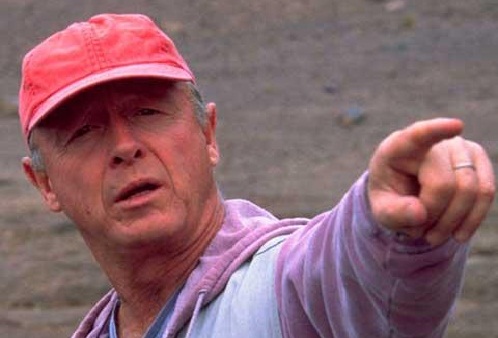
Tony Scott in his signature red cap

Tony Scott was born Anthony D.L. Scott in North Shields (a location just mentioned by me yesterday here), England, in 1944. Tony Scott got his start as a teenager in films by starring in his older brother Ridley Scott's film Boy and Bicycle. In 1995, the two joined forces to create the production company, Scott Free Productions.
In the 1990s, Scott emerged as a big-budget action film director in his own right, with 1990's Revenge starring Kevin Costner and Days of Thunder with Tom Cruise. In 1998 he directed Enemy of the State with Will Smith and Gene Hackman.


It was on the set of Days of Thunder where Scott met actress Donna Wilson, whom he married in 1994. Tony Scott is survived by Wilson and their twin sons, Frank and Max. My condolences to his family, especially to those twin boys who are now fatherless. (Much has been written about twins and the synchroncinematic threads abound.)


The list of films and television productions from Tony Scott is a long one, including the forthcoming Killing Lincoln and Stoker. See more bio info at IMDb here and at Wikipedia here.


++++++

Need help? In the U.S., call 1-800-273-8255


National Suicide Prevention Lifeline


Tuesday, June 12, 2012

Blade Runner: 30 Years of Synchromysticism - Part 2 (Aztec-Mayan Symbolism)


Blade Runner: 30 Years of Synchromysticism - Part 2 (Aztec-Mayan Symbolism)
by Loren Coleman ©2012

Set in November 2019, director Ridley Scott's Blade Runner celebrates its 30th anniversary on June 25, 2012. Director Scott's immediate previous film was Alien (1979) and his most recent film, of course, is Prometheus (2012). These two films share with Blade Runner a look at our future worlds impacted by genetic engineers. Scott's 1982 American science fiction film is based on a Philip K. Dick short story, and stars Harrison Ford, Rutger Hauer, and Sean Young. For three decades, synchos (see definition at bottom) have found cinematic and real world coincidences, synchronicities, and linkages within this highly textured movie.

Ridley Scott has always maintained that Blade Runner is merely a piece of entertainment, nothing more, yet it is his "most complete and personal film." When Scott met Philip K. Dick during the post-production process, he specifically told Dick that he was not interested in "making an esoteric film."

Despite plans that did not include a journey to the "esoteric," Blade Runner's director seems to have not understood that synchronicity, as Carl Jung might observe, is something that Ridley Scott may have not seen coming his way. It just happens.
Synchronicity takes the coincidence of events in space and time as meaning something more than mere chance, namely, a peculiar interdependence of objective events among themselves as well as with the subjective (psychic) states of the observer or observers. 
~ Carl G. Jung
Over the weekend, I watched the anniversary showings of the original 1982 Blade Runner and the 2007 "Final Cut" of Blade Runner on the Encore cable channel (repeat screenings are scheduled). Considering that the movie was set in 2019, it was intriguing to see how unimaginative the film's producers were only three decades ago about telephones, pay telephones, computers, and such. Everything was shown as retaining their then-contemporary bulkiness. Some innovative science fiction thinking was released in the flying urban vehicles and fashion, most of which has not really happened, and through grand corporate architecture, which has. In general, the film does hold up well, and is filled with synchromystic connections. It is one of my personal favorites.

Aztec Sawfish Rostrum


In Blade Runner, this time, one seemingly small item did jump out at me (I'd never noticed it in previous viewings), as seemingly out-of-place but symbolic. It was found in the apartment of Rick Deckard (Harrison Ford). What I saw, momentarily, and identified quickly was a large-toothed sawfish (a type of ray, genus Pristis) rostrum (snout) mounted on Deckard's wall, below some glyphs.


I once noticed Fortean researcher, cryptozoologist and author Ivan T. Sanderson (1911-1973) had been pictured with a sawfish rostrum at his New Jersey's SITU headquarters. Above is Sanderson's conversation/living room area in his so-called "mansion house," with the sawfish rostrum, photos by Richard Grigonis.

When I saw one, decades ago, I obtained it. That sawfish rostrum is now displayed in the International Cryptozoology Museum today (seen in the middle of the midcentury installation, above).
What is a sawfish rostrum doing in Blade Runner? I did a little research, and quickly found a link that may explain its placement.

The most frequently found large animal artifacts interred beneath the center of the Aztec universe were sawfish rostra. Above is pictured a rostrum of the sawfish Pristis pectinata in Offering 58 of the Great Temple, photo courtesy of CNCA-INAH-MEX. Used as tools of sacrifice, these rostra symbolized the blood-spilling swords that fed Cipactli. The ruins of the Aztec Great Temple was discovered in 1978 beneath the central plaza of Mexico City. This pyramid was the center of the Aztec cosmic order and used to sustain the gods. Among the offerings were the sawfish rostra. Among the codices art, there were the stylized sawfish rosta (directly below).


The Aztec-designed sword was made in imitation of the sawfish's rostrum. Matthew T. McDavitt wrote in the Florida Museum of Natural History Ichthyology Department's Shark News (March 2002), on their significance:
In Aztec belief, the world had been founded on the premise of divine sacrifice. The gods had drained all their life-force into creation and no longer had the power to sustain themselves. In a kind of cosmic conservation of energy, the Aztecs believed that the sun could not rise, crops could not grow, and rain would not fall without the regular release of life energy back to their creators. To keep the gods alive, humans were obligated to feed them their blood and hearts, the most potent source of life energy. Although the Aztecs recognized hundreds of gods, these diverse deities were just manifestations of the primary forces of the universe such as sun and earth. The sun was a giver of life and a protector of the Aztec people. The earth however, was considerably more hostile....In reality, sawfish rostra appear commonly in the Aztec codices....In Aztec language, the sawfish rostrum was known as imacuauh "its sword"....Sawfish rostra are most often depicted as symbolic 'swords' in the shield / spear bundles which symbolize warfare in Aztec iconography. There is even a structural similarity between the Aztec glass-edged swords and the sawfishes' toothy appendage.
Tyrell Corporation Buildings/Aztec-Mayan Pyramids


In the Blade Runner, the twin towers of the Tyrell Corporation dominate the landscape. They are pyramids. 

Blade Runner

Aztec

Mayan

The pyramids appear to have been based specifically on Aztec-Mayan temple pyramids, on top of which were made human sacrifices (using sawfish rosta and rostra-modeled swords by the Aztecs). In general, Aztecs, which came after the Mayas, had the simpler top on their pyramids, as did the Tyrell/Blade Runner pyramids. The movie's structures are clearly not Egyptian (below) in nature.


Behind the scenes, we do know that one pyramid model was apparently used for the illusion of two.
The model of Tyrell's pyramid was 9 feet at the base and 2½ feet high. This was a ratio of 1:750. The model ultimately caught fire and melted.
You may have noticed a Tyrell pyramid in a three-part 2009 TV British miniseries, Red Dwarf: Back to Earth. On the right, a very Blade Runner-like pyramid, appears rising out of the landscape of London (visible with Big Ben and the House of Parliament).

One other thing about some Mesoamerican pyramids is worthy of noting. At the equinoxes, the shadow of a Great Feathered Serpent (e.g. Quetzalcoatl) appears on the side of the pyramids, as seen here on the Mayan Chichen-Itza. Snake symbolism, overtly (as in Zhora and her snake) and covertly, is part of Blade Runner.


Blade Runner Insight mentions the Mayan influences and beyond:
Blade Runner's...architecture reveals several different styles. The first few shots of the film show futuristic looking refineries, but then concentrate on a futuristic building that is a pastiche of Mayan architecture. The interiors of the Tyrell Corporation that are shown, however, are designed in an Establishment Gothic look. The police headquarters of the film was designed to echo the Art Deco look of the Chrysler Building, in New York City, and the Bradbury Building, in which the final chase scene of the film is set, is an architectural anomaly, built in 1883 by an architect heavily influenced by a utopian book he had read about the year 2000. Animoid Row, where Deckard goes to discover the origins of the snake scale, seems to resemble a Middle Eastern bazaar. Blade Runner’s presentation of Los Angeles in 2019 as a postmodern architectural entrepot accentuates the ahistorical nature of postmodernist art.
Deckard's Mayan Apartment 

Los Angeles' Ennis-Brown House was used in one drive up scene, and as the studio inspiration for shooting in Rick Deckard's apartment. The style used is called Mayan Revival, and the Mayan influence is undeniably strong in the employment of the glyphs throughout.


Deckard's apartment, drawn by set designer Charles William Breen and built on stage at Warner Brothers, was inspired by the Frank Lloyd Wright-designed Ennis-Brown House. Breen actually had plaster casts taken from the textile blocks of the Wright-designed house and used them for the walls in the stage set. 

Governor's Palace at Uxmal

Wright designed the house in 1923, and built it in 1924. He based the relief ornamentation on its textile blocks, inspired by the symmetrical reliefs of Mayan buildings in Uxmal.


The Ennis-Brown House was in shambles before the 2007 restoration began.

Newly restored.
Bradbury Moments


Blade Runner in the Bradbury Building

The Bradbury Building is an architectural landmark in downtown Los Angeles, California. Built in 1893, the building was commissioned by LA mining millionaire Lewis L. Bradbury and designed by local draftsman George Wyman.

Wyman at first refused the offer, but then supposedly had a ghostly talk with his brother Mark Wyman (who had died six years previously), while using a planchette board with his wife. The ghost's message supposedly said "Mark Wyman / take the / Bradbury building / and you will be / successful" with the word "successful" written upside down. 

After the episode, Wyman took the job, and is now regarded as the architect of the Bradbury Building. Wyman's grandson, the science fiction publisher Forrest J. Ackerman, owned the original document containing the message until his death. Coincidentally, Ackerman was a close friend of science fiction author Ray Bradbury.
Wyman was especially influenced in constructing the building by the 1887 science fiction book Looking Backward by Edward Bellamy, which described a utopian society in 2000.

In Bellamy's book, the average commercial building was described as a "vast hall full of light, received not alone from the windows on all sides, but from the dome, the point of which was a hundred feet above ... The walls and ceiling were frescoed in mellow tints, calculated to soften without absorbing the light which flooded the interior." This description greatly influenced the Bradbury Building.


In 1979, William S. Burroughs wrote Blade Runner (a movie), the rights of which Ridley Scott bought for the title of his Blade Runner. In the novel/screenplay, Burroughs and then Scott in 1982 film, both of them use, as Todd Campbell writes,
The Bradbury Building (which serves as home to Toymaker/Replicant designer J.F. Sebastien), and eerily acts as a character in the film...directly across the street in downtown Los Angeles is the Million Dollar Theater which is also featured prominently in the film. And now, we take a detour down "The Street With No Name" or 5th and Main St. downtown Los Angeles to be precise...just around the corner from Blade Runner central we find the curious Rosslyn "Million Dollar" Hotel. Those of you up on your Templar lore will surely be tempted by the significance of Rosslyn (or Rose Line).
"Rose Line," of course, is "red line." 

Campbell shares various intriguing synchromystic links, and continues:
The Rosslyn (built in and owned by the Hart Brothers) was once the largest building in downtown L.A., and had a rather odd feature...it actually consisted of two buildings joined only by an underground tunnel which connected the two.
Adam Parfrey (coauthor of 2012's Ritual America), Bill Grimstad (author of 1978's Weird America) and I were recently talking about Blade Runner. They were reminded of the long ago plans of a LA subway system, and the bygone days of the old red line (humm, "Rosslyn") that was dismantled in 1961. Parfrey points out that the current subway downtown, called the Red Line (one of six color coded lines), is the "indirect descendant of the Pacific Electric Red Car."

In Blade Runner, the frequently used Bradbury Building, located at 3rd and S. Broadway, was a character, indeed, as was the 2nd Street tunnel that appears in the movie too.

One last Bradbury coincidence during this Blade Runner 30th anniversary month. The Red Planet author (The Martian Chronicles), Ray Bradbury, died on June 5, 2012. 

Sources on linkages and symbolic connections in Blade Runner are to be found in the hundreds throughout the Internet, and specifically include, but are not limited to such good resources as Gary Willoughby's important article on Deckard's apartment, Blake Runner Insight, an essay at "Everything2," and Todd Campbell's two-parter (here and here).

Glossary ~

Synchromystic = from Late Latin synchronus, from Greek sunkhronos, from syn- + khronos time + Middle English mistik, from Latin mysticus of mysteries, from Greek mystikos, from mystēs initiate

Synchromysticism was first coined by Jake Kotze in August 2006, on his website-at-the-time, Brave New World Order. Kotze defined the concept as: "The art of realizing meaningful coincidence in the seemingly mundane with mystical or esoteric significance."

Synchromysticism is defined as the drawing of connections in modern culture (movies, music lyrics, historical happenings and esoteric knowledge); and finding connections that could be coming from the "collective unconscious mind"; and finding connections between occult knowledge (i.e. esoteric fraternities, cults and secret rituals), politics and mass media, according to Wiktionary.

The term synchros (short for synchromystic practitioners) was coined by Loren Coleman at the Twilight Language blog to capture the spirit of the researchers, chroniclers, and bloggers who employ active synchromystic analysis, in the tradition of James Shelby Downard and other twilight language intellectuals (as noted here).

Synchros examine the world through a variety of methodologies, including the following:

Onomastics or onomatology is the study of proper names of all kinds and the origins of names. The word is Greek: ὀνοματολογία [from ὄνομα (ónoma) "name"].

Toponymy or toponomastics, the study of place names, is one of the principal branches of onomastics.

Anthroponomastics or anthroponymy, a branch of onomastics, is the study of anthroponyms (anthropos, "man," + onuma, "name"), the names of human beings.

Etymology is the study of the history of words — when they entered a language, from what source, and how their form and meaning have changed over time. In languages with a long detailed history, etymology makes use of philology, the study of how words change from culture to culture over time. The word "etymology" itself comes from the Ancient Athens ἐτυμολογία (etumologia) < ἔτυμον (etumon), “‘true sense’” + -λογία (-logia), “‘study of’”, from λόγος (logos), "speech, oration, discourse, word."

In all chaos there is a cosmos, in all disorder a secret order. ~ Carl G. Jung.