

Moviegoers can see the inside decor of The Trident in a scene in the Woody Allen film, Play it Again, Sam (1972). The Trident, 558 Bridgeway, closed in 1980, but opened again as the Trident in 2012.
(I lived in San Francisco in 1974-1975, but spent weeks in Marin County, often staying specifically in the Tiburon group home I directed. I also ate at The Trident with my Sausalito girlfriend. It was interesting times. The first movie I saw when I moved to the Bay Area was Play It Again, Sam, and as the film unfolds, I discovered I was sitting in the very theater where the motion picture begins. Talk about synchronicity.)

The Trident, reports Our Sausalito, is "one of Sausalito's best-known big-view extravaganza restaurants at the heart of downtown, arguably one of the two most fabled restaurant buildings in town." The story of Robin Williams working there is a local true story.


Investigators suspect "the death to be a suicide due to asphyxia," according to a statement from the Marin County, California, sheriff's office. Marin County authorities are reporting it as death by hanging.
Williams' body was found inside his home in Tiburon, California.
My Mexican correspondent, Red Pill Junkie reminds me that "Tiburón means 'shark' in Spanish. So there's a bit of a 'Neptunian' connection there. Interestingly enough, Discovery Channel's Shark Week started last Sunday."
Robin's favorite animal wasn't the shark, but dolphins -- the "clowns of the ocean'."
Tiburon is in Marin County. Marin is from Latin Marinus, from marinus (“of or pertaining to the sea”).
I recently penned a blog posting entitled "The Paradise Syndrome: Celebrity Suicides," noting again the link to the "Hemingway Curse." Robin Williams and Ernest Hemingway shared the same birthday - July 21st. (H/T to TravisV for the birthday heads up.)
Needless to say, I never would have imagined that looking into the suicide of Robin Williams I would discover the Trident syncs of late would strike to the heart of this news. Sad. Frightening. And impossible to ignore.

As I note in my book The Copycat Effect, Robin Williams' powerful movie role in The Fisher King figures in two mass shootings that involve elements of murder-suicides.
The copycat effect, regarding the case of San Ysidro McDonald's Massacre and the Luby's Cafeteria Massacre, has been discovered to be rather apparent and clear.
On October 16, 1991, George Hennard drove a 1987 Ford Ranger pickup truck into Killeen, Bell County, Texas’ Luby's Cafeteria. He jumped out and screamed: “This is what Bell County has done to me!”
Hennard shouted this while opening fire with a Glock 17 and then a Ruger P89, shooting to death 23 people, and finally killing himself with a shot to his head. At the time, this was the worst mass murder in US history, only to be surpassed by the Virginia Tech shootings of April 16, 2007.
On Hennard's dead body police found a ticket for The Fisher King, a 1991 Robin Williams movie. The film stars Jeff Bridges as a shock radio DJ Jack Lucas, who has a fan that takes the character Lucas's rants literally and goes to a restaurant with a gun, murdering guiltless diners. The motion picture’s massacre resembles the one carried out by Hennard.
Before George Hennard crashed his truck into Luby's cafeteria in Killeen, Texas, on October 16, 1991, he had also watched a documentary (on videotape) at his home about a similar mass murderer, James Huberty, who killed 21 people at the San Ysidro California McDonald's on July 18, 1984. Huberty was shot to death by a SWAT sniper, in a "suicide by cop" situation. Some reports indicate Hennard viewed the Huberty tape several times.

In the 1960s the old Trident Restaurant was owned by the Kingston Trio, and it has been a long-time destination for musicians recording at local studios like The Record Plant. Janis Joplin had her own table here (at the far right on the window as you face the Bay), and the Stones were feted here by Bill Graham after a concert in 1974. A teen-aged Robin Williams worked here as a busboy in the late 1960s. Source.
On August 11, 2014, comedic actor Robin Williams was discovered dead at his northern California home, law enforcement officials said. Williams was 63.

Robin Williams home
95 St Thomas Way
Tiburon, CA 94920
Investigators suspect "the death to be a suicide due to asphyxia," according to a statement from the Marin County, California, sheriff's office. Marin County authorities are reporting it as death by hanging.
My Mexican correspondent, Red Pill Junkie reminds me that "Tiburón means 'shark' in Spanish. So there's a bit of a 'Neptunian' connection there. Interestingly enough, Discovery Channel's Shark Week started last Sunday."
Robin's favorite animal wasn't the shark, but dolphins -- the "clowns of the ocean'."
Tiburon is in Marin County. Marin is from Latin Marinus, from marinus (“of or pertaining to the sea”).
Needless to say, I never would have imagined that looking into the suicide of Robin Williams I would discover the Trident syncs of late would strike to the heart of this news. Sad. Frightening. And impossible to ignore.
&&&&&&&&&&&&
As I note in my book The Copycat Effect, Robin Williams' powerful movie role in The Fisher King figures in two mass shootings that involve elements of murder-suicides.
The copycat effect, regarding the case of San Ysidro McDonald's Massacre and the Luby's Cafeteria Massacre, has been discovered to be rather apparent and clear.
On October 16, 1991, George Hennard drove a 1987 Ford Ranger pickup truck into Killeen, Bell County, Texas’ Luby's Cafeteria. He jumped out and screamed: “This is what Bell County has done to me!”
Hennard shouted this while opening fire with a Glock 17 and then a Ruger P89, shooting to death 23 people, and finally killing himself with a shot to his head. At the time, this was the worst mass murder in US history, only to be surpassed by the Virginia Tech shootings of April 16, 2007.
On Hennard's dead body police found a ticket for The Fisher King, a 1991 Robin Williams movie. The film stars Jeff Bridges as a shock radio DJ Jack Lucas, who has a fan that takes the character Lucas's rants literally and goes to a restaurant with a gun, murdering guiltless diners. The motion picture’s massacre resembles the one carried out by Hennard.
Before George Hennard crashed his truck into Luby's cafeteria in Killeen, Texas, on October 16, 1991, he had also watched a documentary (on videotape) at his home about a similar mass murderer, James Huberty, who killed 21 people at the San Ysidro California McDonald's on July 18, 1984. Huberty was shot to death by a SWAT sniper, in a "suicide by cop" situation. Some reports indicate Hennard viewed the Huberty tape several times.
&&&&&&&&&&&&&&&&&&&&
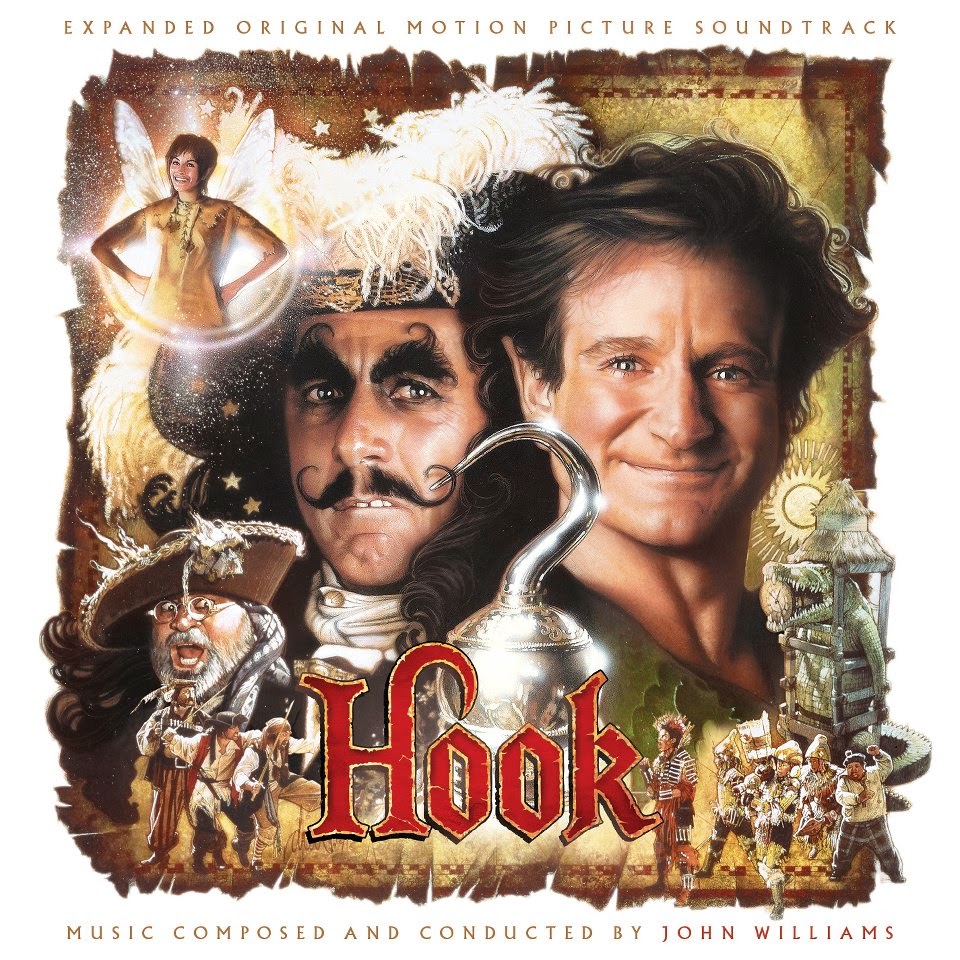
Still in another movie role, Robin Williams as Peter Pan in Hook syncs with another underlying theme to be found within the Twilight Language. See here, here and in "Peter Pan/Hook Deaths" from 2010, for examples.
&&&&&&&&&&&&&&&&&&&&

Need help? In the U.S., call 1-800-273-8255
National Suicide Prevention Lifeline
The current Trident sync to Robin Williams is rather unbelievable, yet there it is.
These are Trident Times...at Twilight Language, recent selections are:


