Showing posts with label Willy Wonka and the Chocolate Factory. Show all posts

Thursday, September 15, 2016

Willy Wonka Syncs


Steve L. writes: "Is it me -- or there some weird kind of Willy Wonka sync going on with this election cycle? A lot of people think Trump looks like an orange Oompa-Loompa, and I just noticed that Hillary Clinton dresses like the girl that is turned into a giant blue berry --- violet beauregarde."

In the remake the new Violet Beauregarde is a blonde like Hillary.

[Willy Wonka] The Chocolate Factory is Hell • /r/FanTheories
Okay everyone knows the scene in the original movie where they go down the chocolate river in the boat and there...


Gene Wilder Net Worth: Actor Leaves Secret Inheritance To Family?
Latest Gene Wilder net worth updates reveal that he might have left a sizable fortune to his family members, inc...
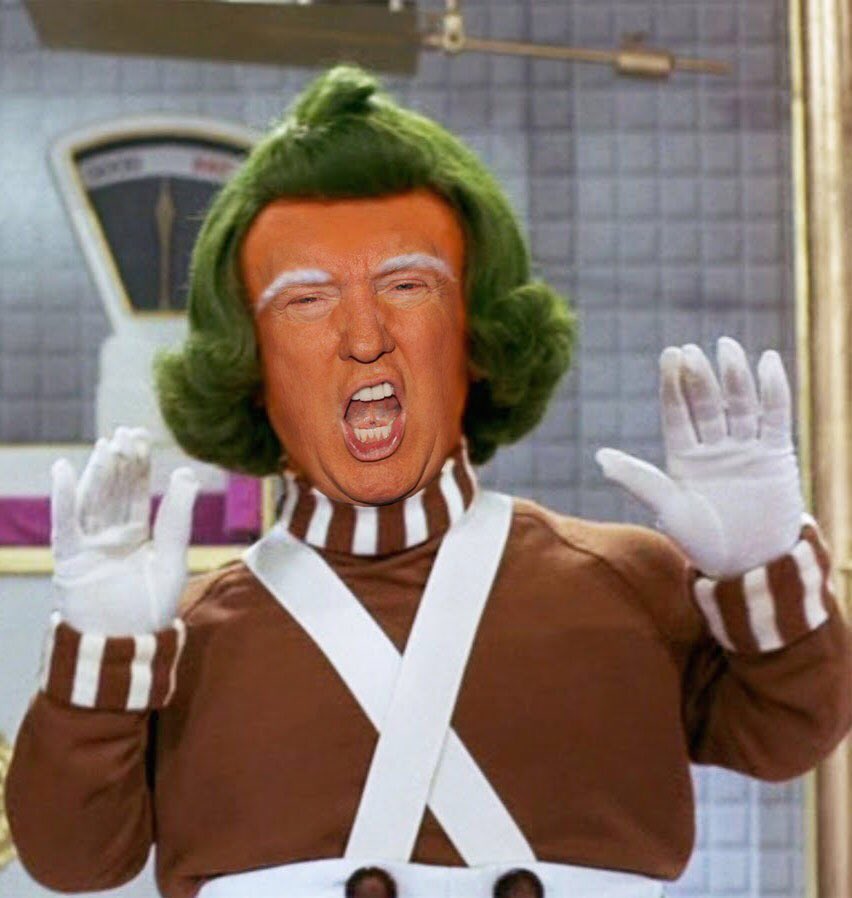
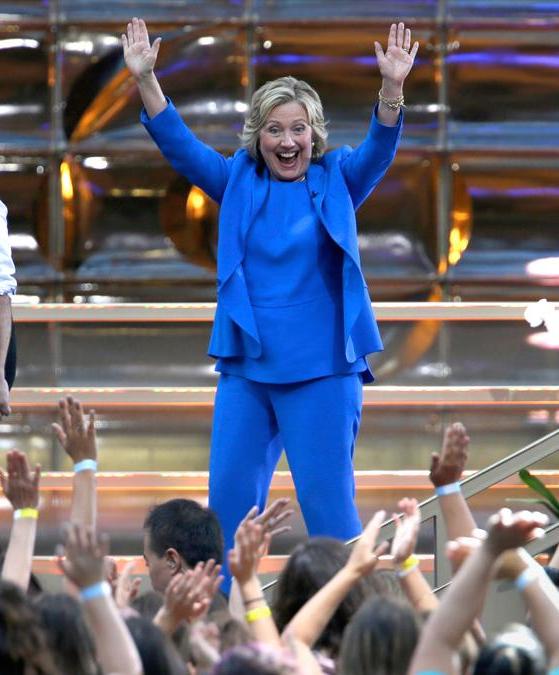
Image result for trumpaloompa

Image result for hillary blueberryImage result for hillary blueberry

Steve L. continues:

If you think about it Willy Wonka is very Similar to Pied Piper Myth ---- a Mysterious character who lures children with Candy, instead of a pipe. Also, the ChildCatcher (screenplay by Roald Dahl) is kind of Pied Piper character as well --- leading children into danger.

The Child Catcher did not appear in Ian Fleming's novel, but was created by Roald Dahl, who wrote the screenplay for the film. The Child Catcher's song, Kiddy Widdy Winkies, was created for the 2002 stage version which enjoyed a smash hit run at the London Palladium, before going on tour.
Originally played by ballet dancer Sir Robert Helpmann in the 1967 film, the character has been voted the scariest children's villain and came in at No.37 in Channel 4's 100 Scariest Movie Moments.
Christopher follows the likes of Richard O'Brien, Paul O'Grady and Boyzone star Stephen Gateley in the stage role.
"I'm still getting into my stride so I can't say exactly how I'll be playing him, but I can say that's he's thoroughly nasty with no redeeming features," says Christopher. "The Child Catcher is everyone's worst fear, I spoke to someone the other day who she said she'd never really recovered from watching him in the film as a child.
"I once played Abanaza in panto and I got letters from parents saying You should tone it down, you've terrorised my child.' But children love being terrified, we all do."
The Child Catcher works for villainous Baron Bomburst but Christopher reckons he has ulterior motives. "I've been wondering what the Child Catcher actually does to these children once he's caught them. He makes them vanish, there's no trace of them. I think he eats them."
Well, I wouldn't put it past him. He's a horrible but fascinating creature, the kind that only Roald Dahl could create.
"He reminds me of Nosferatu, a sinister, pale, wiry figure hiding in the dark," says Christopher. "In the film he was a Pied Piper figure. He lures children into his wagon by tempting them with sweets so I suppose they're not too scared initially. Although realistically, I don't think any child would go anywhere near him, especially in this day and age."


TRICKSTERS AND THE TRICKSTER GOD

TRICKSTERS AND THE TRICKSTER GOD
By Wayne Bush
TRICKED BY THE LIGHT: TRICKSTERS AND THE TRICKSTER GOD


PETER PIPER who picked a peck of pickled peppers, a pepper is of the piper genus
THE PIED PIPER tricked the townspeople and led all the children into a giant rock or mountain and is where we get the phrase "pay the piper"
Pink Floyd has THE PIPER AT THE GATES OF DAWN
Stairway to Heaven which starts out with a flute says The piper's calling you to join him, the tune will come to you at last where all are one and one is all and to be a rock and not to roll

Beatles Sgt Pepper's Lonely Hearts Club Band - Sgt Pepper taught the band to play, Youre such a lovely audience we like to take you home with us

DR PEPPER - I'm a pepper, youre a pepper wouldnt you like to be a pepper too?
Pepsi slogan-- join the Pepsi Generation

"Piper At the Gates of the Dawn" and "Pay the Devil" lyrics by van morrison insinuate the piper is the devil

The trickster Willy Wonka the wizard or the magician had a flute, had a chocolate factory and all the kids/bad eggs would disappear/die thru pipes in his factory.
Finally, the Doctor Who TV show had an episode named Moonbase where a cyberman named The Piper, whose base was on the moon, would come to take a man when he was dying, fit him with a metal headpiece and alter or "convert" him. and "convert" him. The Piper had a wand he used as a weapon.


Sunday, August 12, 2012

Synchrocinematic Willy Wonka Director Dies


"Up the airy mountain, down the rushy glen, we daren't go a hunting, for fear of little men. You see, nobody ever goes in... and nobody ever comes out." ~ Tinker, Willy Wonka & the Chocolate Factory (1971).


The director of Willy Wonka & the Chocolate Factory (1971) has died. Mel Stuart (pictured), known for that synchromystically significant and scary children's film, was also an award-winning documentary filmmaker. His daughter, Madeline Stuart, said he died of melanoma Thursday night, August 9, 2012, of cancer at his home in Los Angeles. He was 83, born Stuart Solomon, on September 2, 1928.


Some of the titles of the works Staurt directed and produced naturally jump out to students of the twilight language: Four Days in November - about the JFK assassination (1964); Ruby and Oswald - TV movie (1978); The Triangle Factory Fire Scandal (TV movie), 1979; Billy Wilder: The Human Comedy (1998); and Man Ray: Prophet of the Avant Garde (1997). He was the executive producer of 1968's The Rise and Fall of the Third Reich and the 1980s' ABC series Ripley's Believe It or Not, whose host was Jack Palance.
Stuart's 1971 version of Willy Wonka (starring Gene Wilder) has a cult following today, a film that has been discussed among synchromystic bloggers as a "worm hole" metaphor and more.

"Time is a precious thing. Never waste it." 
~ Willy Wonka, as he drops an antique alarm 
clock into a vat of an undefinable candy mixture, 
Willy Wonka & the Chocolate Factory (1971) 

"I'm late
I'm late
For a very important date.
No time to say 'Hello, Goodbye'.
I'm late, I'm late, I'm late." 
~ White Rabbit, Alice in Wonderland (1951) 

"Follow the white rabbit...knock, knock...." 
~ Matrix, 1999.

Willy Wonka & the Chocolate Factory's beginnings were born in a milieu of coincidence, synchronicity, and genetic links. Writer J. M. Kenny told of the origins of the 1971 film adaption, in his 2001 documentary, Pure Imagination: The Story of Willy Wonka and the Chocolate Factory. Once upon a time, director Mel Stuart's 10-year-old daughter read Charlie and the Chocolate Factory by Roald Dahl and asked her father to make a film out of it, with "Uncle Dave" (i.e. producer David L. Wolper) producing it.

During the 1960s and 1970s, Stuart and David L. Wolper established a base of West Coast documentary production at a time when New York filmmakers and TV network news dominated the field. Before joining forces with the Wolper Organization, Stuart was a researcher for CBS News' 1950s documentary series, The 20th Century, which was hosted and narrated by Walter Cronkite. (David L. Wolper, coincidentally, died on August 10, 2010.)

Stuart showed the book to Wolper, who happened to be in the midst of talks with the Quaker Oats Company regarding some promotional ideas to introduce a new candy bar from their Chicago-based Breaker Confections subsidiary. Wolper talked the company into buying the rights to the 1964 novel by Roald Dahl and financing the motion picture for the purpose of promoting their new Quaker Oats Wonka Bar. Breaker Confections was renamed the Willy Wonka Candy Company (and has since been sold to Nestlé).


"If you want to view paradise, simply look around and view it." 
~ Willy Wonka, Willy Wonka & the Chocolate Factory (1971) 

The filmmaking of the movie began on April 30, 1970 and ended on November 19, 1970. The primary shooting location was Munich, Bavaria, then in West Germany, because it was inexpensive compared to filming in America and the visual site was conducive to Wonka's factory. Stuart said he was in favor of the unknown nature of the setting for movie audiences. Outside visuals of the candy factory were filmed at the Munich Gaswerks (Emmy-Noether-Straße 10), and reportedly, the side buildings and entryway still exist. 


The final scenes when the Wonkavator flies above the factory are overflight views of Nördlingen in Bavaria.

Stuart's collaborator on Willy Wonka as screenwriter was David Seltzer, who at 26 obtained his first job making documentaries, from Stuart and remembered him as "a mentor by way of drill sergeant, much-feared boss and much-loved friend."
Seltzer, who also wrote The Omen (another film that is about terrorizing kids), said on August 10, 2012, that Stuart dismissed his first effort at a screenplay "with the scolding that if I didn't 'have a drawer-full of magic,' I had no business even thinking I was a screenwriter. He taught me that good enough wasn't good enough."
Two of Stuart's children, Peter Stuart and Madelaine Stuart, make cameo appearances in Willy Wonka & the Chocolate Factory (1971). 

His son, Peter, appears as the little boy "Winkleman," who informs Charlie's teacher about Willy Wonka opening his chocolate factory. 

His daughter, Madelaine, appears as one of the little girls in Charlie's classroom. 

Stuart is survived by his wife Roberta, and his three children ~ Madelaine who grew up to be an interior designer, his son Peter, a filmmaker, and his other son, Andrew, a literary agent.
Stuart was also survived by his first cousin, Marvel Comics genius Stan Lee. Stan Lee was born Stanley Martin Lieber in New York City on December 28, 1922, in the apartment of his Romanian-born Jewish immigrant parents, Celia (née Solomon) and Jack Lieber, in Manhattan. Recall that Mel Stuart was born Stuart Solomon. It was with the help of Stan Lee's uncle Robbie Solomon, Lee became an assistant in 1939 at the new Timely Comics division of pulp magazine and comic-book publisher Martin Goodman's company. Young Stanley Lieber made his comic-book debut with the text filler "Captain America Foils the Traitor's Revenge" in Captain America Comics #3 (May 1941), using the pseudonym "Stan Lee," which years later he would legally take as his name. Lee, whose cousin Jean was Goodman's wife, was formally hired by Timely editor Joe Simon. Timely Comics, by the 1960s, would become into Marvel Comics. 
Stan Lee often is briefly seen in cameos in the Marvel movies, as he is as the "General" in the recent Captain America (which opened on July 22, 2011).

"The two of them grew up in New York and remained close to this day. They used to argue about whose characters were better, and who was more famous. Even well into their 80s they were still challenging each other, which I found rather charming," Madeline Stuart said.

"Four of the five child actors 
[in Willy Wonka & the Chocolate Factory, 1971] 
grew up to be accountants or financial consultants. 
What are the odds of that?" 
~ Piper Weiss, Shine, May 18, 2011.


Sources as attributed above in embedded links, as well as mixes and various tidbits from Wikipedia.