Sunday, February 15, 2015

Paris Copycats? Copenhagen Shootings Target Cartoonist and Synagogue


The dead gunman has been identified as Omar El-Hussein (shown above and below).


Beginning on Valentine's Day, February 14, 2015, Copenhagen, Denmark was rocked by two shootings that mirrored the terrorist shootings in Paris last month.

Krudttoenden Attack

A shooting at a free speech event featuring Lars Vilks, a Swedish artist, who had caricatured the Prophet Muhammad and a second shooting hours later outside a synagogue left two dead and five police officers wounded in Copenhagen, stirring fears that another terror spree was under way in a European capital a month after 17 people were killed in Paris attacks.

No suspects were arrested.

The first shooting happened shortly before 4 p.m. Saturday, February 14th. Danish police said the gunman used an automatic weapon to shoot through the windows of the Krudttoenden cultural center during a panel discussion on freedom of expression following the Paris attacks. A 55-year-old man attending the event was killed, while three police officers were wounded. The victim has not been identified.

The gunman then fled in a carjacked Volkswagen Polo that was found later a few miles away, police said.

Police initially said there were two gunmen at the cultural center but later said they believed there was only one shooter. They described him as 25 to 30 years old with an athletic build and carrying a black automatic weapon. They released a blurred photograph of the suspect wearing dark clothes and a scarf covering part of his face.

Lars Vilks, 68, who has faced numerous death threats for caricaturing the Prophet Muhammad, was one of the main speakers at the event, titled "Art, blasphemy and freedom of expression." He was whisked away by his bodyguards unharmed as the shooting began. He felt he was targeted.

Filmmaker Killed

The man who was killed on Valentine's Day in the Copenhagen attack was a documentary filmmaker who worked on a film about terrorists and another about an Australian boomerang champion.

Finn Nørgaard (1959 – February 14, 2015) was a Danish filmmaker who was involved in several documentary and feature films.

Nørgaard received a cand.phil. degree in Film and Communication from the University of Copenhagen in 1991.

Nørgaard was a photographer for the 1983 Danish detective film Adam Hart i Sahara and editor of the 1986 Danish documentary film Soul to Soul. He served as producer for Kun for Forrykte, a 1988 documentary film about Eik Skaløe and Steppeulvene. He worked behind the camera as clapper loader in Peter Eszterhás' 1989 film En afgrund af frihed.

From 1989 until 2001 Nørgaard worked at DR (Danish Broadcasting Corporation). In 2001 he became co-owner of Filmselskabet (Film Company). During this period he is also credited as assistant camera in the 1992 German film Die Terroristen! and made an appearance as a bodyguard in Thomas Borch Nielsen's 1998 film Skyggen (Webmaster).

In 2004 he directed the documentary film Boomerang Drengen (Boomerang Boy) and was responsible for production of documentary films about the Lê Lê restaurant chain: Lê Lê - De jyske vietnamesere from 2008.

In 2009, for TV 2, Nørgaard directed and produced En anden vej: Historien om fire nydanskere og en koncernchef, which followed former Tryg-CEO Stine Bosse and four young immigrants to Denmark with a criminal background on a pilgrimage to El Camino.

Nørgaard also directed and produced film for Mærsk, SAS and Microsoft, among others.

Finn Nørgaard was killed on February 14, 2015 in an attack on a discussion meeting titled "Art, Blasphemy, and Freedom of Expression" organized by the Lars Vilks Committee and held at the Krudttønden culture center in Østerbro. The perpetrator shot with a submachine gun from close range. In the same incident two PET bodyguards and a police officer were wounded.

Krystalgade Synagogue Attack

After searching for the first gunman for hours, police reported the second shooting in downtown Copenhagen after midnight Sunday. The gunman opened fire at two police officers outside the synagogue on Krystalgade. They were wounded in the arms and legs but were not in life-threatening condition.

Right behind the synagogue, a young girl was celebrating her confirmation (bat mitzvah) with a party of about 80 people, the Jewish Society of Denmark said.

Dan Uzan, 37, who was standing at the gate providing security for the party, was shot and killed.

The gunman fled on foot.

On Sunday, February 15, CNN reported,
Authorities pieced together surveillance images from across the capital and tracked the suspect's movements....
The footage shows the man going from the scene of a shooting to where he apparently abandoned a vehicle, and to a taxi cab.
"By interviewing the taxi driver, we got the address where he dropped off the person," [Copenhagen police investigator Joergen] Skov said. "We have been keeping that address under observation."
He said when officers tried to make contact with the suspect at the Copenhagen apartment on Sunday, the suspect opened fire. Police fired back, killing the gunman.
The dead gunman was Danish-Arab, 22, living in Copenhagen, and was on the radar of authorities for gang activity, not for suspected Islamist extremism.

The suspect remains unidentified.

The Copycat Effect

The targets and methodology in the Paris and Copenhagen attacks appear to be extremely similar.

The cartoonists in Paris were the prime targets of the terrorists. In Copenhagen, Lars Vilks felt targeted.

In March 2013, this poster appeared:


"Wanted: Dead or Alive for Crimes Against Islam," the page reads. The list includes: Molly Norris, Ayaan Hirsi Ali, Flemming Rose, Morris Swadiq, Salman Rushdie, Girt Wilders [sic], Lars Vilks, Stephane Charbonnie, Carsten Luste, Terry Jones, and Kurt Westergaard. Most are or were notable critics of radical Islam, and one heading says "WANTED Dead or Alive for Crimes Against Islam."

"Yes We Can," the image reads. "A Bullet A Day Keeps the Infidel Away."
Vilks became a target after his 2007 cartoon depicting Mohammed with the body of a dog -- an animal that conservative Muslims consider unclean...
Like Charlie Hebdo editor Stephane "Charb" Charbonnier -- who was killed in the attack on that magazine's Paris offices last month -- Vilks was one of nine faces on a "Most Wanted" graphic published by al Qaeda's Inspire magazine for "crimes against Islam."
Others include a pair of Danish journalists who published 12 cartoons depicting Mohammed in the Jyllands-Posten newspaper; Florida pastor Terry Jones, who burned a Quran; and Satanic Verses author Salman Rushdie.
[Helle Merete Brix, a journalist and founder of the Lars Vilks Committee] said, "there's no doubt" the Copenhagen event was targeted because of Vilks, who has "not been able to live a normal life" for years. Source.

"What other motive could there be? It's possible it was inspired by Charlie Hebdo," Lars Vilks said, referring to the January 7 attack by Islamic extremists on the French newspaper that had angered Muslims by lampooning Muhammad.

Police spokesman Joergen Skov said it was possible the gunman had planned the "same scenario" as in the Charlie Hebdo massacre.

The Name Game

Krudttønden means "the powder keg."

Krystalgade (literally 'crystal street') is a street in central Copenhagen, Denmark, connecting Nørregade to Købmagergade.


Krystalgade has been associated, historically, to the location of the Zoological Museum, University of Copenhagen, with origins dating back to 1537, of an often-illustrated cabinet of natural history curiosities (also known as Kunstkabinett, Kunstkammer, Wunderkammer, Cabinets of Wonder, and wonder-room) of Ole Worm (13 May 1588 – 31 August 1654), also known as Olaus Wormius, a Danish physician and antiquary.


The synagogue on Krystalgade.

Regarding the photograph at top: "It's only a trick produced by the angle of the camera and what the suspected shooter is wearing, but doesn't he look a bit like the Joker in this CCTV picture?" ~ Author Robert Schneck.

Saturday, February 14, 2015

Valentine's Day, Aurora, and Waffle Houses Again


Colorado's Aurora (literally "Red Dawn") is the site of a shooting on Valentine's Day, February 14, 2015.

Yes, another Aurora focus of violence. Another Waffle House. Another bloody Valentine's Day (see here). It followed a Friday the 13th.


Fast food in Red Dawn

You may recall that a Waffle House cook shot and killed a customer after an argument the morning of Friday, June 13th in 2014. That occurred outside of Atlanta. See more here on that incident.

As far as the Aurora event, here are some details:
A 19-year-old woman was shot early Saturday morning in the parking lot of an Aurora restaurant after shots were fired between two groups of people, authorities say.
The woman was taken to a local hospital with non-life threatening injuries, said Sgt. Chris Amsler, Aurora police spokeswoman. Her identity has not been released.
Aurora police have arrested a person of interest in the shooting. The name of the person has not been released.
Police are still searching for a second gunman who opened fire during the confrontation.
An argument flared between two groups of inside the Waffle House at 12880 E. Mississippi Ave. at about 4 a.m., Amsler said.
~For more see the Denver Post here.

Further information on Waffle House violence for 2014 (two shootings) and the 2002 Waffle House murders can be found here. See also, the 2012 article, "15 Strange Crimes That Took Place At A Waffle House."

Wednesday, February 11, 2015

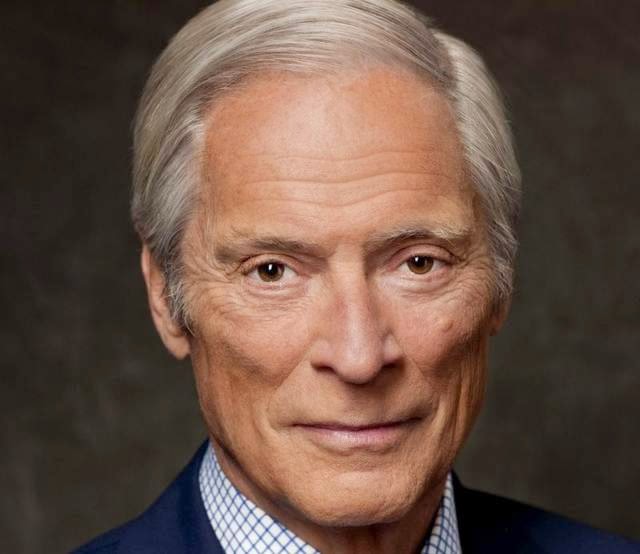
CBS's Bob Simon Dies In Auto Crash


Bob Simon, 73, a CBS News television correspondent, died in an automobile crash on February 11, 2015. He was born on May 29, 1941, in the Bronx, N.Y., and was graduated Phi Beta Kappa from Brandeis University in 1962 with a degree in history. He and his wife, Françoise, have a daughter, Tanya, who is a producer for CBS News’ “60 Minutes” in New York.

From 1964 to 1967, Simon served as an American Foreign Service officer and was a Fulbright Scholar in France and a Woodrow Wilson scholar. From 1969 to 1971, he served a tour in the CBS News London bureau. From 1971 to 1977, he was based in the London and Saigon bureaus, where he served as a Vietnam War correspondent. From 1977 to 1981, he was assigned to the CBS News Tel Aviv bureau.

From 1981 to 1982, he spent time in Washington, D.C., as the CBS News State Department correspondent. From 1982 to 1987, Simon served as a New York-based CBS News national correspondent. In 1987, Simon was named the CBS News Chief Middle Eastern correspondent.

In addition to Vietnam, the Persian Gulf, Sarajevo and Tiananmen Square, Simon has reported from the frontlines on the American interventions in Grenada, Somalia and Haiti, the revolutions in Portugal and Prague, the civil wars in Central America, the Turkish invasion of Cyprus, the conflict in Northern Ireland and the war between Britain and Argentina over the Falklands. Simon was with Israeli troops during the Yom Kippur War, with PLO fighters during the Israeli invasion of Lebanon and in Gaza the day the Intifada began.

During the opening days of the Gulf War in January 1991, Simon and his CBS News team were captured by Iraqi forces and spent 40 days in Iraqi prisons; he later chronicled the experience in the book Forty Days.


In 1996, Simon joined 60 Minutes as a correspondent, and in 1998, he was named a 60 Minutes II correspondent. Notable stories he has done in recent years include the first profile of the so-called "Lost Boys of Sudan" and an exclusive interview with Iraqi Shiite insurgency leader Muqtada al-Sadr. Most recently, he had served as the senior foreign correspondent on 60 Minutes.

There are various versions of how he died.


Deadline Hollywood, allegedly, at first reported he had died when his car hit a tanker truck.

Later, that was changed to this story:
CBS announced tonight that the long time news magazine correspondent was killed in a car accident in NYC tonight. Bob Simon was 73. The veteran reporter joined 60 Minutes in 1996. The crash occurred on the West Side Highway in Manhattan when the Lincoln Town Car the correspondent was traveling in hit another vehicle and went off the road. In a five decade career, much of its as foreign correspondent, Simon won 27 Emmys and 4 Peabodys.
This was posted on Wikipedia:
On February 11, 2015, Simon was killed in a car crash. He was a passenger in a livery cab which was involved in a collision with another car, and then it crashed into a median. Bob Simon went into cardiac arrest and later died at Bellevue hospital. 

Tanker truck?  Median?  Another vehicle and off the road?

Sunday, February 08, 2015

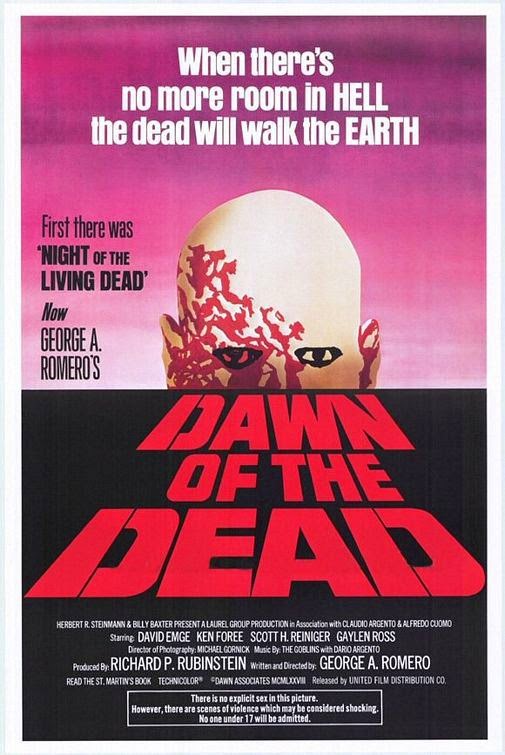
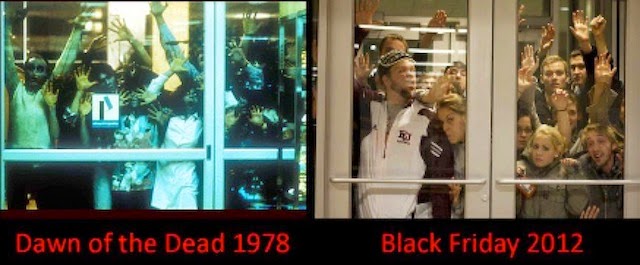
Dawn of the Dead Film Site Is Scene of Multiple Mall Shooting


Gunfire erupted at the Monroeville Mall, a Pittsburgh-area shopping center, on February 7, 2015, Saturday evening, critically wounding two of the three people hit in a shooting that targeted one of the victims. The Monroeville Mall and Forbes Hospital's emergency room were placed on lockdown as police searched for the suspect (a black male in his late teens who is between 5-foot-7 and 5-foot-9 inches tall and was wearing dark clothing).
 Photo credit (above and below).


The shootings occurred inside the Macy's at the Monroeville Mall at about 7:30 p.m., sending shoppers running. Police closed the entire mall for the night. 


Seventeen-year-old Tarod Thornhill was arrested at 3:15 am, February 8, 2015, and charged as an adult in the Monroeville Mall shootings.


Chief Douglas Cole said two men and a woman were shot, including a man who was targeted and was struck at least once. Bystanders were the others, who were caught in the line of fire.
Jeanette, Pennsylvania native and NFL (Oakland Raiders, Seattle Seahawks, Kansas City Chiefs, 2011-Present) quarterback Terrelle Pryor, 25, tweeted that he was at the mall, a short drive east of Pittsburgh.

"Damn was just in monroeville mall and just saw 2 ppl get shot," he tweeted. "They are letting guns go in there."

+++

On January 17, 2015, one person was killed and one was wounded in a shooting inside the Melbourne (Florida) Square Mall's food court before the gunman, José Garcia Rodriguez, died by suicide. Source.
In late December 2014, hundreds of teenagers gathered at the Monroeville (Pennsylvania) Mall and several fights broke out. The fights caused local officials and mall administration to agree on a plan to increase security there.

+++

Four on-duty police officers have been stationed in the Monroeville Mall on Friday and Saturday evenings at the mall's request.

The Monroeville Mall was the film location for George Romero's Dawn of the Dead which completed primary filming 37 years ago this month (February 1978-February 2015). [The remake, Dawn of the Dead (2004) was directed by Zack Snyder in his feature film directorial debut. The screenplay for the 2004 version was by James Gunn, who went on to direct Guardians of the Galaxy.]


Dawn of the Dead (also known internationally as Zombi) is a 1978 American horror film written and directed by George A. Romero. It was the second film made in Romero's Living Deadseries, but contains no characters or settings from Night of the Living Dead, and shows in a larger scale the apocalyptic effects on society. Dawn of the Dead was filmed over approximately four months, from late 1977 to early 1978, in the Pennsylvania cities of Pittsburgh and Monroeville. Dawn of the Dead's primary filming location was the Monroeville Mall.

The history of Dawn of the Dead began in 1974, when George A. Romero was invited by friend Mark Mason of Oxford Development Company—whom Romero knew from an acquaintance at his alma mater, Carnegie Mellon—to visit the Monroeville Mall, which Mason's company managed. After showing Romero hidden parts of the mall, during which Romero noted the bliss of the consumers, Mason jokingly suggested that someone would be able to survive in the mall should an emergency ever occur. With this inspiration, Romero began to write the screenplay for the film.
Romero and his producer, Richard P. Rubinstein, were unable to procure any domestic investors for the new project. By chance, word of the sequel reached Italian horror director Dario Argento. A fan of Night of the Living Dead and an early critical proponent of the film, Argento was eager to help the horror classic receive a sequel. He met Romero and Rubinstein, helping to secure financing in exchange for international distribution rights. Argento invited Romero to Rome so he would have a change of scenery while writing the screenplay. The two could also then discuss plot developments. Romero was able to secure the availability of Monroeville Mall as well as additional financing through his connections with the mall's owners at Oxford Development. Once the casting was completed, principal shooting was scheduled to begin in Pennsylvania on November 13, 1977. Source.
Principal photography for Dawn of the Living Dead (its working title at the time) began on November 13, 1977 at the Monroeville Mall....Principal photography on Dawn of the Dead ended February 1978. Source.
Because Dawn of the Dead was filmed there, today the Monroeville Mall is a tourist stop for Zombie film fans.
Monroeville Mall is most famous as the filming location for the movie Dawn of the Dead, the 1978 cult horror classic, directed by George A. Romero. In 1977, George A. Romero began filming Dawn of the Dead on location at the Monroeville Mall. All filming inside the mall took place at night after the mall had closed, with filming often continuing until dawn. Filming in the mall began in October 1977, but had to be suspended when the mall's Christmas decorations were hung shortly after Thanksgiving. Filming resumed in January after the decorations were removed. It was during that break that much of the mall's exterior shots were filmed, as well as filming at other locations. In the film's storyline, the mall was used as a fortress to protect four human survivors from a world taken over by the walking dead. The movie went on to become a huge hit worldwide. Fans travel far and wide, sometimes from other countries, just to have a chance to visit the location. Several pictures taken during the filming are on display in a room on the upper level near Macy's. In addition, Monroeville Zombies, located on the lower level near Macy's and features an in-store museum and gift shop that is dedicated to celebrating zombies in film and pop culture. The museum's main focus is Dawn of the Dead and contains artifacts, memorabilia, scale models of the mall as depicted in the movie and a boiler room walk through with various life sized replicas of movie zombies. In 2013, The museum was relocated to Evans City, PA, home of the original Night Of The Living Dead. Source.
Other links to popular culture include,

 ~ The ice skating rink at Monroeville Mall appears in the 1983 film Flashdance as the rink on which Jeanne auditions. 
~ Some scenes from the film Zack and Miri Make a Porno, directed by Kevin Smith, were filmed in the mall. The film features a fictional recreational hockey team named the Monroeville Zombies, a reference to the Romero film. Source.
~ In the 1984 children's fantasy film The Boy Who Loved Trolls, 12-year old Paul is seen wandering through the halls of the mall as shots of many long gone storefronts such as the Candy Tree are shown. (Dawn of the Dead's Tom Savini, pictured, plays a motorcyclist in The Boy Who Loved Trolls.)

~ The Monroeville Mall marquee, overlooking U.S. Route 22, is shown in a brief scene in the Greg Mottola film Adventureland.
~ Exterior scenes of the mall annex appeared recurring on the Showtime series, Queer as Folk. Source.
~ Stephen King's 1983 novel Christine takes place in the fictional suburb of Libertyville, Pennsylvania, which is adjacent to Monroeville. The Monroeville Mall is mentioned repeatedly. Source.
H/T to Robert Schneck. 


+++
Please support my work by simply clicking on the following button to give $5, $10, $50, $100, whatever you can send...thank you.

Friday, February 06, 2015

Jupiter Ascending

February 6, 2015: Jupiter reaches opposition, meaning it's opposite to the sun in our sky. Therefore, Jupiter rises around the time the sun sets, shines highest about midnight and sets around sunrise. Opposition is also when Jupiter is closest to Earth for the year, appearing biggest and brightest. Look for it in the east as the blue sky darkens. When you face Jupiter, Venus is almost directly behind you.
How impressive is Jupiter this month? The giant world burns at magnitude minus 2.6, three times as bright as Sirius, the brightest star, which sparkles very far to Jupiter's right or lower right on February evenings. NBC News
Meanwhile, on the theater screens beginning February 6th...

Delayed from 2014....

+++
Please support my work by simply clicking on the following button to give $5, $10, $50, $100, whatever you can send...thank you.

Umbrella People


In an incident occurring on January 28, and uploaded on February 1, 2015, a Chinese woman with an umbrella is making the rounds of YouTube. She takes on three guys who are being disruptive at a Chinese restaurant. Said to be real and not fictional, it has been highlighted in the media, of late, such as here.


Let's look at a few other umbrella people.


First up, some scenes from a short Errol Morris documentary that takes a skeptical view of the reports of a mystery man, the so-called "Umbrella Man" at Dealey Plaza, Dallas, Texas, at the site of the John F. Kennedy assassination, November 22, 1963.

Josiah Thompson, author of Six Seconds In Dallas, considers the following by John Updike:
In December 1967 John Updike was writing “Talk of the Town” for The New Yorker. And he spent most of that “Talk of the Town” column talking about the “umbrella man.” He said that his learning of the existence of the umbrella man made him speculate that in historical research there may be a dimension similar to the quantum dimension in physical reality. If you put any event under a microscope you will find a whole dimension of completely weird, incredible things going on. It’s as if there’s the macro level of historical research where things sort of obey natural laws and the usual things happen and unusual things don’t happen. And then there’s this other level where everything is really weird.


On December 5, 2011, Russ Baker wrote well-articulated rebuttal to the above short video, entitled "JFK Umbrella Man—More Doubts."


NEVILLE CHAMBERLAIN

As you’ll recall, the New York Times’ preferred explanation for why a man opened an umbrella on a sunny day, just as JFK’s limousine passed—and just as the bullets poured into the car— was an entirely benign one. Strange, but benign.

Recap: Fifteen years after the assassination, as the special House Select Committee on Assassinations was taking the first serious look at the death of JFK (and others), a man came forward to identify himself as the so-called “Umbrella Man” and to explain his bizarre behavior.

The man, Steven Louie Witt, said that, no, it was not someone signaling the shooters, and no, it had nothing at all to do with the assassination. Instead, he said, it was a message against appeasement of enemies. He hoped to signal his disapproval of what he considered JFK’s forbearance of America’s enemies.

How to signal that? Here’s where it gets complicated. Witt claimed he held up the umbrella as an icon symbolizing the treachery of Neville Chamberlain, the 1930s British prime minister. Chamberlain, who tried to preserve peace with Hitler by ceding him a part of Czechoslovakia (the Sudetenland), became a reviled symbol of appeasement. The self-described Umbrella Man said that he had been identifying appeasement with Chamberlain’s trademark umbrella. The connection to JFK came via his father, Joseph P. Kennedy, ambassador to Britain at the time and an anti-war isolationist.

Only a very unusual 15-year-old American (Witt’s approximate age in 1938) would have strong feelings about a British prime minister’s behavior, and still harbor those feelings a quarter century later. It is even harder to accept that he could believe JFK, himself a young man in 1938, might “get” the message somehow via the umbrella.

Even if we are to accept that Witt really was the man pumping the umbrella on the Grassy Knoll, and even if he was cognizant of Chamberlain, and even if he did think he could get a message to JFK via the Chamberlain affair, we still have a big problem with this claim.

According to John Simkin, a retired British history teacher and textbook author who runs the historical website Spartacus Educational, the umbrella was never the symbol of Chamberlain that the “umbrella man” claimed it was.

“In Britain, there was never any association with an umbrella at all,” Simkin told me. “Everyone had umbrellas and bowlers in those days.” According to Simkin, the only proper symbol for Chamberlain and appeasement was a piece of paper. That was the document he held aloft, with Hitler’s signature to the so-called Munich Agreement—in which Hitler agreed not to seek any further territorial gains in Europe—as Chamberlain famously declared that he had secured “peace in our time.” (In this old newsreel, you can see Chamberlain hold aloft that document.)

Simkin finds the New York Times video’s assertion that the purpose of opening the umbrella and pumping it in the air to signal Munich simply laughable.

More likely, it was exactly what it appeared to be: a method of signaling shooters, perhaps that JFK had been hit, perhaps that he still seemed to be alive, perhaps to keep shooting. Although it was a sunny day, it had rained the night before, and there was a wind, so it would not have been operationally illogical to move forward with using an umbrella. The fact that the New York Times and the establishment in general have never considered the umbrella worthy of real, serious inquiry, tells us that if the umbrella waspart of a plot, it was not so bad a choice.

RIO GRANDE BUILDING

In the last article, I mentioned that Witt, the self-proclaimed “Umbrella Man,” worked for Rio Grande National Life Insurance in the Rio Grande building. I mentioned that the same building housed the Immigration office frequented by Lee Harvey Oswald, and the local office of the highly negligent Secret Service. I mentioned that Rio Grande wrote a lot of insurance for the military. And, separately, I noted the strong military intelligence connections to key figures connected with 11/22/63.

One thing I did not mention, but should have, was that Military Intelligence itself had offices in that Rio Grande building.

Now, all of that could be coincidence. But there’s a reason certain entities signed leases with particular landlords and not others—especially so in Dallas circa 1963 (more on this in Family of Secrets.) Source.

More on the skeptical view, see also this.

The real danger of a video like the one about the Umbrella Man is that it encourages people to stop questioning, stop investigating. Just laugh it all off. As many would say, "There’s no trouble here in the land of the free, the home of the brave. Nothing to see here, folks, move along, move along."

Next up,

9/7/1978 (American style)
The Bulgarian umbrella is the name of an umbrella with a hidden pneumatic mechanism which injected a small poisonous pellet containing ricin. The weapon has a hollowed stalk into which the pellet neatly sits.
Such an umbrella was allegedly used in the assassination of the Bulgarian dissident writer Georgi Markov on September 7, 1978 (the birthday of the Bulgarian State Council chairman Todor Zhivkov who had often been the target of Georgi Markov's criticism) on Waterloo Bridge in London, (Markov died three days later) and also allegedly used in the failed assassination attempt against the Bulgarian dissident journalist Vladimir Kostov the same year [on August 26, 1978] in the Paris Métro. The poison used in both cases was ricin. Both assassination attempts are believed to have been organized by the Bulgarian Secret Service of the time of the Cold War with the assistance of the KGB. Source.
Markov, thus, died on September 11, 1978 (9/11/1978).


This is a replica of the umbrella - modified to fire a tiny pellet filled with poison - used by the KGB in 1978 to assassinate dissident Georgi Markov.


Then,

3/30/1981 (American style)

On March 21, 1981, Ronald Reagan, the new President of the United States, visited Ford's Theatre in Washington, D.C. with his wife Nancy for a fundraising event. He recalled, "I looked up at the presidential box above the stage where Abe Lincoln had been sitting the night he was shot and felt a curious sensation... I thought that even with all the Secret Service protection we now had, it was probably still possible for someone who had enough determination to get close enough to a president to shoot him."
On March 30, 1981, only 69 days into the new administration, Ronald Reagan, his press secretary James Brady, Washington police officer Thomas Delahanty, and Secret Service agent Timothy McCarthy were struck by gunfire from would-be assassin John Hinckley, Jr., outside the Washington Hilton Hotel. Although "close to death" upon arrival at George Washington University Hospital, Reagan was stabilized in the emergency room, then underwent emergency exploratory surgery. He recovered and was released from the hospital on April 11, becoming the first serving U.S. President to survive being shot in an assassination attempt.

Brady died August 4, 2014.


Hinkeley's face is visible in this photo, to the left of the NBC umbrella sheltering the NBC camera crew, who would soon film the attempted assassination of Reagan. 


4/11/1981 (American style)
April 11, 1981: US President Ronald Reagan smiles and waves as he stands under an umbrella with First Lady Nancy Reagan after leaving George Washington Hospital, Washington, DC. The president recovered from an attempted assassination attempt by John Hinckley. Several secret service agents stand in the background. (Photo by Ronald Reagan Library). Source.


Moving along, back to the future...

5/2011

5/9/2012

An assassin armed with a poisoned-tipped umbrella is being hunted by police after killing a man - in a case bearing chilling echoes of the murder of a Bulgarian dissident on London’s Waterloo Bridge.
The 40-year-old German man died of mercury poisoning after being jabbed in the buttocks by a mystery attacker carrying the modified weapon.
The unnamed victim told police he was attacked by a slim stranger who had a sticking plaster on his face before falling into a coma.
He died on Wednesday [May 9, 2012] almost a year after the hit in Hannover, Germany. Source.

++++


1/26/2015


Robyn Rihanna Fenty (born February 20, 1988) is seen here on January 26, 2015, two days after Rihanna announced a new song via Twitter, "FourFiveSeconds," with Kanye West and Paul McCartney. The song will be performed by the three at the 2015 Grammys, the 57th, on February 8, 2015.

+++
Support my work by simply clicking on the following button to give $5, $10, $50, $100, whatever you can send...thank you.