Showing posts with label 88. Show all posts

Thursday, May 19, 2016

Flight 804 Vanishes Near The Ancient Site of the Colossus of Rhodes

LEgyptAir Flight 804 (MS804/MSR804) is an international passenger flight operated by EgyptAir that is missing as of 19 May 2016 at 02:30 local time. Egyptian authorities have stated that the plane most likely crashed into the sea.

The EgyptAir flight, heading from Paris to Cairo, disappeared from radar. It contains 66 people, according to one report. Earlier, 69 was mentioned.


No remains have been recovered yet.

The aircraft involved was an Airbus A320-232, registration SU-GCC, msn 2088. Its first flight was on 25 July 2003 and it was delivered to EgyptAir on 3 November 2003. Routine maintenance checks on the plane were done Wednesday in Cairo, before it left for Paris, an airline official said. The flight was the aircraft's fifth of the day, having flown from Asmara International Airport, Eritrea to Cairo; Cairo to Tunis–Carthage International Airport, Tunisia and back; and Cairo to Paris.

A distress signal was detected in the general vicinity where the flight disappeared, the airline official said. The signal was detected at 4:26 a.m. -- about 2 hours after the jet vanished. He said the distress signal could have come from another vessel in the Mediterranean. But the Egyptian armed forces stressed that they had not received a distress call.

Greek ministry source said authorities were investigating an account from the captain of a merchant ship who reported a ‘flame in the sky’ some 130 nautical miles south of the island of [Warpaths] - (every time I write Karpathos, it gets autocorrected to Warpaths).


The island of Karpathos was in ancient and medieval times closely connected with Rhodes. Rhodes' nickname is The Island of the Knights, named after the Knights of Saint John of Jerusalem, who once conquered the land. Rhodes was famous worldwide for the Colossus of Rhodes, one of the Seven Wonders of the Ancient World. The Medieval Old Town of the City of Rhodes has been declared a World Heritage Site. Today, it is one of the most popular tourist destinations in Europe.


The harbor's statute at the entrance to the Free City of Braavos in Game of Thrones appears to have been inspired by the the Colossus of Rhodes. 


On a smaller scale, Ellis Island's Statue of Liberty (Columbia) also may have been inspired by the Colossus of Rhodes. Image: Unveiling of the Statue of Liberty Enlightening the World (1886) by Edward Moran. Oil on canvas. The J. Clarence Davies Collection, Museum of the City of New York.


Karpathos' current name is mentioned, with a slight shift of one letter, in Homer's Iliad as Krapathos (οἳ δ' ἄρα Νίσυρόν τ' εἶχον Κράπαθόν τε Κάσον τε). Apollonius of Rhodes, in his epic Argonautica, made it a port of call for the Argonauts travelling between Libya and Crete (Κάρπαθος: ἔνθεν δ' οἵγε περαιώσεσθαι ἔμελλον). The island is also mentioned by Virgil, Pliny the Elder and Strabo.

The Karpathians sided with Sparta in the Peloponnesian War in 431 BC and lost their independence to Rhodes in 400 BC. In 42 BC the island fell to Rome. After the division of the Roman Empire in 395 AD, the island became part of the Byzantine Empire.

Of its Christian bishops, the names are known of Olympius, who was a supporter of Nestorius, Zoticus (in 518), Mennas (in 553), Ioannes, Leo (in 787), and Philippus (in 879). In the 14th century the island was a see of the Latin Church, four of whose bishops bore the name Nicolaus. No longer a residential bishopric, Karpathos (in Latin Carpathus) is today listed by the Catholic Church as an archiepiscopal titular see.

In 1304, Karpathos was given as fief to the Genoese corsairs Andrea and Lodovico Moresco, but in 1306 it fell to Andrea Cornaro, a member of the Venetian Cornaro family. The Cornaro controlled Karpathos until 1538, when it passed into the possession of the Ottoman Turks.

During the Greek War of Independence between 1821–22, the island rebelled, but afterwards it fell again under the Ottoman rule. In 1835 Sultan Mahmud II conceded to the island the privilege of the Maktu tax system, that is, the tax was calculated as an annual lump sum, and not on an household basis. The Ottoman rule ended on May 12, 1912, when the Italians occupied the island, together with the whole Dodecanese, during the Italo-Turkish War of 1911-12. On that day, sailors from the Regia Marina ship Vittorio Emanuele and the destroyer Alpino landed in Karpathos. With the Treaty of Lausanne of 1923 Karpathos joined the other islands of the Dodecanese in the Italian possession of the Italian Aegean Islands, and was ceded by Italy to Greece with the Paris Peace Treaties of 1947. The island formally joined the Kingdom of Greece on 7 March 1948, together with the other Dodecanese islands.

Due to the economic problems after World War II, numerous Karpathians emigrated to the U.S. eastern seaboard cities; Karpathos today has a significant Greek-American constituency who have returned to their island and invested heavily. Inhabitants of the mountains to the north are more traditional.

Saturday, February 27, 2016

Unicorns, Astronauts, and Oscars Gold


The unicorn is a legendary animal that has been described since antiquity as a beast with a large, pointed, spiraling horn projecting from its forehead. The unicorn was depicted in ancient seals of the Indus Valley Civilization and was mentioned by the ancient Greeks in accounts of natural history by various writers, including Ctesias, Strabo, Pliny the Younger, and Aeolian.
An escaped "unicorn" gave authorities a run for their money on Wednesday [February 24, 2016]. Sandra Boos [a photographer doing a photo shoot] -- and the California Highway Patrol -- spent more than three hours chasing her runaway pony, who was outfitted with a unicorn horn, through orchards and roads in California. Source.
Golden coins known as the unicorn and half-unicorn, both with a unicorn on the obverse, were used in Scotland in the 15th and 16th century. The unicorn was a gold coin that formed part of Scottish coinage between 1484 and 1525. The obverse of the coin shows a crowned unicorn. The significance is that the unicorn is one of the heraldic symbols of Scotland, occurring most notably in the royal coat of arms of Scotland as crowned and chained supporters.
The [Unicorn] tapestries show pagan and Christian symbolism. The pagan themes emphasize the medieval lore of beguiled lovers, whereas Christian writings interpret the unicorn and its death as the Passion of Christ. The unicorn has long been identified as a symbol of Christ by Christian writers, allowing the traditionally pagan symbolism of the unicorn to become acceptable within religious doctrine. The original pagan myths about The Hunt of the Unicorn refer to an animal with a single horn that can only be tamed by a virgin; Christian scholars translated this into an allegory for Christ's relationship with the Virgin Mary. Source.
When a Unicorn is portrayed along with a lion it Symbolizes the Union of the feminine (white, lunar) and masculine (Gold, solar) aspects of our dual nature. This Symbolism also represents the Alchemical Marriage. Source.

"God brought him forth out of Egypt; he hath as it were the strength of an unicorn."--Numbers 24:8

Looking to Christopher Knowles' Secret Sun, there's this:
The Egyptians not only adopted the custom of burying the dead from the Sumerians they also adopted the reverence for gold, calling it "the flesh of the gods." Some believe it was associated with immortality in the ancient world since it doesn't rust or corrode (which explains an association or symbolism, but nothing more) Gold's chemical symbol Au, comes from the Latin Aurum, meaning "Shining Dawn."
As in Aurora.
Immortality. As in Jesus Christ?

Readers of this blog are well aware of my past writings about "Aurora" and "Red Dawns."

We have two immediately forthcoming events to watch.


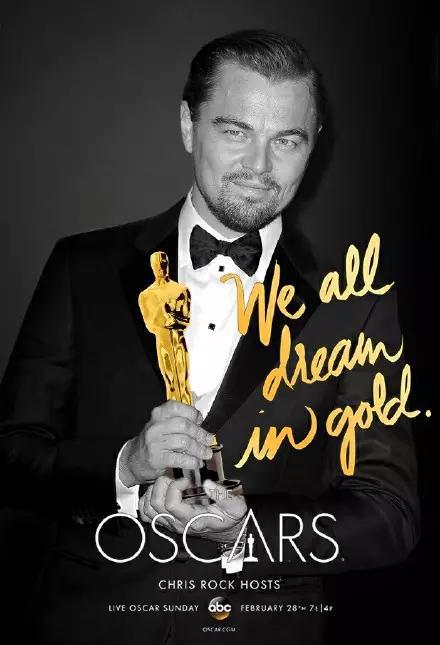
First up, on Sunday, February 28, 2016, The 88th Academy Awards. The "theme" of the Oscars this year, in the wake of criticisms that not enough AfricanAmericans were nominated, is "We All Dream In Gold."

Gold on black looks regal. And the faces that are now on these ads are 35% AfricanAmericans, even though the Oscars will probably NOT be won by any Africans and AfricanAmericans.

One of the movies nominated for the Best Picture is The Martian.

Should we look to space too?

Next up is SuperTuesday, March 1, 2016. Will the primary install "Mars Red" as the new "Red Dawn" for the Republican Party?

Will Mars, the Red Planet, be on the minds of the media?

Outer space is going to be discussed in the midst of the wall-to-wall coverage of politics on the 1st, probably, because of one event.

March 1st is the date that NASA American astronaut Scott Kelly and Russian cosmonaut Mikhail Kornienko return to Earth from the International Space Station. Kelly is the first American to spend a year in space.


Scott and Mark Kelly

Why all the attention to Scott Kelly? He is pivotal to two longterm studies. One is of him and his twin, Mark Kelly, a retired NASA astronaut. Scott and Mark Kelly were born February 21, 1964.

February 21st is Ferālia, an ancient Roman public festival celebrating the Manes (Roman spirits of the dead, particularly the souls of deceased individuals). It fell on February 21 as recorded by Ovid in Book II of his Fasti. This day marked the end of Parentalia, a nine-day festival (February 13-21) honoring the dead ancestors.

A tradition associated with Ferālia (and thus February 21) is that one of the informed nymphs, Lara, could not hold her tongue and warned Juturna to flee. In addition, she approached Jupiter's wife Juno, saying, "Your husband loves the Naiad Juturna.” As a result, Jupiter rips out Lara's tongue in anger and summons Mercury to escort her to be a nymph in the Underworld. During this mission, Mercury becomes lustful of Lara and rapes her, begetting twins. These twins become the Lares, the guardians of intersections who watch over the city of Rome. Considering this is the birthday of the Kelly twins, it is an intriguing coincidence.

Mark Kelly is the husband of former Congresswoman Gabrielle Giffords, who was the victim of a Tucson, Arizona, assassination attempt on January 8, 2011 (where six people were killed), by Jared Lee Loughner. Before the shooting, Loughner expressed "anti-government" beliefs, such as the notion that the government was creating "infinite currency" without the backing of gold, and the assertion that NASA was faking spaceflights. conspiracy theories had a profound effect on Loughner, particularly the online film Zeitgeist: The Movie, with which friends claimed Loughner held an obsession. He was a member of the message board Above Top Secret, which discusses conspiracy theories; members of the site did not respond warmly to his posts. Loughner espoused conspiracy theories about the 9/11 attacks, the New World Order, and beliefs in a 2012 apocalypse, among other controversial viewpoints.

The second study with which Scott Kelly is involved: The Mission to Mars. 
This mission — which began with a launch last March — is all about Mars.
"I think we'll learn a lot about longer-duration spaceflight and how that will take us to Mars someday," Kelly said Thursday [February 25, 2016] in his final news conference from orbit. "So I'd like to think that this is another of many steppingstones to us landing on Mars sometime in our future."
* * *
Mars expeditions planned for the 2030s will last 2½ years; the anticipated crew size will be four to six. The astronauts will almost certainly have to grow some of their own food; that's the reason for an experimental greenhouse aboard the space station.

Sunday, June 21, 2015

Doubleday, Baseball, Charleston, Charles Manson, and Twilight Links

In an early Father's Day celebration, on Sunday, June 14, my son Malcolm took me to a Mets game. I had a wonderful time. Baseball is special.
America has rolled by like an army of steamrollers. It has been erased like a blackboard, rebuilt and erased again. But baseball has marked the time. This field, this game: it's a part of our past, Ray. It reminds of us of all that once was good and it could be again. ~ Field of Dreams
Three days later, on June 17, the Mets were in the news, although events on the same day would overshadow the New York baseball-aligned obituary of the day.

The New York Times' opening paragraphs of the death news told quickly about the connections the deceased had to money, publishing, and baseball:


Nelson Doubleday Jr., who shortly after taking over his family’s publishing business used it in 1980 to buy the lowly New York Mets and put the team on course to win the World Series in 1986, died on Wednesday [June 17,2015] at his home in Locust Valley, N.Y. He was 81.
The cause was pneumonia, his son-in-law John Havens said.
Books and baseball defined Mr. Doubleday’s life. He was the grandson of Frank Nelson Doubleday, who founded the publishing company bearing his name in 1896, and the son of Nelson Doubleday, who built the business into a mass-market powerhouse.
Another Doubleday ancestor was Abner, a great-great-granduncle long credited (erroneously) with inventing the game of baseball. Growing up on the family’s Long Island estate, in Oyster Bay, Nelson Jr. was a passionate baseball fan, following the fortunes of the Brooklyn Dodgers on the radio. Source.
As you know, another incident occurred on Wednesday, June 17. That was the attack on African-Americans in Charleston. We don't need to go into details here, but if you want a refresher, see "There's A Storm Coming: Dylann Storm Roof."

Dylann Storm Roof clearly used highly significant symbols in the digital trail he left investigators to find, including the numbers 4:44, 88, and 23; Nazi imagery (such as the Othala rune - shown below); the Confederate flag; and so forth.


Roof left a ranting, racist manifesto on the internet calling for a new civil war in America before staging his massacre in a church.

But as S.J. Reidhead commented on my earlier Charleston posting, "Abner Doubleday was responsible for the first shot being fired from Fort Sumter."

That's correct, from the Union side, Abner Doubleday was responsible for beginning the Civil War or the War Between the States in response to the Southern forces firing first.

Abner Doubleday (June 26, 1819 – January 26, 1893)...
initially served in coastal garrisons and then in the Mexican–American War from 1846 to 1848 and the Seminole Wars from 1856 to 1858. In 1858 he was transferred to Fort Moultrie in Charleston harbor serving under Colonel John L. Gardner. By the start of the Civil War, he was a captain and second in command in the garrison at Fort Sumter, under Major Robert Anderson. He aimed the cannon that fired the first return shot in answer to the Confederate bombardment on April 12, 1861. He subsequently referred to himself as the "hero of Sumter" for this role.
I've been to Cooperstown with my son's youth baseball championship team, seeing the fame Doubleday has brought to that town, although it is viewed as all myth today.
Although Doubleday achieved minor fame as a competent combat general with experience in many important Civil War battles, he is more widely remembered as the supposed inventor of the game of baseball, in Elihu Phinney's cow pasture in Cooperstown, New York, in 1839.
The Mills Commission, chaired by Abraham G. Mills, the fourth president of the National League, was appointed in 1905 to determine the origin of baseball. The committee's final report, on December 30, 1907, stated, in part, that "the first scheme for playing baseball, according to the best evidence obtainable to date, was devised by Abner Doubleday at Cooperstown, New York, in 1839." It concluded by saying, "in the years to come, in the view of the hundreds of thousands of people who are devoted to baseball, and the millions who will be, Abner Doubleday's fame will rest evenly, if not quite as much, upon the fact that he was its inventor ... as upon his brilliant and distinguished career as an officer in the Federal Army."
However, there is considerable evidence to dispute this claim. Baseball historian George B. Kirsch has described the results of the Mills Commission as a "myth". He wrote, "Robert Henderson, Harold Seymour, and other scholars have since debunked the Doubleday-Cooperstown myth, which nonetheless remains powerful in the American imagination because of the efforts of Major League Baseball and the Hall of Fame in Cooperstown." At his death, Doubleday left many letters and papers, none of which describe baseball, or give any suggestion that he considered himself a prominent person in the evolution of the game. Chairman Mills himself, who had been a Civil War colleague of Doubleday and a member of the honor guard for Doubleday's body as it lay in state in New York City, never recalled hearing Doubleday describe his role as the inventor. Doubleday was a cadet at West Point in the year of the alleged invention and his family had moved away from Cooperstown the prior year. Furthermore, the primary testimony to the commission that connected baseball to Doubleday was that of Abner Graves, whose credibility is questionable; a few years later, he shot his wife to death and was committed to an institution for the criminally insane for the rest of his life. Part of the confusion could stem from there being another man by the same name in Cooperstown in 1839.
Despite the lack of solid evidence linking Doubleday to the origins of baseball, Cooperstown, New York became the new home of what is today the National Baseball Hall of Fame and Museum in 1937. See also here.

Besides the baseball links, Doubleday also was involved in the twilight world of Theosophy. In the summer of 1878, Doubleday lived in Mendham Township, New Jersey, and became a prominent member of the Theosophical Society. When two of the founders of that society, Helena Blavatsky and Henry Steel Olcott, moved to India at the end of that year, he was constituted as the president of the American body. Another prominent member was Thomas A. Edison.

There's another bizarre name game thread going through this Charleston event. 

The shooting of Walter L. Scott (February 9, 1965 – April 4, 2015), a 50-year-old black man, occurred on April 4, 2015, in North Charleston, South Carolina, following a daytime traffic stop for a non-functioning brake light. Scott, a black man, was fatally shot by Michael Slager, a white North Charleston police officer. Slager was charged with murder after a video surfaced contradicting his earlier police report. The video showed him shooting the unarmed Scott from behind while Scott was fleeing. In the wake of shootings in Ferguson, Baltimore and other locations, Scott's killing further fueled a national conversation around race and policing.

Cory Panshin added:
I am becoming caught up in recurrences of the name Walter Scott. This started when I went looking in genealogy listings for members of the Roof family in the Columbia or Lexington area (because someone had written online that Dylann Roof's family was Afrikaans, which doesn't seem to be the case.) I found a fair number of them, going back into the early 1800s, including a Walter Scott Roof who was born in 1875. I don't know if he was Dylann's direct ancestor, but he seems pretty likely he was some kind of relative. That one name caught my eye in particular because I've read that the historical novels of Sir Walter Scott had a strong influence on Southern concepts of honor and chivalry and on the founding of the Ku Klux Klan. It made me wonder if the Roof family had a long-standing streak of Confederate romanticization.
... 
I also find this New Yorker article noting the coincidence of names between Walter Scott and Sir Walter Scott.
South Carolina is not Missouri—its racial past, in fact, is more violent, but its attempts to move away from that history, while less known, have been more bold. The state’s history of violence against black men and women is excruciating to know, or to read. If you are unfamiliar, then Google “George Junius Stinney, Jr.,” “Julia and Frazier Baker,” the Hamburg massacre, or the Orangeburg massacre. That is South Carolina at its worst. But there is a streak of fair-mindedness in the state’s history—an ancient ideal that Mark Twain parodied as coming straight out of the chivalric fiction of Sir Walter Scott’s mist-filled novels of courtly knights. While reserved exclusively for whites for most of its history, this tendency appears from time to time and is always surprising, especially to outsiders. . . .

Admittedly, it may be hard to make a case, any case, for a South Carolina tradition of fair play. But, as inchoate or feeble as it may be, it is there, and we may be seeing a little bit of South Carolina’s almost romantic longing for true justice in the reaction to this murder victim—whose name, historians of cosmic coincidence should note, is Walter Scott.

Sir Walter Scott, 1st Baronet, FRSE (August 15, 1771 - September 21, 1832) was a Scottish historical novelist, playwright, and poet.

In line with the "race war" motivation behind Dylann Storm Roof's shooting of nine members of Emanuel African Methodist Episcopal Church, the name of Charles Manson and his similar reasons surfaced in some reports.


Charles Manson, 2014

Charles Milles Manson (born Charles Milles Maddox, November 12, 1934) is an American criminal who led what became known as the Manson Family, a quasi-commune that arose in the California desert in the late 1960s. In 1971 he was found guilty of conspiracy to commit the murders of a total of nine individuals, including seven people: actress Sharon Tate and four other people at Tate's home; and the next day, a married couple, Leno and Rosemary LaBianca; all carried out by members of the group at his instruction.

Charles Manson's biological father apparently was Colonel Walker Scott (born Pike County, Kentucky, May 11, 1910 – December 30, 1954) against whom Kathleen Maddox filed a paternity suit that resulted in an agreed judgment in 1937.

The official records by attorney Vincent Bugliosi in 1971 (who died June 6, 2015) declared that Manson's father, a cook named Scott, was African American. But Manson has emphatically denied that his biological father had African American ancestry.

Saturday, May 10, 2014

Coded Messages: 88, 18, Hitler, Neo-Nazis, and Soap


Skepticism that twilight language exists is low in Germany this week. Among Neo-Nazis there is a long history of a hidden code used via the numbers "18" and "88." "H'' is the eighth letter of the alphabet, and thus "88" represents the phrase "Heil Hitler." Similarly, "18" is used to stand for "A.H." or Adolf Hitler.


Procter & Gamble has apologized for "any false connotations" after stirring anger in Germany for unintentionally placing a neo-Nazi code on promotional packages for its Ariel laundry detergent.


Outraged shoppers had posted pictures online of Ariel powder boxes featuring a white soccer jersey with a large number "88." The number is sensitive because far-right extremists in Germany often use it as a code to skirt a ban on the use of Nazi slogans in public.

Procter & Gamble acknowledged on 5-9-2014 that their use of the numbers was "unintentionally ambiguous."

"We very much regret if there are any false associations and distance ourselves clearly from any far-right ideology," company spokeswoman Gabi Hassig said in a statement. The number "88" was intended to show how many loads of laundry buyers would be able to do with one package.

Haessig said the company has stopped shipping the offending powder, as well as a liquid detergent that was being promoted as "Ariel 18." The number also represented the number of loads that could be done, the company said.


The number 88 is also associated with the number 14, e.g. 14/88, 14-88, or 1488; this number symbolizes the Fourteen Words coined by David Lane, a prominent white nationalist. Example uses of 88 include the song "88 Rock 'n' Roll Band" by Landser, and the organizations Barselc88, Column 88, Unit 88, and White Legion 88. Gunman and author James von Brunn signed his works as "JVB-88." Currently, the Michigan-based ANP uses 14 in its domain name and 88 as part of a radio sign-off.

It is to be noted that the name Ariel is a Hebrew baby name. In Hebrew, the meaning of the name Ariel is Sprite, "lion of God." It is a Biblical alternate name for Jerusalem. It also is a name of a prankish spirit in Shakespeare's The Tempest.

This is not the first time that Procter & Gamble has run into problems with "hidden messages" in their ads. Certainly, a large outcry was raised when a new logo was introduced a few years ago.