Showing posts with label Jonah. Show all posts

Saturday, July 26, 2014

Tripoli, Tridents, Three Cities, Mermaids, Navy Seals, and Jonah


From the Halls of Montezuma
To the shores of Tripoli;
We fight our country's battles
In the air, on land, and sea;
First to fight for right and freedom
And to keep our honor clean;
We are proud to claim the title
Of United States Marine.

The breaking news Saturday, July 26, 2014, is that the United States is shutting down its embassy in Libya and evacuating its diplomats to neighboring Tunisia under U.S. military escort amid a significant deterioration in security in Tripoli as fighting intensified between rival militias, the State Department said.

To the shores of Tripoli

The lyrics are contained in the book Rhymes of the Rookies by W. E. Christian, published in 1917. The author of these poems was W.E. Christian. They are more commonly known today as being in the "Marines' Hymn," which is the official hymn of the United States Marine Corps.

The line "To the shores of Tripoli" refers to the First Barbary War (1801-1805), and specifically the Battle of Derna in 1805. The conflict involved war with the Barbary States (the Ottoman provinces of Tripoli, Algiers, and Tunis). The run up to the war and the war involved many names you have heard before in this blog (e.g. Bainbridge, Decatur, and others). The return of the bodies of the precursors to today's Navy SEALs has been an ongoing challenge in working with the governments of Tripoli. 

The Tripoli Monument is the oldest military monument in the United States. It honors heroes of the First Barbary War: Master Commandant Richard Somers, Lieutenant James Caldwell, James Decatur (brother of Stephen Decatur), Henry Wadsworth, Joseph Israel, and John Dorsey. It was carved in Livorno, Italy in 1806 and brought to the United States on board the USS Constitution. From its original installation in the Washington Navy Yard in 1808 it was moved to the west terrace of the United States Capitol in 1831, and finally to the United States Naval Academy in Annapolis, Maryland in 1860. (See additionally, "Remains of 'First Navy Seals' Lie in Tripoli," Washington Post, May 29, 2011, and also, Richard Somers.)

Tripoli (Arabic: طرابلس ‎ Ṭarābulus) is the capital city and the largest city of Libya. As of 2011, the Tripoli metropolitan area (district area) had a population of 2.2 million people. The city is located in the northwestern part of Libya on the edge of the desert, on a point of rocky land projecting into the Mediterranean and forming a bay.

Tripoli was founded in the 7th century BC by the Phoenicians, who named it Oea.

Tripoli is also known as Tripoli-of-the-West (Arabic: طرابلس الغرب‎ Ṭarābulus al-Gharb), to distinguish it from its older Phoenician sister city Tripoli, Lebanon known in Arabic as Ṭarābulus al-Sham (طرابلس الشام) meaning "Levantine Tripoli." It is affectionately called The Mermaid of the Mediterranean (Arabic: عروسة البحر‎ ʼarūsat el-baḥr; lit: "bride of the sea"), describing its turquoise waters and its whitewashed buildings. Tripoli is a Greek name that means "Three Cities," introduced in Western European languages through the Italian Tripoli. In Arabic: طرابلس‎ it is called Ṭarābulus, Libyan Arabic: Ṭrābləs, Berber: Trables, from Ancient Greek: Τρίπολις Trípolis).


Around the beginning of the 3rd century AD, it became known as the Regio Tripolitana, meaning "region of the three cities," namely Oea (i.e., modern Tripoli), Sabratha and Leptis Magna.

Tridents and Tripoli have been associated for centuries. The above Medal of Louis XV, notes the bombing of Tripoli by Duvivier, 1728 Paris. The reverse shows Nepture with his Trident, threatening Tripoli. 


The British Naval General Service Medal, 1848, was given to veterans of the naval battles along the Barbary Coast during the French Revolutionary War and Napoleonic Wars. The reserve shown is Britannia with a trident seated sideways on a seahorse.

Watery creatures and Tripoli go fin-in-fin, so to speak.


In 2011, a Libyan rebel poses on a sofa shaped like a mermaid, with the face of Muammar Gaddafi's daughter Aisha at her home in Tripoli.

The name game in Libya even got involved in the civil war there.

The Battle of Tripoli (Arabic: معركة طرابلس‎ maʻarakat Ṭarābulis) - in August 2011 - was a military confrontation in Tripoli, Libya, between loyalists of Muammar Gaddafi, the longtime leader of Libya, and the National Transitional Council, which was attempting to overthrow Gaddafi and take control of the capital. The battle began on 20 August 2011, six months after the Libyan civil war started, with an uprising within the city; rebel forces outside the city planned an offensive to link up with elements within Tripoli, and eventually take control of the nation's capital.

The rebels codenamed the assault "Operation Mermaid Dawn" (Arabic: عملية فجر عروسة البحر‎ ʻamaliyyat fajr ʻarūsat el-baḥr). As noted above, Tripoli's nickname is "The Mermaid" (Arabic: عروسة البحر‎ ʻarūsat el-baḥr) (literally "bride of the sea").

Mermaid! Dawn!

Libya has remained unstable for some time.

On the evening of September 11, 2012, Islamic militants attacked the American diplomatic compound in Benghazi, Libya (560 miles East of Tripoli), killing four Americans in the attack: Ambassador Stevens, Information Officer Sean Smith, and two CIA operatives, Glen Doherty and Tyrone Woods, both former Navy SEALs.


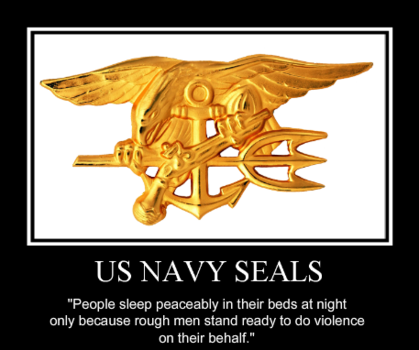
Official Seal of the Navy Seals, with trident.

Now comes the evacuating of Americans from Tripoli, on the heels of the crash of Air Algerie Flight 5017.


Meanwhile, in Iraq, on July 25, 2014, an Iraqi shrine that is purported to be the burial site of Jonah, who the Bible says was swallowed by a whale, has been blown up by Islamic State militants (ISIS). The tomb, a popular destination for religious pilgrims and tourists, was inside a Sunni mosque in Mosul called the Mosque of the Prophet Younis, which is Arabic for Jonah. It dates back to the eighth century BC. The story of Jonah, or Younis, who was said to have survived three days in the belly of a whale, appears in both the Bible and Quran.


Monday, October 08, 2012

Templar Columbus, Columbia, and Columbine

Will the real Columbus please stand up! 

The Halloween-born Christopher Columbus brought genocide to the Americas. It does seem strange that Columbus is a variant of the Latin word Columba meaning dove for peace.


The most famous Columbus is Christopher Columbus (October 31, 1451 – May 20, 1506), the Italian explorer who is incorrectly credited with discovering America. There are whole books written on that subject, like the one by Patrick Huyghe.

The name Christopher Columbus is the Anglicization of the Latin Christophorus Columbus. His name in Italian is Cristoforo Colombo, and in Spanish, it is Cristóbal Colón. He was a Freemason, and perhaps more.
"Columbus’s cryptic signature, 'XpoFERENS Colon' as we decipher it, indicates that he was a member of the super-secretive Templar Military Order of Christ, which had a stronghold in Portugal at the time leading up to his voyage." Source.
"In Portugal, the Knights Templar did not disband, but simply changed their name to Knights of Christ. In 1492, this group is alleged to have provided the navigators for Christopher Columbus' journey, and the Order's cross was featured prominently on the sails of his ships, however there is no actual evidence to support this." Source

The earliest known painting (at top) of Columbus is to be found in The Virgin of the Navigators, 1531–36. Contemporary descriptions describe Columbus as having reddish or blond hair, which turned to white early in his life, light colored eyes, as well as being a lighter-skinned person with too much sun exposure turning his face red. Accounts consistently describe Columbus as a large and physically strong man of some six feet or more in height, easily taller than the average European of his day.

Columba was popular among early Christians because the dove was a symbol of gentleness, purity, and peace.

Other varieties of the word Columbus are written Colombe, Colombo, Columbanus, and Columbano.

The variant form Columbia is familiar to North Americans. Columbia is a historical and poetic name used for the United States of America and is also the name of its female personification. It has inspired the names of many persons, places, objects, institutions, and companies; such as the District of Columbia, the site of the national capital, Columbia River, and Columbia University. Columbia was largely displaced as the female symbol of the U.S. by the Statue of Liberty around 1920.

Columbia is a New Latin toponym, combining a stem Columb- based on the surname of the explorer Christopher Columbus and an ending -ia, common in Latin names of countries (e.g. Britannia "Britain," Gallia "Gaul"). The meaning is therefore "Land of Columbus."

In 1786, just before the United States' Constitutional Convention, South Carolina gave the name "Columbia" to its new capital city. Columbia is also the name of at least nineteen other towns in the United States. Many cities and other locations have been named for Christopher Columbus; see here.

"Pre-Columbian" refers to a time period before the arrival of Christopher Columbus and other European explorers in the Americas.

1893 World's Fair ~ Tesla alternating current presentation.

The World's Columbian Exposition (the official shortened name for the World's Fair: Columbian Exposition, also known as The Chicago World's Fair) was a World's Fair held in Chicago in 1893 to celebrate the 400th anniversary of Christopher Columbus's arrival in the New World in 1492. 

The original Ferris Wheel was built for the 1893 World's Fair.


The fair ended with the city in shock, as popular mayor Carter Harrison, Sr. (shown) was assassinated by Patrick Eugene Prendergast two days (October 28, 1893) before the fair's closing. Harrison's career and assassination are closely connected with the World's Columbian Exposition, and are discussed at some length as a subplot to the two main stories (about the fair and serial killer H. H. Holmes) in The Devil in the White City.

The Mad Gasser of Mattoon (Illinois) sightings of September 1944, were characterized by the local newspaper, the Journal-Review, for example, by talking of the encounter of Miss Frances Smith, principal of the Columbian Grade School, and her sister Maxine:
The first infiltration of gas caught them in their beds. Gasping and choking they awoke and soon felt partial paralysis grip their legs and arms. Later, while awake, the other attacks came and they saw a thin blue smoke-like vapor spreading throughout the room. Just before the gas with its flower-like odor came pouring into the room they heard a strange ‘buzzing’ sound outside the house and expressed the belief that the sound was made by the 'madman's spraying apparatus' in operation.
The Command Module of the Apollo 11 spacecraft, the first manned mission to land on the Moon, was called Columbia (1969).

The Space Shuttle Columbia, built 1975-1979, was named for the exploring ship Columbia. It was the first spaceworthy Space Shuttle in NASA's orbital fleet. First launched on the STS-1 mission, the first of the Space Shuttle program, it completed 27 missions before disintegrating during re-entry on February 1, 2003 near the end of its 28th, STS-107. The destruction of the orbiter killed all seven crew members on board.

Which brings us to Columbine, the name of the high school and today associated with the name of the massacre that happened there (Littleton, Colorado) on April 20, 1999. Columbine is any of various perennial herbs of the genus Aquilegia native to north temperate regions, cultivated for their showy, variously colored flowers that have petals with long hollow spurs. Columbine's origins is from Middle English, from Medieval Latin columbna, from feminine of Latin columbnus, dovelike (from the resemblance of the inverted flower to a cluster of doves), from columba, dove.

Other names linked to dove: Aloma, Calum, Culver, Dove, Jemima, Jonah, Jonina, Paloma, Palomo, Rita, Semiramis, Tor, Yonina, and Yonas.


Portions of this blog, in terms of photos 
and content, are reprinted under the 
as educational and/or editorial material 
of which commentary is made, 
without benefit of financial gain. 
This is applicable throughout 
the entire Twilight Language blog.