Showing posts with label University of Texas. Show all posts

Thursday, March 22, 2018

I-35: Highway to Hell

People have emotional relationships with the highways on which they have to drive often. Interstate 35 is one such road. Writer Sherry Claypool Kuehl once called I-35 "Satan's Parking Lot."


Let's look at it as a "highway to hell" in the wake of the Austin bombings and a quick reflection on its troublesome history.


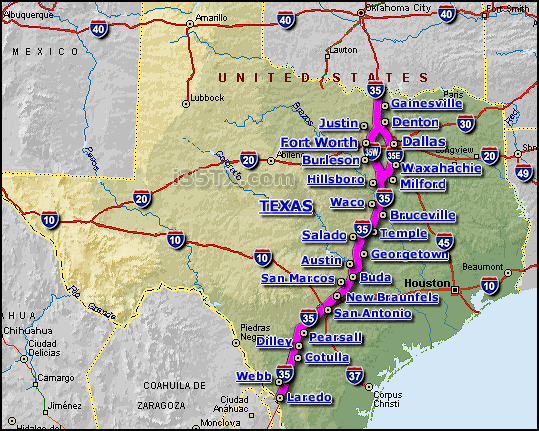
This map by "Jenny Almond" was originally published on February 5, 2018, on Merovee's blog.  It showed predictive insights regarding the Austin bombings. For example, bomber Mark Anthony Conditt's suicide occurred in Round Rock, which is visible on her map.


Other items that Jenny Almond and Tom Mellett have noted should be added to the map include:


~ The Alamo, The Battle of the Alamo, San Antonio, February 23 – March 6, 1836;


~ The Ebola outbreak at the Texas Health Presbyterian Hospital, Dallas, October 12, 2014;

~ The Smiley Face Balloon Crash, near Lockhart, 30 miles south of Austin, July 30, 2016.

Considering how finite the limits of Almond map are, it is intriguing to note how many of the Boyms' "Buildings of Disaster" are represented on her graph.


Texas School Book Depository, November 22, 1963.


University of Texas Tower, Austin, August 1, 1966.
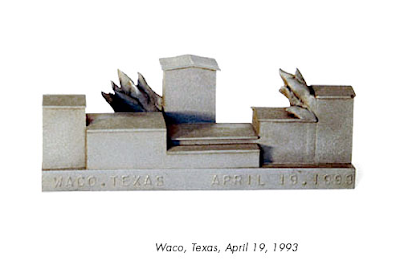


Waco, Texas, April 19, 1993.


Oklahoma City Federal Building, April 19, 1995.


Texas A&M Bonfire Tower, November 8, 1999


Interstate 35 is closely tied to the controversy surrounding the so-called NAFTA superhighway. 

"The proposed Trans-Texas Corridor toll-road project included one proposal (TTC-35) to primarily parallel I-35 from the Mexican border up to the Oklahoma border." Source.


Interstate 29 and Interstate 35, described by the Ministry of Transportation for the province of Alberta as the "NAFTA superhighway."

Perhaps we need to watch I-35 a bit more closely.

For example, notice Ardmore, Oklahoma is on I-35. That's the childhood home of James Shelby Downard, which blogger Matt Forney wrote was "a town straight out of a David Lynch movie: wholesome on the outside but hiding deep dark secrets."

Between 1967 and 1972, "The Enema Bandit" (see Michael H. Kenyon) terrorized Norman, Oklahoma (which sits right on I-35).

The I-35 corridor in this part of the country may be "Satan's Parking Lot," after all.


Sunday, July 31, 2016

50 Years Ago: Charles Whitman Climbed The Texas Tower


No multiple sniping incidents impacted the United States like the one committed by Charles Whitman, who was born [June 24] in Lake Worth, Florida in 1941. Early on the morning of August 1, 1966, Whitman killed his mother in her apartment and his wife at their home. At about 11:30 A.M., Whitman then climbed up to reach the University of Texas Tower (elevation of 231 feet), bringing along six guns, a shotgun, ammunition, a footlocker, knives, food, and water. On his way up, he clubbed the receptionist (who died later) on the 28th floor, and he killed two persons and wounded two others who were coming up the stairs from the twenty-seventh floor. From the observation deck of the tower, Whitman then opened fire on persons crossing the UT campus and on side streets, further killing 10 people and wounding 31 more (one of whom died a week later). For 96 minutes, he held the campus hostage. Finally, at 1:24 P.M., after several attempts, police and a deputized private citizen Allan Crum reached the observation deck, where police officers Ramiro Martinez and Houston McCoy shot and killed Whitman. Altogether, seventeen persons were killed, including Whitman, and thirty-one were wounded in what is still regarded as one of the worst sniper events in modern American history.*

Little known today is that this event encouraged police departments across the USA to develop what came to be Special Weapons and Tactics (SWAT) teams, as Gary M. Lavergne points out in his excellent reference work on this subject, A Sniper in the Tower: The Charles Whitman Murders. The tower itself became a site of tragedy remembered and deaths produced. A series of suicides from the Tower, along with the horror of Whitman’s act, convinced the University of Texas Board of Regents to close the observation deck of the Tower in 1975. Not until 1998 was a vote taken to reopen the Tower, but only after the introduction of metal detectors, and the building of protective fencing around the deck to discourage suicidal jumpers. With those changes in place, Whitman’s sniper nest was reopened to the public in 1999.
The cultural influence of the Whitman event lives on in our culture to such an extent that it colors how we look at any sniper event….From songs to movies, there are hints of Charles Whitman all around us. Singer Harry Chapin wrote a long 1970s folktune Sniper, and Texan Kinky Friedman's facetious The Ballad of Charles Whitman carried on the tradition. Kurt Russell starred in The Deadly Tower (1975), later renamed Sniper, which was set at the Louisiana State Capitol because Texas officials would not allow its use by the filmmakers. References to Whitman continue in Stanley Kubrick's Full Metal Jacket, Oliver Stone's Natural Born Killers, Rick Linklater’s Slacker, and even in Ron Howard’s Parenthood. Whitman is even credited with having an impact on the works of writer Stephen King and Unabomber Ted Kaczynski, as both have admitted. As the D.C. sniper horror unfolded, one lone sniper, Charles Whitman was brought up, over and over again, from such diverse publications as the Workers World to the Right Wing News, from New Age tracts to less than mainstream Internet sites, demonstrating the widespread nature of this person’s story was having on the D.C. snipers tale. ~ The Copycat Effect: How the Media and Popular Culture Trigger the Mayhem in Tomorrow’s Headlines by Loren Coleman (NY: Simon and Schuster, 2004).

* The number was raised to 17, officially, years later. David Gunby, 58, was shot in the lower back. He died of his wounds in 2001; the coroner ruled his death a homicide.


 Charles Whitman as a Marine.