The twilight language explores hidden meanings and synchromystic connections via onomatology (study of names) and toponymy (study of place names). This blog further investigates "name games" and "number coincidences" found in news and history. Examinations are also found in my book The Copycat Effect (NY: Simon and Schuster, 2004).
It was bound to happen, with the name it was give, but The Torch is on fire
A fire erupted early Saturday morning, February 21, 2015, at the Marina Torch in Dubai, the 79-floor skyscrapper that is among the world's tallest residential buildings. According to a report in the English-language Gulf News, thousands were evacuated from the building but high winds hindered firefighters' initial efforts to contain the blaze. It has since been extinguished, according to local witnesses.
There are no reported injuries but the fire was fueled by windy conditions and had engulfed between 10 and 15 floors of the more than 1,100-foot-tall tower, named The Torch.
Designed by award winning architects Khatib and Alami, The Torch rises 351 metres (1152 feet) into the Dubai sky. The tower has 86 floors containing a total of 676 apartments along with a gym, a sauna, a steam room and an eight level garage.
The Marina Torch, also known as Dubai Torch or just The Torch, is a supertall residential skyscraper at the Dubai Marina, in Dubai, United Arab Emirates. The tower became the tallest residential building in the world in 2011, surpassing Q1, in Gold Coast, Australia. The tower reaches 336.1 m (1105 ft) in height with 79 floors above ground.
This year, 2015, is the 40th anniversary of the publishing of my first book (with Jerome Clark). The Unidentified appeared in 1975, from Warner Books. It was republished in combination with its 1978 sister book, Creatures of the Outer Edge, in 2006; see here.
Down through the years, there are over a 100 books that I have contributed to (through introductions, prefaces, forewords), authored, coauthored, and/or edited. That's a good number of books to have seen published, released, reprinted, and revised in old and new editions with your name attached to them.
Seeing that sentence, you probably don't believe it when I say that authors never really ever get rich. Oh, okay, maybe one percent do, if they write 50 Shades of whatever, but most of us are poor and using free sites like blogger to keep writing, waiting to pull things together for our next book. But there is a truth to the fact that the more books you have out there, the less "original" your next publisher thinks you are. That is especially if you specialize in the nonfiction field of unexplained natural and human mysteries, it seems.
Let's look at one truth of what happens to an established writer like myself.
So much has been recycled on the web by others from my books, articles and blogs, today publishers think I'm "borrowing" from others' work when a search of the contents of a new manuscript shows up seemingly similar sections via an online search. This is a troubling trend for authors, of course.
The reality is you can find anything and everything on the net, and everyone seems to use your stuff, as they please, without original attributions.
But it is nothing new. It use to be done by the hard work of collecting all the works on one topic, and extracting what worked for your next "masterpiece." What's new, of course, is that "Google," "Yahoo," and other forms of online searching are available Internet wide of a vast body of written material. There is even a term for this acquiring of material from others and its use by Forteans in books about "Fortean phenomena" or "Forteana."
It's called the "Bermuda Triangle Syndrome."
Photo credit: Fortean Picture Library.
Author Dave Goudsward, in an article he wrote in 1978, coined this practice the "Bermuda Triangle Syndrome," after Berlitz's reuse of the same stories in his various books. This was because intermediate authors had "borrowed" and modified Berlitz's own material to the point where Berlitz himself didn't recognize it when he went looking to "borrow" material.
In academia, such borrowing occurs all the time, as in scholarly citing of others' work and the revision and inclusion of the material in new writings. In the world of popular literature, it is often done, but more casually and with an understanding it happens often between colleagues in, for example, the Fortean field.
Basically, what Goudsward did in his examination was to put all the "Bermuda Triangle" books in publication order and then he traced the evolution of various snippets and stories about various ships and aircraft used, from title to title. He ended up with one of Berlitz's later books with a story unrecognizable from the original. As Goudsward pointed out in his analysis, Richard Winer was probably the most successful of the revisionists, but, of course, Berlitz was too, even of his own work.
While Charles Berlitz would become the most famous, and by extension, make the most money from his books on the topic, the actual coining of the term "Bermuda Triangle" seems to point to Vincent Gaddis, a Fortean friend of Ivan T. Sanderson. In the February 1964 issue of Argosy, Vincent Gaddis' article "The Deadly Bermuda Triangle" used the phrase widely for the first time.
Most of us try to be very careful about the incorrect of use of our old material, especially as seen through the eyes of ours. But then, sometimes it has evolved so far from your own writings, if you try to quote or paraphrase your own investigated case to give it new clothing, via another source, you probably will be accused of inappropriately using a turn of a phase from someone else, when ultimately, it might have been yours in the first place.
What a world.
++++++++++++++++++
Please support my work by simply clicking on the following button to give $5, $10, $50, $100, $1000, or a couple bucks, whatever you can send. I'm a starving writer. Thank you.
It's Oscar season, so perhaps it is time to talk of movies and violence again?
Events do not let us think otherwise. In the end, it is about Falling Down's "I'm going home," and The Wizard of Oz's "There's no place like home," isn't it? And the notion "to protect and serve" what is one's view of "home." It all stems from your homeland, your hometown, your 'hood, your building, your house, your automobile, or even your parking space.
Chapel Hill comes to mind. And L.A. too.
+++++
+++++
On February 10, 2015, at 5:15 p.m., Deah Shaddy Barakat, Yusor Mohammad Abu-Salha and Razan Mohammad Abu-Salha were killed in their home in Finley Forest Condominiums on Summerwalk Circle in Chapel Hill, North Carolina, United States.
The victims.
Craig Stephen Hicks, 46, a former car parts salesman, allegedly shot dead the three Muslim university students at point blank range, in their heads, before turning himself into police. Hicks had moved to Chapel Hill in 2005 from Bethalto, Illinois. His motive, allegedly, was not because he is anti-Muslim, but because he was angry because of an ongoing parking space dispute. However, additional information from his first wife notes that Hicks was obsessed with watching "incessantly" the 1993 film Falling Down starring Michael Douglas, about a divorced lawyer who loses his job and embarks on a shooting rampage across Los Angeles.
We've heard of this before.
Before George Hennard crashed his truck into Luby's cafeteria in Killeen, Texas, on October 16, 1991 and sprayed it with gunfire, he had watched a documentary video at home about a similar mass murderer, James Huberty, who killed 21 people at a California McDonald's on July 18, 1984. ~ Loren Coleman, The Copycat Effect (NY: Simon and Schuster, 2003).
CNN religion editor Daniel Burke interprets Hicks' response to conspiracy theories about President Barack Obama's religion as "It's OK if we have a Muslim president." Source 1, 2, 3.
(In American English, especially as viewed as slang, the word "hick" is a derogatory term for an unsophisticated provincial person, usually said to be Caucasian, Midwestern- or Southern-raised, racist, and anti-semitic.)
Looking to analyze films like Falling Down, it opens up an entire area of film study.
Doing this, a reviewer once observed that filmmaker and professor Thom Andersen
...pushes the issue of de-humanization, of symbolic genocide, further. A venture such as the Michael Douglas-fronted Falling Down presents the case of a white-collar, WASP-y male who, abiding no more of an interminable traffic jam, deserts his car and, trekking across Los Angeles, essentially loses his mind, though not his sense of entitlement. ~ Peter Moysaenko ~ 12.7.2009
Synchromystics, Forteans, and twilight language translators watch motion pictures on a different level than most moviegoers. They observe everything. Not just the plot. They look beyond the obvious. They experience the settings, the scene, and the sequences with new eyes. So too, it appears, do architectural students, film buffs, and cityscape fans. A deep, powerful, rarely seen documentary looking at film, analyzes movies on this level.
I've made it no secret for years that the architecture of Frank Lloyd Wright and films have a special meaning to me and others.
The Ennis House and Vincent Price appeared in House onHaunted Hill.
Michael Douglas' 1989 yakuza movie Black Rain also used the Ennis House. Source.
The Snowden House was built by Lloyd Wright, eldest son of Frank Lloyd Wright. The house was used as a shooting location to depict the home of Ava Gardner in Martin Scorsese's film The Aviator.
Director Thom Andersen's Los Angeles Plays Itself (2003) - at 169 minutes -is a genius synchrocinematic visual essay. If you have not viewed and digested it, you should. Here's a sample and some thoughts:
Los Angeles, Thom Andersen’s hometown, has figured, it seems, for most of its existence, as a misunderstood mutant, a territory without definitive identity, despite now serving as residence to nearly four million people. A McDonald’s restaurant in the City of Industry remains forever closed to the public, but functions exclusively as a set for commercials. The Bradbury Building has been cast as a Mandalay locale or as the headquarters of an East Coast newspaper. Frank Lloyd Wright’s Ennis House has provided context for such varying visions as that of Blade Runner, The House on Haunted Hill (a cheesy Vincent Price joint), and a Ricky Martin music video. Hollywood refuses to take Los Angeles for what it is, Andersen insists, if the professionals that make up the movie machine have any clue about its essence to begin with. Hollywood denigrates what should represent the pride of Los Angeles’s eclectic architectural scene, casting its Modernist and International style homes as dens of iniquity, the mansions of gangsters and drug lords, rather than centers for evolved living....
We are bidden to watch not as Hollywood expects us to, but with voluntary attention, getting past the expertly dressed leads and zeroing in on the more elemental concern of setting. After all, there’s no story in a vacuum, and as the trumpeted notion of country, the notion of property over country, reminds daily, a life’s nothing without a home. ~ Peter Moysaenko ~ December 7, 2009.
As Andersen notes in his documentary, and I have too, the films containing FLW-trained architect John Lautner's homes are frequent targets of attention too.
The clean bold lines of John Lautner’s famous houses are hard to resist for moviemakers. The most famous houses are the Elrod House, which was Willard Whyte’s crib in Diamonds are Forever, the Chemosphere used in Body Double, the Goldstein House featured in The Big Lebowski, and the Schaffer House, which offers a luxurious repose for A Single Man. Source.
Personally, I taught a weekly 3 hour long documentary film course, for 23 semesters, from 1983 to 2003, at the University of Southern Maine. Sorry to know Los Angeles Plays Itself (2003) appeared after my course ended. I would have loved to screen it for my students.
+++
Movies in order of appearance in Thom Andersen's Los Angeles Plays Itself(2003).
(I wish someone would do I similar list, from his documentary, of the names of all the architects and the buildings mentioned in his film.)
The Crimson Kimono (1959) Pushover (1954) He Walked by Night (1948) Nocturne (1946) Pushover (1954) The Strip (1951) Out of Bounds (1986) Hickey and Boggs (1972) The Glimmer Man (1996) They Live (1988) Out of Bounds (1986) The Thirteenth Floor (1999) Blade (1998) The New Centurions (1972) Brother (2001) 52 Pick-Up (1986) Blade (1998) The Million Dollar Hotel (2001) Night on Earth (1991) Safe (1995) The Thirteenth Floor (1999) The Glimmer Man (1996) Boyz N the Hood (1991) The Takeover (1994)
2001 filming Swordfish East of Eden (1955) Rebel Without a Cause (1955) The Music Box (1932) Mr. Blanding Builds His Dreamhouse (1942?) Zabriskie Point (1970) The French Connection (1971) To Live and Die in L.A. (1985) The French Connection (1971) L.A. Bounty (1989) Rising Sun (1993) Hollywood Calvalcade (1932) A Muddy Romance (1913) Putting Pants on Philip (1928) What Price Hollywood? (1932) This Gun for Hire (?) The Blue Dahlia (1946) Detour (1945) Safe (1995) The Adventures of Ford Fairlane (1990) Escape from L.A. (1996) To Live and Die in L.A. (1985) Alien from L.A. L.A. Confidential L.A. Wars L.A. Bounty L.A. Vice L.A. Crackdown Fashionably L.A. L.A. Crackdown II L.A. Story Out of Bounds (1986) Hollywood Boulevard (1976) Hollywood Confidential Volcano
The City as Background A Star Is Born Nobody Lives Forever The Damned Don’t Cry What! No Beer? (1933) Three Smart Girls (1936) Dragon Seed (1944) Babbitt (1934) The Public Enemy (1931) The Street With No Name (1948) China Girl (1943) The White Cliffs of Dover (1944) D.O.A. (1950) Indestructible Man Marlowe (1969) Blade Runner (1982) Murder in the First (1995) Wolf (1994) The Replacement Killers (1998) The Karate Kid III Black Rain Female (1933) House on Haunted Hill (1958) Vuelve (1999) music video Blade Runner (1982) A Passion to Kill (1994) The Thirteenth Floor (1999) Timestalkers Black Rain (1989) Howling II: Your Sister is a Werewolf House on Haunted Hill The Terminal Man Blade Runner Timestalkers Bugsy (1991) Nick of Time (1995) To Live and Die in L.A.(1985) Bugsy (1991) Mike’s Murder (1984) The Way We Were (1973) Under the Rainbow (1981) Species (1995) Blade Runner Union Station The Replacements Killers The Morning After (1986) The Net (1995) The Morning After (1986) The Outside Man (1973) The Rookie (1990) Why Do Fools Fall in Love? Miracle Mile Panic in the City (1968) The Big Sleep (1946) Rebel Without a Cause (1955) The Net Night of the Comet Dead Connection The Glimmer Man The Adventures of Ford Fairlane Heartbreakers (1984) To Live and Die in L.A. Dead Homiez (1997) To Live and Die in L.A. City of Industry The Learning Curve (2001) Nocturne (1946) Deep Cover (1992) The Limey (1999) Heat (1995) Marlowe (1969) Cobra (1986) Kalifornia Cobra (1986) Death Wish 4: The Crackdown Gone in 60 Seconds (1974) To Live and Die in L.A. Jackie Brown Heat (1995) Gone in 60 Seconds (1974) To Live and Die in L.A. The Damned Don’t Cry The Night Holds Terror (1955) The Replacement Killers L.A. Confidential (1997) Why Do Fools Fall in Love? (1998) The Marrying Man (1991) The First Power (1990) Why Do Fools Fall in Love? Twilight (1998) The Big Lebowski (1998) Body Double (1984) Lethal Weapon 2 (1989) Die Hard (1988) Rising Sun (1993) Impulse L.A. Bounty Valley Girl The Terminator Hollywood Boulevard Repo Man Predator 2 Nick of Time Anywhere But Here City of Industry Breathless (1983) Clueless (1995) Hickey and Boggs Two Minute Warning (1976) Invisible Invaders (1959) Hollywood Confidential (1997) Demolition Man Escape from L.A. The Great Los Angeles Earthquake Earthquake (1974) The Great Los Angeles Earthquake (1990) The War of the Worlds (1953)
Earthquake (1974) Airport (1970) Escape from L.A. (1996) Volcano (1997) Independence Day (1996) Armageddon (1998) The War of the Worlds (1953) Earthquake
The City as Character
Double Indemnity (1944) L.A. Confidential Death Wish II Mildred Pierce (1945) The Postman Always Rings Twice (1946) Shadow in the Sky Till the End of Time (1946) Act of Violence (1949) The Next Voice You Hear (1950) Shadow in the Sky (1951) The Next Voice You Hear Rebel Without a Cause (1955) The Big Sleep (1946) The Devil Thumbs a Ride (1947) He Walked By Night (1948) Kiss Me Deadly (1955) The State of Things Targets Little Caesar (1930) Hollywood Canteen (1944) Kiss Me Deadly (1955) The Exiles (1958) Flareup (1969) Messiah of Evil (1973) Kiss Tomorrow Goodbye (1950) Bachelor in Paradise (1961) The Disorderly Orderly (1964)
Messiah of Evil (1973) Armored Car Robbery The Atomic City (1952) Johnny Eager Suspense Xanadu (1980) Zabriskie Point (1970) Into the Night (1985) Farewell, My Lovely (1975) Bunker Hill The Glenn Miller Story Kiss Me Deadly Criss Cross (1949) Shockproof (1949) The Unfaithful (1947) Indestructible Man Kiss Me Deadly The Exiles Omega Man (1971) Night of the Comet (1984) Virtuosity (1995) The Outside Man (1973) 110/220 (1994) Out of Bounds (1986) 110/220 (1994) Out of Bounds (1986) Sudden Impact (1983) The Birds (1963) Vertigo (1958) Saboteur Psycho (1960) Annie Hall (1977) Venice/Venice (1992) The Loved One (1965) Point Blank (1967) The Trip (1967) Meshes of the Afternoon (1943) Tarzan and Jane Regained… Sort of (1963) L.A. Plays Itself (1972) The Outside Man (1973) Zabriskie Point (1970) Model Shop (1969) Flareup (1969) The Exiles (1958)
The City as Subject
Chinatown (1974) There Goes My Baby (1990) Chinatown (1974) Cutter’s Way (1981) Chinatown (1974) Freeway (1996) The Outside Man (1973) Midnight Madness (1980) Breathless (1983) Sunset Blvd. Falling Down (1993) Who Framed Roger Rabbit? (1988) Bachelor in Paradise (1961) The War of the Worlds (1953) Sins of the Night Heartbreakers (1984) Repo Man (1984) American Me (1992) Blade Runner (1982) L.A. Confidential (1997) Dragnet (1954 movie) Dragnet (tv series) Dragnet (1954 movie) Dragnet (tv series) Unlawful Entry (1992) Terminator 2: Judgment Day The Player (1992) The Choirboys (1977) The Black Marble (1980) The Glitter Dome (1984) The New Centurions The Black Marble The Blue Knight (1975) Predator 2 (1990) The Terminator (1984) Cobra Tango & Cash Lethal Weapon (1987) Internal Affairs Heat (1995) Strange Days (1995) Unlawful Entry Falling Down Nails The Glimmer Man (1996) Short Cuts (1993) The Long Goodbye (1973) L.A. Story (1991) A Woman Under the Influence (1974) Love Streams (1984) Hanging Up (2001) Grand Canyon El Norte (1983) The Exiles Bush Mama (1975) Bless Their Little Hearts (1983) Bush Mama (1975) Killer of Sheep (1977) Bless Their Little Hearts (1983)
The synchromystic "Fayette Factor" has struck again.
A freight train in Fayette County, southern West Virginia, carrying crude oil derailed on February 16, 2015. The derailment caused an explosion that set at least one house on fire. The man in the residence, identified as Morris Bounds, escaped in his bare feet without serious injury. This took place near Mount Carbon, described as being along WV Route 61, near Armstrong Creek Road. This area is also known as Powelltown Hollow.
Several of the train cars spilled into the Kanawha River, east of Montgomery, and caught fire, prompting an evacuation order for a mile-and-a-half around the area where the train skipped the tracks, according to NBC affiliate WSAZ.
No injuries have been reported, according to the Fayette County Sheriff's Department. The Fayette County Fire Department responded to the scene, the sheriff's department said.
At the other end of the Kanawha River, 80 miles away, is Point Pleasant, a city in and the county seat of Mason County, West Virginia, USA, at the confluence of the Ohio and Kanawha Rivers. The town is known for sightings of Mothman in 1966-1967, and the collapse of the Silver Bridge on December 15, 1967.
The Kanawha River is a tributary of the Ohio River, approximately 97 mi (156 km) long, in the State of West Virginia.
Fayette County was created by Act of the Virginia General Assembly, passed February 28, 1831, from parts of Greenbrier, Kanawha, Nicholas, and Logan counties. It was named in honor of the Marquis de la Fayette, who had played a key role assisting the Continental Army during the American Revolutionary War. Virginia previously had a Fayette County, which was lost to form the new state of Kentucky. Accordingly, in the State records of Virginia, there will be listings for Fayette County from 1780–1792 and Fayette County from 1831-1863. Neither location is still located in Virginia and despite naming a county after him twice, Virginia no longer has a county named for the Marquis de la Fayette.
Fayette County was home to a disastrous mine explosion at Red Ash in March 1900, in which 46 miners were killed.
The dead gunman has been identified as Omar El-Hussein (shown above and below).
Beginning on Valentine's Day, February 14, 2015, Copenhagen, Denmark was rocked by two shootings that mirrored the terrorist shootings in Paris last month.
Krudttoenden Attack
A shooting at a free speech event featuring Lars Vilks, a Swedish artist, who had caricatured the Prophet Muhammad and a second shooting hours later outside a synagogue left two dead and five police officers wounded in Copenhagen, stirring fears that another terror spree was under way in a European capital a month after 17 people were killed in Paris attacks.
No suspects were arrested.
The first shooting happened shortly before 4 p.m. Saturday, February 14th. Danish police said the gunman used an automatic weapon to shoot through the windows of the Krudttoenden cultural center during a panel discussion on freedom of expression following the Paris attacks. A 55-year-old man attending the event was killed, while three police officers were wounded. The victim has not been identified.
The gunman then fled in a carjacked Volkswagen Polo that was found later a few miles away, police said.
Police initially said there were two gunmen at the cultural center but later said they believed there was only one shooter. They described him as 25 to 30 years old with an athletic build and carrying a black automatic weapon. They released a blurred photograph of the suspect wearing dark clothes and a scarf covering part of his face.
Lars Vilks, 68, who has faced numerous death threats for caricaturing the Prophet Muhammad, was one of the main speakers at the event, titled "Art, blasphemy and freedom of expression." He was whisked away by his bodyguards unharmed as the shooting began. He felt he was targeted.
Filmmaker Killed
The man who was killed on Valentine's Day in the Copenhagen attack was a documentary filmmaker who worked on a film about terrorists and another about an Australian boomerang champion.
Finn Nørgaard (1959 – February 14, 2015) was a Danish filmmaker who was involved in several documentary and feature films.
Nørgaard received a cand.phil. degree in Film and Communication from the University of Copenhagen in 1991.
Nørgaard was a photographer for the 1983 Danish detective film Adam Hart i Sahara and editor of the 1986 Danish documentary film Soul to Soul. He served as producer for Kun for Forrykte, a 1988 documentary film about Eik Skaløe and Steppeulvene. He worked behind the camera as clapper loader in Peter Eszterhás' 1989 film En afgrund af frihed.
From 1989 until 2001 Nørgaard worked at DR (Danish Broadcasting Corporation). In 2001 he became co-owner of Filmselskabet (Film Company). During this period he is also credited as assistant camera in the 1992 German film Die Terroristen! and made an appearance as a bodyguard in Thomas Borch Nielsen's 1998 film Skyggen (Webmaster).
In 2004 he directed the documentary film Boomerang Drengen (Boomerang Boy) and was responsible for production of documentary films about the Lê Lê restaurant chain: Lê Lê - De jyske vietnamesere from 2008.
In 2009, for TV 2, Nørgaard directed and produced En anden vej: Historien om fire nydanskere og en koncernchef, which followed former Tryg-CEO Stine Bosse and four young immigrants to Denmark with a criminal background on a pilgrimage to El Camino.
Nørgaard also directed and produced film for Mærsk, SAS and Microsoft, among others.
Finn Nørgaard was killed on February 14, 2015 in an attack on a discussion meeting titled "Art, Blasphemy, and Freedom of Expression" organized by the Lars Vilks Committee and held at the Krudttønden culture center in Østerbro. The perpetrator shot with a submachine gun from close range. In the same incident two PET bodyguards and a police officer were wounded.
Krystalgade Synagogue Attack
After searching for the first gunman for hours, police reported the second shooting in downtown Copenhagen after midnight Sunday. The gunman opened fire at two police officers outside the synagogue on Krystalgade. They were wounded in the arms and legs but were not in life-threatening condition.
Right behind the synagogue, a young girl was celebrating her confirmation (bat mitzvah) with a party of about 80 people, the Jewish Society of Denmark said.
Dan Uzan, 37, who was standing at the gate providing security for the party, was shot and killed.
Authorities pieced together surveillance images from across the capital and tracked the suspect's movements....
The footage shows the man going from the scene of a shooting to where he apparently abandoned a vehicle, and to a taxi cab.
"By interviewing the taxi driver, we got the address where he dropped off the person," [Copenhagen police investigator Joergen] Skov said. "We have been keeping that address under observation."
He said when officers tried to make contact with the suspect at the Copenhagen apartment on Sunday, the suspect opened fire. Police fired back, killing the gunman.
The dead gunman was Danish-Arab, 22, living in Copenhagen, and was on the radar of authorities for gang activity, not for suspected Islamist extremism.
The suspect remains unidentified.
The Copycat Effect
The targets and methodology in the Paris and Copenhagen attacks appear to be extremely similar.
The cartoonists in Paris were the prime targets of the terrorists. In Copenhagen, Lars Vilks felt targeted.
In March 2013, this poster appeared:
"Wanted: Dead or Alive for Crimes Against Islam," the page reads. The list includes: Molly Norris, Ayaan Hirsi Ali, Flemming Rose, Morris Swadiq, Salman Rushdie, Girt Wilders [sic], Lars Vilks, Stephane Charbonnie, Carsten Luste, Terry Jones, and Kurt Westergaard. Most are or were notable critics of radical Islam, and one heading says "WANTED Dead or Alive for Crimes Against Islam."
"Yes We Can," the image reads. "A Bullet A Day Keeps the Infidel Away."
Vilks became a target after his 2007 cartoon depicting Mohammed with the body of a dog -- an animal that conservative Muslims consider unclean...
Like Charlie Hebdo editor Stephane "Charb" Charbonnier -- who was killed in the attack on that magazine's Paris offices last month -- Vilks was one of nine faces on a "Most Wanted" graphic published by al Qaeda's Inspire magazine for "crimes against Islam."
Others include a pair of Danish journalists who published 12 cartoons depicting Mohammed in the Jyllands-Posten newspaper; Florida pastor Terry Jones, who burned a Quran; and Satanic Verses author Salman Rushdie.
[Helle Merete Brix, a journalist and founder of the Lars Vilks Committee] said, "there's no doubt" the Copenhagen event was targeted because of Vilks, who has "not been able to live a normal life" for years. Source.
"What other motive could there be? It's possible it was inspired by Charlie Hebdo," Lars Vilks said, referring to the January 7 attack by Islamic extremists on the French newspaper that had angered Muslims by lampooning Muhammad.
Police spokesman Joergen Skov said it was possible the gunman had planned the "same scenario" as in the Charlie Hebdo massacre.
The Name Game
Krudttønden means "the powder keg."
Krystalgade (literally 'crystal street') is a street in central Copenhagen, Denmark, connecting Nørregade to Købmagergade.
Krystalgade has been associated, historically, to the location of the Zoological Museum, University of Copenhagen, with origins dating back to 1537, of an often-illustrated cabinet of natural history curiosities (also known as Kunstkabinett, Kunstkammer, Wunderkammer, Cabinets of Wonder, and wonder-room) of Ole Worm (13 May 1588 – 31 August 1654), also known as Olaus Wormius, a Danish physician and antiquary.
The synagogue on Krystalgade.
Regarding the photograph at top: "It's only a trick produced by the angle of the camera and what the suspected shooter is wearing, but doesn't he look a bit like the Joker in this CCTV picture?" ~ Author Robert Schneck.
Colorado's Aurora (literally "Red Dawn") is the site of a shooting on Valentine's Day, February 14, 2015.
Yes, another Aurora focus of violence. Another Waffle House. Another bloody Valentine's Day (see here). It followed a Friday the 13th.
Fast food in Red Dawn
You may recall that a Waffle House cook shot and killed a customer after an argument the morning of Friday, June 13th in 2014. That occurred outside of Atlanta. See more here on that incident.
As far as the Aurora event, here are some details:
A 19-year-old woman was shot early Saturday morning in the parking lot of an Aurora restaurant after shots were fired between two groups of people, authorities say. The woman was taken to a local hospital with non-life threatening injuries, said Sgt. Chris Amsler, Aurora police spokeswoman. Her identity has not been released. Aurora police have arrested a person of interest in the shooting. The name of the person has not been released. Police are still searching for a second gunman who opened fire during the confrontation. An argument flared between two groups of inside the Waffle House at 12880 E. Mississippi Ave. at about 4 a.m., Amsler said. ~For more see the Denver Post here.
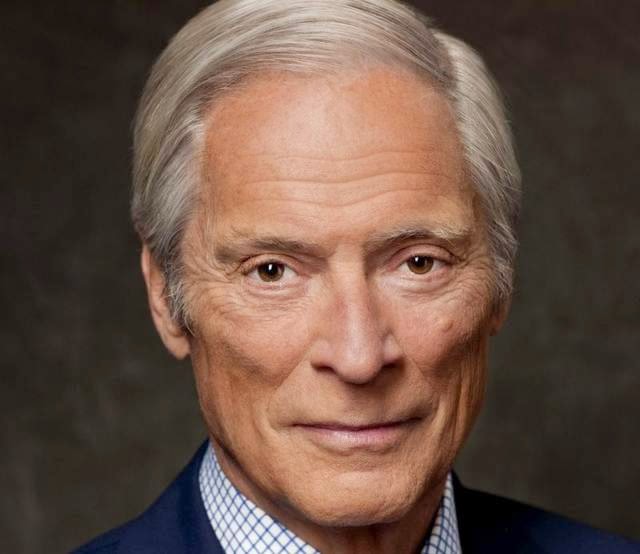
Bob Simon, 73, a CBS News television correspondent, died in an automobile crash on February 11, 2015. He was born on May 29, 1941, in the Bronx, N.Y., and was graduated Phi Beta Kappa from Brandeis University in 1962 with a degree in history. He and his wife, Françoise, have a daughter, Tanya, who is a producer for CBS News’ “60 Minutes” in New York.
From 1964 to 1967, Simon served as an American Foreign Service officer and was a Fulbright Scholar in France and a Woodrow Wilson scholar. From 1969 to 1971, he served a tour in the CBS News London bureau. From 1971 to 1977, he was based in the London and Saigon bureaus, where he served as a Vietnam War correspondent. From 1977 to 1981, he was assigned to the CBS News Tel Aviv bureau.
From 1981 to 1982, he spent time in Washington, D.C., as the CBS News State Department correspondent. From 1982 to 1987, Simon served as a New York-based CBS News national correspondent. In 1987, Simon was named the CBS News Chief Middle Eastern correspondent.
In addition to Vietnam, the Persian Gulf, Sarajevo and Tiananmen Square, Simon has reported from the frontlines on the American interventions in Grenada, Somalia and Haiti, the revolutions in Portugal and Prague, the civil wars in Central America, the Turkish invasion of Cyprus, the conflict in Northern Ireland and the war between Britain and Argentina over the Falklands. Simon was with Israeli troops during the Yom Kippur War, with PLO fighters during the Israeli invasion of Lebanon and in Gaza the day the Intifada began.
During the opening days of the Gulf War in January 1991, Simon and his CBS News team were captured by Iraqi forces and spent 40 days in Iraqi prisons; he later chronicled the experience in the book Forty Days.
In 1996, Simon joined 60 Minutes as a correspondent, and in 1998, he was named a 60 Minutes II correspondent. Notable stories he has done in recent years include the first profile of the so-called "Lost Boys of Sudan" and an exclusive interview with Iraqi Shiite insurgency leader Muqtada al-Sadr. Most recently, he had served as the senior foreign correspondent on 60 Minutes.
There are various versions of how he died.
Deadline Hollywood, allegedly,at first reported he had died when his car hit a tanker truck.
CBS announced tonight that the long time news magazine correspondent was killed in a car accident in NYC tonight. Bob Simon was 73. The veteran reporter joined 60 Minutes in 1996. The crash occurred on the West Side Highway in Manhattan when the Lincoln Town Car the correspondent was traveling in hit another vehicle and went off the road. In a five decade career, much of its as foreign correspondent, Simon won 27 Emmys and 4 Peabodys.
On February 11, 2015, Simon was killed in a car crash. He was a passenger in a livery cab which was involved in a collision with another car, and then it crashed into a median. Bob Simon went into cardiac arrest and later died at Bellevue hospital.
Tanker truck? Median? Another vehicle and off the road?