Showing posts with label Review. Show all posts

Tuesday, September 26, 2017

Invasion on Chestnut Ridge: Spooky, Scary, A Cocktail of Weirdness


Invasion on Chestnut Ridge is a bit of a departure for Seth Breedlove and Small Town Monsters films.

Spooky, at times scary, and often a cocktail of weirdness, the documentary projects a Twilight Zone feel. Not strictly about monsters and cryptids, one gets the sense we are peeking in on a secret region of the country - Chestnut Ridge at the edgy corner of Pennsylvania, Ohio, and West Virginia.

What is seen as normal there by the locals - where UFOs, Bigfoot, Black Panthers, Dogmen, and Glowing Orbs haunt the area and coexist - is beyond bizarre elsewhere. Breedlove captures it all well, although it is hard to say any of it really has anything to do with each of the other phenomena being reported.

Driven by the testimony and gathering of incidents by a handful of investigators, we are asked to buy into the strange notion of the connectedness of this window area. If anything, we should look back and appreciate Breedlove for documenting how very isolated and unusual this story is - thank goodness.


Invasion of Chestnut Ridge is due Halloween 2017, and you may pre-order it via Small Town Monsters, along with their other movies, together or separately.  Director Seth Breedlove was named The Cryptozoologist of The Year 2017, due to his growing body of cryptozoology documentary work. Pick up some of his films, and view them for yourself.

(For more remarks, in my extended comments on this documentary, see below.)
Seth Breedlove's and his Small Town Monsters crew's on-site location interviews of eyewitnesses adds a texture to the film not found in merely reading or hearing about the cases. The viewer is able to "see" where these incidents happened, and experience these remarkable events in an unforgettable fashion.
 Stan Gordon was a focus of the Invasion on Chestnut Ridge interviews, as the primary historical investigator in the area, creating a thread throughout the documentary. Gordon's open-minded theorizing that connects UFOs to the creature accounts is the paintbrush that colors the documentary. 


This is not to say this is an incorrect notion about the world of Chestnut Ridge, but a critical thinking audience may wish to examine the cases outside Gordon's worldview. Breedlove's film gives plenty of opportunities to merely listen and look at the weirdness, and separate the data from the theorizing. Certainly, there is a great deal occurring in this specific region that defies explanation.


Chestnut Ridge is what must be considered one of the classic "window areas" mentioned by John A. Keel and other UFO investigators in the 1960s-1970s. The documentary begins with notes on how these special locations are a concentration of intrigue and interest. But the "celebrity sites," such as the Bermuda Triangle and Stonehenge get all the attention. Other ones, off the beaten track of visitors and media attention, include places like Chestnut Ridge. There is a need for more documentaries like this one.


Invasion on Chestnut Ridge shines a spotlight on Westmoreland County (where Stan Gordon lives).


Around the edges, we do note that the "Fayette Factor" is part of the picture.


Fayette County is known for Falling Water and Frank Lloyd Wright (see here).

Invasion of Chestnut Ridge mentions, besides its focus on Westmoreland County, that Fayette County is not to be ignored. I wrote of "Frank Lloyd Wright and Synchromysticism" in 2012. I've been writing about Fayette County for decades.

High strangeness in Fayette County, Pennsylvania is a long documented reality. (See here.) In 1978, my and Jerry Clark's Creatures of the Outer Edge dealt with the bizarre Uniontown, Fayette County, Pennsylvania, case involving Bigfoot and globes of light and more. It is a different kind of county.

Anyone familiar with my writings, as well as Jim Brandon's, know I put stock in the Fayette Factor as a lens to Fortean weirdness awareness.

Watch Invasion of Chestnut Ridge with a view to looking deeper than any cryptozoologist or ufologist ever did. You may see things never observed before, synchromystically speaking, through your 2017 eyes.


Friday, December 07, 2012

Red Dawn (2012) Review


Red Dawn was neither Pearl Harbor nor Tora! Tora! Tora!

I guess it has taken me so long to write down my thoughts on Red Dawn (2012) because I found it to be such a horrible movie. I respect filmmakers for trying to do their best, and actors for their craft. But sometimes, motion pictures do miss the mark.

First thing that happened when I went to the opening week's showing is that it won't begin. It took the theater about 15 minutes to get the blank screen to reveal the images. That's never a good sign. Then the middle-aged man behind me kept kicking my chair. I finally had to give him a look that said "Stop it."

Okay, then I suffered through the film.

A lot has been written in reviews of Red Dawn (2012) about the move from the original setting in Colorado to Spokane, and the supposedly more urban surroundings. There also is the change from Chinese as the invaders to the North Koreans. It is almost as if the film was rather spineless before it even began. Those kinds of things tend to not work out too well in remakes.
Other reviewers have discussed the illogical aspects of the "occupation," such as why are some people put in the internment camps and why are others walking around. Several things in the movie seem not thought out clearly.

The preamble with the news footage of Obama, Biden, and Clinton just didn't make much sense either. The reasoning for this war was incomprehensible.
I found other little things bothered me. Like what happened to all of the dogs that would be roaming around, homeless, and looking for food, in the aftermath of an invasion? No feral pets wild in the streets? There was a sterility about the landscape.


How did the youthful guerrillas, the Wolverines, get food to survive? Yes, there was one moment of humor, when a Subway was taken over briefly by the Wolverines. But almost immediately, it felt like product placement, especially since the partner company, Pepsi, turned up, here and there, too.

Who would you want fighting for the USA? The 1984 rugged Wolverines or the 2012 seemingly prep school crew?
The choice is an easy one.

Why was that HHR (a Chevy product made entirely in Mexico) prominently in frame (in the new Red Dawn), near the prisoner camp, is beyond understanding. Was it a nod to the 1978 Chevrolet K10 Cheyenne in Red Dawn (1984)?

The new Red Dawn film had a midweek, Thanksgiving week release on Wednesday, November 21, 2012. Almost immediately, there was a theater incident.

In Rhode Island, a man was arrested on November 21, 2012 (n.d. JFK assassination anniversary is November 22nd, remember) for using threatening language in an East Providence movie theater.

Law enforcement officers were called to the East Providence 10 Theater around 6 p.m. on that Wednesday night, after a distressed moviegoer told them that a man standing in line ahead of him was talking to himself about shooting people and buying weapons.

According to police, Carl Butler, 41, of Central Falls, had just finished watching a movie (it has never been identified) and was standing in line to purchase tickets for another movie (also unknown). Three people standing in line overheard him muttering to himself that he wanted to shoot people at a motel he was planning on staying at.

Butler was inside one of the theaters when police arrived. Police say about a half-dozen officers arrived and evacuated the building for 45 minutes.

Police quickly located Butler and took him into custody. Butler was wearing a large jacket. He was searched, and police found no weapons on him, according to police. Butler allegedly told police that he thought nobody heard him and that saying such things "wasn't a big deal."

Some moviegoers were visibly agitated by what Butler said.

Butler was charged with disorderly conduct.

Enki, who sent along the tip about Butler, wrote:
The individual who was using threatening language is named Carl Butler. Carl = man, and Butler = server.
I am reminded of the classic Twilight Zone episode "To Serve Man," which was based on a story by Damon Knight. In this episode, the secret agenda of seemingly benevolent aliens is discovered when an alien book called To Serve Man is translated. The ending is memorable: "Don't get on that ship! The rest of the book To Serve Man, it's...it's a cookbook!"
And later:
There is a name game link to the {November 30th} SSA building bombing suspect Abdullatif Aldosary.  The name Abdul Latif is an Arabic name. In Arabic the meaning of the name Abdul Latif is: "One who serves a kind man."


Red Dawn (1984): Jennifer Grey and Lea Thompson

Red Dawn (2012): Chris Hemsworth and Adrianne Palicki


Red Dawn (2012, above, and 1984, below): Why was the original remade?

Red Dawn (2012) may have taken advantage of "something in the air," 
but they certainly didn't bring it home.


Saturday, June 06, 2009

Outbreak!


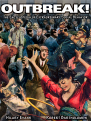
The recommended new book, Outbreak! The Encyclopedia of Extraordinary Social Behavior is a massive tome, being a large format paperbound book (8" by 11"), with a total of 765 pages of about 340 entries. The authors are the scholars Hilary Evans, a social historian, and Robert Bartholomew, a sociologist and specialist in collective behavior. The editor-publisher Patrick Huyghe also deserves much credit for being the midwife at Anomalist Books for the birth of this big baby, during the Spring of 2009.

From "Abdera Outbreak of Prose and Poetry" to "Zoot Suit Riots," the book takes the reader on an incredible tour of the topics at hand. The classics of contagion behavior are here, e.g. the "Band Bus Hysteria," "Cargo 'Cults'," "Copycat Behavior," "Phantom Slasher," "Pokemon Illness," "Salem Witch Hunts," "Suicide Clusters," and "Windshield Pitting Scare."

But it may be the more bizarre of the strange that gets some attention for the authors' weird little treks into "Extraterrestrial Tsunami Panic," "Feather Tickling Fad," "Jumping Frenchmen of Maine" (a little more serious than the "kicking horse game" and "cabin fever"), "Masturbation Delusion" (obviously, an in-depth global survey), "Ugandan Running Sickness," and "Wacky Wallwalker Fad."


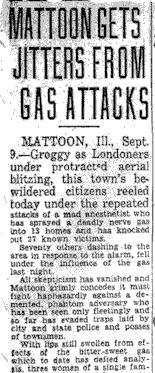
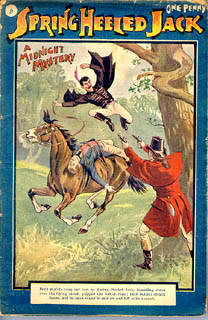
Some personal Fortean favorites of mine, as well as familiar ufological topics, are to be found in this book. They include "Cattle Mutilations," "Chupacabra Scare" (incorrectly spelled, I must note), "Flying Saucer, Origin of," "Ghost Rocket Scare," "Great American Airship Scare," "Halifax Slasher," "Mad Gasser of Botetourt," "Mad Gasser of Mattoon," "Monkey Man Scare," and "Springheel Jack Scare."


The Jack the Ripper case is discussed under the academic entry heading, "Whitechapel Murders Scare," thus acknowledging the authors' apparent dislike for the "Ripper" label.

Monkeyman


Cryptozoology, per se, also shows up marginally in relationship to a "Water Monster Panic" that occurred in Shanghai, China, in August 1947. An "amphibious monster" scare resulted in the death by drowning of a man who jumped overboard when he heard screams of what he thought was the monster. Two other men were beaten to death by a crowd who "believed they were somehow linked to the monster."

yellowtop.jpg

The entry for the "Windigo Psychosis" covers pages 726 to 728, and is written much differently than how I would approach the subject. The authors begin by clearly defining where they are going here: "Native Canadians of the Algonquin peoples are subject to periodic outbreaks related to a supernatural naked giant to which they give many names but which is chiefly known as the windigo or wendigo, or weetigo."

The authors tip their hat by using the word "supernatural," and give no basis for how the Windigo, a local name for Sasquatch, is viewed by some First Nations people. The real cryptid or unknown hominid is used as the model for the "boogie man" of the psychosis but does not need to be dismissed, out of hand, in their introduction. The windigo psychosis or wittiko psychosis is real, no doubt, but then too, so may be the "monsters of the woods," the Windigo/Wendigo/Wittiko. The two topics are actually separate but equal, and I see again that the foggy psychosis has caused these writers to pen vague words about the hairy hominid too.

I suppose if you are going to credit an undated article on the "Windigo" psychosis published in the International Journal of Parapsychology for the source of your definition on "Windigo," versus using more folkloric, anthropological, or cryptozoological references on the creatures, you better be prepared for me to not be happy with that entry.

The Windigo (also known as the Wendigo, Windago, Windiga, Wittiko, Wihtikow, and numerous other variants) is an unknown hairy hominid tied to the sightings, legends and folklore of First Nations people linked by the Algonquin languages. The range is much more broad than given in Outbreak!. The Windigo is a bipedal hairy creature, equal to the Eastern Bigfoot, Stone Giant, or Marked Hominid in some classification systems, which is often said to have aggressive behaviors. But the "Windigo Psychosis" has nothing to do with cryptozoology, except that a name is used for a mental disorder.

I do not hide the fact that I have differences in interpretation with these authors, for I find their black and white skeptical approach to a few of the encyclopedia's events as being wholly too psychological-based, without any appreciation for the possible underlying factual reality to be found in some of these encounters. I predict that a few thoughtful suicidologists, social scientists or even ufologists reviewing this book would also have a few comments to make about some of their suicide epidemics or ufological entries, as well. It really depends on your point-of-view.

The book is well-organized, but it does take a few moments to understand the reasoning behind why some incidents are entries and why some items are subcategories under others.

The entries bounce back and forth, between the universal and the incredibly specific, such as, for instance, the worldwide "Streaking Fad" to little collections like the "Sick School Staff Syndrome," and to the minute examples of one event, e.g, the "Ohio Chorus Fainting Fits," which happened on one day, November 23, 1959.

The index is detailed in small print in 10 pages, and it helps a great deal, if, for example, you are looking for the "penis theft attacks" of 2001, which took place in Nigeria and Benin. Those aren't mentioned in the section on "Genital Shrinking Scares," but instead discussed under "Genital Vanishing Scares." Certainly, an important difference.

Such reservations, however, do not distract me from being grateful these two scholars have written such a fine collection of cases, so we may all have this data at our fingertips now.

The book is a masterpiece, that's for sure.

It will become a major reference work for those involved in researching these kinds of events or for those with a casual interest who wish to dive deeper into the literature and stories on such things.

Besides merely congratulating Anomalist Books for taking on the monumental task of publishing this important book, also I congratulate them for keeping the price reasonable, at $39.95 US. I already notice used copies are going for $55.21 on the American site, Amazon.com, so I say, if you are the least bit intrigued, buy it new, now.


Outbreak! The Encyclopedia of Extraordinary Social Behavior


Thank You.

Thursday, April 09, 2009

Obelisk: A History

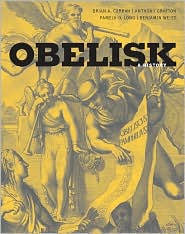
I just received my copy of Obelisk: A History (Cambridge: MIT Press, 2009), written by Brian A. Curran, Anthony Grafton, Pamela O. Long, and Benjamin Weiss, who are four art historians and historians. Let me give you an overview of this wonderful book.


Publications of the Burndy Library shares this publication information:

Nearly every empire worthy of the name—from ancient Rome to the United States—has sought an Egyptian obelisk to place in the center of a ceremonial space. Obelisks—giant standing stones, invented in Ancient Egypt as sacred objects—serve no practical purpose. For much of their history their inscriptions, in Egyptian hieroglyphics, were completely inscrutable. Yet over the centuries dozens of obelisks have made the voyage from Egypt to Rome, Constantinople, and Florence; to Paris, London, and New York. New obelisks and even obelisk-shaped buildings rose as well—the Washington Monument being a noted example. Obelisks, everyone seems to sense, connote some very special sort of power. This beautifully illustrated book traces the fate and many meanings of obelisks across nearly forty centuries—what they meant to the Egyptians, and how other cultures have borrowed, interpreted, understood, and misunderstood them through the years.

In each culture obelisks have taken on new meanings and associations. To the Egyptians, the obelisk was the symbol of a pharaoh’s right to rule and connection to the divine. In ancient Rome, obelisks were the embodiment of Rome's coming of age as an empire. To nineteenth-century New Yorkers, the obelisk in Central Park stood for their country’s rejection of the trappings of empire just as it was itself beginning to acquire imperial power. And to a twentieth-century reader of Freud, the obelisk had anatomical and psychological connotations.

The history of obelisks is a story of technical achievement, imperial conquest, Christian piety and triumphalism, egotism, scholarly brilliance, political hubris, bigoted nationalism, democratic self-assurance, Modernist austerity, and Hollywood kitsch—in short, the story of Western civilization.


While not thoroughly and intensely reading Obelisk: A History yet, cover to cover, I have studied each illustration and caption deeply. Then I read multiple parts of the tome, scanned the entire book, while recovering from some apparently kidney stone-related ailments over the weekend. (My empathy to any ancient Egyptians going through that misery as they built these beautiful obelisks.)

In general, I found Obelisk: A History is a grand overview that I must recommend. It is art-oriented, technical, and shares many intriguing details on the known cultural history of obelisks through 295 pages of text, 38 pages of notes, 25 pages of bibliography, five pages of illustration captions for the archival black and white images, and nine pages of an excellent index.

My favorite supporting appendix is the section entitled "The Wandering Obelisks: A Cheat Sheet." This supplementary material tracks the creation and journey a few well-known obelisks have taken to their current locations.


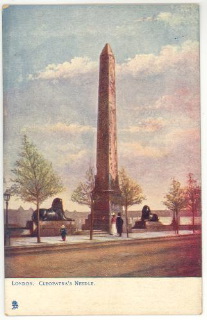
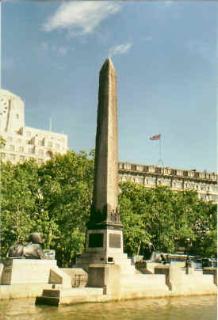
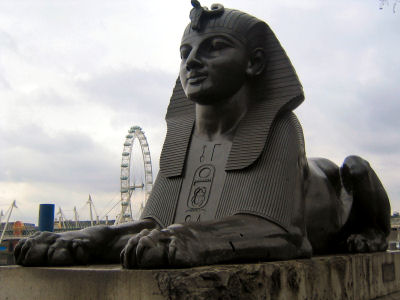
Cleopatra's Needle, London, United Kingdom.

For example, here is one sample entry of the obelisk I was able to view while over in London to appear on the Paul O'Grady Show.

∆∆∆∆∆∆∆∆∆∆∆∆∆∆∆∆∆∆∆∆∆∆∆∆∆∆

LONDON, THAMES EMBANKMENT
• Inscribed for Pharoah Thutmose III (1479-1425 BCE) and raised at Heliopolis
• Moved to Alexandria by Emperor Augustus between 23 and 12 BCE; erected in front of the Caesarium
• Moved to London in 1877-78; erected on the Thames Embankment
Usually called Cleopatra's Needle
Pair to the New York obelisk

∆∆∆∆∆∆∆∆∆∆∆∆∆∆∆∆∆∆∆∆∆∆∆∆∆∆


The authors record the travels of 19 obelisks in this interestingly constructed list.


While Obelisk: A History is not as reader friendly and exploratory as Peter Tompkins' book, The Magic of Obelisks, there is much about it that thoughtful researchers, students, and obelisk-obsessed fans will enjoy.


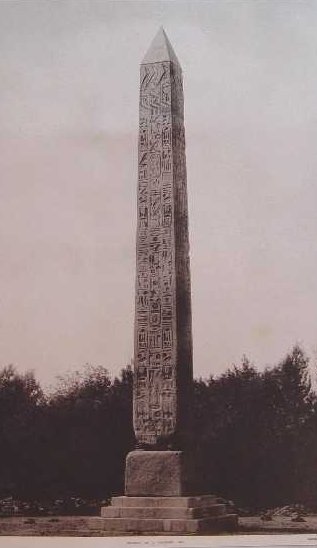
A synchromystic footnote: In Obelisk: A History, Freemasonry is treated somewhat dismissively, and only mentioned on two pages, regarding the gathering of many Masons at the dedication of the New York obelisk (shown above). This is more evidence that this book, in essence, is more a mainstream cultural art history tome than a collection of anomalistic factoids. Also, this means too, that this book avoids touching on the hidden history of how much overlap there has been in recent years between the proper preservation of Egyptian obelisks and Masonic funding.

Nevertheless, Obelisks: A History is a worthy addition to any obelisk resource and research library, of course.