Showing posts with label Behavior Contagion. Show all posts

Sunday, August 19, 2012

Peyton Place Copycat Effect


I investigate and try to understand the links between the modeling of suicidal behavior in popular culture and media, such as in movies, and self-deaths that come later. History - in fiction and fact - based on contagion theory - appears to repeat itself.

The suicide cluster of teenagers in the Camden-Rockport-Rockland, Maine, area, during the 1970s and 2000s - often due to death by hanging in their closets - has been of great concern to me for several years. The high suicide rate for Camden's Knox County is likewise troubling.

In 2006, I made a disturbing "coincidental" discovery regarding Peyton Place. The method and location of the suicide depicted in the movie is chilling and significant. The most graphic suicide to be included in a modern American movie up to that time occurred in Peyton Place, a film that changed the subject matter parameters of moviemaking forever. In the plot of the film, the character Nellie hangs herself in her "friend" Connie's teenager daughter Allison's closet.

The motion picture Peyton Place (released December 13, 1957) was filmed in Camden, Maine, and the surrounding New England countryside. References to Maine, such as having the prosecutor (played by Lorne Greene) being sent from Portland, are throughout the film. (Ironically, this is a technical mistake; the prosecutor would have come from Augusta.)


Filming of a scene on Main Street
opposite the Camden Public Library
Photo by E. Hamilton Hall

The movie was directed by Mark Robson, based on the novel of the same title written by Grace Metalious. The top-billed actors were Lana Turner ("Constance 'Connie' MacKenzie"), Lee Philips ("Michael Rossi"), Arthur Kennedy ("Lucas Cross"), Hope Lange ("Selena Cross"), Diane Varsi (Allison MacKenzie), and Betty Field ("Nellie Cross").

Peyton Place is a story about the lives and loves of the residents of a small New England town in the years immediately preceding and following World War II. Behind the town's tranquil façade hides scandal, homicide, suicide, sexual deviance, and moral hypocrisy.

Peyton Place specifically follows the story of Allison MacKenzie, a teenager with dreams of becoming a successful novelist, and her mother Constance "Connie" MacKenzie. Connie has been harboring the secret for years that Allison was born illegitimate from an affair Connie had with a married businessman, and her greatest fear is that Allison will find out the truth about her parentage. Allison's best friend is Selena Cross, who was sexually and physically abused by her stepfather Lucas.

Allison is attracted to Rodney Harrington, the only son of the richest man in town. However, Rodney becomes involved with "good-time girl" Betty Anderson, who becomes pregnant by him; Rodney is eventually killed in a car crash. Selena becomes involved with Ted Carter, but tragedy strikes her: she is raped multiple times by her stepfather Lucas and eventually becomes pregnant. Selena's mother, Nellie Cross, dies by suicide in Connie MacKenzie's house, and her body is discovered by Connie's daughter Allison, traumatizing her.

Those are some of the initial events in the story, according to various summaries easily found online.

A major box office hit, Peyton Place was the second highest grossing film of 1958.

The "real" Peyton Place is not Camden, Maine (the filmsite) or Gilmanton, New Hampshire, where Grace Metalious lived when she wrote the novel. Peyton Place apparently, instead, is a fictional composite of the nearby towns of Laconia, New Hampshire (where Grace Metalious allegedly did most of her drinking), Belmont, Gilmanton and other nearby villages.

Camden, Maine still celebrates its role as the location for the film. For example, the promotional material for the Blackberry Inn notes it hosted the Peyton Place cast party after the filming ended. Other locations around the town are likewise highlighted in printed and online references.

The firstl Camden Film Festival appears to have developed out of the local Chamber of Commerce's interest in celebrating the links Camden has to the original Peyton Place motion picture, when they invited various stars to town. For example, during a more recent Camden Film Festival, held on May 4-7, 2000, several Peyton Place-related lectures and screenings were presented. Also an informative Peyton Place bus tour to locations used in the film was conducted.

Visiting Camden you will be able to locate helpful people who know about the film sites, as well as local resources to assist you.

The Camden Area History Center has maps online (here, here) specifically related to the filmed sites for Peyton Place.


++++
The above, since edited, was first published on 9/13/2006.


(NY: Simon and Schuster, 2004)


Tuesday, August 07, 2012

Contagious Killer Copycats


People online are making the mistake of saying the Sikh Temple incident is not a copycat of the Aurora red dawn event. In general, there appears to be a general misunderstanding of the form that outbursts of contagion can take during a time of increased levels of violence. The modeling of killings to the vulnerable/violent/suicidal individuals, as expressed by these rare few people who engage in these behaviors, can present in many ways. The Aurora violence and resulting media attention was the eruption, and the minor and major seismic waves, including the significant Oak Creek shooting, are the ripples from that initial, renewed activity. These patterns are predictable, and they can take many articulations.

Don't you know it's darkest before the dawn
And it's this thought keeps me moving on
If we could heed these early warnings
The time is now quite early morning
~ Pete Seeger

Here is how I stated my sense of what's going on during times like what we are seeing right now, from my book, The Copycat Effect (NY: Simon and Schuster, 2004):
It became clear by the late 1990s that reports of workplace violence were not always just followed by other copycats of workplace incidents a day or a week later, but sometimes by other forms of mass and rampage violence as well. For example in the first week of November 1999, two workplace shootings on a Tuesday and a Wednesday shook the United States, which was already reeling from a long string of office and school killings for the year. In Seattle and Honolulu, the families of nine victims grieved as observers debated how to keep violence out of public settings traditionally considered safe.
In Honolulu, seven people were shot to death when Xerox technician Brian Uyesugi walked into a second-floor meeting room of the Xerox's offices and opened fire. He shot all the victims at close range with a 9mm handgun.
In Seattle, the next day a gunman shot and killed two men and wounded two others in a shipyard office. Wearing a dark trench coat over camouflage clothing, the gunman had walked into the Northlake Shipyard building and proceeded down a long hallway and into a back office before wordlessly opening fire and shooting all four men in the room with a 9mm semi-automatic handgun. Two 9 mm guns, two Pacific Rim cities, two days of killings. Ten days later, another school shooting occurred in New Mexico.
One type of copycat event was reinforcing another—and people were beginning to take notice.
In early July 2003, author Kate Randall, writing in WSW News, observed that in “the past week has witnessed an uncommonly large number of violent incidents—including two workplace shootings, murder-suicides and multiple homicides. Three teenagers were also arrested for allegedly plotting a killing rampage. Between July 1 and July 8, 20 individuals were killed in these incidents and another 14 wounded… Also on July 8, police found the bodies of four people, apparent victims of a murder-suicide, in a small, well-kept ranch-style home in Magnolia, N.J.…Another multiple shooting was discovered on July 8, this time in Bakersfield, Calif. The bodies of a grandmother, mother and three young children were all found shot dead in their home.”
When such clustering occurs, with its mix of violence types, the copycatting is spreading from one type of incident to another. "Absolutely, there's a copycat aspect to workplace violence," James Alan Fox, a criminologist at Northeastern University in Boston, told the Christian Science Monitor in 2001. "There's a copycat aspect to virtually all high-profile, high-visibility crimes."

To more clearly explain the "copycat effect," here is this section, also from The Copycat Effect:

The pattern is called the “copycat effect.” It is also known as “imitation” or the “contagion effect.” And what it deals with is the power of the mass communication and culture to create an epidemic of similar behaviors.
The copycat effect is the dirty little secret of the media. That doesn’t prevent the media from calling the various epidemics of similar behaviors the “copycat” phenomenon, often for shock impact. But curiously, their use of the phrase seems to put a distance between the events and the reporting media, and allows them the stance that implies we are not part of the problem. But they are.

Sociologists studying the media and the cultural contagion of suicidal behaviors were the first to recognize the copycat effect. In 1974, University of California at San Diego sociologist David P. Phillips coined the phrase, “The Werther Effect,” to describe the copycat phenomenon. The word “Werther” comes from a 1774 novel, The Sorrows of Young Werther, written by Johann Wolfgang von Goethe, the author of Faust. In the story, the youthful character Werther falls in love with a woman who is promised to another. Always melodramatic, Werther decides that his life cannot go on, and that his love is lost. He then dresses in boots, a blue coat, and a yellow vest, sits at his desk with an open book, and, literally at the 11th hour, shoots himself. In the years that followed, throughout Europe, so many young men shot themselves while dressed as Werther had been and seated at their writing desks with an open copy of The Sorrows of Young Werther in front of them, that the book was banned in Italy, Germany, and Denmark.
Though an awareness of this phenomenon has been around for centuries, Phillips was the first to conduct formal studies suggesting that the Werther Effect was, indeed, a reality--that massive media attention and the retelling of the specific details of a suicide (or, in some cases, untimely deaths) could increase the number of suicides.
The August 1962 suicide of Marilyn Monroe presents a classic modern day example of the Werther Effect. In the month that followed it, one hundred, ninety-seven individual suicides – mostly of young, blonde women -- appear to have used the Hollywood star's suicide as a model for their own. The overall suicide rate in the US increased by 12 percent for the month after the news of Monroe’s suicide. But, as Phillips and others discovered, there was no corresponding decrease in suicides after the increase from the Marilyn Monroe-effect suicides. In other words, the star’s suicide actually appeared to have caused a whole population of vulnerable individuals to complete their own deaths, over and above what would be normally expected. This is the copycat effect working with a vengeance.
* * *
Please see the updated "Aurora Copycat Effect: The Complete List" by clicking here. One of the recent copycats you might not have read about includes a man with the ghostly name Casper in Eagan, Minnesota. Recall that alleged Aurora suspect's name is James Eagan Holmes. Casper yelled to the police officers, as he was being arrested, that he should be the "Joker," and "I wouldn't own a gun, but if I did, I would do what Holmes did. I would blow people away. Put me in jail for the rest of my life, I don't care. Put me in jail with criminals. I grab them by the throat and kill them."
* * *

The overlapping ensemble cast between Inception and The Dark Knight trilogy, all Christopher Nolan films, is quite evident. One movie of Nolan's is a sychophant of the other, and is the elephant in the middle of the room.

"I'm going to improvise. Listen, there's something you should know about me... about inception. An idea is like a virus, resilient, highly contagious. The smallest seed 
of an idea can grow. It can grow to define or destroy you." 
~ Christopher Nolan, Inception (2010).


Monday, July 23, 2012

Anticipating Aurora and Beyond


by Loren Coleman ©2012

"What time is it?" ~ Dr. John Watson
"Dawn." ~ Sherlock Holmes
 ~ The Return of Sherlock Holmes
"The Man with the Twisted Lip," 1986.


What is next in our dawns? As I have mentioned before, Aurora means "dawn." Unfortunately, I must predict a copycat outburst for Friday, July 27th. More on that in a moment.

First, Holmes appeared on the stage he desired today.
"My name is Sherlock Holmes. It is my business to know what other people don't know."
~ Sherlock Holmes, The Adventure of the Blue Carbuncle, 1892.
James Eagan Holmes' middle name meaning of "fiery" matched his dyed bright reddish-orange hair today, for his first post-massacre appearance. Holmes sat in Judge William B. Sylvester's court on July 23, 2012, in connection with the Aurora, Colorado movie theater massacre Holmes allegedly carried out on July 20th.

Judge Sylvester set July 30th for the filing of formal charges against Holmes. The former neuroscience student at the University of Colorado has been held since Friday in solitary confinement at the Arapahoe County jail in Centennial, about 15 miles south of Denver.

In the court appearance, Holmes seemed in a bizarre trance, nearly Sirhan Sirhan-like. Or Jared Loughner-like. Some felt the genius in the chair was acting. Others saw mind control programming. His hair was dyed an uneven red. The color was faded to a strange pink or an ugly orange in some spots, and, yet, natural brown was visible elsewhere.

When arrested, it has been reported, Holmes said he was the "Joker." In the comics and generally in the Batman and Dark Knight films, the Joker is shown as a green-haired figure.
Cesar Romero (Joker 1966-1968 on television) and James Holmes (2012)
Heather Ledger (Joker 2008)
However, the Joker's costumed henchman often wear orange-red wigs. The Washington Post also correctly pointed out today, "in The Dark Knight, the second film of a Batman series called the Dark Knight trilogy, the Joker character played by Australian actor Heath Ledger wore a nurse's uniform and a red wig in one scene as he destroyed a hospital. Ledger died in January 2008, six months before The Dark Knight was released."
The suspect's name translates as James = "he who supplants," Eagan = "fiery," and Holmes = "holly" and/or "island in the river."

The suspect's genealogy goes back to the beginning of this nation. James' grandmother, Mary Jane Crawford Holmes was descended not only from the Mayflower Pilgrims (she was the governor of the Monterey Bay Colony of Mayflower Descendants), but also was from a member of the Ancient and Honorable Artillery Company of Boston, the first American militia.


The Rebirth of Pan and Weird America author Jim Brandon sends me these elusive insights:
Holmes has not been a highly noticeable name of interest, compared with say Fay or Nick, except secondarily in the frequent movie iterations of the British Sherlock Holmes persona, which of course was fictional. But a sensationally fatal real-life eruption occurred in the late 1890s with discovery of the famed "murder castle" in south Chicago. Disguised as a hotel, this was the work of a man who called himself H. H. Holmes and preyed mainly on women attracted to the then popular [1893 Columbian Exposition] World’s Fair, nearby on the lake shore. The total of his victims ranges from a confessed 27 to as high as 200 estimated.
Holmes, whose real name was Herman Webster Mudgett, had started as a medical doctor who however soon showed criminal traits. His “castle” was a virtually surrealistic affair with guest rooms set up with outside door locks, gas jets for asphyxiations and chutes to convey bodies to the basement. The facilities there almost beggar description, employed for corpse dismemberment, dissection of body parts and preparation of skeletons for sale to medical schools or other buyers who can only be imagined.
A number of writers have tackled this story, most recently Eric Larson in [the nonfiction 2003 book] The Devil in the White City, along with others.
Leonardo DiCaprio has purchased The Devil in the White City for a movie in development. DiCaprio's last film was Christopher Nolan's Inception (2010). Nolan is the director of the Dark Knight trilogy.
 
Before James Holmes dominated the news for all of Friday, Saturday, and Sunday of this recently completed weekend in July, the Holmes in the news was Katie Holmes. She is divorcing Tom Cruise, and entertainment news was filled with a Church of Scientology subplot. However, in another thread, what is intriguing is that Katie Holmes was the female lead character (Rachel Dawes) opposite Batman/Bruce Wayne (Christian Bale) in the first of the Christopher Nolan Dark Knight trilogy, Batman Begins (2005). 
Katie Holmes as Rachel Dawes in Batman Begins.

It was in Nolan's second installment of the Dark Knight series that a character was created that has caused the copycat evil we are discussing today.

As I have written before, I am concerned about the behavior contagion factor as it applies to the Dark Knight films. Soon after The Joker (played by Heather Ledger) appeared in The Dark Knight, copycats occurred. In The Copycat Effect (NY: Simon and Schuster, 2004), I laid out how visual media has a significant impact on vulnerable homicidal/suicidal individuals who use graphically violent films as models for their own future actions.

The known patterns of copycats are clear. Humans are imprinted with anniversary syndromes and timing markers that seem subtle to most, but are identifiable to behavior scientists, like me. In the case of suicide clusters, school shootings, going postal incidents, workplace violence, and other forms of mass and spree killings, I have ventured forth with predictions, sometimes. I have expectations of how humans react. Often they do. Sometimes they don't. 

After Columbine, over 450 copycat events took place in North America. The CTV published an article about my predictions in 2006. One of the most telling predictions was my sense that something would occur exactly a week after Columbine. It did, when a school shooting happened in Taber, Alberta, only a week later. After Virginia Tech, many quotes of mine were used by the media demonstrating the predictive power of copycat insights.

One quotation haunts me. Here's what I told Seth Borenstein, AP Science Writer, April 20, 2007: "These people are psychologically competing with each other to increase the body count."

The Gothamist looked back to look ahead:
The whole idea of copycats brings us to another [WNYC’s] On the Media interview, this one from October in the aftermath of the Amish school shooting. Then, they interviewed Loren Coleman, a suicide prevention consultant and school violence researcher and author of the book The Copycat Effect: How the Media and Popular Culture Trigger the Mayhem in Tomorrow's Headlines. He was of the opinion that the media’s over coverage of tragedies, starting with the Columbine shootings have set up a model for the later perpetrators of these violent acts. In the interview Coleman noted, “I think that one of the reasons that I wrote my book, The Copycat Effect, was really to try to begin the debate within the media about how much is too much. The graphic details that we see on the cable wall-to-wall coverage and in some other media really sets up a situation where these vulnerable people have a model in front of them to then plan their outrages in a similar fashion. Since August 24th, these individuals have all been males, they've all been Caucasian, they all have been outsiders, either expelled students or older males, and they all have victimized females - young girls, usually – or authority figures, in the case of principals or teachers or guards.”
If you look at some of the Columbine shooter’s videos, which were only released a few years after the fact and only after much legal wrangling, there seems to be a lot of parallels with Cho’s video. Was the oversaturated coverage of these paste events inspiration? It is probable and it is no doubt that Cho’s desire to be heard from the grave was sent to NBC instead of being squirreled away in the case files as has happened in the past. ~ Toby von Meistersinger, "Television Watching: How Much Is Too Much?" The Gothamist, April 24, 2007
In The Copycat Effect, the patterns I found in suicide clusters and school shootings happened over and over again in other kinds of mass shootings. In their most basic blueprint, the copycats take place exactly one week, two weeks, one month, and one year after a massively media-discussed incident of violence. The Aurora red dawn event is the first mass media incident in recent years. Wall-to-wall coverage has occurred, and copycats will happen. The correlation is direct. Why will we be surprised when the next theater shooting takes place?

Look, I predicted that something was going to happen related to the opening of The Dark Knight Rises. Yes, on July 20th. You can read my July 19th pondering about that here.

Therefore, I have to go out on a limb, again. If we get there without a copycat ripple (one seems to have been reported in Maine, already). Law enforcement personnel, movie theater staff, and sports event venue managers need to be aware.

What is the next big event? This is called predictive preparatory planning to understand these patterns.

The two week mark is the weekend of August 3-4-5, 2012. That needs to be watched.

What are the next movie openings of note? Total Recall, Assassin's Bullet, and Soldier's Fortune on Friday August 3, 2012. Gangster Squad (with the film's gangsters shooting up a movie audience!!) on Friday, September 7, 2012. James Bond's Skyfall on Friday, November 9, 2012 (with Aurora in red on the Shanghai skyline).

What is fiction and what is nonfiction? Have the lines blurred? Yes, of course they have.

The copycat effect exists. The Joker is real, because the imaginary villains have become actual ones. A dozen people died in Aurora. The dawn has come, and it is here. We should pay attention. We all have been warned.

I sincerely hope no one else would ever die in another mass shooting. But to be blind to the patterns that are certainly there right in front of us is foolishness.


James Eagan Holmes, mugshot, just released. Taken July 20, 2012.


"When you have eliminated the impossible, 
whatever remains, however improbable, 
must be the truth." 
~ Sherlock Holmes, The Sign of the Four 
Chapter 6: 111, Doubleday, 1890.


Coleman Reese from The Dark Knight, 2005.

"They are trying to kill me." ~ Coleman Reese
"Well, maybe Batman will save you." ~ Commissioner James Gordon

Monday, May 21, 2012

Bucky Fuller and Sophie Freud


"Love is metaphysical gravity."
~ R. Buckminster Fuller

Picnic shelter, Southern Illinois University, where I received my BA in 
anthropology/zoology, was built by Bucky Fuller and his students.

Once in a blue moon, all of our lives are touched by great individuals and memorable humans. I have felt that has happened to me many times. I use to be very careful about what I considered to be extensive name-dropping, but upon reflection, I am honored to have met and learned from so many notable people. And these folks are known by their works, which are remembered when we say their names. 
Personally I have known some distinguished researchers and chroniclers in cryptozoology, including Bernard Heuvelmans, Ivan T. Sanderson, Roy Mackal, and George Haas, as well as first-rate Fortean thinkers like Miriam Allen DeFord, Bucky Fuller, Patrick Huyghe, Mark A. Hall, Jerome Clark, Bob Rickard, Jim Brandon, Robert Anton Wilson, Vincent Gaddis, Brad Steiger, and John A. Keel, to name but a few. The same goes for the synchromystic and twilight language writers and theorists (see here), most of whom I have met and, if they are alive, am still corresponding with them regularly. (Then there are the women and children who have enriched or are still in my life, but that's for another time.)

I feel my decades here on Earth have been specially blessed and touched by hundreds of incredible Homo sapiens. I have gained so much from all of these people.

How strange it is for me to reflect on the fact that Ivan T. Sanderson and R. Buckminster Fuller (who like me was born on July 12th) actually both wrote letters on my C.O. behalf to Decatur's draft board in the 1960s, supporting our special Fortean view of the world?
Norman Foster's Dymaxion #4 was built and then revealed during 
the fall of 2010. Photo: (probably) Nigel Young.


The nearly completed Dymaxion #1, outside the Bridgeport factory, July 1933.
Fuller's three-wheeled 1933 Dymaxion had a fuel efficiency of 30 miles 
per US gallon, carried 11 passengers, and 
reached 120 mph. Photo: Buckminster Fuller Archives.
Should I be surprised, years later, I retain a deep fascination for Fuller's architectural designs and his forward-looking innovations as insights into the twilight nature of things from that fool on a hill?
Meanwhile, in the field of understanding the mysteries in the behavior of women and men, there is one educator whom I appreciate above all others: Sophie Freud, the granddaughter of Sigmund Freud. Between the fall of 1976 and the spring of 1978, I attended Simmons College School of Social Work in Boston.

Simmons use to be a women's college, and their graduate school in social work reflected those old roots. I was one of only 17 males among the 100 students in the MSW Class of 1978. For whatever reason, Professor Sophie Freud picked me out to be her special project. At 29, I was an older, highly experienced student and I found her interest in me fascinating. It truly was a mentoring relationship, restricted to the halls of the social work school, but she had a way of finding me in the library and talking to me often about how things were going. I also became the student newspaper editor, and she volunteered as the faculty representative, even penning some movie reviews for the newsletter.
The synchromystic link with Freud continued when I was picked to receive the 1992 Simmons College School of Social Work Alumni Recognition award for writing my book Suicide Clusters (Boston: Faber and Faber, 1987). I arrived at the ceremony only to discover I was sharing the day with Sophie Freud, who was being honored for her years of teaching with a Faculty Recognition award.

Her ideas, by extension, were very Fortean and holistic, even as she screened them through a Freudian view of the world. As I noted in my book The Copycat Effect (2003: page 137),
Sigmund Freud, despite his fall from grace during the rise of feminism in the 1970s and the notion that some of his theories are sexist and outdated, had some interesting insights that inform any examination of the interplay between murder and suicide. His conceptualization of suicide was as the murder of one's self. Freud's granddaughter, non-Freudian feminist Sophie Freud, Ph.D., whom I studied under at Simmons College, said it well in her appropriately named "The baby and the bathwater" Some thoughts on Freud as postmodernist." in The Journal of Contemporary Human Services (1998). She observed that Freud's extensive work on the unconscious, however flawed, helped students of psychology to see that "surfaces mirror only one aspect of human motives, and that each visible aspects of human behavior carries within it, its opposite.
The standard biography of Sophie Freud notes, of course, she is the granddaughter of Sigmund Freud (above). She was born in Vienna, Austria, and emigrated via France and Casablanca to the United States in 1942, at the age of 18. She attended Radcliffe/Harvard, and then Simmons College School of Social Work. 
Freud practiced as a social worker mostly in the field of child welfare and child (parent) guidance ~ as I did, and received her Ph.D. from the Florence Heller School for Social Welfare in 1970. She then spent the next thirty years as a social work educator, chairing the Human Behavior Sequence at the Simmons College School of Social Work and taking an active part in their doctoral program. She continues to give talks through the United States, Canada and Europe, even as she nears the age of 90.
Sophie Freud is the author of books reflecting her interest in understanding her remarkable relatives.  They are Three Mothers and Other Passions (NY: NYU Press, 1991), and Living in the Shadow of the Freud Family (NY: Praeger, 2007).
Sophie Freud's mother, Esti Freud

Sophie Freud keeps a cluttered collection of books and memorabilia (above), 
just as her grandfather Sigmund did (seen below) on his desk and in his office during his life.


A recent article notes the achievements of Sophie's offspring whom she had with her former husband, George Loewenstein, as well as other Freud relatives:

Sigmund Freud is, of course, a household name. Also well known are Anna Freud, his youngest child and the only one of his children to become a psychoanalyst, and his grandson, Lucian Freud, one of the foremost figurative artists of the current day.But the sprawling Freud family also includes many other accomplished offspring in the fields of finance, media, politics, entertainment, academia, writing, fashion and social work.
Great-grandson George Loewenstein, for example, Carnegie Mellon University professor, is a leading authority and researcher on decision-making, currently writing a book on the role of emotions in economic behavior.
His oldest sister, Andrea Freud Loewenstein, is a novelist and literary critic, author of "This Place," "The Worry Girl: Stories From a Childhood," and "Loathsome Jews and Engulfing Women." His other sister, Dania Jekel, runs the Asperger's Association of New England. Dania Jekel's daughter, Laura A. Jekel, is a graduate student in the Carnegie Mellon music department. And Dr. Loewenstein's wife, Donna Harsch, is a history professor at Carnegie Mellon, specializing in 20th century Germany.
Sigmund Freud and his wife, the former Martha Bernays, had six children: Mathilde, Martin (the Loewensteins' grandfather), Oliver, Ernst, Sophie (who died at age 27) and Anna.
Martin Freud's wife and daughter, Esti and Sophie Freud, wound up in the United States. Most of the other Freuds fled to England from Vienna during World War II, so most subsequent generations are British. They include:
• Clement Freud (son of architect Ernst, brother of Lucian), broadcaster and Liberal Party politician who was knighted upon retirement from Parliament, married to actress Jill Freud, who is the former June Flewett, the inspiration for C.S. Lewis' Lucy Pevensie in "The Chronicles of Narnia."
• Matthew Freud (Clement's son), public relations mogul, head of Freud Communications, married to Rupert Murdoch's daughter, Elisabeth, formerly married to Caroline Hutton, who then married the Earl of Spencer, brother of Diana, Princess of Wales.
• Emma Freud (Clement's daughter), broadcaster and cultural commentator, life partner of scriptwriter Richard Curtis and chief script editor of his "Four Weddings and a Funeral," "Notting Hill" and "Bridget Jones's Diary."
• Esther Freud (Lucian's daughter), novelist, author of "Hideous Kinky" (which became a film starring Kate Winslet), as well as "The Sea House," "The Wild," "Peerless Flats" and "Love Falls."
• Bella Freud (Lucian's daughter), London fashion designer whose work is favored by celebrity clients, weekly columnist for the Sunday Telegraph.
• David Freud (grandson of Martin and son of Walter, Sophie Freud's brother), London investment banker who helped to raise 50 billion pounds for firms such as Eurotunnel and EuroDisney, Tony Blair's adviser on welfare reform, former journalist for the Financial Times, author of "Freud in the City," an inside look at high finance in the go-go '80s.


Source: Freud's offspring lead noted lives by Sally Kalson / Pittsburgh Post-Gazette, March 16, 2012.
by Loren Coleman ©2012 

Saturday, June 06, 2009

Outbreak!


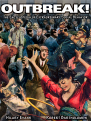
The recommended new book, Outbreak! The Encyclopedia of Extraordinary Social Behavior is a massive tome, being a large format paperbound book (8" by 11"), with a total of 765 pages of about 340 entries. The authors are the scholars Hilary Evans, a social historian, and Robert Bartholomew, a sociologist and specialist in collective behavior. The editor-publisher Patrick Huyghe also deserves much credit for being the midwife at Anomalist Books for the birth of this big baby, during the Spring of 2009.

From "Abdera Outbreak of Prose and Poetry" to "Zoot Suit Riots," the book takes the reader on an incredible tour of the topics at hand. The classics of contagion behavior are here, e.g. the "Band Bus Hysteria," "Cargo 'Cults'," "Copycat Behavior," "Phantom Slasher," "Pokemon Illness," "Salem Witch Hunts," "Suicide Clusters," and "Windshield Pitting Scare."

But it may be the more bizarre of the strange that gets some attention for the authors' weird little treks into "Extraterrestrial Tsunami Panic," "Feather Tickling Fad," "Jumping Frenchmen of Maine" (a little more serious than the "kicking horse game" and "cabin fever"), "Masturbation Delusion" (obviously, an in-depth global survey), "Ugandan Running Sickness," and "Wacky Wallwalker Fad."


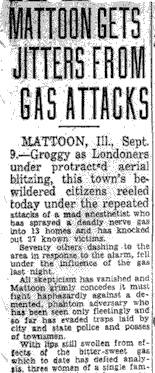
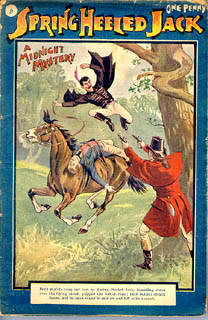
Some personal Fortean favorites of mine, as well as familiar ufological topics, are to be found in this book. They include "Cattle Mutilations," "Chupacabra Scare" (incorrectly spelled, I must note), "Flying Saucer, Origin of," "Ghost Rocket Scare," "Great American Airship Scare," "Halifax Slasher," "Mad Gasser of Botetourt," "Mad Gasser of Mattoon," "Monkey Man Scare," and "Springheel Jack Scare."


The Jack the Ripper case is discussed under the academic entry heading, "Whitechapel Murders Scare," thus acknowledging the authors' apparent dislike for the "Ripper" label.

Monkeyman


Cryptozoology, per se, also shows up marginally in relationship to a "Water Monster Panic" that occurred in Shanghai, China, in August 1947. An "amphibious monster" scare resulted in the death by drowning of a man who jumped overboard when he heard screams of what he thought was the monster. Two other men were beaten to death by a crowd who "believed they were somehow linked to the monster."

yellowtop.jpg

The entry for the "Windigo Psychosis" covers pages 726 to 728, and is written much differently than how I would approach the subject. The authors begin by clearly defining where they are going here: "Native Canadians of the Algonquin peoples are subject to periodic outbreaks related to a supernatural naked giant to which they give many names but which is chiefly known as the windigo or wendigo, or weetigo."

The authors tip their hat by using the word "supernatural," and give no basis for how the Windigo, a local name for Sasquatch, is viewed by some First Nations people. The real cryptid or unknown hominid is used as the model for the "boogie man" of the psychosis but does not need to be dismissed, out of hand, in their introduction. The windigo psychosis or wittiko psychosis is real, no doubt, but then too, so may be the "monsters of the woods," the Windigo/Wendigo/Wittiko. The two topics are actually separate but equal, and I see again that the foggy psychosis has caused these writers to pen vague words about the hairy hominid too.

I suppose if you are going to credit an undated article on the "Windigo" psychosis published in the International Journal of Parapsychology for the source of your definition on "Windigo," versus using more folkloric, anthropological, or cryptozoological references on the creatures, you better be prepared for me to not be happy with that entry.

The Windigo (also known as the Wendigo, Windago, Windiga, Wittiko, Wihtikow, and numerous other variants) is an unknown hairy hominid tied to the sightings, legends and folklore of First Nations people linked by the Algonquin languages. The range is much more broad than given in Outbreak!. The Windigo is a bipedal hairy creature, equal to the Eastern Bigfoot, Stone Giant, or Marked Hominid in some classification systems, which is often said to have aggressive behaviors. But the "Windigo Psychosis" has nothing to do with cryptozoology, except that a name is used for a mental disorder.

I do not hide the fact that I have differences in interpretation with these authors, for I find their black and white skeptical approach to a few of the encyclopedia's events as being wholly too psychological-based, without any appreciation for the possible underlying factual reality to be found in some of these encounters. I predict that a few thoughtful suicidologists, social scientists or even ufologists reviewing this book would also have a few comments to make about some of their suicide epidemics or ufological entries, as well. It really depends on your point-of-view.

The book is well-organized, but it does take a few moments to understand the reasoning behind why some incidents are entries and why some items are subcategories under others.

The entries bounce back and forth, between the universal and the incredibly specific, such as, for instance, the worldwide "Streaking Fad" to little collections like the "Sick School Staff Syndrome," and to the minute examples of one event, e.g, the "Ohio Chorus Fainting Fits," which happened on one day, November 23, 1959.

The index is detailed in small print in 10 pages, and it helps a great deal, if, for example, you are looking for the "penis theft attacks" of 2001, which took place in Nigeria and Benin. Those aren't mentioned in the section on "Genital Shrinking Scares," but instead discussed under "Genital Vanishing Scares." Certainly, an important difference.

Such reservations, however, do not distract me from being grateful these two scholars have written such a fine collection of cases, so we may all have this data at our fingertips now.

The book is a masterpiece, that's for sure.

It will become a major reference work for those involved in researching these kinds of events or for those with a casual interest who wish to dive deeper into the literature and stories on such things.

Besides merely congratulating Anomalist Books for taking on the monumental task of publishing this important book, also I congratulate them for keeping the price reasonable, at $39.95 US. I already notice used copies are going for $55.21 on the American site, Amazon.com, so I say, if you are the least bit intrigued, buy it new, now.


Outbreak! The Encyclopedia of Extraordinary Social Behavior


Thank You.