Showing posts with label suicide clusters. Show all posts

Friday, April 19, 2019

The Red Zone of April: A Dangerous Time

The Red Zone of April: A Dangerous Time
by Loren Coleman, author of The Copycat Effect (Simon and Schuster, 2004), Suicide Clusters (Faber & Faber, 1987), and other books.


"April is the cruellest month... " 
by T.S. Eliot (1888–1965). 
From The Waste Land, 1922.

April 14-5
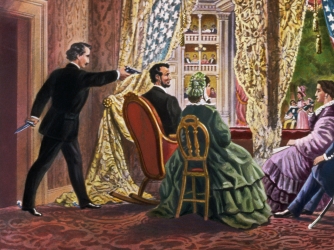
1865 – On the eve of the fifth day of Passover, April 14, 1865, President Abraham Lincoln was shot and died of his wounds in the early morning of April 15th, which had already been scheduled as a national day of prayer to mark the end of the Civil War. Jews across the land were gathering in synagogues to give thanks. When news of Lincoln's death arrived, the synagogue altars were quickly draped in black and, instead of Passover melodies, the congregations chanted Yom Kippur hymns. Lincoln had been protective of American Jewry, overturning General Grant's infamous General Order #11 expelling Jews from the Department of the Tennessee and supporting legislation allowing Jewish chaplains to serve in the military.


April 15

2013 – The Boston Marathon bombing was a terrorist attack, followed by subsequent related shootings, that occurred when two pressure cooker bombs exploded during the Boston Marathon on Boylston Street, Boston, Massachusetts. Six died in the events, and 280 injured, some with loss of legs and arms.

April 16
73 – Masada, a Jewish fortress, falls to the Romans after several months of siege, ending the Great Jewish Revolt.
1947 – French freighter S.S. Grandcamp explosion loaded with ammonium nitrate docked at the Port of Texas City, Texas, and erupted in flames, causing a massive explosion that killed at least 581 people.
1995 – George W. Bush names April 16 as Selena Day in Texas, after she was killed two weeks earlier.

2007 – Virginia Tech shooting: Seung-Hui Cho guns down 32 people and injures 17 before dying by suicide.

April 17

1961 – Bay of Pigs Invasion: A group of Cuban exiles financed and trained by the CIA lands at the Bay of Pigs in Cuba with the aim of ousting Fidel Castro.
1978 – Mir Akbar Khyber is assassinated, provoking a communist coup d'état in Afghanistan.
1984 – Police Constable Yvonne Fletcher is killed by gunfire from the Libyan People's Bureau (Embassy) in London during a small demonstration outside the embassy. Ten others are wounded. The events lead to an 11-day siege of the building.
2006 – A Palestinian suicide bomber detonates an explosive device in Tel Aviv, killing 11 people and injuring 70.

April 18

1775 – American Revolution: The British advancement by sea begins; Paul Revere, William Dawes (above) and other riders warn the countryside of the troop movements. (The syncinematic film, 2009's Knowing has student Caleb Koestler - a name game there - going to the fictional William Dawes Elementary, located in 1959 Lexington.)
1906 – An earthquake and fire destroy much of San Francisco, California.
1983 – A suicide bomber destroys the United States embassy in Beirut, Lebanon, killing 63 people.
2007 – A series of bombings, two of them being suicides, occur in Baghdad, killing 198 and injuring 251.
2013 – A suicide bombing in a Baghdad cafe kills 27 people and injures another 65.
2013 – Fertilizer plant explosion, West, just north of Waco, Texas, killed 15 killed and about 200 injured. Eighty homes and a middle school are leveled.

    April 19

    Blood Sacrifice to the Beast. Fire sacrifice is required for this specific date.
    1775 – Battles of Lexington and Concord, Massachusetts, the first battles of the American Revolutionary War. This is the actual anniversary of the battles, even though the observance has become a date tied to the third Monday in April.
    1897 – First running of the Boston Marathon, with marathons named after the Greek Battle of Marathon. 

    1993 – The 51-day FBI siege of the Branch Davidian building outside Waco, Texas, USA, ends when a fire breaks out. Eighty-one people die.
    1993 – South Dakota governor George Mickelson and seven others are killed when a state-owned aircraft crashes in Iowa.
    1995 – Oklahoma City bombing: The Alfred P. Murrah Federal Building in Oklahoma City, USA, is bombed, killing 168.
    1995 – Richard Wayne Snell, a convicted murderer, member of the white supremacist group The Covenant, The Sword, and the Arm of the Lord (CSA), is executed in Arkansas. Snell was involved in filming the planes that landed at the restricted airport in Mena, Arkansas, believed by many conspiracy theorists to be used in a CIA-sanctioned cover-up to smuggle drugs into America. Snell had been accused of plotting to bomb the Murrah Building in the 1980s. Snell reportedly watched televised reports of the Oklahoma City bombing on the day of his execution and nodded in approval. 
    2013 – Boston Marathon bombings suspect Tamerlan Tsarnaev is killed in a shootout with police. His brother Dzhokhar Tsarnaev is captured while hiding in a boat inside a backyard in Watertown, Massachusetts.

    April 20 

    1889 – Adolf Hitler, Austrian-German soldier and politician, Chancellor of Germany (d. 1945) is born
    1939 – Adolf Hitler's 50th birthday is celebrated as a national holiday in Nazi Germany.
    1945 – World War II: Führerbunker: Adolf Hitler makes his last trip to the surface to award Iron Crosses to boy soldiers of the Hitler Youth.
    1961 – Failure of the Bay of Pigs Invasion of US-backed Cuban exiles against Cuba.
    1971 – According to Steven Hager, editor of High Times, he found the term 420 originated at San Rafael High School in 1971, among the Waldos. They would meet every day after school at 4:20 p.m. to smoke marijuana at the Louis Pasteur statue. One of the Waldos notes, "We did discover we could talk about getting high in front of our parents without them knowing by using the phrase 420." By extension now, April 20 ("4/20" in U.S. dating shorthand) has evolved into a counterculture holiday, where people gather to celebrate and consume cannabis.
    1978 – Korean Air Lines Flight 902 is shot down by the Soviet Union. 

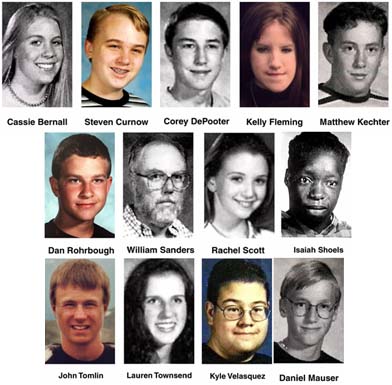
    1999 – Columbine High School massacre: Eric Harris, 18, and Dylan Klebold, 17, killed 13 people and injured 21 others before dying by suicide at Columbine High School in Columbine, Colorado.
    2007 – Johnson Space Center shooting: William Phillips with a handgun barricades himself in NASA's Johnson Space Center in Houston, Texas before killing a male hostage and himself.

    2015 – A substitute teacher was killed at the Joan Fuster School in the La Sager neighborhood of Barcelona, Spain, by a 13-year-old student with a crossbow and machete. Four other people were injured.

    April 21 
    1506 – The three-day Lisbon Massacre comes to an end with the slaughter of over 1,900 suspected Jews by Portuguese Catholics.
    1985 – The compound of the militant group The Covenant, The Sword, and the Arm of the Lord surrenders to federal authorities in Arkansas after a two-day government siege.

    April 22 
    2004 – Two fuel trains collide in Ryongchon, North Korea, killing up to 150 people.
    2013 – Six people die in a shooting in Belgorod, Russia.
    2013 – The Royal Canadian Mounted Police arrest and charge two men with plotting to disrupt a Toronto area train service in a plot claimed to be backed by Al-Qaeda elements.
    2014 – More than 60 people are killed and 80 are seriously injured in a train crash in the Democratic Republic of the Congo's Katanga Province.
    2016 – The one-month anniversary of three suicide bombers killing 35 people and injuring 316 in the 2016 Brussels bombings at the airport and at the Maelbeek/Maalbeek metro station.

    April 23
    303 – Saint George, Roman soldier and martyr (b. 275) dies
    St George's Day (England) and its related observances
    1343 – St. George's Night Uprising commences in the Duchy of Estonia.
    1968 – Timothy James McVeigh, who blew up the Alfred P. Murrah Building in 1995, on April 19, was born. He is executed on June 11, 2001.

    April 24
    1184 BC – Traditional date of the fall of Troy.

    April 25
    1946 – Naperville train disaster kills 47 in Naperville, Illinois.
    1965 – Teenage sniper Michael Andrew Clark kills three and wounds six others shooting from a hilltop along Highway 101 just south of Santa Maria, California.
    2005 – One hundred seven people die in Amagasaki rail crash in Japan.
    2010 – Joseph McVey, 23, from Ohio, is arrested with a shotgun, in a car made to look like a police vehicle with working lights and sirens in the Asheville, NC airport parking lot, when President Obama and his family were departing in Air Force One.

    April 26
    1865 – Union cavalry troopers corner and shoot dead John Wilkes Booth, assassin of President Lincoln, in Virginia.
    1894 – Birthdate of Rudolf Walter Richard Heß, also spelled Hess, who was a prominent politician in Nazi Germany. Appointed Deputy Führer to Adolf Hitler in 1933, he served in this position until 1941, when he flew solo to Scotland. Neo-nazi "celebrations" have been held for him in Germany, on the date of his death, August 17, but some indications are that his birthdate is acknowledged, as well.
    1982 – Fifty-seven people are killed by former police officer Woo Bum-kon in a shooting spree in South Gyeongsang Province, South Korea.
    2002 – Robert Steinhäuser, 19, infiltrates the Gutenberg-Gymnasium (a secondary school) in Erfurt, Germany. He stalked the halls, and killed 12 teachers, an administrator, two students, one policeman, and wounded 10 other people before he killed himself. Seventeen people in total died.

    April 27
    711 – Islamic conquest of Hispania: Moorish troops led by Tariq ibn Ziyad land at Gibraltar to begin their invasion of the Iberian Peninsula (Al-Andalus).
    1805 – First Barbary War: United States Marines and Berbers attack the Tripolitan city of Derna (The "shores of Tripoli" part of the Marines' Hymn).
    2011 – The April 25–28 tornado outbreak devastates parts of the Southeastern United States, especially the states of Alabama, Mississippi, Georgia, and Tennessee. Two hundred five tornadoes touched down on April 27 alone, killing more than 300 and injuring hundreds more.
    2012 – At least four explosions hit the Ukrainian city of Dnipropetrovsk with at least 27 people injured.
    2014 – A tornado outbreak over much of the eastern United States kills 35 people.

    April 28
    1192 – Assassination of Conrad of Montferrat (Conrad I), King of Jerusalem, in Tyre, two days after his title to the throne is confirmed by election. The killing is carried out by Hashshashin.
    1949 – The Hukbalahap are accused of assassinating former First Lady of the Philippines Aurora Quezon, while she is en route to dedicate a hospital in memory of her late husband; her daughter and ten others are also killed.
    1978 – President of Afghanistan, Mohammed Daoud Khan, is overthrown and assassinated in a coup led by pro-communist rebels.
    1996 – Port Arthur massacre, Tasmania: A gunman, Martin Bryant, opens fire at the Broad Arrow Cafe in Port Arthur, Tasmania, killing 35 people and wounding 23 others.

    April 29
    1429 – Joan of Arc (tied to name game, Fay/Fairy/Beech) arrives to relieve the Siege of Orleans.
    1945 – World War II: Führerbunker: Adolf Hitler marries his longtime partner Eva Braun in a Berlin bunker and designates Admiral Karl Dönitz as his successor. Both Hitler and Braun died by suicide the following day.

    April 30
    1945 – World War II: Führerbunker: Adolf Hitler and Eva Braun die by suicide after being married for less than 40 hours. Soviet soldiers raise the Victory Banner over the Reichstag building. 

    2009 – Eight people are killed and another ten injured at a Queen's Day parade in Netherlands in an attempted assassination on Queen Beatrix and members of the Royal Family. The attack occurred at the De Naald (in English The Needle), which is the obelisk monument in the Dutch city of Apeldoorn. The car of the assailant, identified as Richard Karst Tates, ended up crashed at the base of the obelisk.


    2009 – Azerbaijan State Oil Academy shooting: Twelve people were killed (students and staff members) by an armed attacker.

    Beltaine Festival - April 30-May 1. Walpurgis Night. This is the highest day on the Druidic Witch's Calendar. May 1 is the Illuminati's second most sacred holiday. Human sacrifice is required.
    +++++++++++++++++

    Monday, March 25, 2019

    Parkland and Newtown Suicide Cluster


    We are in the midst of a suicide cluster. The copycat ripples are reaching wider and wider. Be aware. Talk to anyone at risk.


    A contributing factor to suicides being linked to other suicide victims and to other survivors of violent deaths is the "copycat effect."

    Canada's Centre for Suicide Prevention states it thusly: "It has long been believed that when suicidal contagion occurs, a suicide cluster can develop. A cluster, in this case, is defined as multiple suicidal behaviours or suicides that fall within an accelerated time frame, and sometimes within a defined geographical area."

    In my two books on the topic, Suicide Clusters (Faber and Faber, 1987) and The Copycat Effect (Simon and Schuster, 2014), I define "suicide clusters" as three or more suicides in close proximity with reference to time and space.

    A suicide cluster occurs, through word of mouth or a media event, when three or more suicides take place in a restricted setting - a school, a community or a region or state - to those who are similar to each other in age, race, gender, economic status or via similar situations who have died by suicide. If one strongly identifies with the victim, these other individuals may be at risk too. The next victim may feel they had no other choices or options but to do the same thing - take their own lives.

    Considering what appears to be happening in real time right now, late in March 2019 - with three deaths by suicide of people closely linked to high profile school shootings - in these cases associated with the events at Parkland, Florida's Marjory Stoneman Douglas High School and Newtown, New Jersey's Sandy Hook Elementary School - this is officially a "suicide cluster."


    On February 14, 2018, Valentine's Day, the Marjory Stoneman Douglas High School massacre occurred in Parkland, Florida. It is one of the deadliest school shootings, with 17 fatalities and 15 injuries. 

    On December 14, 2012, the Sandy Hook Elementary School shooting occurred, resulting in 27 people (20 children and 6 adults plus the gunman by suicide), killed at the school in Newtown, Connecticut. The gunman had killed his mother before coming to the school. 

    On April 20, 1999, the Columbine High School school shooting occurred at Columbine, Columbine. The carnage included the death of 12 students, one teacher, and the two 12th grade students (by suicide).

    In late March 2019, it became apparent that suicide was haunting the survivors of the Parkland shooting.


    On Sunday, March 17, 2019, St. Patrick's Day, a June 2019 graduate of Marjory Stoneman Douglas High School and survivor of the 2018 school shooting, Sydney Aiello, 19, (above) took her own life. The Broward County Medical Examiner’s Office said that Aiello died from a gunshot wound to the head.

    Among the victims of the shooting was Aiello’s longtime friend, Meadow Pollack. Aiello was also friends with Joaquin Oliver, 17, another student killed in the shooting. She wrote lovingly about both on her social media following their deaths. 
    Meadow Pollack, left, pictured with Sydney Aiello. Courtesy of Andrew Pollack. 

    On Saturday, March 23, 2019, another Parkland student died by suicide. The Miami Herald reported that the male student, who was in tenth grade and attended Stoneman Douglas last year, died in “an apparent suicide” on Saturday night. The news came just days after the family of another Parkland survivor, Sydney Aiello, confirmed that she died by suicide after struggling with post-traumatic stress disorder and survivor’s guilt.


    Then, on Monday, March 25, 2019, at about 7:00 am, the father of a Sandy Hook student who was killed in 2012, was found dead outside the Edmond Town Hall, the victim of suicide. The body of Jeremy Richman was found in his Connecticut office building Monday morning, Newtown police said.  Richman, 49, was the father of 6-year-old Avielle Richman, who was those killed in the 2012 Sandy Hook Elementary School shooting. Richman was one of the individuals who have sued InfoWars' Alex Jones. Police said they "will not disclose the method or any other details" of Richman's death, other than it does not appear to be suspicious.


    Richman's death is the third suicide between March 17th and 25th, by survivors of school massacres.

    <><><>

    After the Columbine school shooting of 1999, it is felt there have been more deaths, related to suicides.

    This week CBS News published what one Parkland parent recalls about the Columbine suicides:
    "We tried to get the warning out last year," said Ryan Petty, whose daughter Alaina was killed at Parkland. He was worried survivors would take their own lives – just like some of those at Columbine High School did. Thirteen people were murdered in that 1999 shooting in Colorado.
    "Almost as many people died after Columbine as died during the event, and that was suicide," Petty said.

    The internet's oldest site (source) tracking the tragedies in the wake of Columbine gives this limited list:

    October 22, 1999 -- Carla June Hochhalter (pictured), mother of surviving victim Anne Marie Hochhalter went into an Englewood pawn shop, bought a gun and shot herself there in the shop. She had been diagnosed with depression before the shootings and the stress of having a daughter paralyzed by the attack on Columbine pushed her over the edge.
    February 13, 2000 -- Nicholas Kunselman, 15, and Stephanie Hart, 16, - both students at Columbine - were killed late Sunday night at a Subway restaurant two blocks south of Columbine High School. Nicholas was supposed to lock up the store; Stephanie was there to give him a ride home.
    February 14, 2000 -- The bodies of Nicholas Kunselman and Stephanie Hart were discovered at the Subway restaurant around 1:30 AM (Valentine's Day) by another Subway employee who noticed the lights were still on when she drove by. Victim Rachel Scott worked at the shop before she was killed at the school. 
    May 4, 2000 -- Greg Barnes, a Columbine High student in his Junior year and a basketball player for the school team, died by suicide (by hanging himself) two weeks after the first "anniversary" of the shootings. He was in the school on April 20, 1999 and escaped without injury, though he saw Coach Dave Sanders die and victim Matthew Kechter was a close friend of his. His father found Greg's body in the garage at 12:15 PM with a CD repeating one song over and over: Adam's Song by Blink 182. He left no note but it is believed the suicide was prompted by a recent break-up with his girlfriend. His death left his family and fellow students at Columbine stunned.
    <><><> 
    What is clear is that suicides are occurring now, in March 2019. Do your best to ask someone if they are thinking about taking their own life today. Talking about suicide prevents suicides.

    +++
    If you need to talk, for any reason, please call the National Suicide Prevention Lifeline at 1-800-273-TALK (8255), or contact the Crisis Text Line by texting TALK to 741741.

    Friday, February 16, 2018

    Post-Parkland Prediction: Be Alert in April


    There are certain times of year that are routinely more dangerous for our children. What should people be preparing for in the wake of the Parkland shooting?

    In my 2004 book, The Copycat Effect, I wrote a subsection entitled the "Significant of Dates," and began with the example of St. Valentine's Day, February 14th, (page 246):
    Dates are important, anniversary events especially so. Suicides, murder-suicides, murders tend to clump around dates of loss for at-risk victims.
    One such date is one that most people assume should be associated with happy feelings, but it is not. That is Valentine’s Day. For many people, it’s a day that speaks more to emptiness and loss than to joy and love.

    When I wrote Suicide Clusters (NY: Faber & Faber, 1987), I mentioned the spike in suicides around Valentine's Day. From interviews I conducted, the date tended to not remind people of all the people they loved, but, among suicidal individuals, how alone they were. Simply put, people felt suicidal around February 14th. In this modern era of violence, that translates into also feeling homicidal.

    The suicide clusters of the early 1980s were replaced by school shootings, as you know from the wall-to-wall coverage, first in a trickle in the mid-1980s, through the mid-1990s, followed by the tsunami of Columbine (1999) and beyond.

    Ten years ago, in 2008, after school shootings in Memphis (February 4), Baton Rouge (February 8), Memphis again (February 11), and Oxnard (February 12), a mass shooting occurred at Northern Illinois University, in DeKalb, Illinois, leaving 6 dead (5 at the college and the shooter through suicide) and 21 wounded on February 14, Valentine’s Day, 2008.

    The Parkland school shooting occurred on the 10th anniversary of that mass shooting of February 14, 2008, happening at Cole Hall, Northern Illinois University (NIU) in DeKalb, Illinois. Steven Kazmierczak opened fire with a shotgun and three pistols into a crowd of students on campus, killing five students and injuring an additional 17 people, before fatally shooting himself.

    A school shooting of February 19, 2010, revisited DeKalb, Illinois. Soon after NIU marked the 2nd anniversary of the mass shooting that claimed the lives of six, 24-year-old NIU student Brian Mulder was shot by fellow student 22-year-old Zachary R. Isaacman, who survived.

    But this time of year has been a dangerous one for years. There was a school shooting on February 19, 1987, with two dead. At the Bethel (Alaska) Regional High School shooting, 16-year-old student Evan Ramsey killed principal Ron Edwards, and 15-year-old star student athlete Joshua Palacios. He also wounded two other students.

    School shootings go back over a hundred years. These deadly events occurred on February 14, 1883 (Florence, Nebraska) and February 14, 1920 (Durant, Oklahoma).  There was a school shooting on February 16, 1912, at LaGrange, New York, at the Sprout Creek School House, when 14-year-old May McQuade was killed by classmate Raymond B. Carroll, also 14. (This is part of the Fayette Factor for LaGrange is the French home of Lafayette.)

    School shootings cluster and build momentum. This can be seen in Februarys and give indication that the copycat effect is taking place. For Februarys, you will find the data shows in 1978 (February 9, February 22); in 1996 (February 2, February 29); in 1997 (February 19); in 2004 (February 2, February 9); in 2005 (February 8); in 2008 (February 4, February 8, February 11, February 12, February 14); in 2010 (February 5, February 12, February 19, February 23); in 2014 (February 10, February 10, February 12, February 22);  in 2015 (February 4, February 14, February 23); in 2016 (February 9, February 12, February 29); and in 2017 (February 1, February 4, February 14).

    If past modern trends continue, please be alert and aware that a winter (February) cluster of school shootings is followed by an infrequent but large school shooting in April, especially during the "dangerous red zone" of late April.

    Ponder which dates of the month have turned into anniversaries for certain towns and cities:

    April 12, 1994 - Butte, Montana - 1 killed
    April 12, 2013 - Dublin, Virginia - 2 wounded
    April 13, 2015 - Goldsboro, North Carolina - 1 killed
    April 14, 2003 - New Orleans, Louisiana - 1 killed, 3 wounded
    April 15, 1993 - Acushnet, Massachusetts - 1 killed 
    April 16, 1987 - Detroit, Michigan - 1 killed, 2 wounded
    April 16, 1999 - Notus, Idaho - mild injuries
    April 16, 2007 - Blacksburg, Virginia - 33 killed, 23 wounded
    April 16, 2013 - Grambling, Virginia - 3 wounded
    April 16, 2015 - Paradis, Louisiana - 1 wounded
    April 18, 2013 - Cambridge, Massachusetts - 2 killed, 1 wounded
    April 20, 1999 - Columbine, Colorado - 15 killed, 21 injured
    April 21, 1994 - Nashville, Tennessee - 1 killed 
    April 23, 1991 - Compton, California - 1 killed
    April 23, 2016 - Antigo, Wisconsin - 1 killed, 2 wounded
    April 24, 1998 - Edinboro, Pennsylvania - 1 killed, 3 wounded
    April 24, 2003 - Red Lion, Pennsylvania - 2 killed
    April 26, 2009 - Hampton, Virginia - 3 wounded
    April 27, 2015 - Lacey, Washington - no injuries
    April 29, 1986 - Senath, Missouri - 1 killed

    Modern school shootings have, therefore, clustered historically during Aprils in 2015 (April 13, April 16, and April 27); in 2014 (April 9 and April 11); in 2013 (April 12, April 16, April 18); in 2003 (April 14, April 24); in 1999 (April 16, April 20); and in 1994 (April 12, April 21).

    April will be a dangerous time for mass shootings and other violent events. Needless to say, there are going to be school incidents, workplace violence, and probably mall & movie situations between now and April 2018. But there is something in the psyche of the suicidal-homicidal individuals who conduct school shootings linked to February and April.

    Recall that April is a flashpoint for more than America. The W. R. Myers High School shooting was a school shooting that occurred on April 28, 1999, at W. R. Myers High School in Taber, Alberta, Canada. The gunman, 14-year-old Todd Cameron Smith, walked into his school and began firing at three students in a hallway, killing one student and wounding another student. This shooting was a direct copycat of the Columbine event of eight days before.

    In 2009, on April 10, at a vocational college in Athens, Greece, one was killed in a shooting, and on April 28, at an elementary school in Harstad, Norway, no one was injured in the first Norwegian school shooting. On April 7, 2011, A 23-year-old former student fatally shot 12 people inside a Rio de Janeiro, Brazil, school and died by suicide after being shot down by a policeman. In 2015, at a school in Barcelona, Spain, on April 20, a 13-year-old boy armed with a crossbow and a machete killed a teacher and injured 4.

    The face of evil.

    April 20, 2018, will be the 19th anniversary of the Columbine school shooting and the 129th anniversary of the birth of Adolf Hitler, who then killed himself on April 30, 1945. April 26th is Hitler's right hand man, Rudolf Hess's birthday and the anniversary of the Erfurt, Germany school shooting in 2002, when Robert Steinhäuser killed 16 and then himself.

    It does get personal. Pictured is my maternal grandmother, Nellie Gray, who died at the hands of her estranged second husband, in a murder-suicide on Valentine's Day, 1940.


    It is worthy of repeating what I wrote in 2009:
    Murder and suicide are two sides of the same coin played out in going postal, workplace violence, shooting spree, and school shooting incidents, which are impacted by the copycat effect.
    Being forewarned and aware is half the battle. Vulnerable, suicidal, homicidal youth need help and attention, long before it gets to the stage where they feel there's no turning back. Keep talking, take care, get people help, and remain alert, with your guard up.
    A few bloggers may wish to demean the predictive insights of known patterns, but ridicule does not overwhelm the reality of history.

    +++


    "Killers often pick special dates for their attack," April 17, 2009 by Trish Crawford, in Toronto Star

    ...Loren Coleman is worried, because mass killers often choose special dates and anniversaries for their carnage. The killers at Columbine did, by picking the birthday of one of history's monsters.
    The author of The Copycat Effect (Simon & Schuster) says the amount of attention this anniversary gets may determine whether any other disaffected males bent on vengeance pick April 20 for their act of destruction.
    "Anniversaries can be dangerous," Coleman says. "These individuals compete with each other."
    ...Coleman called schools "a fish bowl setting with a vulnerable population."
    ...The killers are uniformly "homicidal, suicidal, sexually dysfunctional males" who feel powerless and blame others for their problems. Attacking school students – young girls are favored targets – makes these people feel powerful and strong, Coleman says.


    Thursday, September 25, 2014

    The Copycat Effect Is Real, Notes The FBI

    "The copycat phenomenon is real," said Andre Simons of the FBI's Behavioral Analysis Unit in 2014. "As more and more notable and tragic events occur, we think we're seeing more compromised, marginalized individuals who are seeking inspiration from those past attacks." ~ "FBI report: Dramatic increase in U.S. mass shootings in recent years," Haaretz, 25 September 2014.

    When I wrote, and then Faber and Faber published my book, Suicide Clusters, in the late 1980s, few acknowledged that "suicide clusters" even existed. I brought to bear historical evidence that they did occur. I pointed to pages of data, beginning with the fact that the first documented suicide cluster, a wave of self-hangings by young maidens, occurred during the fourth century B.C., in the ancient Greek city of Miletus. I took scientific papers detailing studies from the 1970s that showed the Werther Effect (a term coined by American sociologist Dave Phillips in 1974) resulted in future events. But few read my book. It was not time for those interested in doing something about these incidents to be heard.


    Suicide Clusters. Boston: Faber and Faber, 1987. (Psychotherapy and Social Science Book of the Month Club, Alternative Selection, August 1987.)

    So, I tried again. On a sporting front, I gave a paper at a suicidology conference (22nd Annual Conference of the American Association of Suicidology, San Diego, California, April 14, 1989). I wrote to MLB Commissioner Peter Ueberroth, warning of a coming series of baseball suicides. 

    When it happened, I was not surprised. Sports reporters at newspapers (like Ira Berkow at the New York Times) called me after Donnie Moore's suicide. 
    I was interviewed by producers of television documentaries about baseball player suicides, in terms of clustering and copycats.  ESPN SportsCenter (1989) and ESPN Classics (The Donnie Moore Story, 2001) had me discuss the Donnie Moore attempted murder-suicide, after I forecast the baseball player suicides, which did occur during the time period I predicted.

    I summarized my research for a professor who asked me to include a discussion of the matter in his sociology of American baseball.

    Baseball and American Culture: Across the Diamond. “Boys of Summer, Suicides of Winter: An Introduction to Baseball Suicides.” NY: Haworth Press, 2003. Edward J. Reilly, ed.

    But little changed globally, in terms of copycat awareness or prevention. (I was glad to learn, nevertheless, that the MLB players' Baseball Assistance Team, actively instituted more suicide prevention counseling in 1989. Sometimes prevention victories are little ones.)
    A pattern underlies many of the events we hear about in the news every day. ... The pattern is called the "copycat effect." It is also known as "imitation" or the "contagion effect." And what it deals with is the power of the mass communication and culture to create an epidemic of similar behaviors. ~ Loren Coleman, The Copycat Effect, 2004.
    In 1987, when Simon and Schuster published my Suicide Clusters, few considered that the clustering occurred. In 2004, I challenged myself and the media when The Copycat Effect was released. But only one newspaper in North America reviewed it. The Boston Globe ran a biting, skeptical critique. The media wanted my book to be ignored or even worse, just go away.

    Dr. Steven Stack, a sociologist at the Center for Suicide Research, agreed in 2003, to write a cover blurb. He summarized what was happening, perfectly: "The media are still largely in a state of denial on how their coverage of death contributes to the violence and destructiveness in our society -- but Coleman's book should wake them up!"

    Perhaps it did, a little, but the journey to the recognition of the reality of the "copycat effect" has been a long time coming. And more work needs to occur.


    The Copycat Effect: How the Media and Popular Culture Trigger the Mayhem in Tomorrow's Headline. New York: Paraview Pocket-Simon and Schuster, 2004.

    Still, I see inroads in the thinking beginning to change. The statement from the FBI's Andre Simons was encouraging to read. Yes, indeed, "The copycat phenomenon is real," Agent Simons. Past events are predictive of future acts of violence, in the current media climate.
    The validity of the copycat effect is undeniable. ... The media’s graphic coverage of rampage shootings, celebrity suicides, bridge jumpers, school shootings, and the like is triggering vulnerable and angry people to take their own lives and that of others. ~ Loren Coleman, The Copycat Effect, 2004.

    Tuesday, July 31, 2012

    Colorado Clusters and Copycats

    by Loren Coleman ©2012


    Aurora did not happen in a vacuum. Media spin would have you believe that only two major incidents of mass violence have occurred in Colorado in recent years. Aurora is one. And the other is Columbine, which, of course, happened in nearby Littleton.


    But such things are told to you by a few newspeople who have no sense of history. Or they wish to ignore the vortex that Colorado has become for acts of violence and mass manias. California gets all the bad press, but sometimes the reality of pain happens in Colorado.


    Today, few remember that suicide clusters were the behavior contagion phenomena that spread like a wildfire across America beginning in the 1980s. One of the first clusters began when twelve teens killed themselves in the northern Denver, Colorado suburb of Loveland in 1980-1981. The word "suicide cluster" refers to a concentrated number of self-deaths occurring in a specific location in a short amount of time. Some in the media disputed the fact that "suicide clusters" actually existed. But Loveland was a classic suicide cluster that began to start appearing in news stories and documentaries, which attempted to acknowledge this supposedly "new" behavior by teenagers.

    Movies and suicides were identified as being interwoven, and special studies were made of The Deer Hunter. Here again, Colorado cropped up. Philip J. Hinshaw, 22, of Boulder Colorado, killed himself acting out a scene from The Deer Hunter with a .38 caliber automatic in front of his cousin, noted the Rocky Mountain News on February 9, 1980. He died five months later. According to a January 20, 1982, news report on KMGH-TV, Paul Whittaker, 17, of Denver, Colorado, killed himself with a .22 caliber revolver while playing Russian roulette with his brother and two girls the day after The Deer Hunter was shown on broadcast television. Four other Russian roulette deaths occurred across the country within six days of this Colorado 1982 incident. The copycat effect was subtly occurring, linked to suicides, by professionals in the social sciences, like myself.

    I ended up writing a book, Suicide Clusters in 1987, about how the phenomenon was not new - first records date to 4 BC Greece - and detailing how they were rather consistent in their appearances. I began to talk about the copycat effect, but most people only were relating it to suicides and murder-suicides in the 1980s. The copycatting of one suicide after another was seen to jump, via newspapers, news magazines, and marginal television media attention, from well-publicized events to smaller ripples.


    The copycat effect became so predictable, however, and the media coverage of these events so thorough, that I began to observe them almost as they would occur, in realtime. For example, on Friday afternoon May 16, 1986, former police officer David Young and his wife Dorris took over the Cokeville (Wyoming) Elementary School, and held 167 students and teachers hostage. The siege ended when one of the Youngs' homemade gasoline bombs went off, burning scores of fleeing, screaming children. David Young apparently then killed Dorris, wounded teacher John Miller, and then turned his Colt .45 on himself. (Months later, it was revealed that several children reported seeing angels in the classroom that day, including many children who claimed to have seen a "beautiful lady" who told them to go near the window. Other children reported seeing an angel over each child's head. A police photo taken during the incident - above - also reportedly shows "angels.")

    The nationally broadcast Cokeville hostage situation, turned murder-suicide, was followed by the killing that night of five people at a bar and nearby convenience store in Colorado Springs, Colorado. When cornered by police, the killer, plumber Gilbert Eugenio Archibeque, shot himself once in the head with his .237 caliber handgun at 2 A.M., Sunday morning, May 18, 1986.Throughout the 1980s, it was individual acts of suicides, with occasional outbursts of murder-suicide incidents that grabbed the media's attention. The clumping and repeating of these suicides in specific geographic areas, like Loveland, were noted by social scientists as suicide clusters.

    Suicide clusters of the 1980s - with Loveland's being the first epicenter - would be replaced by the school shootings of the 1990s, almost all conducted by suicidal male youth. The copycat effect had merely shifted its target as the media had shifted its focus. School violence has been around for a long time. but America’s “first” modern school shooting took place on Groundhog’s Day, February 2, 1996, at a school at Moses Lake, Washington State.

    The Moses Lake killings set the pattern for what would follow in America--a student (not an outsider) killing other students and teachers. This is the horror--the danger from within of students killing students--that appears to have captivated the media. On that day, Barry Loukaitis, 14, dressed all in black, with boots and a long coat that hid his father’s hunting rifle and two handguns, walked into his Frontier Junior High fifth-period algebra class at Moses Lake and started shooting. He has cut the pockets out of his long Western duster and was able to use the .30-.30 lever-action hunting rifle without taking his hands out of the long, black trenchcoat. Loukaitis killed two classmates (Arnold Fritz and Manuel Vela) and then severely wounded another (Natalie Hintz). Hintz, sitting beside the boys, was shot in the stomach, with the bullet traveling through her elbow and almost tearing her right arm off. Next, Loukaitis aimed at the back of his algebra teacher, Leona Caires, and killed her as she was writing an equation on the chalkboard. With the carnage around him and 15 students in the room crying hysterically, Loukaitis calmly turned toward them, smiled and said: “This sure beats algebra, doesn't it?” The line was a quote from the Stephen King novel, Rage. Physical education teacher Jon M. Lane then rushed into the room, knocked the rifle away from Loukaitis, and wrestled him to the floor to end the shooting.

    Loukaitis said his murderous loss of control was inspired by King’s Rage, Pearl Jam's music video “Jeremy,” and the movies Natural Born Killers and The Basketball Diaries. Unfortunately, the explosive media attention to Loukaitis’ school shooting triggered a series of similar events. Today, Stephen King says he wishes he had never written Rage.


    Then Columbine happened. On April 20, 1999, Eric Harris, 18, and Dylan Klebold, 17, killed one teacher and 12 students and wounded 23 others at Columbine High School in Littleton, Colorado. Centering their attack on the cafeteria, Harris and Klebold spoke German and worn trench coats, as they reenacted scenes from Matrix and The Basketball Diaries in the nation's deadliest school shooting. They had plotted for a year to kill at least 500 and blow up their school. At the end of their hour-long rampage, they turned their guns on themselves. Harris and Klebold appeared to have deliberately chosen the anniversary date of Hitler’s Birthday for their attack. At one point, Harris and Klebold had considered the highly important date of April 19, too – the anniversary of Waco and the Oklahoma City bombing – but transportation problems forced a delay in their plans. They finally carried out their attack on the 20th – speaking German and “honoring” Hitler. (They had also discussed that after the attack, they would hijack a jetliner, fly it from Colorado, and crash it into Manhattan. This was two years before the 9/11 terror of 2001.) In the wake of the shootings in Littleton, the nation’s schools were under attack by copycats. Some 450 related incidents were reported in the month following the Columbine killings.

    The decades-long impact of Columbine copycats is well-documented today, and I captured that research in my 2004 book, The Copycat Effect.

    But in 2006, another shift occurred. Before 2006, most of the school shootings involved students or former students firing on students and teachers, and ending the incidents with the shooters' death, suicide by cop, or capture, often when attempting suicide. But something changed, and once again, Colorado fostered a model that was to be repeated in copycat situations.

    Before the Colorado milestone incident of 2006 occurred, the following shadowy Columbine copycats took place:

    Wednesday, August 29, 2006 - Hillsborough, NC - one dead (father of teenage shooter) - two wounded (two students) - shooter showed up in a trench coat, with guns, pipe bombs, in a copycat of Columbine - Asked by police why he went to Orange High School, Alvaro Rafael Castillo, 19, responded: "Columbine. Remember Columbine."

    Wednesday, September 13, 2006 - Montreal, Quebec - Based on the pattern I see behind this shooting, Quebec was a logical next location (near Vermont and French-linked). Kimveer Gill, the 25-year-old shooter, a self-described atheist Goth with an Indian Sikh heritage, wearing a trenchcoat, dark clothing, and a Mohawk haircut, came to Dawson College, fully armed. He appeared to target what students call the "Jew Caf" and opened fire, killing Anastasia de Sousa, 18, and wounded 19 other students. Police fired upon him, and then Gill turned the gun on himself. Gill was obsessed by the Columbine massacre. He mentioned online being a fan of several computer games (e.g. Super Columbine Massacre) and movies (e.g. Natural Born Killers, Matrix) with violent themes that have been played out in several school shootings.

    Thursday, September 14, 2006 - Green Bay, Wisconsin - Matt Atkinson, a 17-year-old senior, told an associate principal at Green Bay East High School on the day after the Montreal college shooting that a Columbine-like plot was being planned by two teens. It was said to be a "suicide-by-cop" plot. Police arrested the boys and then found sawed-off shotguns, automatic weapons, pistols, ammunition, several bombs, bomb-making materials, camouflage clothing, helmets, gas masks, and suicide notes. Brown County District Attorney John Zakowski said: "This was a Columbine waiting to happen."


    But then something different happened at Bailey, on the edge of Pike National Forest. On Wednesday, September 27, 2006, at Bailey, Colorado (39 miles from Columbine), a man named Duane R. Morrison, 54, (DOB July 23, 1953) walked into an English classroom at Platte Canyon High School, and took six young female students hostage. The media and local law enforcement officials conducted detailed press conferences as the drama unfolded, giving exact details about why they could not rush the building; the hostage taker had chained the doors.

    After releasing four hostages, one at a time, the students told the police that sexual assaults were occurring. As the situation neared a 4 pm deadline and discussions broke down, a police SWAT team blew open the door to Room 206 with explosives. Morrison fired a handgun at entering SWAT officers, and then at 16-year old Emily Keyes, fatally wounding her. The gunman then killed himself. The last hostage was saved. (A suicide note from the shooter was found on September 28th.)
    In the wake of Bailey, Colorado's former assistant attorney general Dave Kopel wrote a thoughtful column, "Kopel: Only Press Itself Can Stop Copycats" in the October 7, 2006 issue of the Rocky Mountain News. In that piece, he said, "In the 2004 book The Copycat Effect, Loren Coleman documents, in horrific detail, how the publicity about mass murders and suicides leads to more murders and suicides."

    It is good to know someone was listening.

    Nevertheless, the days that followed were filled with media reports giving in-depth details about what had transpired.
    Then, on October 2, 2006, came the shooting in Amish country, the deadliest of that week's 2006 cluster, with five dead. I was quoted by Canadian media (who were not afraid to openly talk about the copycat effect in 2006) that I saw these violent shooter, intent on shocking the public, sometimes "compete for the highest body count."

    In America, the copycat effect was downplayed, and often skeptically challenged.

    Col. Jeffrey Miller, commissioner of the Pennsylvania State Police, held a widely reported news conference on October 3, 2007, the day after the Amish school shooting.

    The public was looking for answers, of course. Miller wanted to communicate some, from his point of view. Many people clearly saw that the Amish attack bore similarities to a deadly school shooting on September 27, in Bailey, Colorado, in which police said an older white man (Duane R. Morrison) molested girls in a classroom before killing a 16-year-old and himself. But Miller said he believed the Pennsylvania attack was not a copycat crime. "I really believe this was about this individual and what was going on inside his head," Miller reportedly said.
    The media detailing of the events in Bailey, however, I would point out, very definitely influenced the Nickel Mines shootings - including the over-identification between the shooters (both suicidal sexual molestors), the victims (little girls), the hostage situation (plans carried out), the use of the school (location of opportunity with girls), and the response to the police (which ends badly but with the shooter dead - a probable goal). Both also involved using chains on doors to keep the police out. The overlapping outrage between the sexual assault actions of Morrison in Colorado and the thoughts, feelings, and history of Roberts, the Amish killer, are too obvious to ignore. The eventual outcomes - suicidal thoughts being acted out in a horrible scenario of taking the lives of these young females and then ending the shooter's own through suicide (or if need be, via suicide-by-cop) - are the same.

    The media, however, is always hostile to the "copycat effect" and so one spin on information shared by Col. Miller was done thusly:
    Investigators also said that Charles Carl Roberts IV, 32, plotted his takeover of the school for nearly a week and that the items he brought — including flexible plastic ties, eyebolts and lubricating jelly — suggest he may have been planning to sexually assault the Amish girls before police closed in.
    "It's very possible that he intended to victimize these children in many ways prior to executing them and killing himself," State Police Commissioner Jeffrey B. Miller said. But Roberts "became disorganized when we arrived," and shot himself in the head.
    But if you read on, you will see that it is not this simple:
    Roberts had planned the attack for nearly a week, buying plastic ties from a hardware store on Sept. 26 and several other items less than an hour before entering the school, Miller said.
    So the facts are that the plastic ties, which are produced for many reasons, would become "hostage restraints," were purchased the day before Bailey. Other items were purchased after the Bailey hostage-school shooting-suicide incident, up to Monday, October 2nd's Amish killings.

    How do we know what Roberts was thinking? He tells his wife in his note that he had been struggling with thoughts about molesting girls again. Perhaps his internal demons were being stirred up? He bought plastic ties to do "something." Then the media's wall-to-wall coverage of the sexual assaults on the six young female hostages in Bailey, Colorado, gave Roberts the canvas to paint his horrible scenario. Yes, something snapped inside of Roberts. To say that Roberts was not influenced by Bailey seems to be a form of denial.

    The Amish school shooting at Nickel Mines, Pennsylvania, was the 24th school shooting in the United States in 2006, according to the National School Safety and Security Services.

    The model of what happened at Bailey and Nickel Mines would be repeated during the next shooting season - spring. On April 16, 2007, in a backpack, Seung-Hui Cho carried into Norris Hall at VA Tech, several chains, locks, a hammer, a knife, two handguns with nineteen 10- and 15-round magazines, and almost 400 rounds of ammunition. In the largest mass school shooting in America, he left 32 people dead, 17 wounded, and himself killed by suicide. What was one of the newest elements that the VA Tech killer brought to this mass shooting? It was those chains Cho used to lock out law enforcement officers trying to save the students. That was one of the copycat elements that lead straight back to Bailey, Colorado.

    There have been other violence events coming out of Colorado. On December 9, 2007, at Colorado Springs, Colorado, three people are killed and five wounded in two shooting rampages, one at a missionary school in suburban Denver and one at a church in Colorado Springs. The gunman in the second incident is killed by a guard. On Monday, June 9, 2008, the Colorado media reported a teenager was arrested in Fort Collins, who was also allegedly linked to three attacks, including a stabbing at a Wal-Mart. Police arrested the 17-year-old at the Wal-Mart Supercenter at 1250 E. Magnolia Street, in Fort Collins, Colorado, after they reported a 20-year-old man, Frank McConnell, of Ault, was stabbed in his abdomen. Police believe the suspect may be the same person who assaulted another man and harassed a cyclist earlier in the day during a series of random attacks.

    There was even a "workplace shooting" in Aurora's past. A former kitchen worker, Nathan Dunlap, 19, who had been fired, went on a shooting rampage at a family restaurant that left some of its employees dead. On December 14, 1993, his shooting spree left four Chuck E Cheese employees, Ben Grant, 17; Colleen O’Connor, 17; Sylvia Crowell, 19; and Margaret Kohlberg, 50, dead.

    Colorado is more than Aurora and Columbine. More than Bailey and Loveland. It is a state with a good deal of history that has yet to be fully appreciated. 

    The recent red dawn event of Aurora, I predict, will call forth an era of reflective recall, to look at the morrow in a new way.

    No kids should see that kind of violence where 
    Batman is killing as many people as the bad guys. 
    ~ Burt Ward

    ********************


    For the links to recent other postings about The Dark Knight Rises, Colorado's Aurora red dawn event, and copycats, please see also:


    Recent interviews, about the Aurora shootings:

    WGN - Mike McConnell: Loren Coleman

    The Corbett Report: The Copycat Effect with Loren Coleman

    Binnall of America: Loren Coleman and Bruce Rux

    Talk Shoe - 42 Minutes: Loren Coleman

    Red Ice Creations


    (NY: Simon and Schuster, 2004)