Monday, June 06, 2011

Pikes Peak: Masonic Mountain

Pikes Peak is a special location in which its mysterious links are often overlooked.

Most recently, the mystical mountain of Pikes Peak was the focus of the program MonsterQuest on March 11th. Repeats will be forthcoming in future weeks.
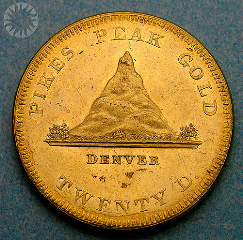


It is instructive to examine the background on the peak's name.

Pikes Peak (originally Pike's Peak, see below) is a mountain in the Front Range of the Rocky Mountains, 10 miles (16 km) west of Colorado Springs, Colorado, in El Paso County. The mountain was named after Zebulon Montgomery Pike Jr. (January 5, 1778 – April 27, 1813), an American soldier, explorer, and Freemason, whose Pike expedition, often compared to the Lewis and Clark Expedition, mapped much of the southern portion of the Louisiana Purchase.
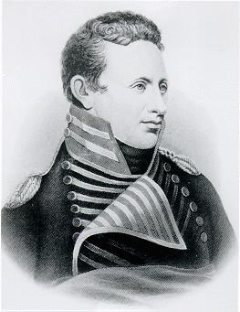


Pike (pictured above) was born in Lamberton, New Jersey, now a part of Trenton. His father, also named Zebulon Pike, was an officer in the Continental Army under General George Washington and served in the United States Army after the end of the Revolutionary War.

One famed ancestor of Zebulon Pike is John Pike (1613-1688/1689), who was a founder of Woodbridge, New Jersey and a judge and politician of the early colony of New Jersey.

During the period of exploration in Colorado, many would refer to the mountain as "Pike's Peak," after Zebulon Pike, the man who first documented it and attempted to climb to its summit. The attempt failed to reach the summit as it was made during the winter months. The snow drifts were reported chest high at the time of the climb.

Edwin James was successful to reach the summit in his attempt during a summer month's attempt. Later, some suggested "James' Peak," after Edwin James, the first man who successfully climbed to the summit. However, in this area there was another "James' Peak" which made identification of the peak a confusing issue. The name went back and forth until it was settled with a uniquely identifiable name.

Originally the peak was called "Pike's Peak", but in 1891, the newly-formed US Board on Geographic Names recommended against the use of apostrophes in names, so officially the name of the peak does not include an apostrophe. In addition, in 1978 the Colorado state legislature passed a law mandating the use of "Pikes Peak" only. Even so, the old name is often seen.

Several people make the mistake thinking that Pikes Peak was named after the shadowy Masonic figure Albert Pike, who was related to Zebulon, through their mutual ancestor John Pike.

Albert Pike (December 29, 1809–April 2, 1891) was an attorney, explorer, soldier, writer, and Freemason. Pike is the only Confederate military officer or figure to be honored with an outdoor statue in Washington, D.C. (in Judiciary Square).

Albert Pike was elected Sovereign Grand Commander of the Scottish Rite's Southern Jurisdiction in 1859. (Some have said that the Civil War was an occult battle between the northern and southern branches of Freemasonry.) He remained Sovereign Grand Commander for the remainder of his life (a total of thirty-two years), devoting a large amount of his time to developing the rituals of the order. Notably, he published a book called Morals and Dogma of the Ancient and Accepted Scottish Rite of Freemasonry in 1871, of which there were several subsequent editions. Pike is still sometimes regarded in America as an eminent and influential Freemason.
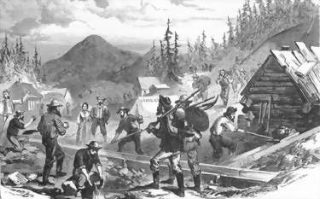


Is Pikes Peak of significance to Freemasonry?

In 1899, there was a small time capsule inserted into a rock atop Pikes Peak by 500 Masons - who arrived on a special train for the ceremony.

In 1999, on the 100th anniversary of that event, more than 200 Masons from Kansas and Colorado rode the Cog Railway to the summit of Pikes Peak, removed a small bronze plaque and withdrew the copper time capsule. They intended to put a new one in its place - to be opened in another 100 years - but they had misjudged the size of the hole cut into the rock by their 19th century colleagues, and the capsule didn't fit.

In September 2000, a group of 22 Masons returned to the peak to discover that the bronze plaque atop the rock had been pried off and taken. In its place were several small capsules containing Scriptures and anti-Masonic statements.

The Masons reported the theft to rangers and then inserted their new stainless steel capsule into the flat, 10-foot-square rock, sealing it with concrete. The capsule, like the old one now on display in a Kansas bank, contains a Bible, an American flag, a list of Masons who made the trip and instruments such as a compass and ruler that have significance for the group, founded in the 1600s by European stonemasons.

Sunday, May 15, 2011

Hobo Pantry & Evil Clowns


On Tuesday, May 10, 2011, Andrew Joseph Davis, 20, was arrested for running down a person with his car and dragging the individual 100 feet.  The Oklahoma incident resulted in the above mug shot of Davis, which was published by Smoking Gun.

Police were called after eyewitnesses saw a driver wearing the distinctive face paint swerve across the road near Bartlesville, Oklahoma, and hit a pedestrian before accelerating. Nearby residents reported that the two men in the black-colored sedan shouted "Woop! Woop!" as they zoomed away from the scene.
 
It was unclear why he was wearing the face paint, although it could be because he is a "fan of Insane Clown Posse, whose 'Juggalo' followers are partial to similar facial adornment," Smoking Gun said.


Perhaps Andrew Davis was merely attempting to get on the Top Ten Evil Clown List for 2011?  Not much has floated to the top since the clown reports that made the list from 2008, but this year is starting off rather strangely.


For example, Mitchell Woods, 17, of Thrasher Close, Haggerston, East London, was sentenced at Maidstone Crown Court on Monday, May 9, 2011, after pleading guilty to possessing a prohibited firearm and possessing ammunition without a certificate, to three years in jail. On January 29, 2011, Woods was arrested by a Kent Police Armed Response unit at Higham rail station, after officers were called to the station by a concerned member of the public, who, while waiting for a train at Chatham, overheard Woods talking to some friends about carrying a gun.  The Hackney teenager was caught carrying a loaded gun and a clown mask (seen below) on a train in Kent.  The gun had been previously used in three gang-related shootings in London, one in which someone had been shot three times with the weapon, according to media accounts.


Then there's such things as the robbery in Alabama in April. According to a Dothan, Alabama police statement, a robbery took place around 12:45 a.m. on Tuesday, April 26, 2011, at the Hobo Pantry store. The police reported a man armed with knife stole some cash and ran from the store toward Westgate Parkway.The robber as a white male, about 6 feet tall, who weighed 175 to 180 pounds, had blue or green eyes, wore desert camouflage pants, a black hooded sweater with red and green animated pictures on it along with the black and white Insane Clown Posse mask over his head.


Of course, evil clowns (and Joker clones) turned up in 2009, as well as real killer clowns in 2010.  But while 2011 seemed to start off rather slowly, with a clown attack on March 22nd, these new events, noted above, may be a clue of things to come.


Trying to find the "Top Ten Evil Clowns of 2011"? See here.

Wednesday, May 11, 2011

Human Earthquakes


This is the scene aboard American Airlines Flight 1561 from Chicago, just ten minutes before arrival at San Francisco's airport, when a Yemeni man attempted to storm the flight's cockpit.

During the last few days, you may have noticed that people are beginning to share questions like, "Is there something in the air?" or "What's in the water?"
Comments such as those usually alert us to the fact there seems to be a strange trend in the news reflecting outbursts of human behavior or what I like to call, "human earthquakes."
There definitely are periods when humans appear to repeat patterns so similar that the copycat effect, behavior contagion, or some mysterious seismic forces seem to be at play. 
Are we in such a period?
First, let us mention the prediction for a massive earthquake occurring today, May 11, 2011. 


Raffaele Bendani, an Italian seismologist, forecast in 1915 that a large earthquake would hit Rome on May 11, 2011.  (Or will it happen on Friday, May 13th?)
Why should people pay attention to Bendani's prediction? Well, of course, because he was right before.  He predicted the earthquake of January 13, 1915, which killed 30,000 people in Avezzano. In 1923, he predicted an earthquake would hit central Italy on January 2, 1924. He was only off by two days. He also forecast the quake of May 6, 1976, in Friuli, which killed 1,000 and left another 45,000 homeless.


An update: Late news reports on May 11th, say a 5.3 earthquake causing eight fatalities hit Spain. See here.

On May 12th, UK's The Telegraph asked, "Was Bendani Correct?"

As the earthquake struck yesterday, there was a sigh of relief in Rome, whose residents had mounted a mass evacuation following claims of a 1915 prediction by Mr Bendandi that the “big one” would wipe out the Eternal City on May 11, 2011….“There is absolutely no link between Spain and Italy, geologically, or with the prediction of an earthquake in Rome,” said the Italian National Institute of Geology and Vulcanology.   
“The earthquake in Spain was not very strong in itself, but it was close to the surface,” said Alberto Michelini, a seismologist at the institute. “The quake happened on the coast, a zone which has not had strong quakes in the past. It is close, however, to the point where the Eurasian plate meets the African plate,” he added.
Meanwhile, what about the human earthquakes?


What is remarkable is the rather high number of incidents of strange human bizarre behaviors of late. Such outbursts are often associated, in the public mind and media, with some form of lunacy, i.e. as if they are caused by the full moon, the new moon, an alignment of planets, or earthquake activity (which, in turn, is blamed on the moon/planets, as well).
The following is a quick roundup of some of these recent incidents.
The one that received the most media notice involved an event that appeared to remind people of the 9/11 scenarios, and, indeed, was frightening to those abroad the involved flight. Rageit Almurisi, 29, a Yemeni man screamed "Allah Akbar" as he stormed the flight's cockpit. He banged on the cockpit door on American Airlines Flight 1561 from Chicago, just ten minutes before the jet was due to land on Sunday night, May 8, 2011. A flight attendant tackled the man to the floor, and the attendant was soon assisted by other passengers.

The incident was another scare during a weekend that saw several similar ones for American air passengers and followed a number of security alerts at bus and train stations and airports across America, following the death of Osama Bin Laden:
A man slipped into the PATH tunnel at the World Trade Center in New York and walked all the way to Jersey before saying he had left a bomb in the tunnel;
A gunman who shot two Houston officers outside a downtown Greyhound bus depot was confirmed dead;
Police blocked off several streets in the Bronx, New York, as the NYPD bomb squad investigated a parked SUV;
The Mockingbird DART station and the surrounding area in Dallas, Texas, were evacuated on Saturday after a police dog alerted authorities to suspicious packages;
Four people were arrested at Denver International Airport after staff noticed someone videotaping security lines;
A 34-year-old Illinois man went berserk aboard Continental Airlines Boeing 737 from Houston to Chicago and tried to open the door at 35,000ft, but a Vietnam veteran and martial arts expert tackled him from behind;
A Delta Air Lines flight from Detroit to San Diego was diverted to Albuquerque, New Mexico, after a flight attendant found a note in the lavatory with the word "bomb." FBI agents ushered the passengers and crew to safety;
A woman stripped naked on a Delta flight;
A half-naked man in Fayetteville, Arkansas, died when a falling incident occurred;
A naked man went berserk on a subway; and
On Tuesday night, May 10, yet another man, this time on a Delta flight, attempted to open an exit door.
More probably will follow.

Thursday, May 05, 2011

Bin Laden Raid Squirt Gun

Can you name the brand of the water squirt gun photographed underneath the body of one of the men killed during the Osama bin Laden raid in Pakistan?


Random squirt gun images that do not exactly match the one photographed during the raid.


Photos of the squirt gun.


The image of the dead body and the squirt gun.

Tuesday, May 03, 2011

Geronimo and Skull & Bones

Operation Geronimo was the codenamed mission to kill Osama bin Laden on May 1, 2011.Geronimo (Chiricahua: Goyaałé, "one who yawns"; often spelled Goyathlay or Goyahkla in English) (June 16, 1829 – February 17, 1909) was a prominent Native American leader of the Chiricahua Apache who fought against Mexico and the United States for their expansion into Apache tribal lands for several decades during the Apache Wars.
Geronimo, circa 1890 (Getty)
In one of the strange twists of the story of the original Geromino, enter a secret society well-known to conspiracy theorists. Six members of the Yale secret society of Skull and Bones, including Prescott Bush, served as Army volunteers at Fort Sill during World War I. It has been claimed by various parties that they stole Geronimo's skull, some bones, and other items, including Geronimo's prized silver bridle, from the Apache Indian Prisoner of War Cemetery at Fort Sill, OklahomaAlexandra Robbins, author of Secrets of the Tomb: Skull and Bones, the Ivy League, and the Hidden Paths of Power (2002), says this is one of the more plausible items said to be in the organization's Tomb.


The Americans chose the code name of a Native American warrior chief in the operation to kill Osama bin Laden. But, as Samira Ahmed writes, Geronimo did more than evade capture - he became a hero.

It's what you shout when take a dangerous leap; a slogan of US paratroopers during the second world war.

But the 19th century Chiricahua Apache hero, whose name it is, was a perhaps questionable choice of code name for Osama Bin Laden; given the numbers of people who do regard him as a hero. His story is laden with symbolic parallels for those who choose to regard Bin Laden as a great warrior.

Born Goyahkla (He Who Yawns) in modern New Mexico in 1829, he was given the name Geronimo by Mexican soldiers, who prayed to St Jerome, after seeing him defy bullets to attack with a knife.

His desire for revenge against the Mexicans was fuelled by their massacre of his mother, wife and three children. He was a symbol of resistance – the man who defied the White Man's broken treaties, who refused to remain quietly on a reservation when other tribes had given in and been forced off their tribal lands.

Geronimo famously said he was not a chief, a political leader. Instead, like Bin Laden, he saw himself as a military leader.

Bin Laden's fundamental hatred against the west was supposedly the US presence on holy (and oil-rich) Saudi Arab soil. In the 1860s, the discovery of Gold in the West saw the US and the Mexican governments speed up their push against American Indians to seize their land.

Geronimo became a great war leader, a symbol of resistance to the white occupation. His small band of warriors raided settlements in Arizona, and attacked US troops.

As the US looks to withdrawal from Afghanistan, and the possibility of negotiating with theTaliban, it's worth noting that he was rarely defeated and US generals found themselves struggling to form a successful strategy.

The last of the Indian wars ended after years, only when Geronimo signed a piece treaty with General Nelson Miles – who had failed to defeat him by military means.

The end of Geronimo was a humiliation of broken promises, not assassination.

As a result of the revisionist histories written since the 1960s, many younger Americans, such as President Obama, would, surely be aware of the less than honorable actions of US forces against American Indians, such as Geronimo.

He and his people were moved around Florida, and Alabama, ending up in Oklahoma. He was not killed in a compound; but died in US military base – Fort Sill in 1909, after completing his autobiography.

Even in the early 1960s, when we assume Indians were the "bad guys", Hollywood’s first biopic starring the white sportsman turned actor Chuck Connors as the Native Indian hero, saw him portrayed as a great hero and family man, abused by Federal forces.

The 1993 film
Geronimo: An American Legend, starting Gene Hackman, Robert Duvall and the Native American Wes Studi as Geronimo, focused on the abuse of the Apache themselves and the success of a small band of dedicated warriors against the might of the US military.

According to some analyses today, the US military chose the code name because Bin Laden, like Geronimo, had evaded capture for years. If they were trying to avoid mythmaking, it seems they chose the wrong code name.

Thus reports Channel 4 News. The British, via the BBC News, have another take on the name game of "Geronimo."


The code name for the operation to capture Osama Bin Laden was Geronimo. Why was it named after one of the best-known Native Americans?

Geronimo. The Apache warrior's name conjures up an image of the American Wild West, the world over.

In the best-known photograph of him - taken in 1887 - he glares defiantly into the camera, gripping a rifle. It was this fearless warrior that led the last band of Apache resistance to the white Americans.

The fact that Bin Laden had been killed by US special forces was reported to President Barack Obama on Sunday with the words "Geronimo EKIA" - Enemy Killed In Action.

But US officials have not commented on why the name Geronimo was chosen - and may never do so.Old West reincarnated

It was back in 2001 that the narrative for America's hunt for the al-Qaeda leader became strewn with Wild West imagery.

George W Bush's call for Bin Laden to be caught "dead or alive" mimicked the posters of the old Hollywood westerns, while borderland Pakistan became the Old West reincarnated in the minds of many commentators.

Bin Laden was referred to by one as a "21st-Century Geronimo, trying to elude the US military somewhere in a dry mountain range that could easily pass for the American West".

Afghanistan's cave-laced mountains, were easy to imagine using the template of the Sierra Madre mountain range thousands of miles away, where the original Geronimo managed to elude US troops for so long in the late 19th Century.

Referring to US military possibilities in the tribal areas of Afghanistan's mountainous regions, Allan R Millet, a retired Marine Corps colonel and Ohio State University professor, said in 2001: "It's like shooting missiles at Geronimo... you might get a couple of Apaches, but what difference does that make?"

Geronimo was actually given the name Goyahkla at birth. One theory is that he acquired the name Geronimo from the Mexicans he fought to avenge the death of members of his family.

According to one story the Mexicans would shout: "Cuidado! (Watch out!) Geronimo!". It could be because they mispronounced his name or, as some historians have suggested, they were calling for the protection of St Jerome.

The real Geronimo was born in 1829 in what is modern day New Mexico. As one of the Apache leaders, he inherited a tradition of resisting colonisation by both Spaniards and North Americans.

According to Ron Jackson writing in the Oklahoman in 2009, Geronimo's "legend is rooted in real deeds of bravery and bloodshed."

He gained early notoriety for his fearless raids against Mexican soldiers. Mexican troops had killed members of his family after storming his village, and his revenge was to kill as many of them as possible.

"By 1872, US government officials were keenly aware of Geronimo's fighting exploits when they corralled him and hundreds of his fellow Chiricahua Apache people onto an Arizona Territory reservation," writes Mr Jackson.

"Four years later, Geronimo led a large band of Apache dissidents off the reservation and into the Sierra Madre mountains of Old Mexico, where they staged raids on anyone unlucky enough to cross their paths.

"Military officials soon branded Geronimo a renegade. During the next decade, Geronimo repeatedly returned to reservation life in peace only to bolt with others for the refuge of the Sierra Madres. They often left a trail of blood. Hidden in the myriad mountain passes and caves, Geronimo and his followers embarrassed military officers by eluding them time and again, at one point with as many as 5,000 US soldiers on their heels."

It was Apache scouts that helped track Geronimo down in 1886.

The hunt for Bin Laden was often portrayed with Wild West imagery.

His struggle to resist the white Americans has led to him being depicted in a sympathetic light by many cultural historians.

Ironically, it is thanks to the Native American's legendary bravery that one of US army's elite units has the regimental nickname "Geronimo".

The link to the parachute division's moniker and the tradition of shouting "Geronimo" while diving out of a plane can be traced to Fort Benning in the state of Georgia.
G-E-R-O-N-I-M-O

According to reports, in 1940 soldiers from the parachute division were preparing to test a daring new maneuver, in which men jumped from the plane in rapid succession.

The night before the jump, a small group of soldiers left the base to watch film at the local cinema - a western featuring the fearless Geronimo. As the men later revealed their apprehension about the next day's jump, Pt Aubrey Eberhardt announced that he was going to shout "Geronimo" as he leapt from the plane to demonstrate his courage.

The story goes that as he jumped, "G-E-R-O-N-I-M-O" was clearly heard from the ground. It was copied by other servicemen and quickly became standard parachute regiment practice - and the favoured cry for little boys performing a daring leap.

The word "Geronimo" was eventually discontinued by the army in favor of a parachute opening count - "one-thousand, two-thousand, three-thousand" - but by this stage it was already the name of the 1st Battalion (Airborne), 509th Infantry Regiment.

The "Geronimos" have been operational in Iraq and Afghanistan. By adopting the tactics and techniques of al-Qaeda and the Taleban, they help to train other units to defend themselves.

The original Geronimo is buried at Fort Still in Oklahoma - but one branch of his descendants argue that he should be laid to rest in his tribal homeland of the Gila Mountains of New Mexico. Until the correct sacred rite is carried out, his spirit is still wandering.
+
So what's the end of the story of Skull & Bones stealing Geronimo's skull? 


In 1986, former San Carlos Apache Chairman Ned Anderson received an anonymous letter with a photograph and a copy of a log book claiming that Skull & Bones held the skull. He met with Skull & Bones officials about the rumor; the group's attorney, Endicott P. Davidson, denied that the group held the skull, and said that the 1918 ledger saying otherwise was a hoax. The group offered Anderson a glass case containing what appeared to be the skull of a child, but Anderson refused it. In 2006, Marc Wortman discovered a 1918 letter from Skull & Bones member Winter Mead to F. Trubee Davison that claimed the theft:

The skull of the worthy Geronimo the Terrible, exhumed from its tomb at Fort Sill by your club... is now safe inside the tomb and bone together with his well worn femurs, bit and saddle horn.
The second "tomb" references the building of Yale University's Skull & Bones society.
But Mead was not at Fort Sill, and Cameron University history professor David H. Miller notes that Geronimo's grave was unmarked at the time. The revelation led Harlyn Geronimo of Mescalero, New Mexico, to write to President Bush requesting his help in returning the remains:
According to our traditions the remains of this sort, especially in this state when the grave was desecrated ... need to be reburied with the proper rituals ... to return the dignity and let his spirits rest in peace.
The Fort Sill grave site of Geronimo.
In 2009, Ramsey Clark filed a lawsuit on behalf of people claiming to be Geronimo's descendants, against, among others, Barack ObamaRobert Gates, and Skull & Bones, asking for the return of Geronimo's bones. An article in The New York Times states that Clark "acknowledged he had no hard proof that the story was true."
+++
Please see comments below for more on the "third" head: Pancho Villa's.
Source, Source, Source.

Wednesday, April 13, 2011

Who is Bill Grimstad?

Who is Bill Grimstad? 


Jim Brandon is the author of 1978's Weird America and 1983's The Rebirth of Pan: Hidden Faces of the American Earth Spirit. Both of these books have had a long-lasting effect on the thinking of Forteans and synchromystics, first in articles and books, and now in blogs, podcasts, and digital visual works.

The Fayette Factor, as I have coined the theory or idea, was first characterized by researcher and writer William Grimstad back in 1977, as the "Fateful Fayette," Fortean Times, No. 25, Spring 1978, and in his two books shown here - Weird America and The Rebirth of Pan - credited as being authored by "Jim Brandon," who we know as Bill Grimstad.


Before Brandon became well-known in Fortean circles for his classic books, he had created and shared with associates his now-long-unavailable and difficult-to-obtain tape of his interviews with James Shelby Downard (March 13, 1913 – March 16, 1998). Yes, it was a reel-to-reel tape.

++++
Update


Jim Brandon


On April 13, 2011, comment maker "Lauren" at Goodreads shared that "William Grimstad...is a published Holocaust denier."

His Fortean work is separate from his denier writings. But still, he is what he is.

In 2018, Jim Brandon/William Grimstad resurfaced with the reissuing of a revised edition of his audio book from 1974-1975, Sirius Rising, which he gave a new subtitle, Mr. Downard and the Synchromystical Boson.


Renewed recognition of Sirius Rising was noted in recent years, and then reviewed on December 19, 2018, by Andrew W. Griffin of Red Dirt Report, in his critique, "Magick Bullet: 'Sirius Rising: Mr. Downard and the Synchromystical Boson' by Jim Brandon."

Griffin gives an overview of the entire contents of Siruis Rising tape, and there is no reason for me to repeat his words here. Griffin takes the reader along on the ride, and reminds us that Grimstad reinforces the definitions we are growing aware of ~ "Synchromysticism is the old study of 'name games' and 'Forteana,'" plus "All coincidences may have meaningful relationships."


Grimstad's past has been published but only in the Internet era has it become more accessible.

One article quoted was from The Washington Post, May 31, 1978. Here are a few extracts:

A former editor for the American Nazi Party is registered with the Justice Department as an agent for the Saudi Arabian government and says he received $20,000 from the Saudis last June for an anti-Zionist book published two years ago.
William N. Grimstad says in registration papers filed Nov. 15 that he received the money as a "gift or honorarium apparently in appreciation" for his book, "Antizion." The book is a collection of anti-Zionist and anti-Jewish statements attributed to famous public figures throughout history ranging from Winston Churchill and Mark Twain to Napoleon and Cicero.
Grimstad was managing editor in the early 1970s of White Power, the bimonthly publication of the American Nazi Party, now the National Socialist White People's Party.
His book is dedicated to the late King Faisal of Saudi Arabia, described in the frontispiece as a "distinguished statemans and humanitarian who in this New Dark Age never lost insight into the hidden causes of world upheaval."

Several representatives of the Saudi embassy here, however, say they have never heard of Grimstad. They said they were unaware that he is officially registered as an agent for the Saudi government and know nothing of the $20,000 he claims he received.

"The embassy says it has had no contact with Mr. Grimstad," said Mark Helgeson of the Saudi Arabian Information Office.

Grimstad, reached by telephone at his home Geneva, N.Y., said he received the $20,000 unsolicited, by check last June. He said he registered as an agent of the Saudis five months later without notifying them, and that he registered as a legal precaution "because of receiving the money."

"The money came to me under very mysterious circumstances," he said. "I'm mystified by the whole thing."

He said in a letter after the telephone call that he now believes the money may have been planted by a "covert unit of Israeli Intelligence in a misguided effort to discredit the Saudis . . ." He said he came to this belief after receiving press inquiries triggred by disclosure of his Justice Department registration statement by the Anti-Defamation League, an element of the Jewish service organization B'nai B'dith that monitors anti-Jewish and anti-Zionist activities and individuals.

***
Grimstad's book, Antizion, was published in 1976 by Noontide Press, a California publishing house run by Willis A. Carto, a well-known anti-Zionist and treasurer of the ultra conservative Liberty Lobby here. The book quotes several hundred famous historical figures, many of whom said international Jewry is embarked on a conspiracy to dominate the world.


Monday, March 28, 2011

Crete and the Libyan War


What was the first civilization in Europe? What European country had the first palace?

The answers to those questions are (1) Crete and (2) Crete at Knossos.

A prediction: The role of Crete in the Libyan war will cause her reappearance in the news in the coming months.


A French C160 Transall taxis as a Greek F16 fighter takes off at the Souda military base, on the Greek island of Crete. Greece has no direct involvement in the air and missile attacks on Libya that began on the Saturday after the UN resolution of March 17, 2011. Still it has sent a navy frigate to the region and has offered the use of its air bases to the countries involved. The United States has also used a navy base on the island to build up Libya-bound forces.


A Qatar Emiri Air Force Dassault Mirage 2000-5EDA fighter jet prepares for takeoff from Larnaca international airport, Cyprus, Tuesday, March 22, 2011. Two Qatar Air Force fighter jets and a C-17 Globemaster cargo aircraft were heading to Crete in the first sign of military operations by Qatar so far to help enforce a no-fly zone over Libya, officials said. The planes made an unscheduled stop at the island's Larnaca airport, and government spokesman Stefanos Stefanou said in a statement that the aircraft would depart after refueling.

Crete is a location not to be underestimated in history, especially ancient history. Look for more news from Crete in the near future.

Crete (Greek: Κρήτη) is the largest and most populous of the Greek islands and the fifth largest island in the Mediterranean Sea. It forms a significant part of the economy and cultural heritage of Greece; while it retains its own local cultural traits (such as its own dialect, poetry, and music). Crete was the center of the Minoan civilization (circa 2700–1420 BC).

Under Roman rule, in Classical Latin, the island was called Creta. Under Venetian rule, it was known as Candia (sometimes anglicized as 'Candy'), a Venetian adaptation of the earlier Greek name Chandax (Greek: Χάνδαξ, "moat") or Chandakas (Greek: Χάνδακας), which in turn came from the Arabic rabḍ al-ḫandaq 'castle of the moat'. Under Ottoman rule, in Turkish, it was called Girit.


Crete has a rich mythology mostly connected with the ancient Greek Gods but also connected with the Minoan civilization.

The Idaion cave at Mount Ida was the birthplace of the god Zeus. The Paximadia islands were the birthplace of the goddess Artemis and the god Apollo. Their mother, the goddess Leto, was worshipped at Phaistos. The goddess Athena bathed in Lake Voulismeni. The ancient Greek god Zeus launched a lightning bolt at a giant lizard that was threatening Crete. The lizard immediately turned to stone and became the island of Dia. The island can be seen from Knossos and it has the shape of a giant lizard. The islets of Lefkai were the result of a musical contest between the Sirens and the Muses. The Muses were so anguished to have lost that they plucked the feathers from the wings of their rivals; the Sirens turned white and fell into the sea at Aptera ("featherless") where they formed the islands in the bay that were called Lefkai (the islands of Souda andLeon). Hercules, in one of his labors, took the Cretan bull to the Peloponnese. Europa and Zeus made love at Gortys and conceived the Kings of the Minoan civilization.
The labyrinth of the palace of Knossos has the myth of Theseus and the Minotaur where the Minotaur was slayed by TheseusIcarus and Daedalus were captives of King Minos and crafted wings to escape. King Minos became a judge of the dead in Hades.


The Minoan eruption of Thera devastated the Minoan civilization.


Wall paintings in Crete, the center of the Minoan civilization, show what has been described as a bikini, apparently a woman performing in athletics. Similar depictions have been found in Sicily (Villa Romana del Casale, 4th Century). However, Minoan women on the island of Crete 3,000 years ago wore garments that partially supported yet revealed their bare breasts; the best known example of this style is the Snake Goddess.

They used corsets that were fitted and laced, or a smaller corselette that left the breasts exposed or even forced them upwards to make them more visible. However, this corset was outerwear, not underwear. Covering the breasts, or even wearing a bra-like garment, was not a usual part of Minoan life. The succeeding Mycenaean civilization also emphasized the breast, which had a special cultural and religious significance.